

Antique Music Cabinets
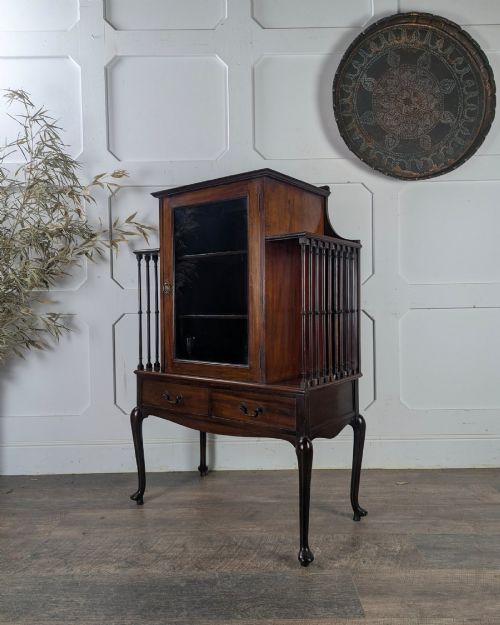
A narrow domestic cabinet made to hold bound volumes and loose sheet music flat and upright beside the piano.

Antique Music Cabinets
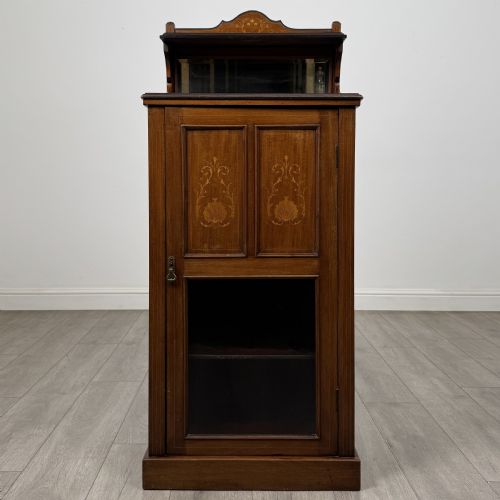
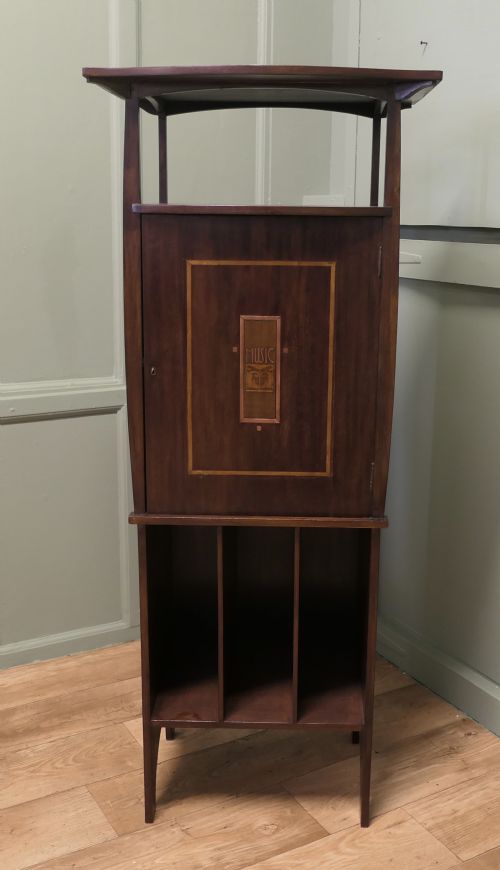
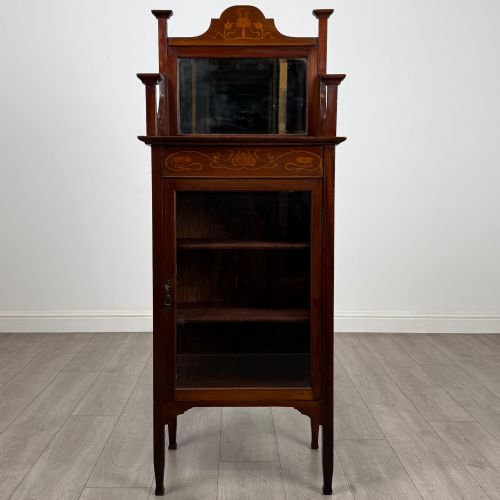
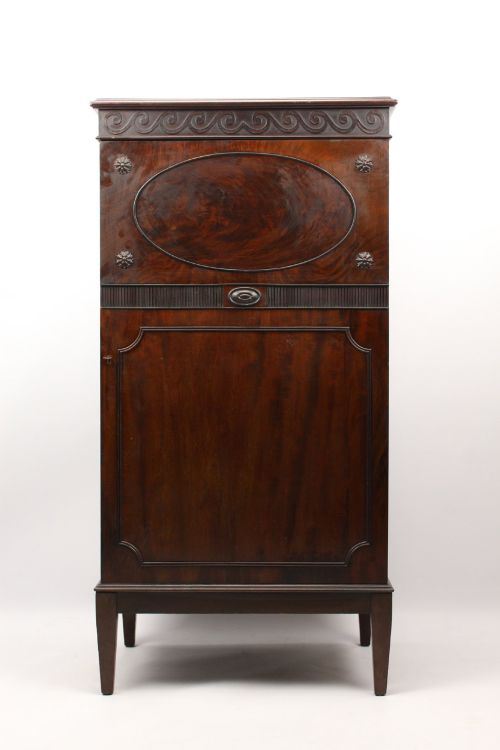
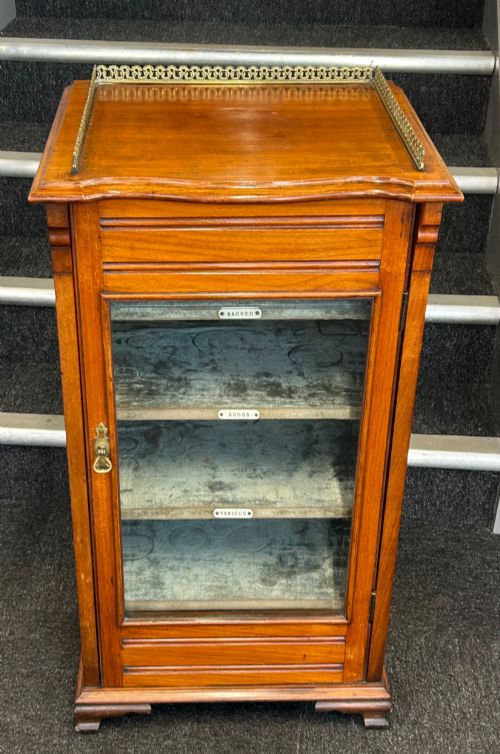
Purpose-made music cabinets arrived with the domestic piano in the 19th century, once households had accumulated enough bound volumes and loose sheets to need somewhere to put them. The form settled quickly: a tall, narrow case, sized to sheet music, with a single glazed or panelled door over shelves or slides, and it stayed in production into the early 20th century.
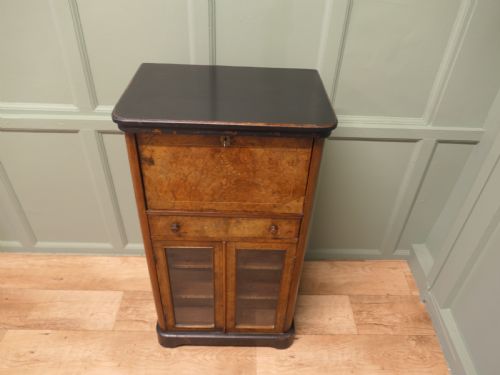
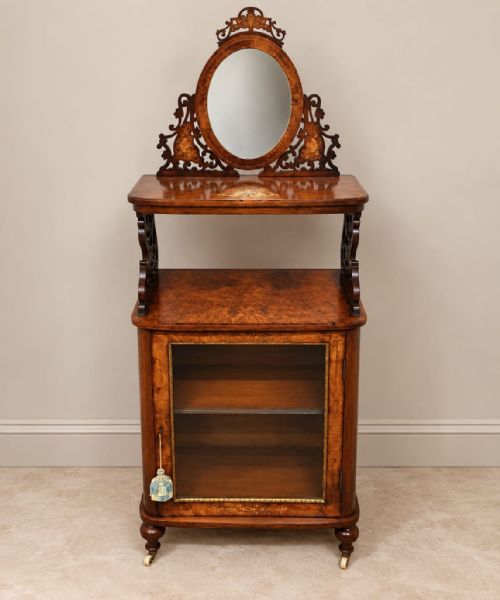
The version you'll meet most often is Edwardian, in mahogany, with inlay. Edwardian appears in 145 of the titles and mahogany in 136, and the dealers' own dating puts Edwardian ahead of Victorian by a good margin. Walnut is the main alternative, burr walnut in particular on the Victorian cabinets, with rosewood behind it.
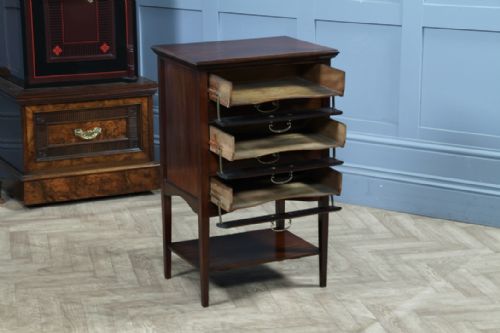
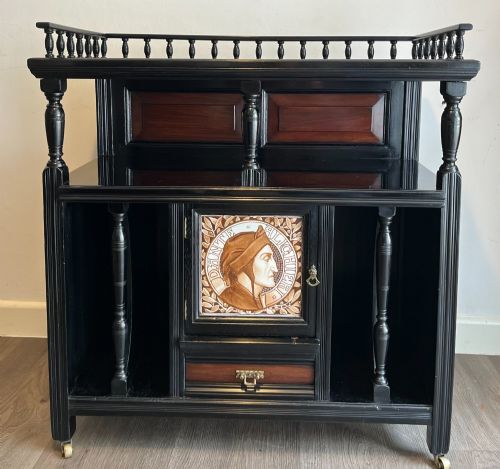
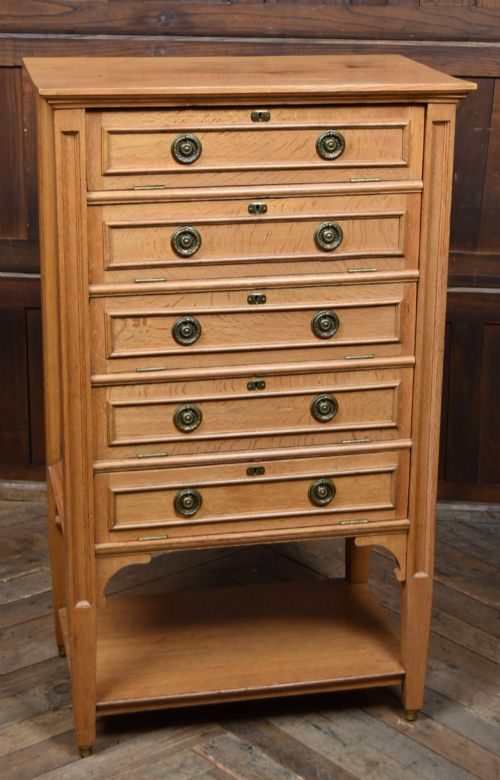
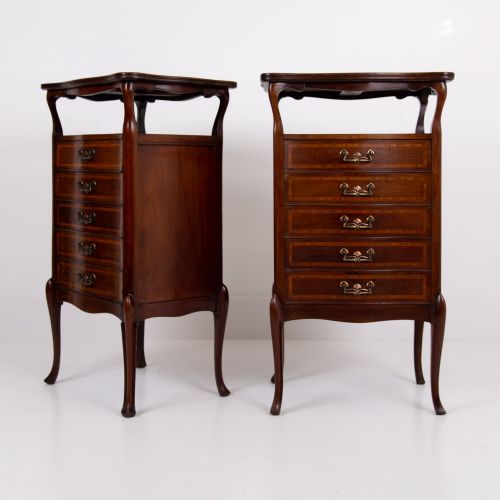
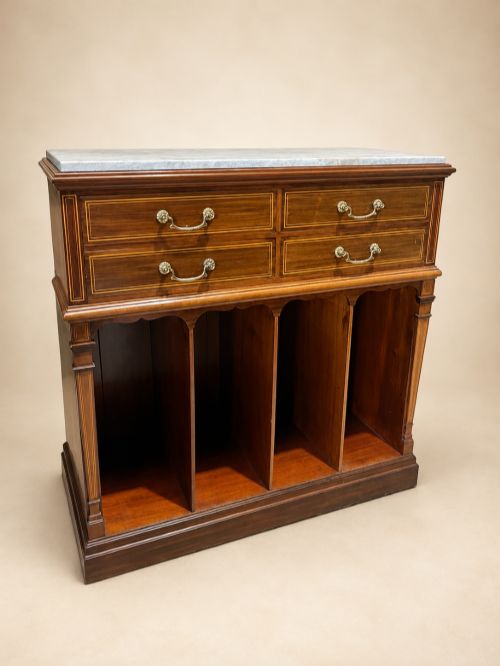
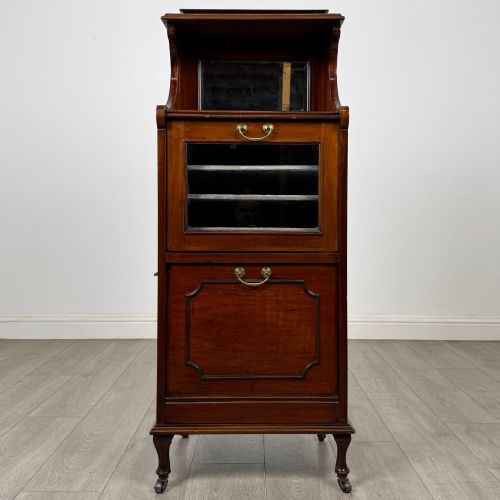
The other main type swaps the door for storage: a stack of four to seven shallow drop-front drawers, or slides, sometimes behind a tambour shutter. These are the filing and folio cabinets, and they run to roughly one in ten of what comes up. A smaller run of ebonised, Aesthetic, Art Nouveau and Arts and Crafts pieces sits alongside them.
Very few of these cabinets are sold for music alone. Titles offer the same case as a side cabinet, display cabinet, bedside, hall, office, filing or stationery cabinet, a pier cabinet, chiffonier, bookcase, whatnot or record cabinet. Around 30 come to market on Sellingantiques in a year, listed by 98 different dealers, so it's a category almost everyone handles and nobody specialises in.
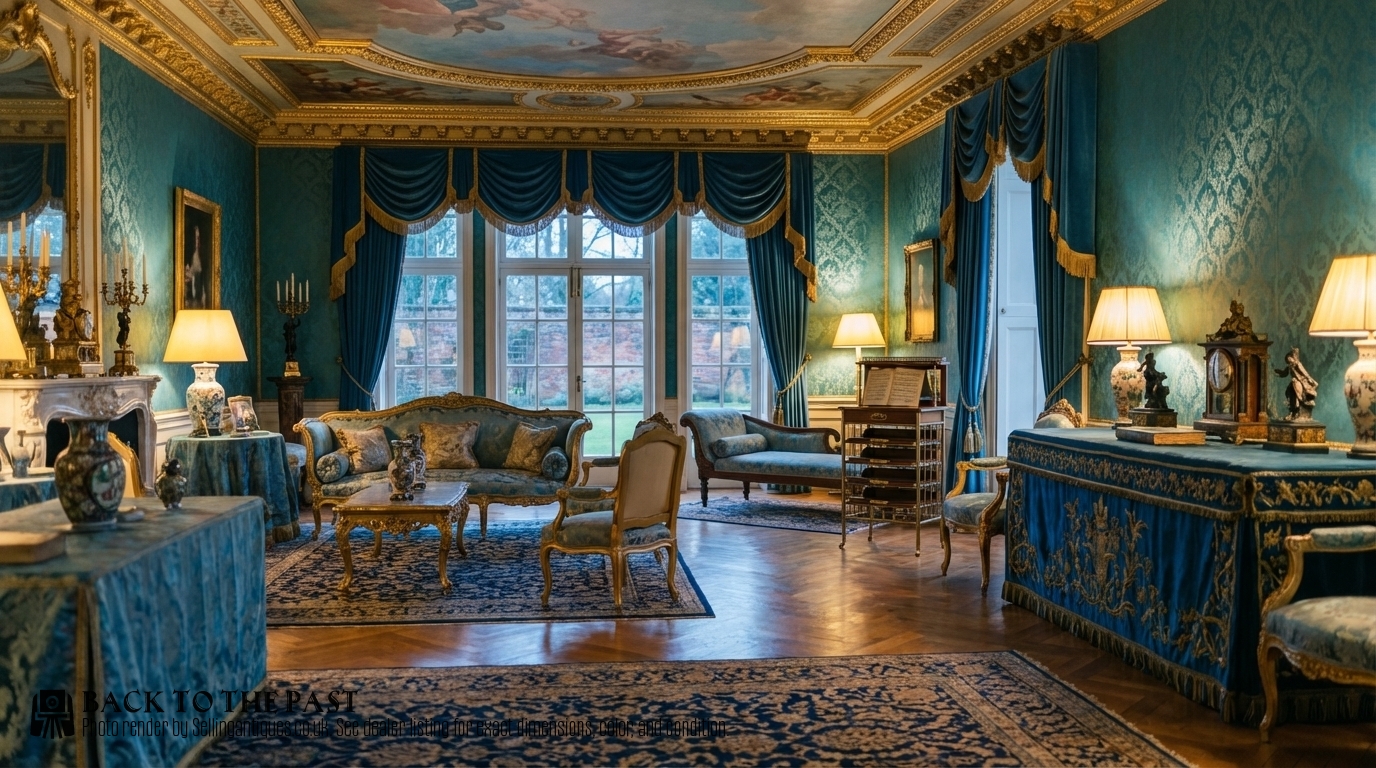
What Sets Them Apart
Timber and figure do most of the work. Burr walnut heads the walnut cabinets, and figured rosewood, satinwood, thuya, burr yew and birds eye maple each turn up once or twice near the top of the range. At the other end sit plain oak and a cabinet described only as walnut finish, where the naming itself tells you what you're getting.
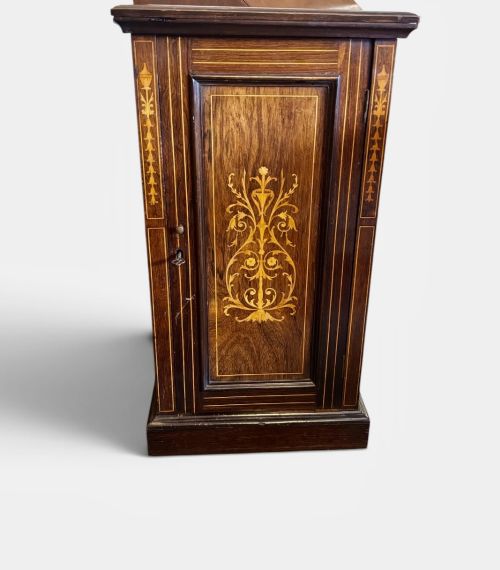
Decoration is the second divide, and it's a matter of degree rather than presence. Inlay is close to a defining feature, advertised in 105 titles, so a line or string of it is ordinary. Marquetry is the step up, nine titles, with boxwood and Gonçalo Alves named among the woods. The plainest listings say nothing beyond the wood and the reign.
Then there's what the case does. Cabinets with something extra fitted inside sit well above the plain ones: a secret drawer, an enclosed music stand, a writing compartment, specimen drawers, a hinged easel top. Size pulls both ways, with small and slim at the bottom and large, mirror-backed or shop-display pieces at the top. Pairs, about eight listings' worth, sit above comparable singles, and a title carrying a retailer's name or a made-for attribution tends to sit in the upper half.
Antique Music Cabinets Retail Price Guide 2026
Typical UK retail prices for music cabinets, calculated from the Sellingantiques database of over a million retail prices indexed since 2003. This retail price guide relies exclusively on Sellingantiques data; no external sources or auction records are used, so the figures do not describe the wider market.
A few hold more than sheet music: a secret drawer, a fitted writing compartment, specimen drawers and a hinged easel top have each turned up once.

The Antique Music Cabinets Glossary
- Inlaid
- Decorative wood set into the surface. The commonest descriptive word in the category, in 105 titles, so its presence says less than its absence.
- Burr walnut
- Figured veneer cut from a burr growth on the tree. Forty-one titles carry it, and it marks the better Victorian walnut cabinets.
- Drop-front drawer
- A drawer with a hinged front that falls forward so sheet music slides out flat. Titles cite chests of four, six and seven.
- Tambour front
- A flexible slatted shutter that rolls back rather than a hinged door, found on several of the filing-type cabinets.
- Pier cabinet
- A narrow cabinet made for the wall between two windows. Several titles use the term interchangeably with music cabinet.
- Amboyna
- A golden burr veneer, turning up on a few of the ebonised Aesthetic Movement cabinets.
Antique Music Cabinets: Frequently Asked Questions
What wood are music cabinets usually made from?
Mahogany, walnut and rosewood are the three that dominate. Mahogany appears in 136 titles, walnut in 101 and rosewood in 39, with burr walnut a recurring note among the Victorian pieces.
A minority are ebonised or oak. Rarer timbers show up once each, including satinwood, thuya wood, burr yew and birds eye maple.
How old are most antique music cabinets?
The dealer-supplied dates run from 1850 to 1930. Edwardian leads at 124 listings, Victorian follows at 73, and 121 carry a clean year.
A further 27 are given only as 19th century, and titles use vaguer forms still, late Victorian, early 1900s, early 20th century. A good many pieces are placed to a reign rather than a decade.
Outliers exist at both ends: two Regency titles, one a rosewood cabinet on a stand given as c.1820, and an Art Deco walnut example at the late end.
Can a music cabinet be used for something else?
That's how a lot of them are sold. The same case is offered as a side, display, bedside, hall, office, filing, stationery or record cabinet, and one as a shop display fitting.
Other titles reach for pier cabinet, chiffonier, bookcase, whatnot or Canterbury. The narrow case suits any of it.
What is the difference between a door and a drawer cabinet?
The door type has a single glazed or panelled front over a fitted interior of shelves or slides. It's the commoner arrangement across the category.
The drawer type stacks four to seven shallow drop-front drawers, sometimes behind a tambour shutter, each drawer taking sheet music flat. These are the ones titled as filing or folio cabinets, roughly one in ten of what comes up.
Do music cabinets come in pairs?
Occasionally. Eight or so listings offer two together, described as pairs, matched pairs or matching pairs.
They sit above comparable single cabinets in the range.
Are there Arts and Crafts or Art Nouveau examples?
Yes, as a small but steady minority. Ebonised appears in 12 titles, with Art Nouveau, Arts and Crafts and Aesthetic Movement each on a handful more.
The ebonised cabinets are sometimes paired with amboyna veneer. Style words of that sort turn up on one or two titles apiece rather than as recognised ranges.