
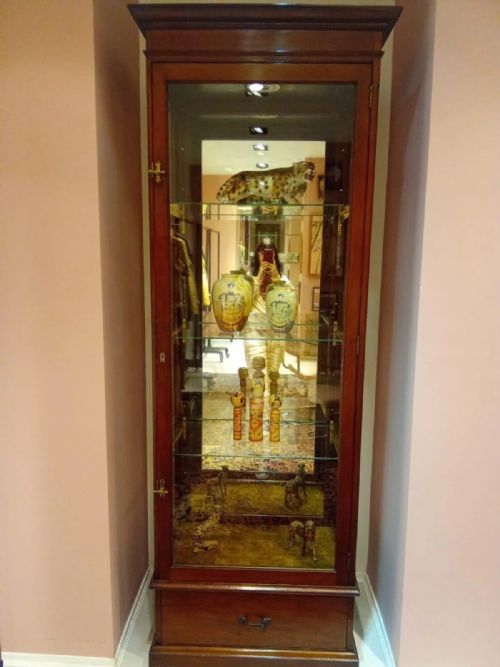
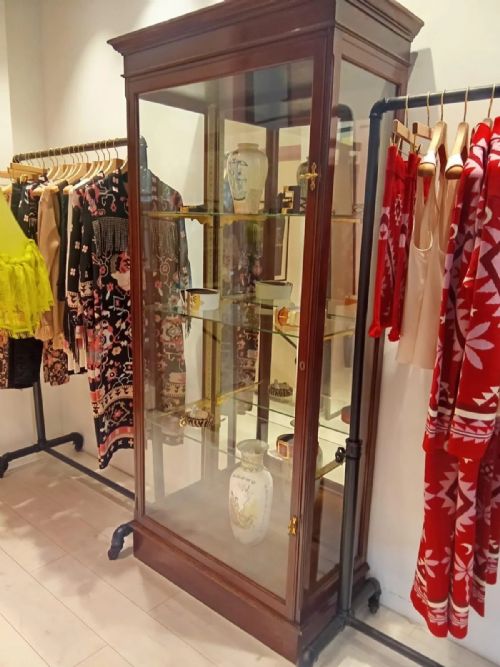
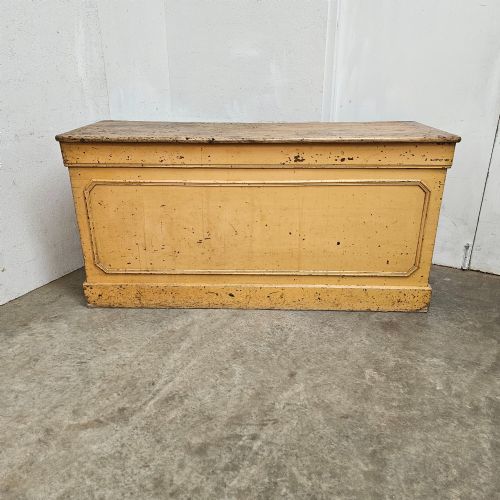
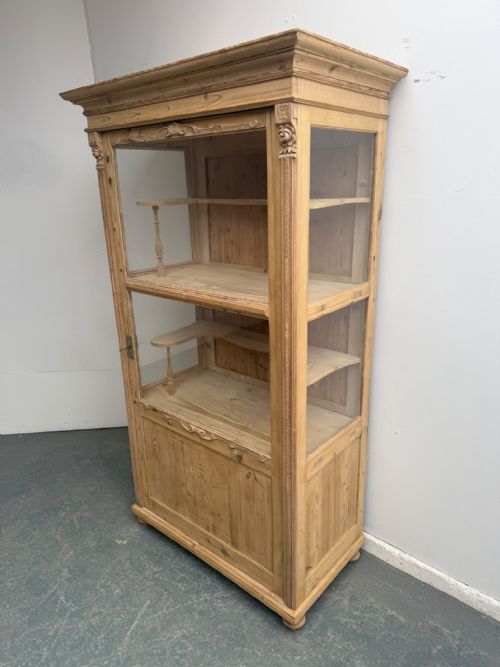
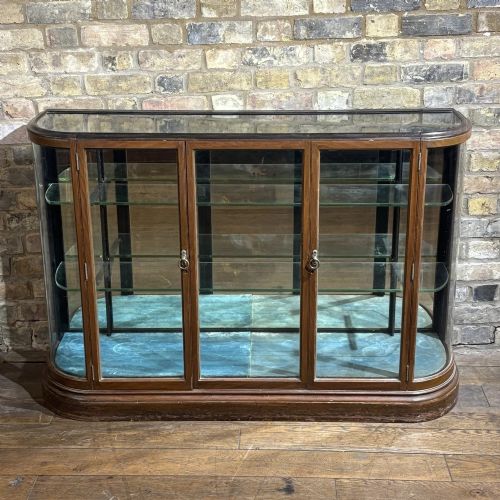


Antique Shop Display Cabinets
Glazed cabinets, counters and cases built as shop fittings, made so a Victorian, Edwardian or inter-war shopkeeper could show goods to a customer while keeping them clean and secure.

Antique Shop Display Cabinets
These are retail fixtures rather than domestic furniture. Purpose-made glazed showcases became standard shop equipment through the nineteenth century, built to the shopfitter's or shopkeeper's order as counters, counter-top cases and floor-standing showcases, and supplied into the 1930s.
Timber framing with glass panels dominates. Mahogany appears in 110 of 388 titles and oak in 44, with metal-framed cases a smaller run: brass in 19 titles, bronze in 17, and one-off chrome, aluminium and steel examples clustered in the 1920s and 1930s.
The counter and the counter-top case make up the single largest group. 'Counter' turns up in 77 titles, with a further 29 using countertop or counter top, so the cabinet you are most likely to meet sat on the counter, or served as one, rather than standing on the floor. Alongside these run haberdashery and drapers' cabinets, fitted for threads and sewing goods, in 47 titles.
Dates run from 1860 to 1930, and 242 listings carry a clean year. The 1920s is the largest bucket at 75, then Victorian at 62, the 1910s at 43, the 1930s at 41 and the 1900s at 39. A quarter of the field is a period word rather than a year, and titles and date fields sometimes disagree. Around 34 come to market in a year on Sellingantiques, listed by 72 different dealers.
What Separates Them
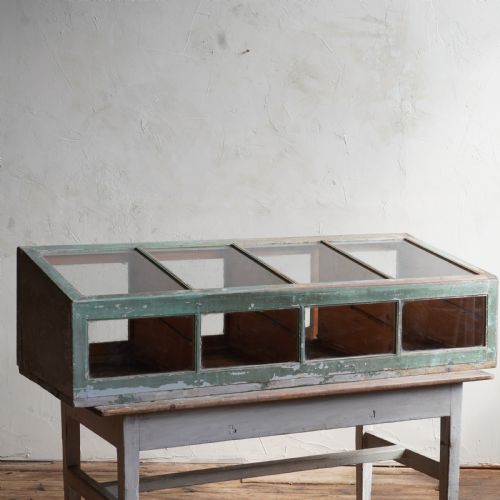
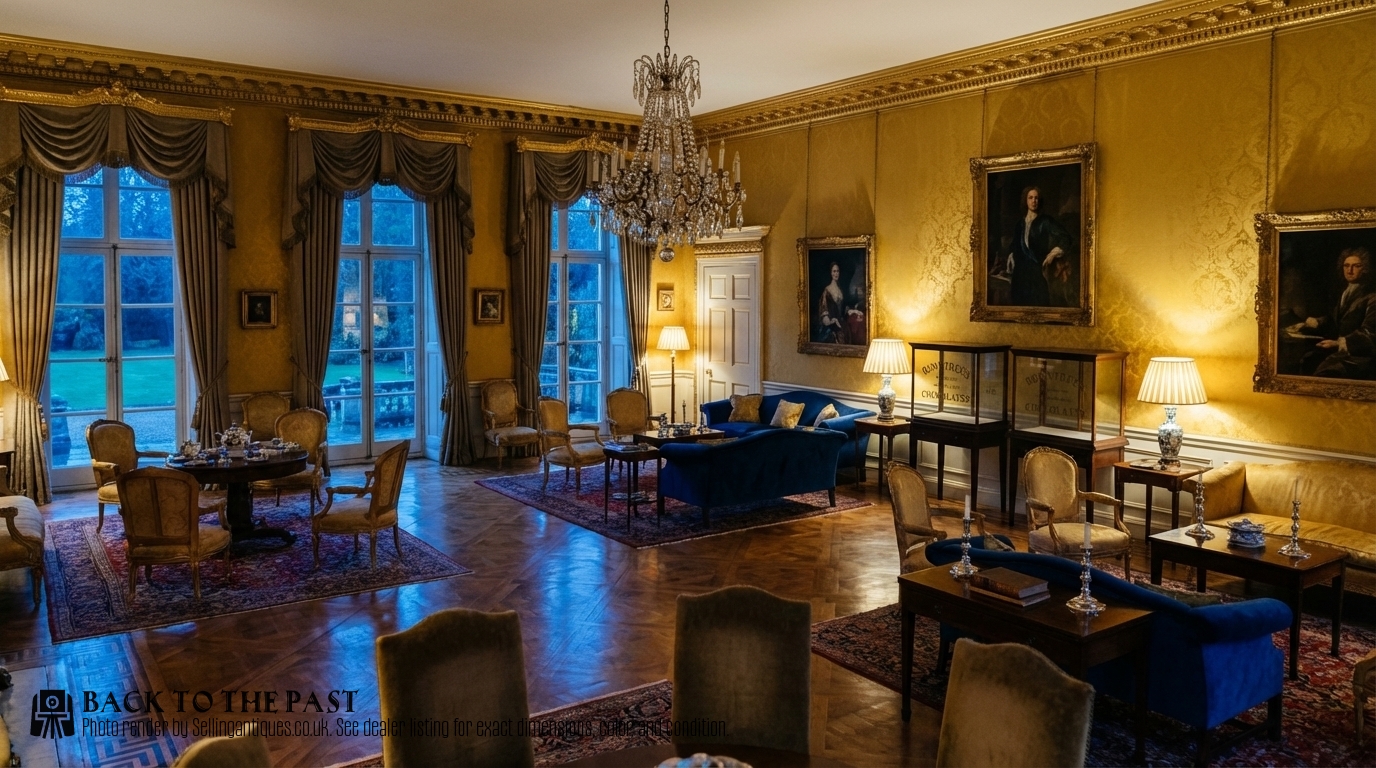
Scale does most of the work. Large freestanding counters and showcases sit at the top of the range, and 'large' appears in 24 titles clustered up there, including a nine-foot mahogany-framed cabinet. Table-top and small counter-top cases sit at the bottom, whatever their trade or period.
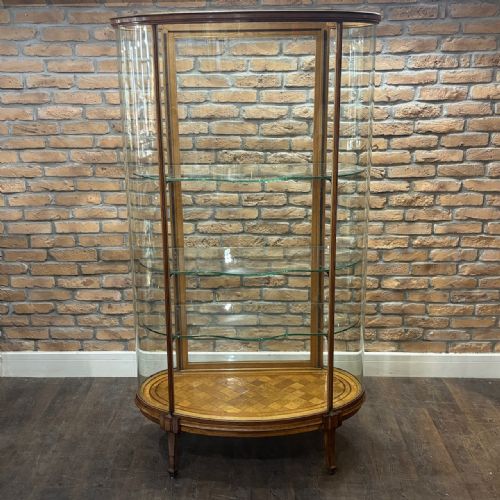
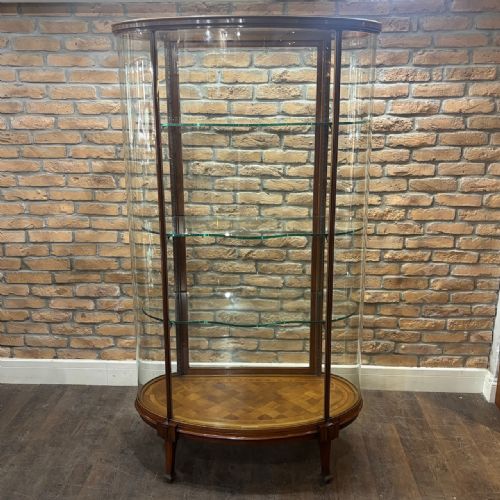
Frame material sorts the rest. Bronze and brass framing runs well up the range, taking in bronze counters and brass tower units, one of them fitted with twenty-four drawers. Pine and plain oak table-top cases sit near the bottom. Curved glass lifts a piece too: 'bow' turns up in 17 titles, on bow fronts, bow ends and bow tops, and repeatedly on the higher-priced counters.
Two other things push upward. A legible shopfitter's or retailer's name is one, though named firms surface singly rather than as a trade. Matched pairs are the other, appearing 15 times and running from modest counter-top cases up to pairs of bronze and brass showcases at the top.
Antique Shop Display Cabinets Retail Price Guide 2026
Typical UK retail prices for shop display cabinets, calculated from the Sellingantiques database of over a million retail prices indexed since 2003. This retail price guide relies exclusively on Sellingantiques data; no external sources or auction records are used, so the figures do not describe the wider market.
The largest to pass through Sellingantiques was a nine-foot mahogany-framed glazed cabinet.
The Antique Shop Display Cabinets Glossary
- Counter
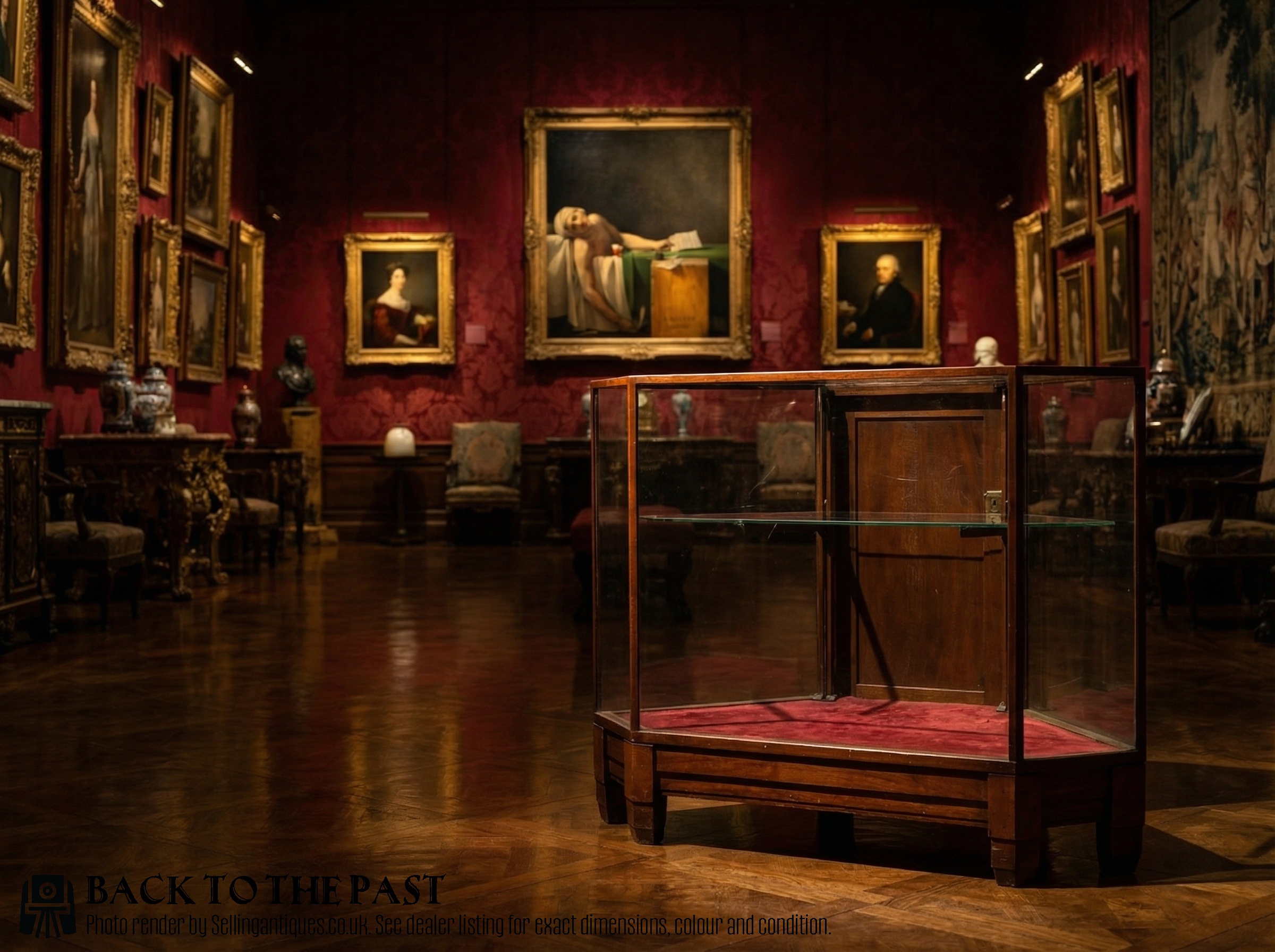
- The serving unit itself, glazed at the front and often fitted with drawers or shelves behind. It heads 77 titles, making it the commonest single form.
- Countertop case
- A small glazed case made to stand on the shop counter rather than on the floor. Twenty-nine titles use one spelling or the other.
- Haberdashery cabinet
- A fitting for threads, trimmings and sewing goods, usually with shallow drawers or slotted compartments. It appears in 47 titles, sometimes paired with drapers or sewing.
- Sign-written
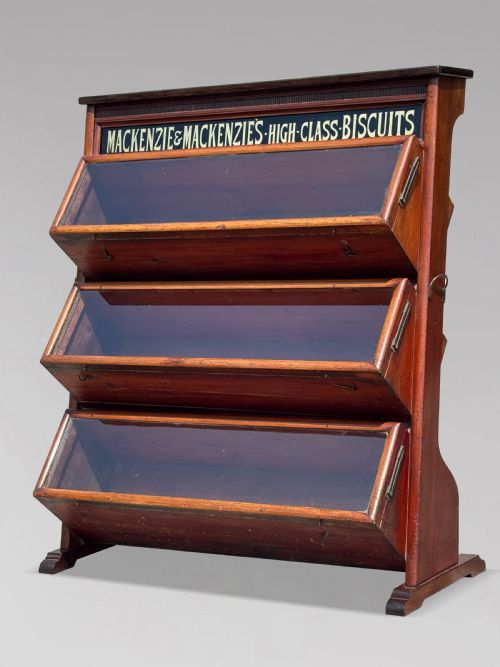
- Brand lettering painted onto the glass or frame. Confectionery and biscuit names recur, and several cases are described as sign-written later than the cabinet itself.
- Bijouterie
- A small-jewellery case, shallow and glass-topped. It shows up in a handful of titles alongside the 12 that say jewellery.
- Mirror-back
- A mirrored back panel fitted to the case, used to double the apparent display.
Antique Shop Display Cabinets: Frequently Asked Questions
What were shop display cabinets used for?
They were the fixtures a shop used to show goods to a customer while keeping them clean and out of reach. Counters, counter-top cases and floor-standing showcases were built to the shopfitter's or shopkeeper's order.
Trade-specific fittings recur throughout: chemist and apothecary cases, jewellery cases, cigar and cigarette cabinets, tea room, stationer and drapers' fittings.
Which period do most of these come from?
The dated field runs from 1860 to 1930, and 242 of the 388 listings carry a clean year. The 1920s is the largest bucket with 75, followed by Victorian with 62.
A quarter of the field is a period label rather than a year, so Victorian, Edwardian and 19th Century all appear in place of dates. Nothing here is consistently dated before 1860, and the record stops around 1930.
Are metal-framed showcases common?
They are the minority tradition. Brass appears in 19 titles and bronze in 17, against 110 for mahogany and 44 for oak.
One-off chrome, aluminium and steel-and-leather cases cluster in the 1920s and 1930s. Metal-framed pieces reach well up the range.
Why do sweet and biscuit brands appear on the glass?
Confectioners and biscuit makers supplied branded cases to the shops that stocked them, with the name painted or sign-written on the glass or frame. Around one in ten of these cabinets carries advertising of some kind.
Fry's, Rowntree's, Terry's of York, McVitie & Price, Jacob & Co, Needlers, Carr & Co and Mackenzie's Biscuits all turn up in the listings.
Do these cabinets carry shopfitters' names?
Some do, but named firms surface one at a time rather than as a recognisable trade. Most appear only once across the whole archive, so no single shopfitter stands behind the category.
Where a name is legible on the frame or a plate, it sits with the pieces in the upper half of the range.
Is anything here made outside Britain?
Imported examples are the rarest thing in the category. A Japanese shop counter cabinet and an American showcase from Illinois each appear once, as does a Paris-made brass cabinet.
Against those, 18 titles simply say English, usually as the dealer's own tag rather than an attribution to a region or workshop.