
Antique Vitrines
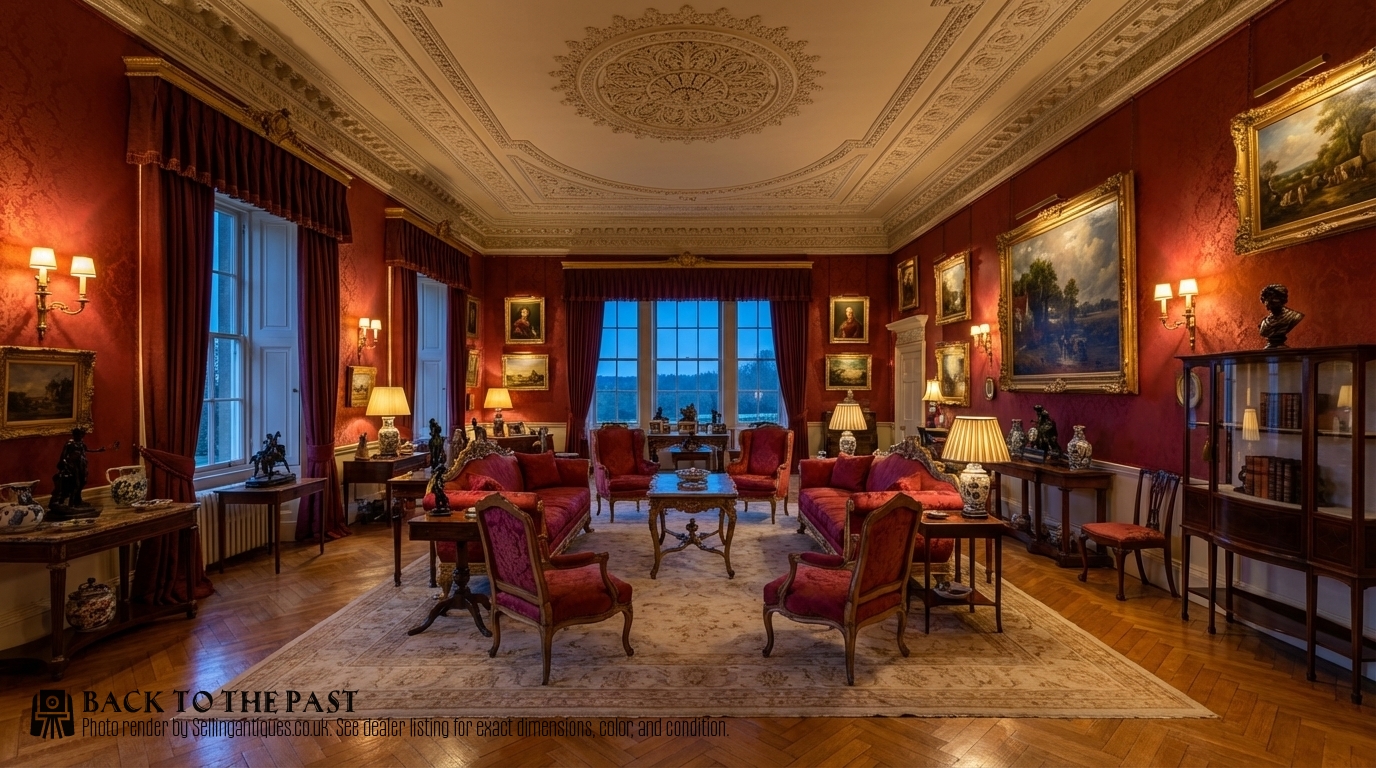
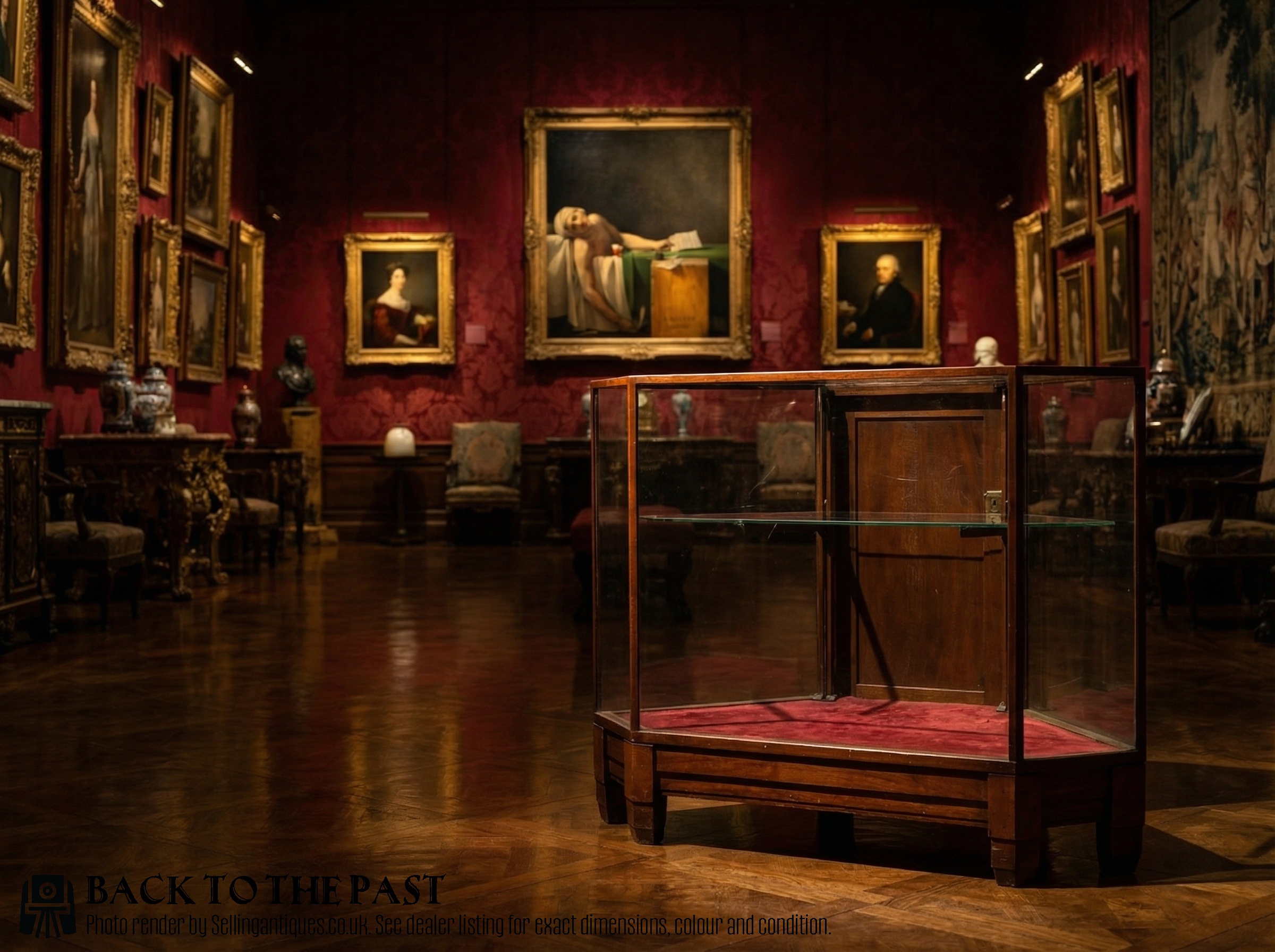
A vitrine is a glazed display cabinet, made with glass doors and shelves so that china, silver, jewellery or curios could be seen without being handled.
What Is A Vitrine?
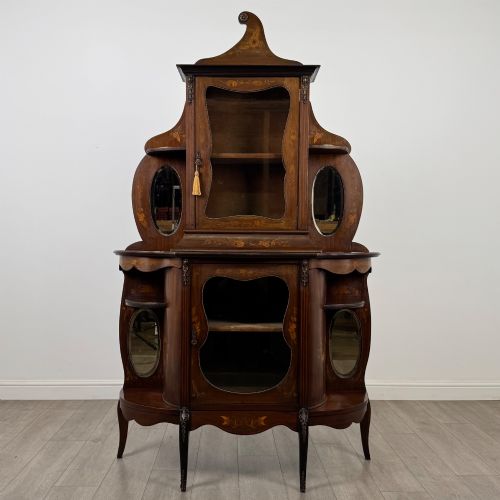
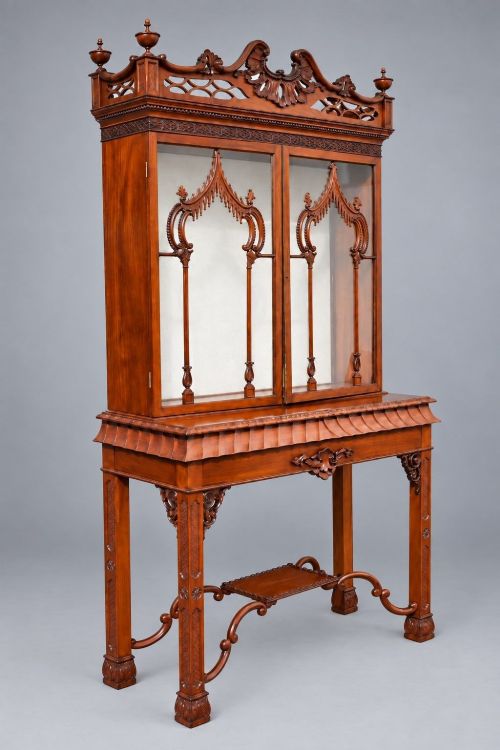
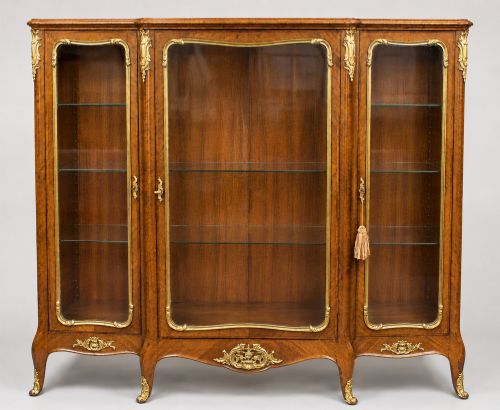
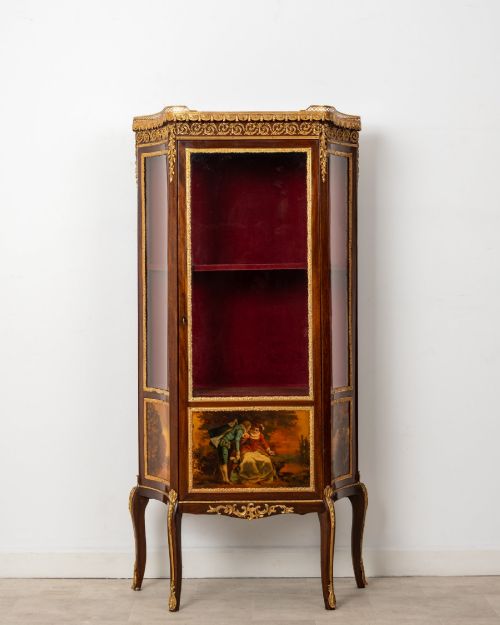
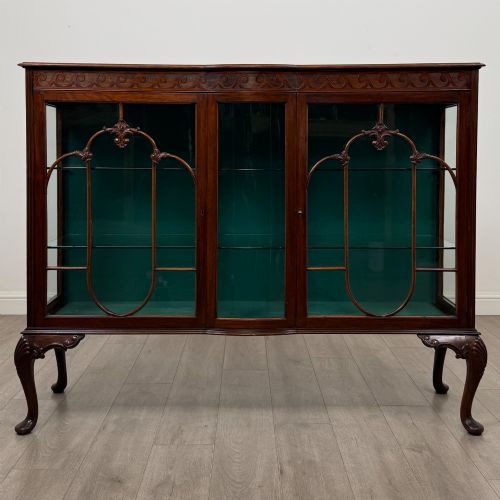
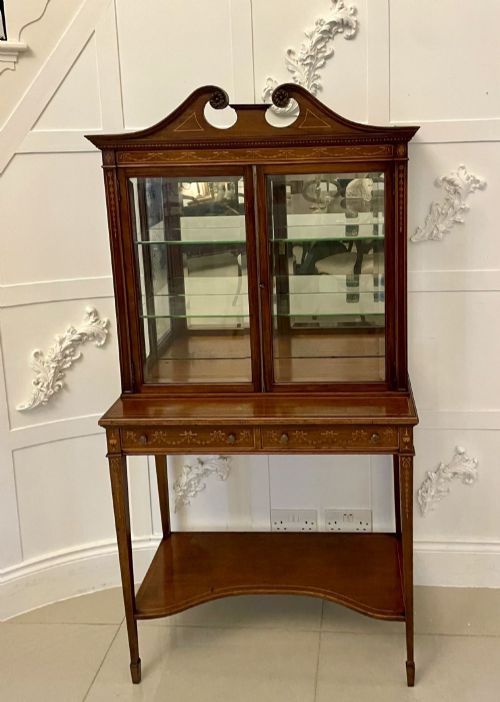
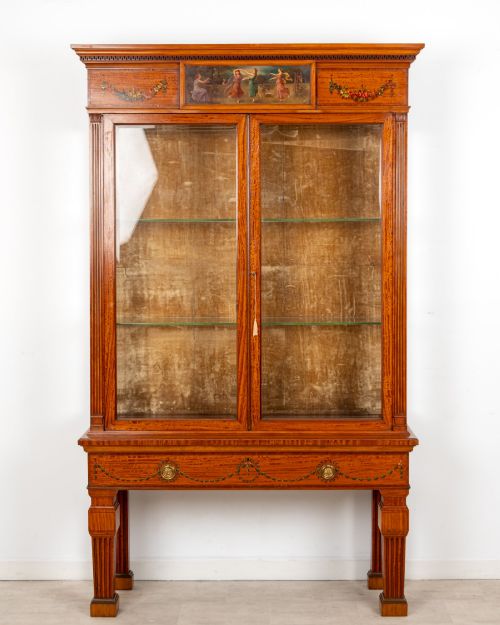
The heading covers two things sold side by side. One is the French-taste vitrine in kingwood, walnut or mahogany, with gilt-metal mounts, painted panels and often a marble top. The other is the English glazed display cabinet in mahogany, usually inlaid, and it is this second type that dominates by count.
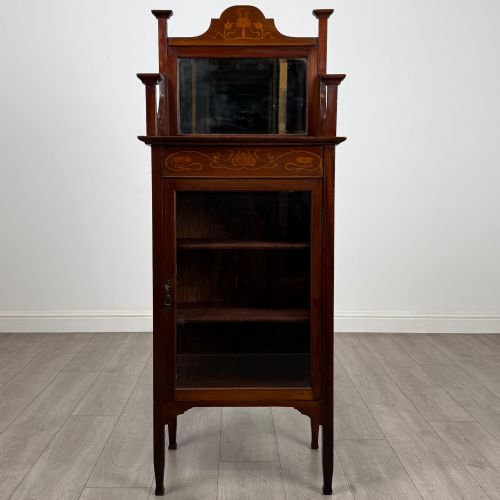
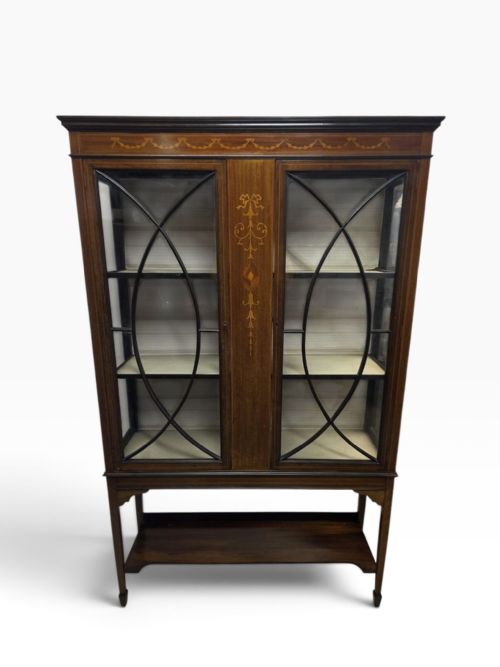
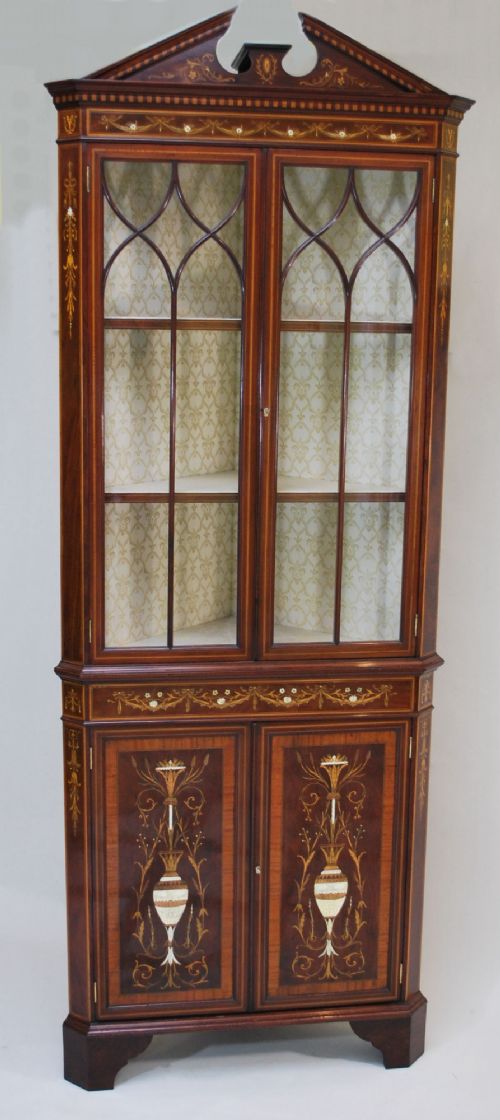
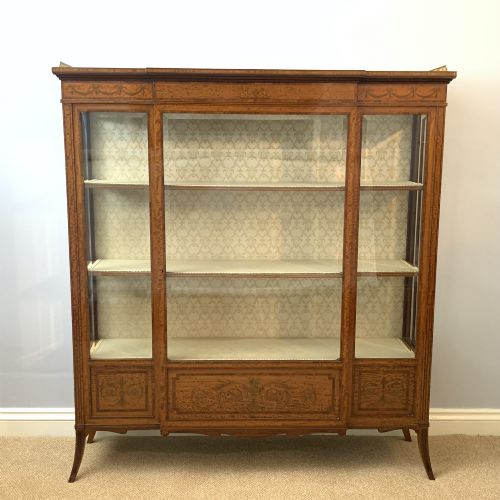
The plain glazed standing cabinet in mahogany is what you'll meet most often. Of 871 titles on Sellingantiques, 655 say cabinet, 514 say display and 260 name mahogany. The most repeated title shape of all is an Edwardian inlaid mahogany display cabinet, with Victorian examples close behind and satinwood and marquetry running through the same group.
The French branch runs to roughly a quarter or a third of the category and takes up the bulk of the upper range. Kingwood appears in 85 titles, Vernis Martin painted panels in 76, ormolu in 64. Louis XV and Louis XVI styling is the recurring note here, along with serpentine and bombé fronts.
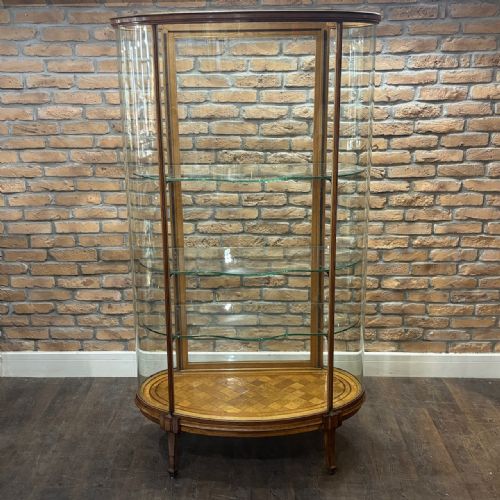
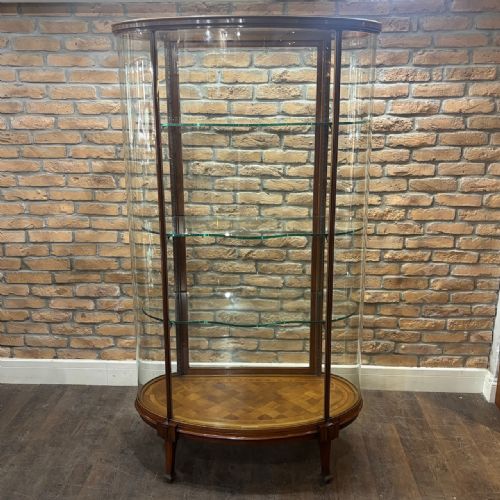
Beyond those two blocks sit smaller groups: bijouterie cabinets for jewellery, in kidney, oval, circular and pedestal forms; shop and counter showcases, including haberdashery, apothecary and jeweller's cases; and a 1930s Art Deco block in walnut, where the odd shapes cluster. Dates run from 1750 to 1930 and stop there, with decade labels bunched on 1880 to 1910.
What Sets Them Apart
Decoration does most of the work. Applied ormolu mounts on corners, feet and edges lift a cabinet, and the highest-priced pieces in the archive routinely combine kingwood, mounts and a marble top. Painted panels do the same: Vernis Martin vitrines sit well above the plain glazed cabinets across the sampled range.
Shape counts too. Serpentine, bowed, bombé and demi-lune fronts sit above straight-fronted examples, and the same holds for the oval, circular and octagonal cases. Timber and inlay follow the same line, kingwood, satinwood and marquetry against the plainer oak and pine cabinets.
Then there's scale and number. Pairs are scarcer than singles, only 32 titles say pair, and they sit consistently toward the top. Large cabinets do likewise. A named cabinetmaker or retailer in the title has the same effect, while the bottom of the range is small corner and wall-hanging cases under a metre.
Retail Price Guide 2026
Typical UK retail prices for vitrines, calculated from the Sellingantiques database of over a million retail prices indexed since 2003. This retail price guide relies exclusively on Sellingantiques data; no external sources or auction records are used, so the figures do not describe the wider market.
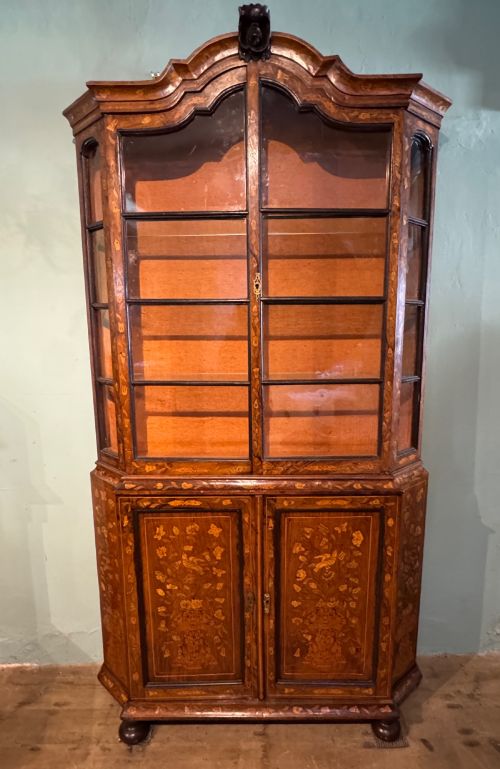
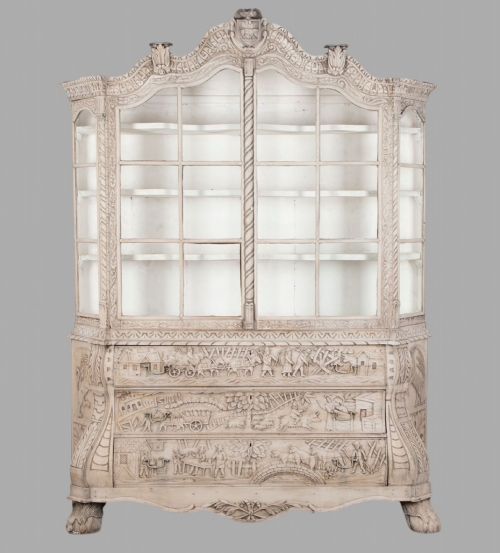
The earliest dated vitrine on Sellingantiques carries the year 1750. Eighteenth-century Dutch marquetry cabinets are the oldest well-represented type.
Maple & Co·François Linke
The Antique Vitrines Glossary
- Vitrine
- A glazed display cabinet. In these titles it usually means the more decorative, French-taste version rather than the English mahogany one.
- Bijouterie cabinet
- A small display case for jewellery and trinkets, often table height or on a pedestal. Thirty-four titles use the term.
- Vernis Martin
- Painted and varnished decorative panels in the French eighteenth-century taste, appearing in 76 titles and concentrated in the kingwood group.
- Ormolu
- Applied gilded metal mounts on corners, feet and edges. Titles use ormolu and gilt-metal mounted for the same thing.
- Astragal glazing
- Glazing bars dividing a door into small panes, a recurring note in the English mahogany titles.
- Pier cabinet
- A narrow cabinet made for the pier, the wall space between two windows. Twenty-eight titles describe one.
Frequently Asked Questions
What is the difference between a vitrine and a display cabinet?
In practice the two words cover the same object, a case with glass doors and shelves. Vitrine tends to attach to the French version, smaller and more decorative, with mounts and painted panels.
Display cabinet does the heavier lifting in English titles. Of the 871 listings on Sellingantiques, 462 use the phrase display cabinet outright.
Which timbers turn up most?
Mahogany leads, named in 260 titles, and it carries the English Edwardian and Victorian block, commonly inlaid or with satinwood banding.
Kingwood is the signature timber of the French group, in 85 titles. Walnut concentrates in the 1930s Art Deco cabinets, and plainer oak and pine examples sit at the lower end.
How old are most of these cabinets?
The dated field runs from 1750 to 1930, and decade labels bunch hard on 1880 to 1910. Nothing in the archive is dated after 1930.
The commonest label is also the vaguest. A hundred and sixty-nine listings are dated only to the 19th century, more than any single decade, and Victorian and Edwardian are used just as loosely.
Were vitrines made for shops as well as homes?
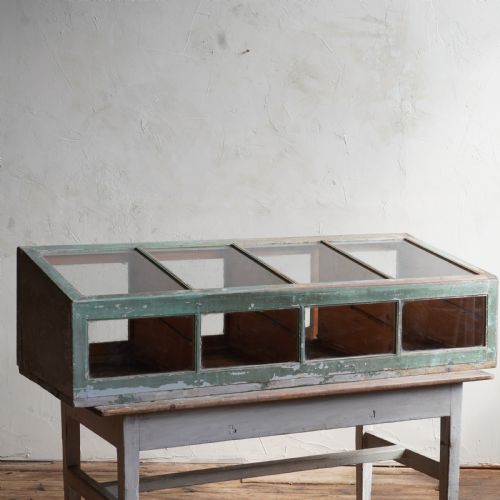
Yes. Shop fittings are a persistent minority, with 27 titles mentioning shop, including countertop and bow-end counters.
Samples cover haberdashery, apothecary, jeweller's, confectionery and museum cases. One Edwardian cabinet was later sign-written with perfume brand names.
Why are some Art Deco cabinets round or octagonal?
The odd shapes all cluster in the 1930s block, which runs to 56 listings and is almost entirely walnut. Circular, oval, octagonal, hexagonal, clove-shaped, cathedral and rocket forms all appear there.
Everything earlier keeps to rectangular, bowed or serpentine outlines. The shaped fronts before 1930 are curves rather than geometry.
Where do these cabinets come from?
The category splits mainly between France, England and the Netherlands. Eighteenth-century Dutch marquetry vitrines are the earliest well-represented type, and one carries the archive's earliest date of 1750.
Other origins appear once or twice each: Swedish, Danish, Italian, Belgian, Japanese, Chinese and American showcase work.