




Antique Specimen Cabinets
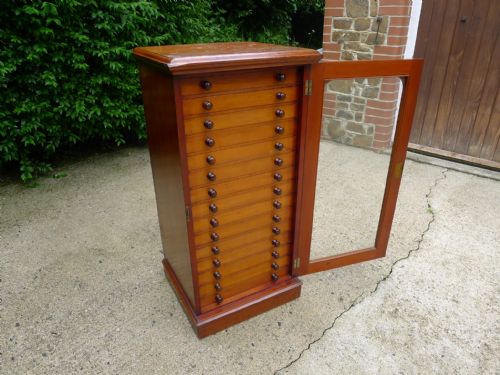
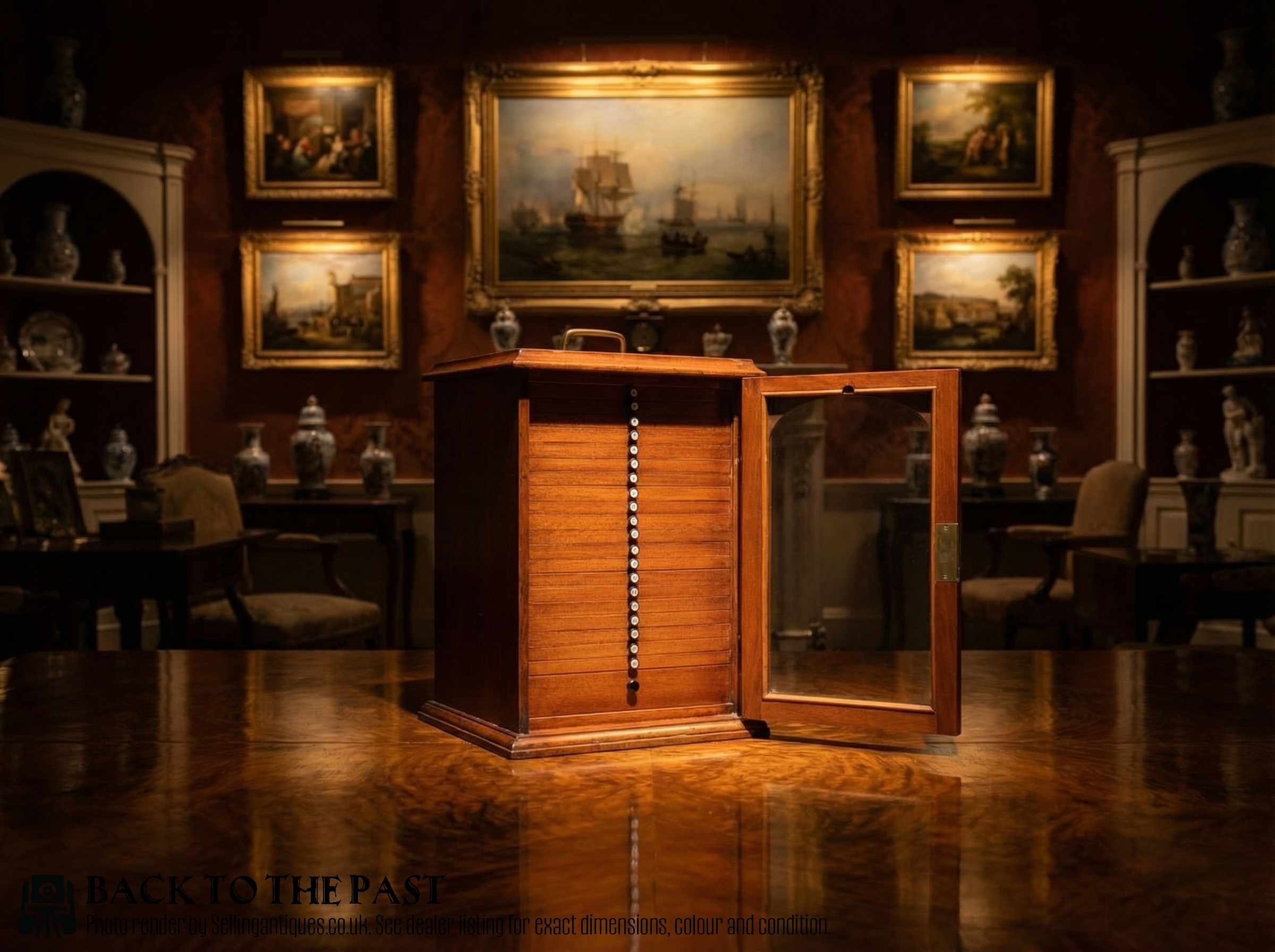
A specimen cabinet is a case of shallow, close-fitting drawers built to store and show a collection: insects, birds' eggs, minerals, shells, microscope slides, medals.
What Are Specimen Cabinets?
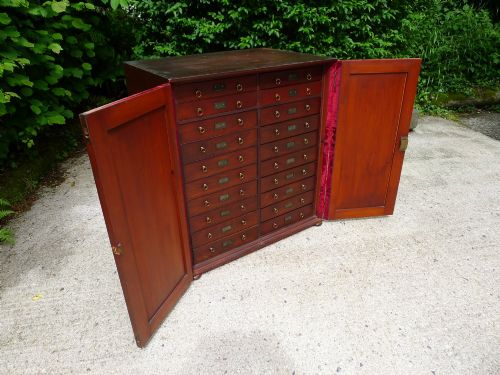
Cabinets of even, dust-tight drawers were made from the eighteenth century onward to house private collections of natural history and curiosities, and they multiplied through the nineteenth as entomology, conchology, mineralogy and microscopy became common amateur pursuits. The form follows the job: shallow drawers of matched depth, sometimes glazed, so a collection can be stored and looked at without being handled.
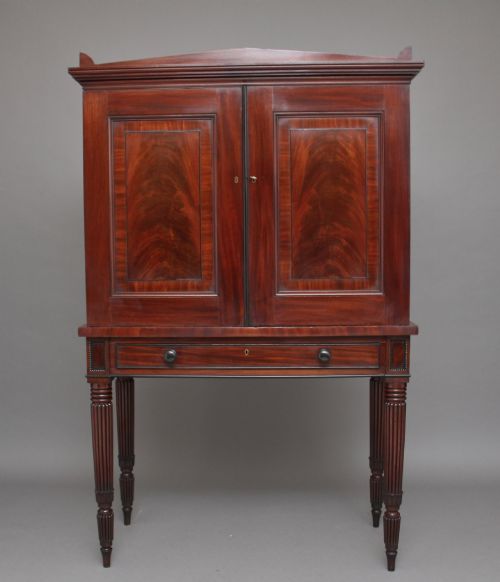
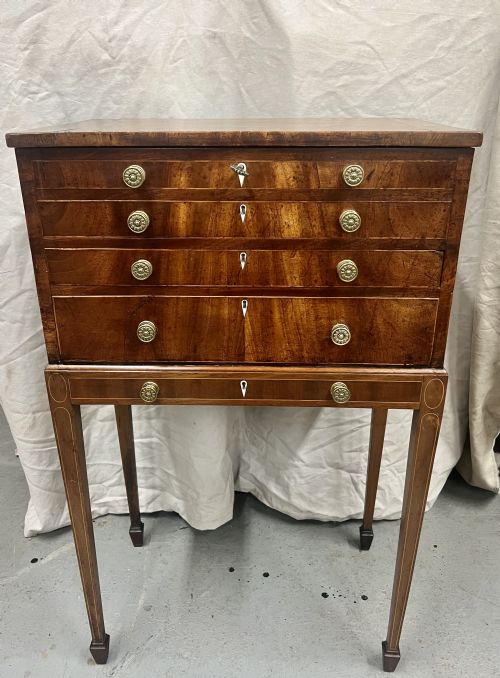
The version you'll meet most often is a Victorian mahogany multi-drawer collectors cabinet. "Collectors" appears in 70 of 129 titles, mahogany in 42 and Victorian in 41. Walnut is the second timber, with oak, pine and stained deal behind it. Drawer counts are quoted constantly and cluster at 6, 8, 12, 16, 20, 24, 30, 32 and 40.
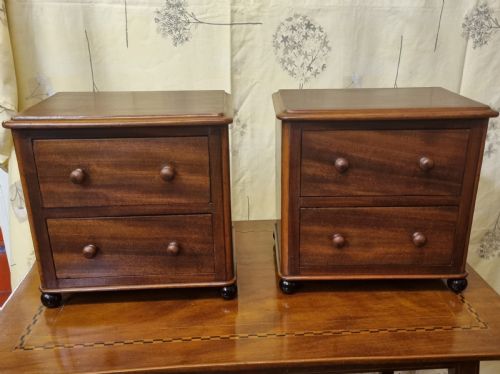
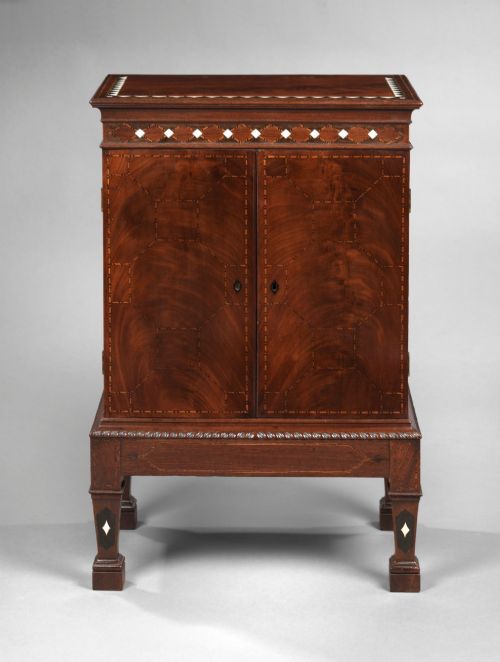
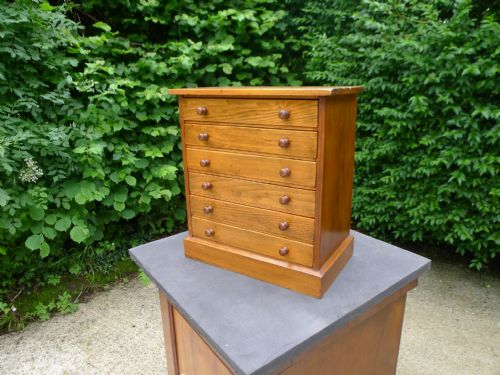
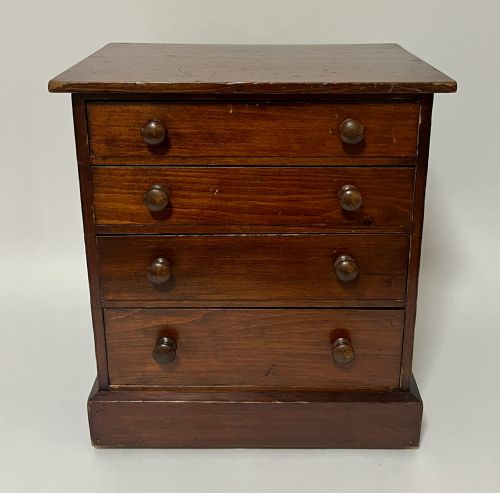
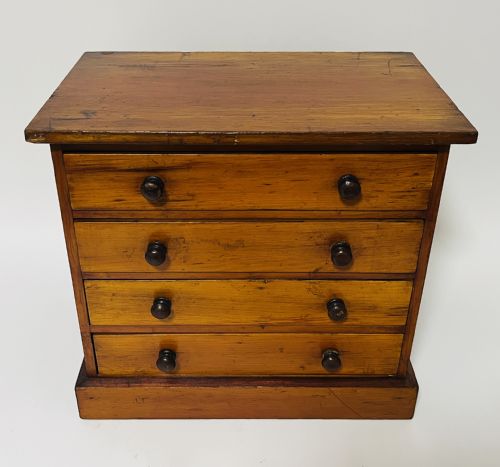
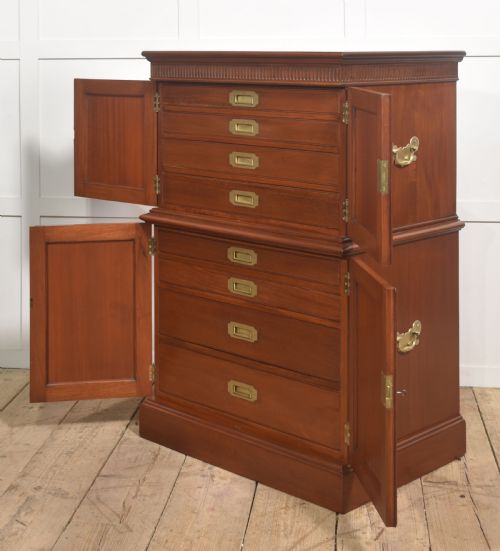
Size splits the category in two. At one end sit small tabletop and portable chests of five to eight drawers, in pine, stained pine, deal or satin walnut. At the other, floor-standing cabinets of thirty and forty graduated drawers, sometimes behind a pair of doors. Microscope slide cabinets run as a steady thread, one of them offered with 280 slides. Trade and professional chests fitted out the same way - dentist, chemist, apothecary, jeweller - account for roughly one listing in ten. Pairs turn up in about one in fourteen.
Dating is often broad rather than exact. The dated field runs 1800 to 1930, with 76 listings carrying a clean year, though 22 say only "Victorian" and 13 only "19th Century". Where decades are given they bunch in the 1880s, 1890s and 1900s. A handful of titles reach back to the Georgian period, and one cabinet carries a specific month, July 1827.
What Sets Them Apart
Drawer count does most of the work. The five- and eight-drawer tabletop chests sit at the bottom of the range, and cabinets of 20, 24, 30, 32, 36 and 40 drawers occupy the top third almost without exception. Timber pulls in the same direction: stained pine and stained deal at the lower end, solid Cuban and Honduras mahogany, burr walnut, English walnut, pollard oak and satinwood running through the upper listings.
Names and history lift a cabinet clear of the pack. Every title carrying a cabinetmaker's name, or the name of the collector who owned the piece, sits above the midpoint of the range, and several sit near the top. The same goes for provenance stated in the title, including two cabinets offered on the strength of the naturalists who owned them, with their dates.
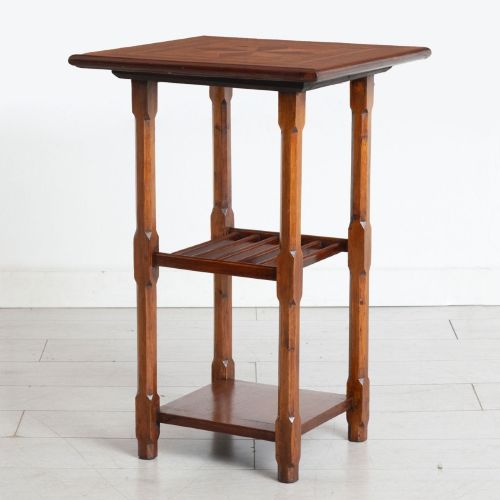
Completeness counts. Cabinets that arrive with the collection still in the drawers - butterflies and beetles, mineral specimens, a fossil collection, a run of microscope slides - all fall in the upper half. So do pairs, every one of them. Beyond that, the odd forms stand apart: a revolving cabinet, a mahogany 'book type' cabinet made to look like a shelf of books, an Arts and Crafts specimen side table.
Retail Price Guide 2026
Typical UK retail prices for specimen cabinets, calculated from the Sellingantiques database of over a million retail prices indexed since 2003. This retail price guide relies exclusively on Sellingantiques data; no external sources or auction records are used, so the figures do not describe the wider market.
Specimen cabinets have been listed on Sellingantiques since 2011.
The Antique Specimen Cabinets Glossary
- Collectors cabinet
- The commonest title word in the category, used interchangeably with 'specimen cabinet' for a multi-drawer case made to hold a collection.
- Graduated drawers
- Drawers that increase in depth toward the base, noted explicitly on a 36-drawer mahogany cabinet.
- Flight of drawers
- A run of matching drawers, sometimes offered on its own without the carcase that surrounded it.
- Deal
- Plain softwood, usually stained and polished, used for the carcase of working cabinets at the lower end.
- Satin walnut
- A pale, straight-figured timber that recurs in the drawer fronts of entomological cabinets.
- Type specimen
- The reference specimen for a species. One cabinet in the archive is described as a 'type' specimen cabinet.
Frequently Asked Questions
How many drawers do these cabinets have?
Anywhere from five to forty. Counts are stated far more often than dimensions, and they cluster at 6, 8, 12, 16, 20, 24, 30, 32 and 40.
The small tabletop chests hold five to eight. Floor-standing entomological cabinets of thirty and forty sit at the very top of the range.
What wood are specimen cabinets made from?
Mahogany leads, named in 42 of 129 titles, with walnut second at 18. Oak, pine and stained deal follow.
The upper listings bring in solid Cuban and Honduras mahogany, burr walnut, English walnut, pollard oak and satinwood. Stained pine and stained deal turn up on the plainer working chests.
Do any come with the specimens still inside?
Some do. One cabinet was full of mineral specimens, another complete with butterflies and beetles, and a microscope slide cabinet came with 280 slides. A French mineral and fossil collection arrived with its cabinet.
Cabinets sold with their contents all fall in the upper half of the range.
Are microscope slide cabinets part of this category?
Yes, as a small but consistent thread. Slide cabinets of 15, 28 and 30 drawers appear, along with a pair in walnut.
They're built the same way as the natural-history cabinets: shallow drawers of matched depth in a compact case.
How old are they, typically?
The dated listings run from 1800 to 1930. Where decades are given they bunch in the 1880s, 1890s and 1900s, with the 1850s to 1870s and the 1920s behind.
Much of the dating is broad. Twenty-two listings say only "Victorian" and thirteen only "19th Century". A few titles reach back to the Georgian period, and one cabinet is dated to July 1827.
Why do pairs get singled out?
Pairs appear in 10 of the 129 titles, and they've become more common among cabinets currently listed than in the archive behind them. Pairs of 12- and 16-drawer cabinets, slide cabinets and ornithological cabinets have all come up on Sellingantiques.
Every pair sits in the upper half of the range.