

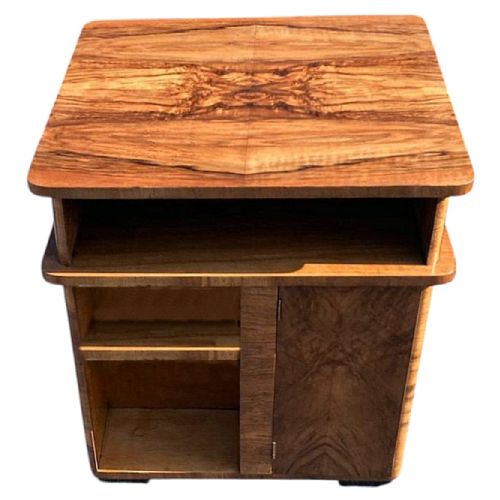


Art Deco Liquor Cabinet
An art deco liquor cabinet is a striking period piece designed for entertaining, combining practical storage for glassware and bottles with bold geometric presence.
Art Deco Liquor Cabinet
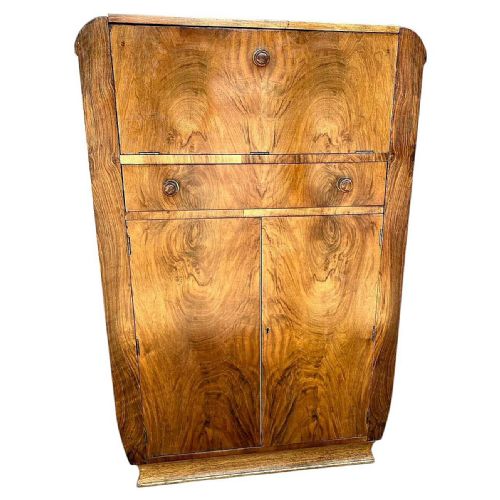
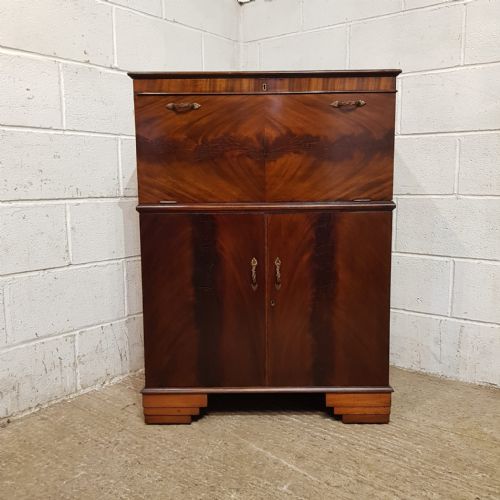
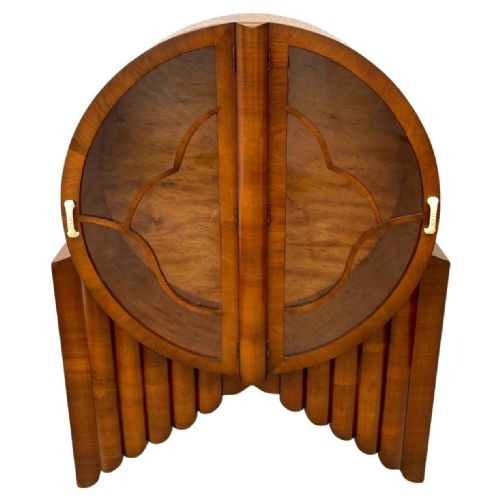
When you search for an art deco liquor cabinet, you encounter dedicated cocktail cabinets, drinks cabinets, and dry bar tables primarily originating from the 1920s and 1930s. These pieces often take the form of cocktail chests, sideboards, or distinctive rocket cabinets designed specifically to house spirits and glassware during the interwar entertaining boom.
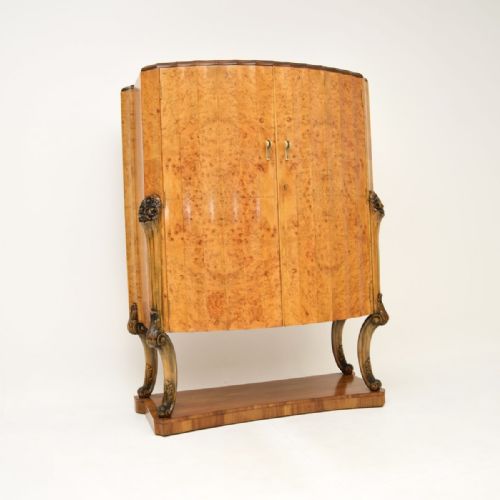
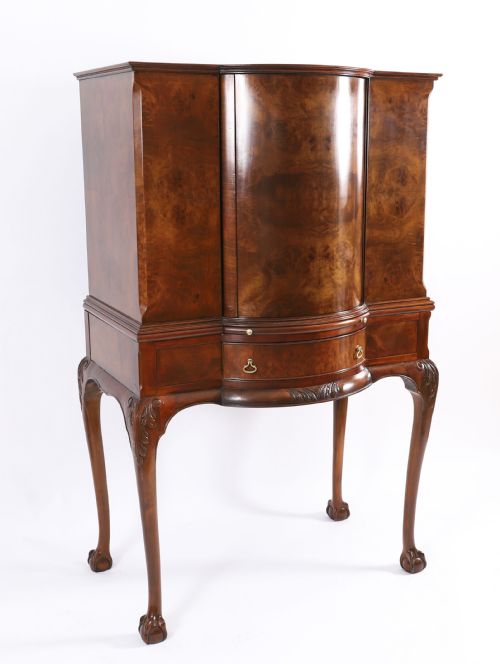
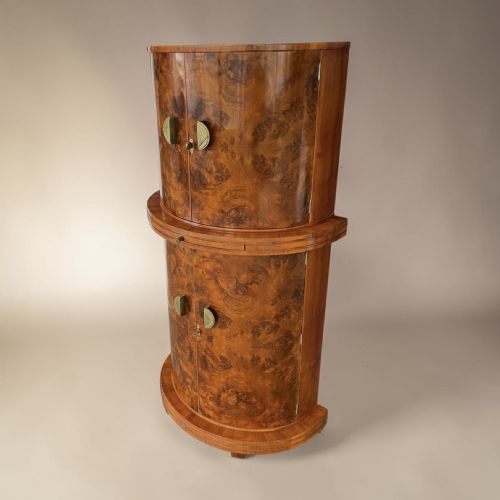
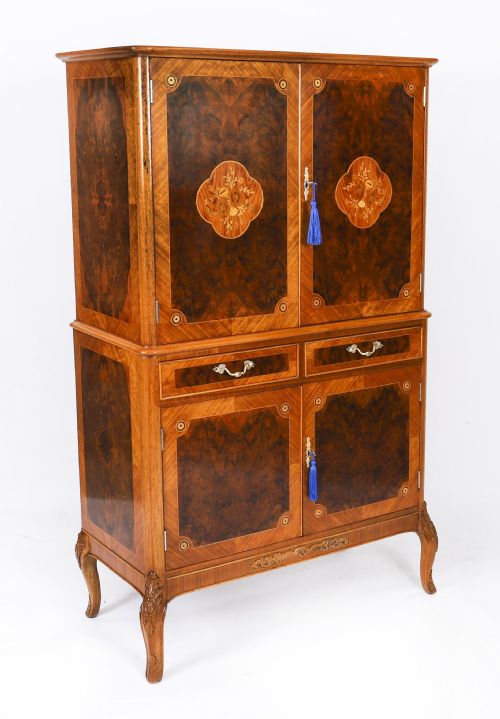
The version you are most likely to meet on this page is constructed from burr walnut or figured walnut, reflecting the dominant aesthetic of British interwar design. Alongside standard upright cabinets, the selection includes revolving dry bars, corner cabinets, and pop-up cocktail tables that reveal internal preparation surfaces.
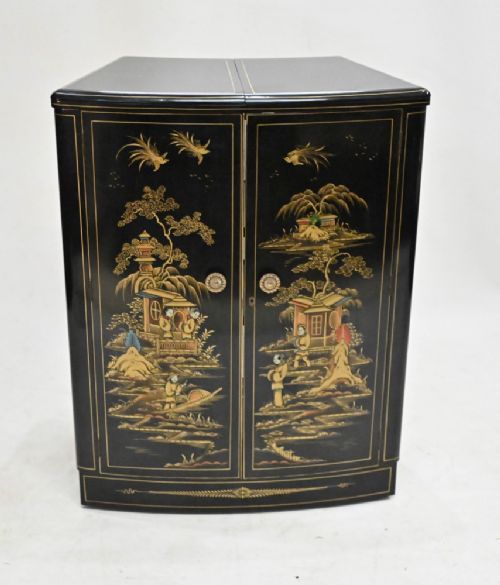
While the majority of pieces adhere strictly to the symmetrical geometric lines of the interwar period, stylistic crossovers such as Queen Anne Revival influence and lacquered Chinoiserie finishes also appear. Makers adapted traditional forms like display cabinets and sideboards into dedicated spaces for serving drinks.
How they were made
Cabinet makers utilised dense hardwood timbers such as mahogany and oak as the structural foundation, applying highly figured walnut and burr walnut veneers to external surfaces to create dramatic grain patterns. Blonde maple also appears alongside black lacquer finishes to provide high-contrast visual drama characteristic of the period.
Interiors frequently integrate mirrored glass backings, glass shelving, and metal elements such as brass fixtures and silver plating to reflect light when the cabinet doors open. Original glass tops and fitted serving trays complete the internal architecture designed for hosting.
Art Deco Liquor Cabinet Retail Price Guide 2026
Typical asking prices for art deco liquor cabinet among the pieces listed under this phrase on Sellingantiques today, from the lower quarter to the upper quarter. They describe what is for sale here now, not the wider market.
One remarkably specialised item on offer is a giant silver-plated spirit flask from the interwar period.
What varies in quality
The visual hierarchy of these pieces rests largely on the choice and matching of wood veneers, where symmetrical burr walnut or figured walnut grain commands superior presence compared to plain timber surfaces. Master workshops invested heavily in book-matching grain across double doors to achieve striking geometric symmetry.
Execution of specialised mechanics, such as pop-up actions in cocktail tables or revolving dry bar mechanisms, distinguishes standard production from exceptional workshop output. The integration of original mirrored glass, internal lighting channels, and bespoke brass hardware elevates the distinction of individual cabinets.
Epstein·Hille·Harry and Lou Epstein·Waring and Gillow
The Art Deco Liquor Cabinet Glossary
- Burr walnut
- A veneer sliced from the deformed growths or burls of walnut trees, yielding intricate, swirling grain patterns highly prized for cabinet fronts.
- Cocktail cabinet
- A specialised piece of furniture featuring fitted interior compartments for bottles, glassware, and mixing trays, often accompanied by a pull-down serving flap.
- Chinoiserie
- A decorative style reflecting European interpretations of Chinese artistic traditions, utilising hand-applied lacquers and painted motifs.
- Vitrine
- A glass-fronted cabinet or display case designed primarily for the exhibition of glassware and porcelain collections.
- Marquetry
- The art and craft of applying decorative pieces of veneer to a structural structure to form geometric or pictorial designs.
Art Deco Liquor Cabinet: Frequently Asked Questions
What is an art deco liquor cabinet?
An art deco liquor cabinet is a specialised interwar storage piece built to house bottles, decanters, and cocktail glassware for home entertaining.
These pieces range from upright drinks chests and sideboards to revolving dry bars and pop-up tables featuring specialised internal mirrors and preparation surfaces.
How were these cabinets used?
Owners used them as dedicated home bars to mix and serve drinks during the height of the 1920s and 1930s cocktail culture.
Drop-down front panels often doubled as mixing shelves, while internal racks held stemmed glassware and inverted bottles ready for evening gatherings.
How do I identify the period?
Period identification relies on examining the combination of timber veneers, hardware materials, and structural silhouettes typical of the 1920s and 1930s.
The widespread use of burr walnut veneer, brass trim, and geometric symmetry points directly to interwar manufacturing conventions.
Where should I place one?
These cabinets suit dining rooms, living spaces, or reception areas where their striking wood veneers act as a focal point.
Corner variants and compact dry bars allow these statement pieces to integrate smoothly into smaller architectural layouts.