


Vintage Drinks Credenza
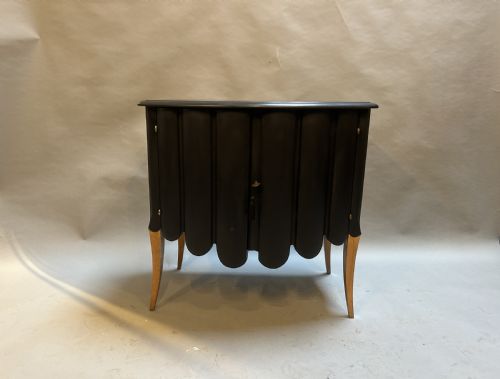
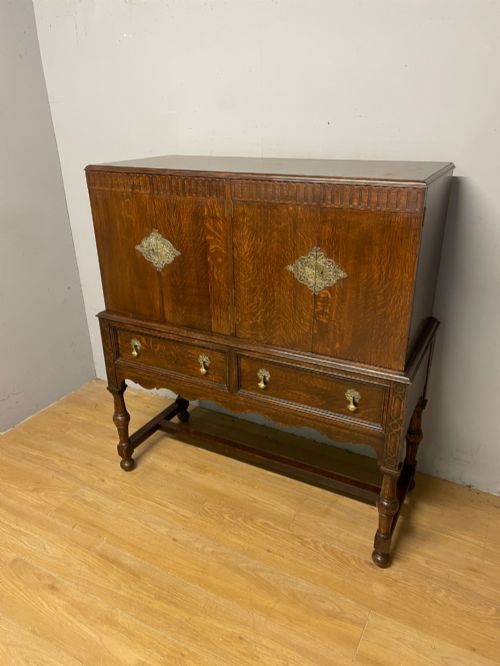
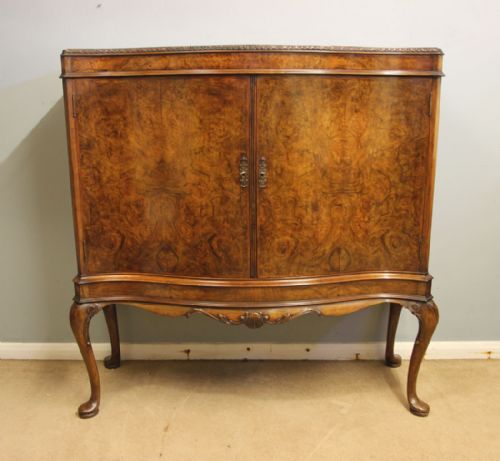
A vintage drinks credenza brings together fine cabinet-making and functional entertaining, offering fitted compartments for bottles and glassware behind polished wood doors.
Vintage Drinks Credenza
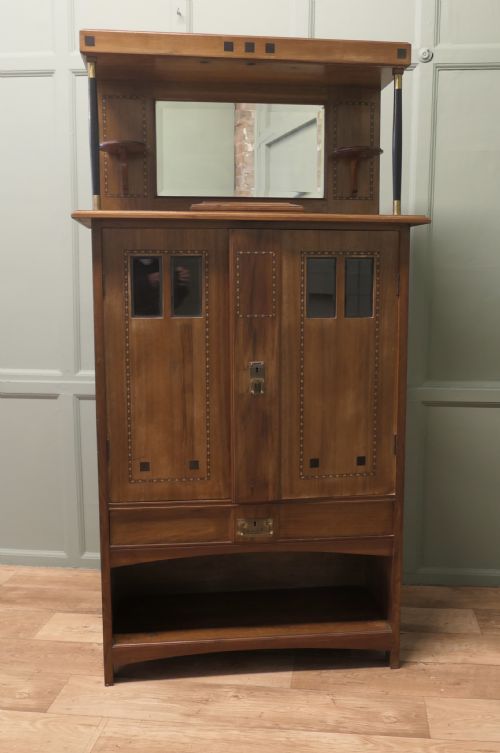
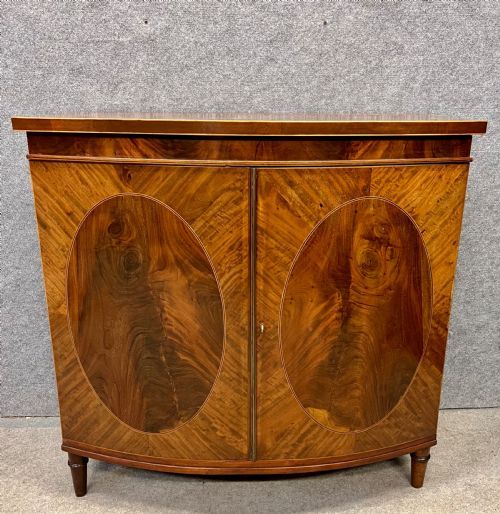
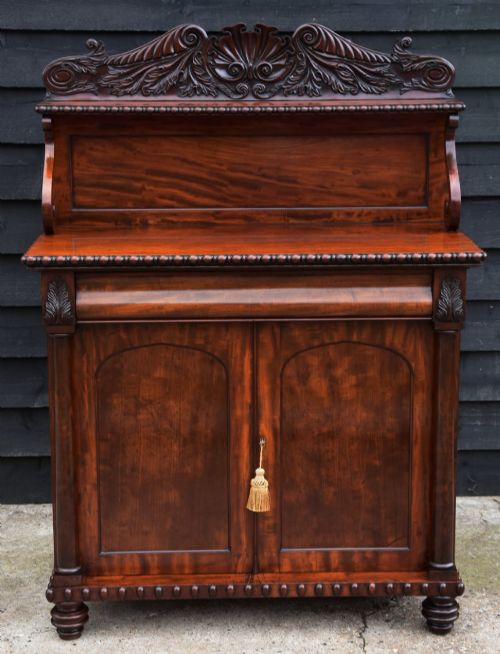
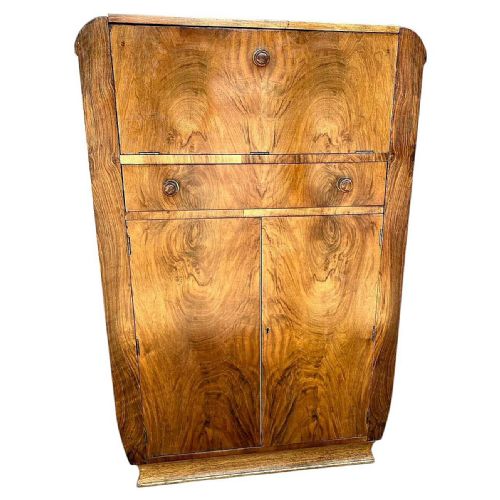
A vintage drinks credenza encompasses form and function, serving primarily as a dedicated storage piece for bottles, decanters, and glassware while anchoring a room with its architectural presence. Buyers seeking a vintage drinks credenza will find pieces spanning multiple eras, from early nineteenth-century mahogany chiffoniers to twentieth-century cocktail cabinets.
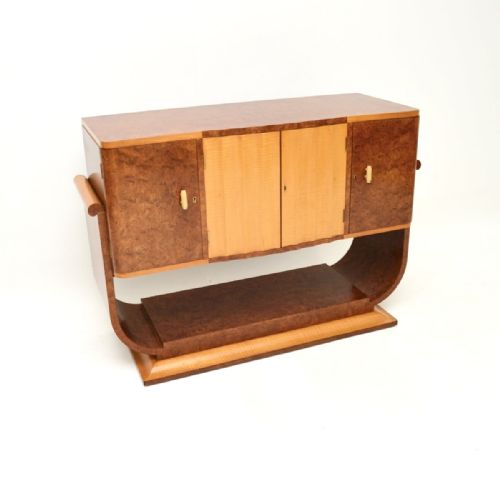
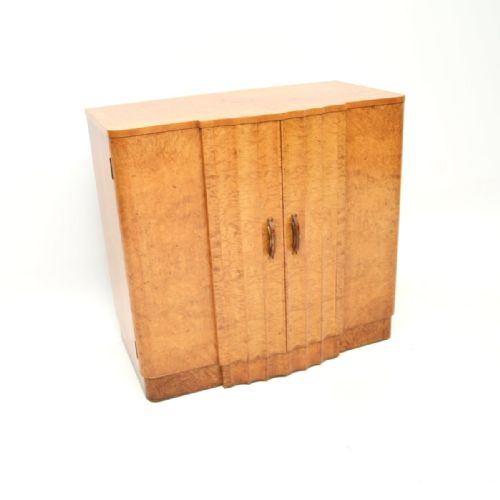
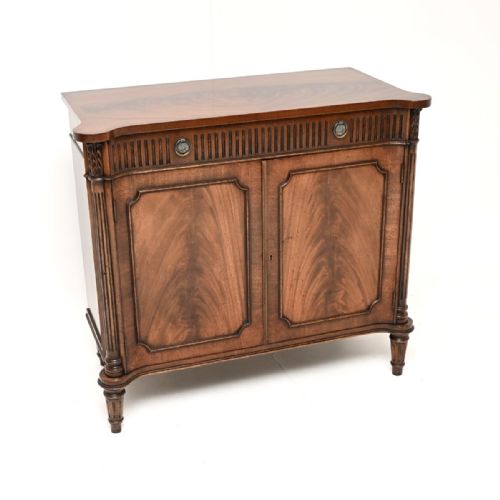
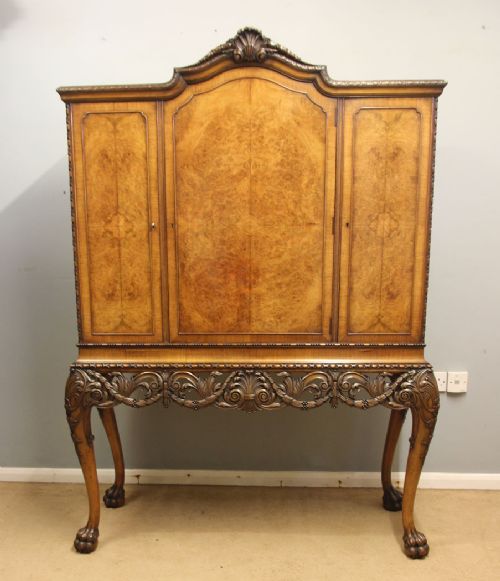
The selections available here lean heavily into the Art Deco period, alongside Edwardian, Regency, and Victorian examples that double as sideboards or side cabinets. These forms merge internal shelving with surface display space, creating a practical hub for hosting.
Origin and period dictate the underlying silhouette, moving from the linear geometry of 1930s walnut designs to the curved fronts and brass details of earlier Regency and Victorian models. Each variation reflects the prevailing social habits of its original era.
Materials and construction methods
Makers utilised dense hardwoods such as mahogany and oak for structural integrity, often pairing solid frames with decorative veneers like burr walnut and sycamore to create striking grain patterns on exterior doors and drawer fronts. Glass panels, mirrored interiors, and brass hardware complete the construction of the storage and display compartments.
Traditional joinery methods ensure longevity, with panelled doors, dovetailed drawers, and inlaid marquetry demonstrating the high level of craftsmanship applied by period cabinet-makers. Surface finishes are typically polished to accentuate the natural warmth and depth of the timber.
The inventory spans the 18th, 19th, and 20th centuries, uniting Regency mahogany chiffoniers with 1930s Art Deco walnut cocktail cabinets.
What separates the finest examples
The hierarchy of quality rests on the choice of timber and the sophistication of the internal fittings, where matched burr walnut veneers and bespoke pull-out serving trays elevate a piece above standard utility furniture. Master workshops invested greater labour in mirrored back panels and intricate marquetry inlay.
Proportion and execution define the lasting appeal, distinguishing mass-produced items from atelier pieces attributed to known designers or specialist London and French makers. The crispness of carved details and the smooth operation of internal doors indicate superior original manufacture.
Harry and Lou Epstein·Reno Wahl Iversen·Dyrlund
The Vintage Drinks Credenza Glossary
- Chiffonier
- A compact sideboard developed in the nineteenth century, typically featuring enclosed shelving below and sometimes a small raised shelf or back gallery above. They frequently appear in mahogany.
- Burr walnut
- A prized timber veneer obtained from the gnarled growths of walnut trees, displaying highly decorative, swirling grain patterns. It was heavily favoured by twentieth-century cabinet makers.
- Demi-lune
- Half-moon in shape, describing cabinets or sideboards with a curved front and flat back designed to fit flush against a wall. This profile softens the geometry of a dining or living room.
- Marquetry
- Decorative veneer work where small pieces of different coloured woods or materials are assembled into pictorial or geometric patterns on a surface. It requires immense precision.
Vintage Drinks Credenza: Frequently Asked Questions
What is a vintage drinks credenza used for?
These cabinets serve as dedicated storage for bottles, crystal glassware, and bar accessories, keeping entertaining equipment organised within a formal piece of furniture.
Many designs incorporate pull-out shelves or mirrored display sections specifically tailored for mixing and serving drinks.
How do I identify an Art Deco drinks cabinet?
Art Deco models from the 1930s typically feature bold geometric shapes, book-matched burr walnut veneers, and contrasting light woods like sycamore. They often include streamlined hardware and specialised internal compartments for cocktail glassware.
Earlier pieces rely on classical revival styles, whereas the 1930s embraced modernism and dramatic grain patterns.
Are these cabinets suitable for modern living rooms?
Their compact footprints and enclosed storage make them versatile additions to contemporary sitting rooms or dining spaces. They provide a focal point while concealing modern entertaining supplies behind period-correct wooden doors.
The variety of woods, from dark mahogany to warm walnut, allows them to complement diverse interior palettes.
What is the difference between a chiffonier and a credenza?
A chiffonier is typically a nineteenth-century form with specific proportions and enclosed lower cupboards, sometimes featuring a small shelf superstructure. A credenza generally offers a lower, broader profile designed for side-serving and storage.
Both categories overlap in modern usage when adapted for holding drinks.
How do I date a mahogany side cabinet?
Dating relies on architectural styling, construction techniques, and secondary woods visible inside the carcass. Regency and early nineteenth-century pieces display classical restraint, while Edwardian and later variations incorporate revival motifs or streamlined veneers.
Hardware styles and dovetailing methods further narrow down the decade of manufacture.