


Figured Walnut Sideboard
A figured walnut sideboard brings striking grain patterns and warm tones to a room, ranging from sleek Art Deco forms to elaborate Victorian credenzas.
What these pieces are
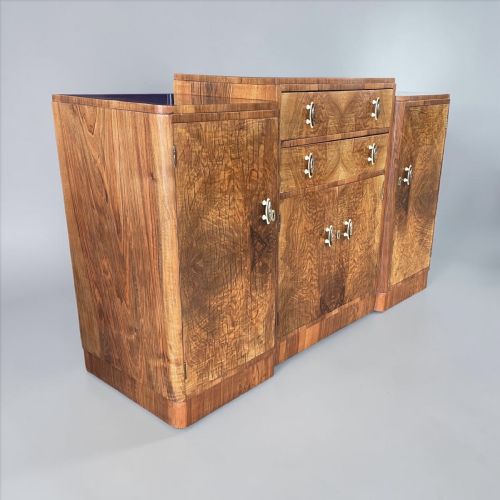
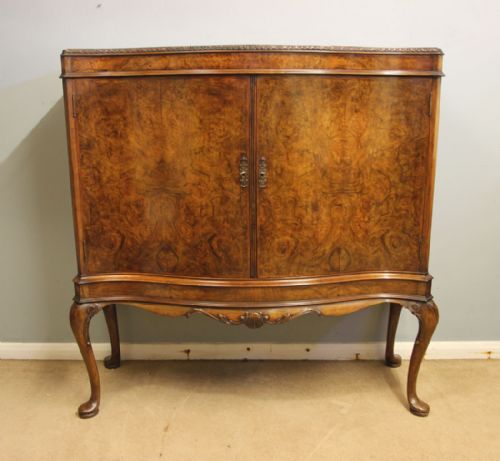
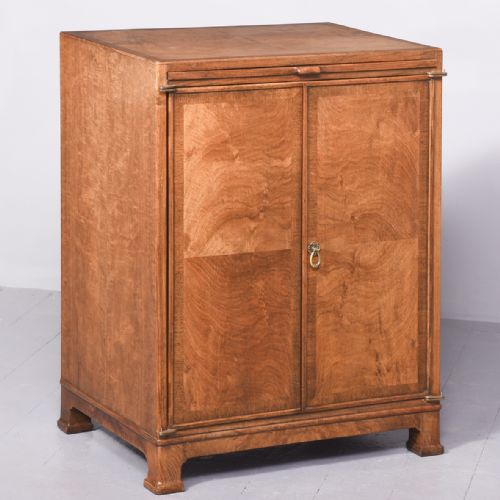
A figured walnut sideboard encompasses server cabinets, credenzas, and cocktail drinks units designed for storage and display. The selection spans periods from Victorian and Edwardian iterations to Queen Anne Revival styles and clean Art Deco designs.
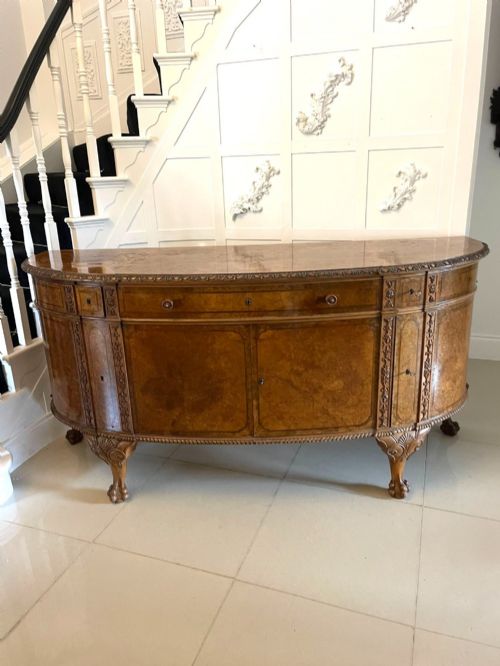
Buyers frequently encounter Art Deco sideboards from the 1930s featuring bold curves and veneered surfaces, alongside nineteenth-century credenzas showcasing intricate marquetry, ormolu mounts, and marble tops.
Forms vary from bow-fronted and serpentine shapes to demi-lune cabinets and breakfront cupboards. Each piece serves as a functional focal point in a dining room or living space, utilising rich timber surfaces.
What varies in quality
The visual impact of a figured walnut sideboard depends largely on the choice and matching of the wood veneers across the doors and top. Symmetrical grain patterns and careful crossbanding distinguish finer examples from plain constructions.
The sophistication of the hardware and structural shaping - such as serpentine, bow-fronted, or breakfront carcases - indicates the maker's skill. Finer pieces integrate cast bronze or ormolu mounts and precise marquetry work that remain intact within the timber frame.
Retail Price Guide 2026
Typical UK retail prices for figured walnut sideboard, calculated from the Sellingantiques database of over a million retail prices indexed since 2003. This retail price guide relies exclusively on Sellingantiques data; no external sources or auction records are used, so the figures do not describe the wider market.
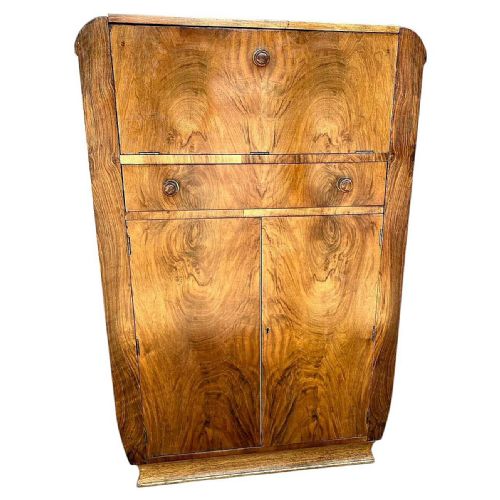
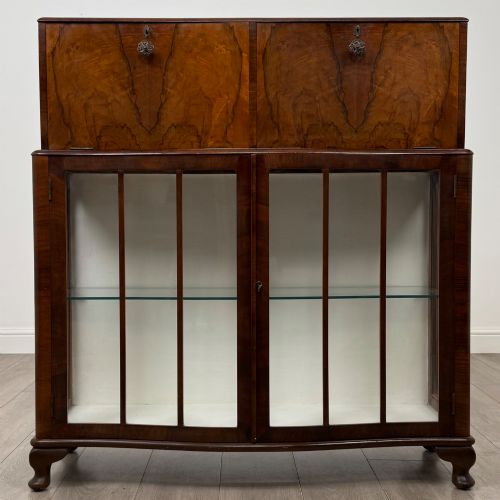
Secret cocktail compartments wait inside 1930s drinks cabinets to hold your evening gin.
Harry and Lou Epstein·Whytock and Reid·Maples and Co
The Figured Walnut Sideboard Glossary
- Burr walnut
- A specialised wood cut from walnut tree growths, producing dense, swirling patterns highly prized for cabinet veneers. It creates a rich, textured surface across doors and panels.
- Credenza
- A low dining or reception room cabinet used for storage and display, often featuring glass panels or ornate marquetry in Victorian examples.
- Crossbanding
- A decorative border technique where strips of veneer are laid perpendicular to the surrounding grain, framing the central figured walnut panel.
- Ormolu
- Gilded bronze mounts applied to nineteenth-century cabinet furniture for decorative emphasis along borders and feet.
- Serpentine
- A curved cabinet front featuring a convex central section flanked by concave sweeps, adding sculptural depth to the piece.
Frequently Asked Questions
How do I clean figured walnut?
Dust the veneered surfaces regularly with a soft, dry cloth to prevent dirt buildup on the grain.
Avoid using harsh chemical polishes or excessive moisture, applying a quality beeswax sparingly when the wood appears dry.
Are these sideboards suitable for modern homes?
The variety of designs, from streamlined Art Deco cabinets to compact Victorian credenzas, allows these pieces to integrate easily into contemporary interiors.
Their substantial storage capacity makes them practical for living rooms and dining spaces alike.
How do I distinguish Art Deco from Victorian models?
Art Deco sideboards from the 1930s favour geometric symmetry, smooth waterfall curves, and minimal ornamentation to showcase the natural wood grain.
Victorian and Edwardian pieces lean towards heavier carving, inlaid marquetry, ormolu mounts, and classical revival styles.
What is a cocktail cabinet?
A specialised drinks cabinet featuring fitted interior compartments designed for glassware and bottles, commonly found in 1930s Art Deco designs.
These units often incorporate drop-down serving flaps and mirrored back panels.