


Art Deco Credenza
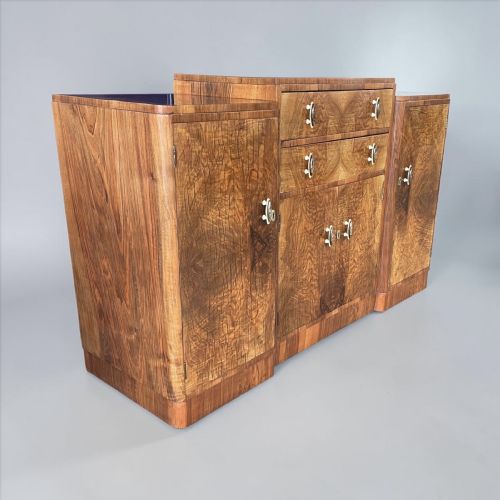
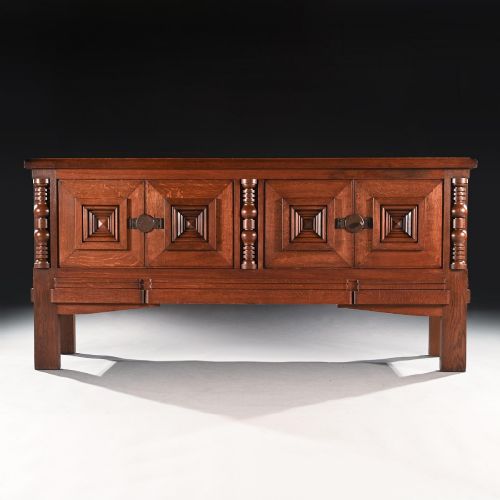
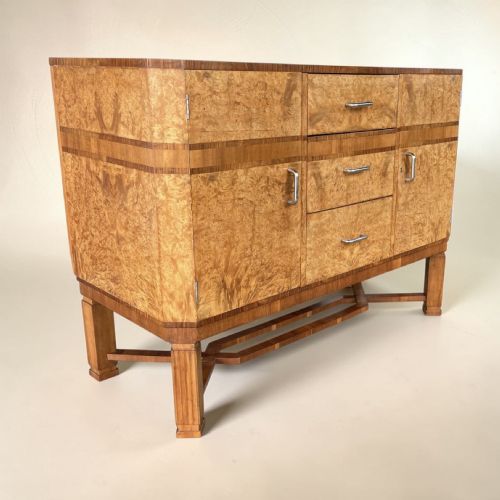
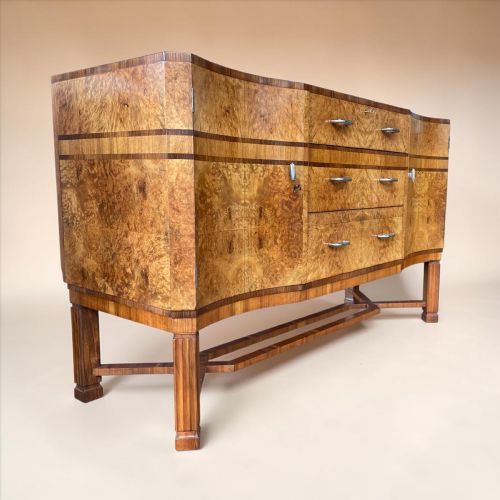
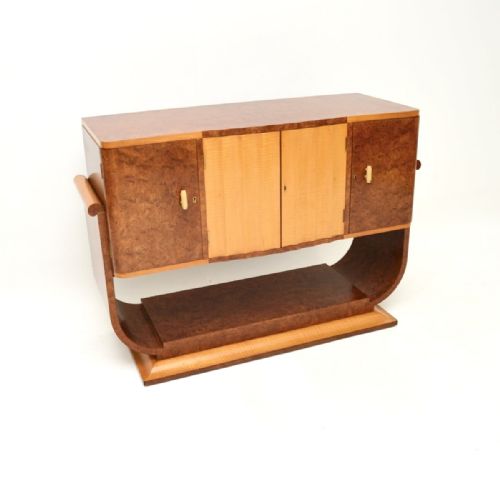
An art deco credenza brings geometric line and figured timber to a room, functioning as a practical storage piece with distinct presence.
Art Deco Credenza
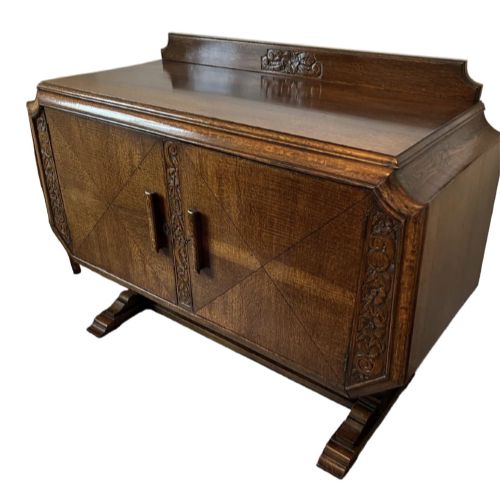
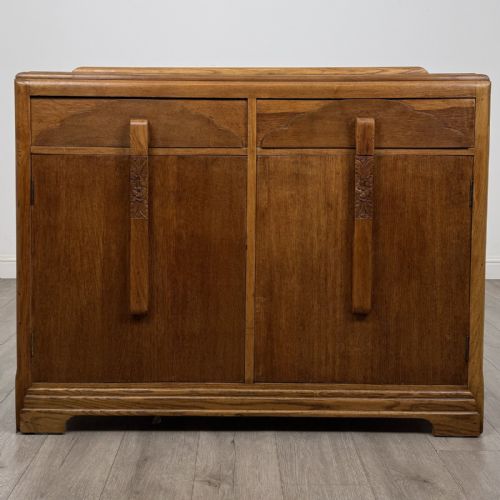
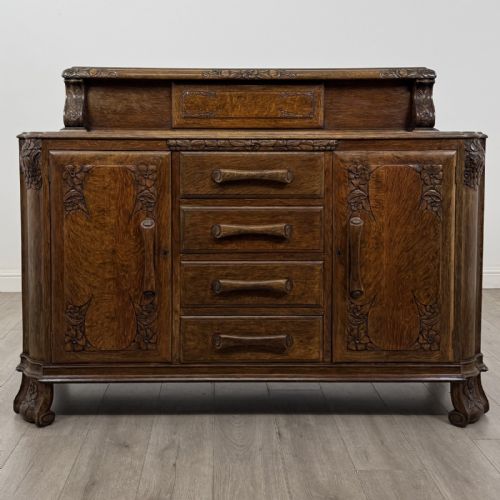
When you search for an art deco credenza, you are looking at large storage furniture primarily from the nineteen-thirties and nineteen-twenties, though the listings also encompass sideboards, buffets, cocktail cabinets, and commodes. These pieces serve as focal storage points in a dining room or living space, often incorporating dedicated compartments for drinks, glassware, or cutlery alongside general shelving.
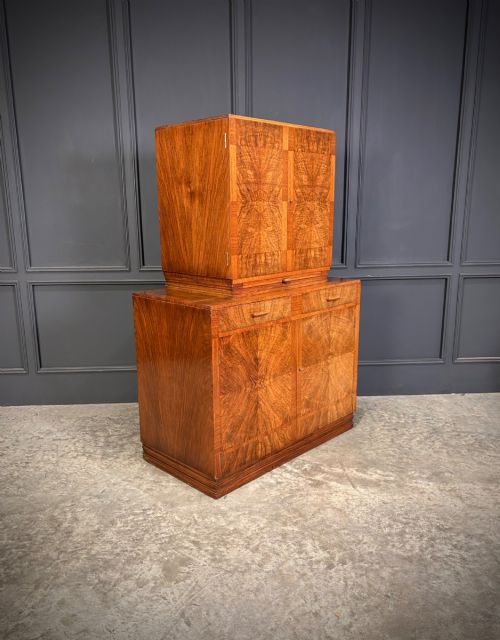
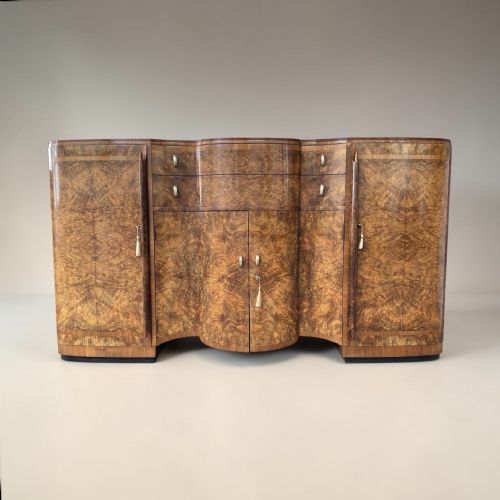
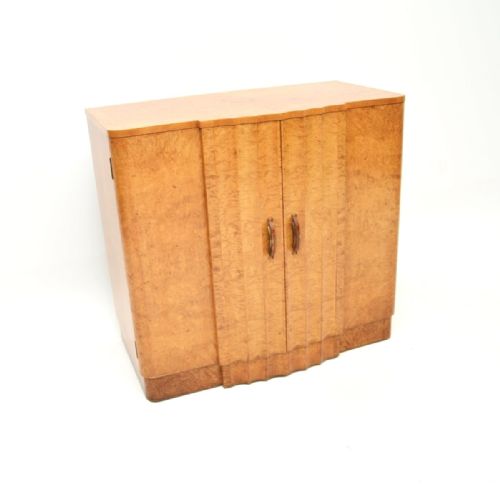
The version you are most likely to meet on this page is a sideboard or cabinet originating from nineteen-thirty, frequently constructed in Britain or France. Makers such as Harry and Lou Epstein, Hille, and Maurice Adams produced substantial walnut or burr walnut designs during this period, while other examples draw on oak, mahogany, and satin birch from Sweden, Italy, and Britain.
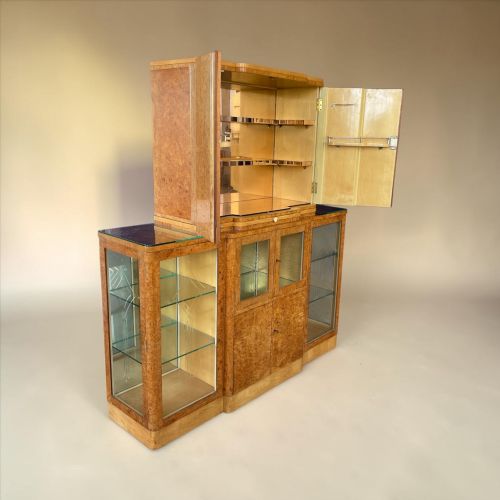
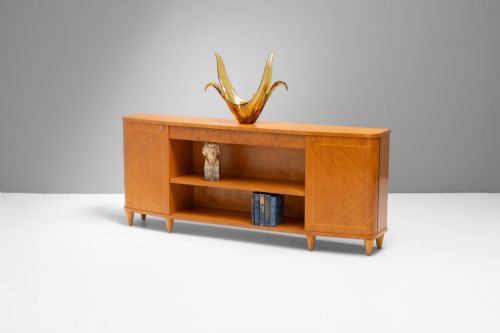
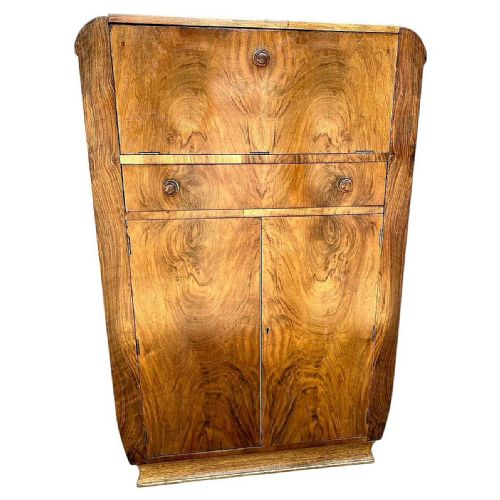
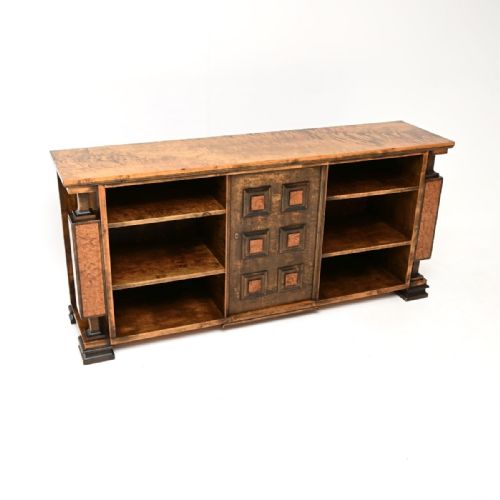
Beyond the standard dining sideboard, the selection includes specialised cocktail and drinks cabinets that open to reveal mirrored interiors, slide-out preparation shelves, and clever storage racks. Alongside these stand smaller console tables, low open bookcases, and occasional washstands spanning French, Scandinavian, and British workshops.
How they were made
Cabinet makers relied heavily on timber veneers, choosing burr walnut, figured walnut, macassar, and palisander for their dramatic grain patterns, which were laid across flat and curved surfaces to create symmetrical designs. Solid oaks, mahoganies, and sycamores formed structural carcases and contrasting stringing lines, while rarer pieces introduced parchment-covered drawers or aluminium panels.
Metalwork played a defining role in both structure and decoration, utilising brass and chrome for handles, hinges, feet, and decorative mounts. Bakelite and glass also appear on specific models, particularly within cocktail cabinets where mirrored backs and glass shelving reflect light inside illuminated compartments.
Art Deco Credenza Retail Price Guide 2026
Typical asking prices for art deco credenza among the pieces listed under this phrase on Sellingantiques today, from the lower quarter to the upper quarter. They describe what is for sale here now, not the wider market.
Materials recorded across the selection include walnut, burr walnut, oak, mahogany, maple, satin birch, burr elm, brass, glass, metal, bakelite, and aluminium.
What varies in quality
The standard of veneer work separates standard production furniture from master commissions, visible in how seamlessly wood grains match across multiple doors and drawers. Pieces bearing documented workshop attributions from makers like Hille or the Epstein brothers display superior timber selection and more complex curved joinery than anonymous trade items.
Hardware and interior detailing indicate the original tier of manufacture, with heavy cast brass mounts, fitted felt-lined cutlery drawers, and original mirrored cocktail compartments marking out finer commissions. The ambition of the form itself also varies, moving from simple rectilinear oak cabinets to sculptural serpentine fronts and unusual woods like satin birch and burr elm.
Maurice Adams·Harry and Lou Epstein·Gomme·Hille·Heals of London·Hamptons of Pall Mall London·The Bowman Brothers·Charles Dudouyt
The Art Deco Credenza Glossary
- Burr walnut
- A veneer sliced from the knot growths of walnut trees, yielding a turbulent, highly figured grain pattern prized for cabinet fronts.
- Cocktail cabinet
- A drinks storage unit featuring drop-down or cabinet doors opening to reveal mirrored interiors, bottle racks, and mixing surfaces.
- Veneer
- A thin layer of decorative timber applied over a secondary wood carcase to achieve symmetrical and striking exterior patterns.
- Commode
- A low cabinet or chest of drawers, often standing on short legs, used primarily for decorative storage in reception rooms.
- Serpentine
- A front contour that curves outward in the centre and inward toward the sides, demanding advanced cabinet-making skill.
Art Deco Credenza: Frequently Asked Questions
What is an art deco credenza?
An art deco credenza is a storage cabinet or sideboard originating principally from the interwar decades, characterised by clean geometric lines, rich wood veneers, and stylish metal hardware.
These pieces function as striking focal points in modern interiors while offering concealed storage for dining ware, books, or drinks.
How do I identify a cocktail cabinet?
Cocktail cabinets usually feature a drop-down flap or central opening doors that reveal a mirrored interior, glass shelves, and specialised racks for storing bottles and glasses.
Many include pull-out slides surfaced in glass or laminate to serve as a convenient mixing tray when entertaining.
Which woods were used most often?
Walnut and burr walnut dominate the era, chosen for their rich brown tones and swirling grain patterns, often accented with lighter sycamore or dark mahogany.
Oak appears frequently in British and French regional pieces, while rarer examples utilise exotic timbers such as macassar, palisander, and satin birch.
Where were these pieces made?
The listings show production centred largely across Britain and France, with notable workshops operating in London alongside significant Scandinavian and Italian pieces.
Prominent retailers and cabinet-makers of the period, including Hille and the Epstein brothers, drove the design standards across these regions.
How do I date a piece?
Most items date from the nineteen-twenties and nineteen-thirties, though the selection reaches back to Edwardian designs and forward into mid-twentieth-century French modernist work.
Stylistic cues such as streamlined curves, waterfall edges, and specific veneer choices help align pieces with their decade of manufacture.