


Curved Walnut Sideboard
A curved walnut sideboard brings warmth and sculptural presence to a room, offering generous interior storage behind flowing timber lines.
Curved Walnut Sideboard
A curved walnut sideboard encompasses a range of formal storage furniture designed to anchor a dining room or drawing room. When exploring this selection, a buyer encounters everything from nineteenth-century credenzas to twentieth-century geometric forms. These pieces serve as both decorative focal points and practical containers for tableware or household linens.
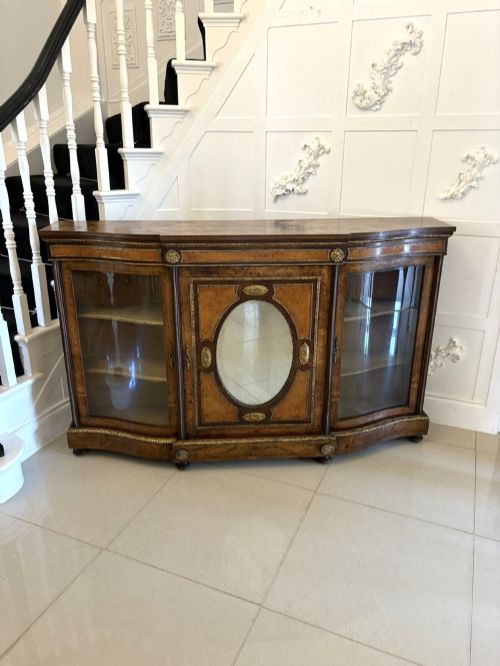
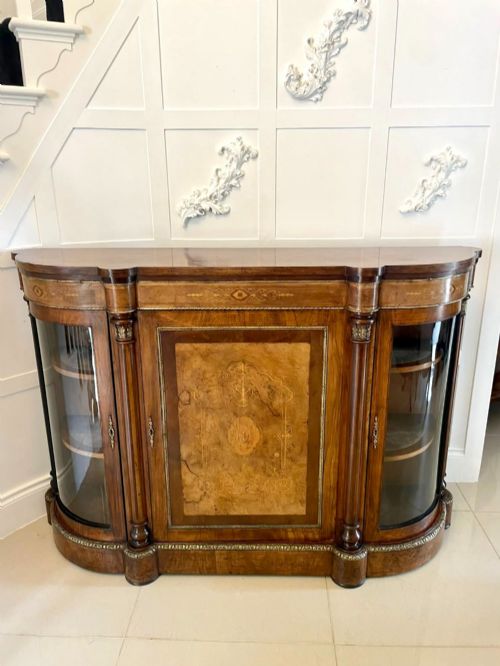
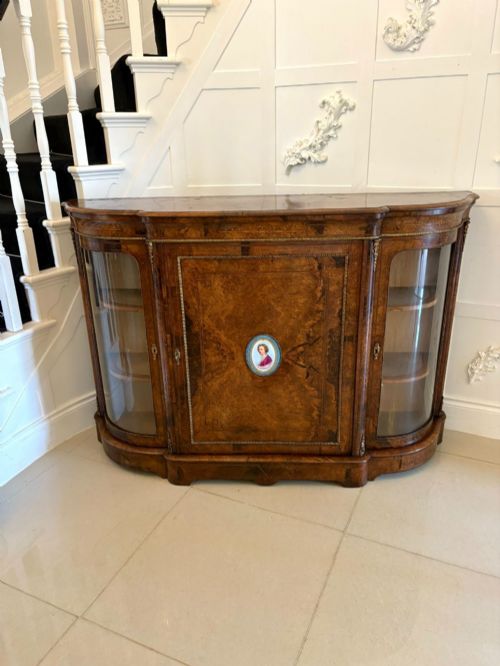
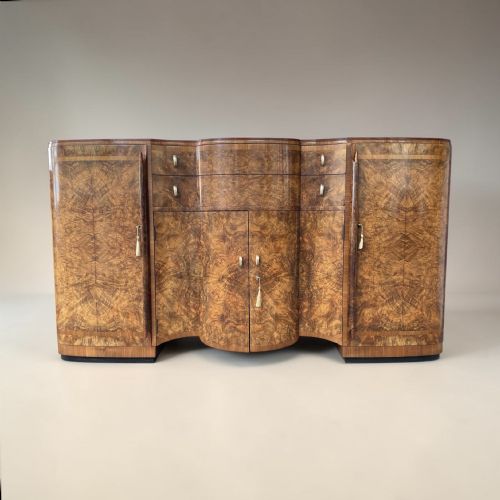
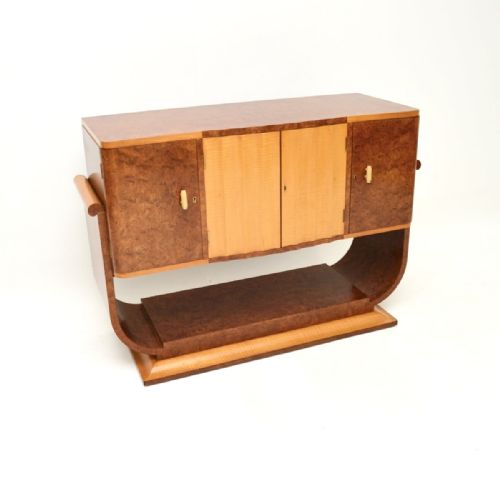
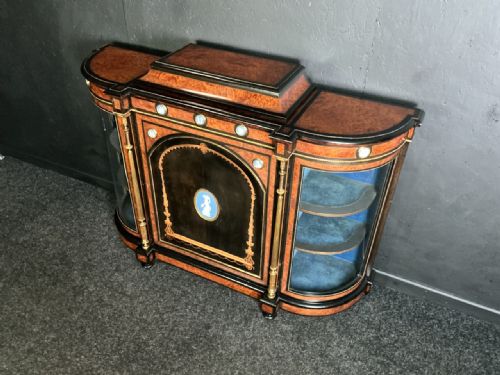
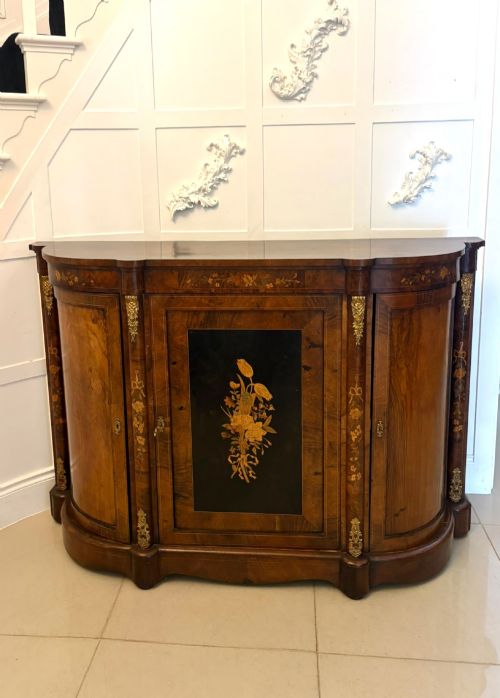
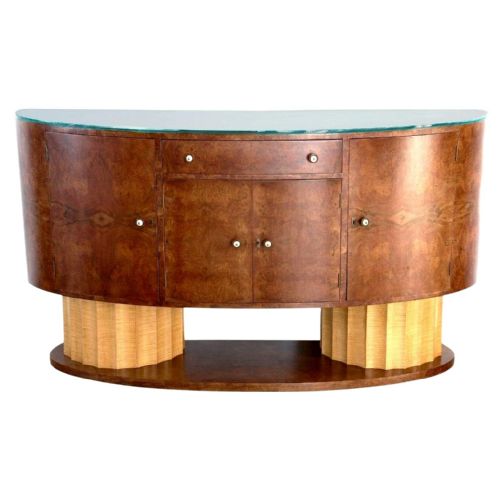
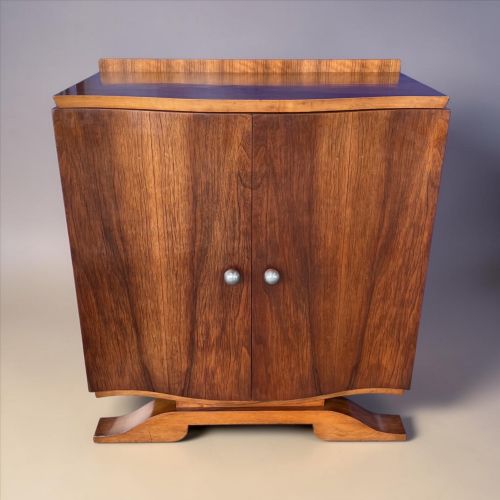
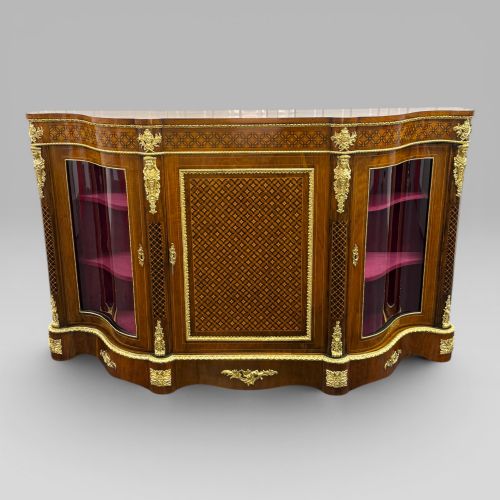
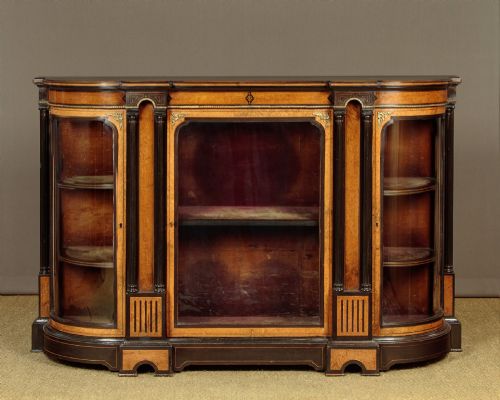
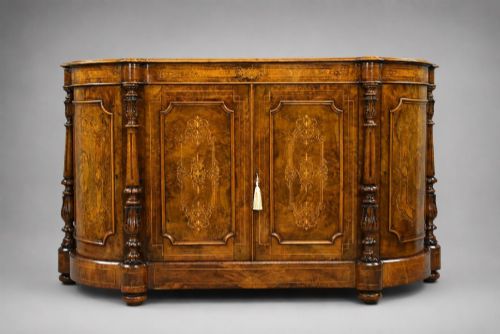
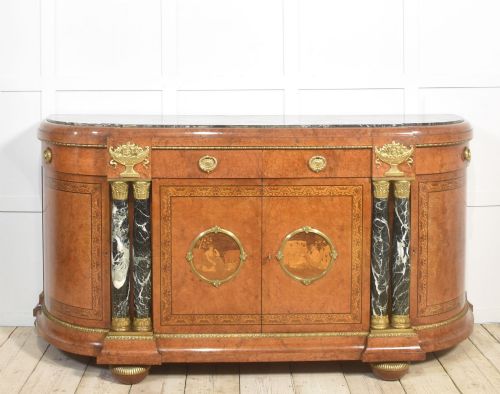
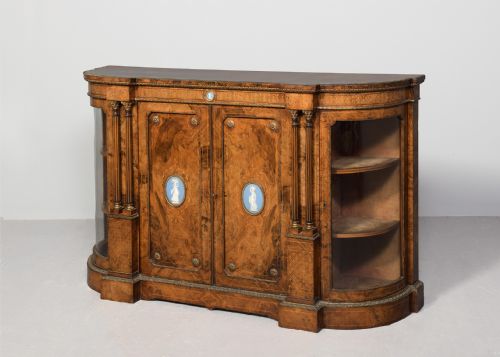
The pieces appearing on this page lean heavily towards Victorian burr walnut examples alongside twentieth-century Art Deco interpretations. Victorian specimens frequently present as credenzas with serpentine fronts, while later pieces favour clean-lined geometric sweeps in walnut and sycamore. Both traditions utilise the natural grain of the timber to create movement across the front elevation.
How they were made
Cabinet makers constructed these bodies using solid and veneered walnut, frequently selecting burr walnut for its complex, swirling figuring. Marquetry panels, boxwood inlay, and satinwood details embellished the surfaces of nineteenth-century examples, while later makers relied on the contrast between walnut and sycamore. Ormolu mounts, brass fittings, and porcelain plaques added further textural contrast to the timber frames.
Achieving the characteristic curved silhouette required advanced timber-bending techniques and precision veneering over solid core carcases. Marble tops appeared on French and continental sideboard cabinets, providing a heavy, cool surface above the timber base. Interior compartments often included adjustable shelving and lined drawers tailored for specific domestic uses.
Selected Art Deco examples double as cocktail cabinets, keeping evening refreshments hidden behind sweeping burr walnut curves.
What varies in quality
The distinction between standard and exceptional pieces rests upon the selection of the timber veneer and the execution of the marquetry. Superior examples display mirrored burr walnut figuring that flows seamlessly across curved doors and panels without interruption. Finer specimens also feature crisp ormolu mounts, hand-chased details, and integration with named makers rather than anonymous workshop production.
Structural integrity and the retention of original decorative elements dictate the standing of a piece within its period. High-grade items preserve their original marble slabs, intact porcelain plaques, and precise door alignment along curved tracks. The depth of the hand-polished finish reveals the underlying patience of the original workshop.
Maurice Adams·Hille·Maison Gagneau·Harry and Lou Epstein·Hamptons of Pall Mall London·Bowman Brothers·Gillow
The Curved Walnut Sideboard Glossary
- Credenza
- A low-standing cabinet or sideboard, traditionally featuring central doors flanked by curved side compartments. This form evolved during the Victorian era to display porcelain and ornaments.
- Burr Walnut
- A timber harvested from walnut tree growths, prized for its swirling, highly figured grain patterns. It provides a rich, mottled decorative surface when sliced into veneers.
- Ormolu
- Gilded bronze mounts applied to the corners, feet, and friezes of furniture. It adds metallic brightness and sculptural definition to wooden cabinet work.
- Marquetry
- The art of applying thin slices of various woods to form decorative pictures and geometric patterns. Makers used contrasting timbers like boxwood and satinwood to create detailed floral motifs.
Curved Walnut Sideboard: Frequently Asked Questions
What is a credenza?
A credenza is a low cabinet designed for storage and display, often featuring curved glass or solid wooden doors. These pieces sit flush against dining room or drawing room walls.
Originally developed in earlier centuries, the form flourished during the Victorian period with elaborate marquetry and ormolu mounts. They provide substantial surface space for serving or decorative arrangements.
How do I care for walnut veneer?
Walnut furniture requires protection from direct sunlight and sudden changes in room humidity to prevent veneer lifting. Regular dusting with a soft, dry cloth maintains the surface.
Occasional applications of appropriate beeswax nourish the timber without building up heavy chemical residues. Avoid placing wet items or hot serving dishes directly onto the polished wooden surface.
How do I distinguish Victorian from Art Deco?
Victorian sideboards and credenzas display ornate serpentine shapes, elaborate marquetry, and often incorporate ormolu mounts and porcelain plaques. The decorative language draws heavily from historical revival styles.
Art Deco pieces from the twentieth century lean towards streamlined geometric sweeps, contrasting veneers like sycamore, and minimal ornamentation. The focus shifts from historical motifs to modern, clean lines.
Where were these sideboards used?
These cabinets found their primary home in formal dining rooms, serving as storage for heavy silverware, glassware, and table linen. The top surface functioned as a sideboard for serving food during gatherings.
They also occupied grand drawing rooms and reception spaces, where the decorative marquetry and glass doors allowed owners to display fine porcelain collections.