




Art Deco Wooden Credenza
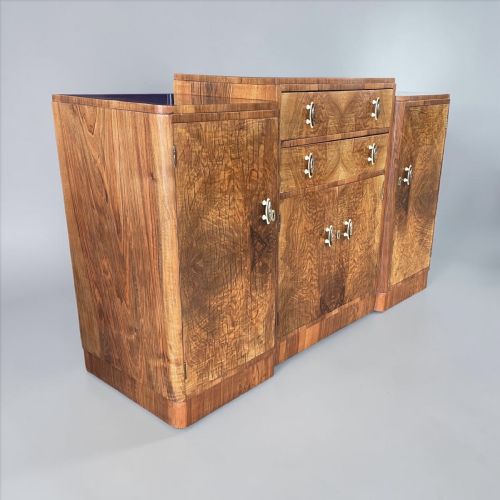
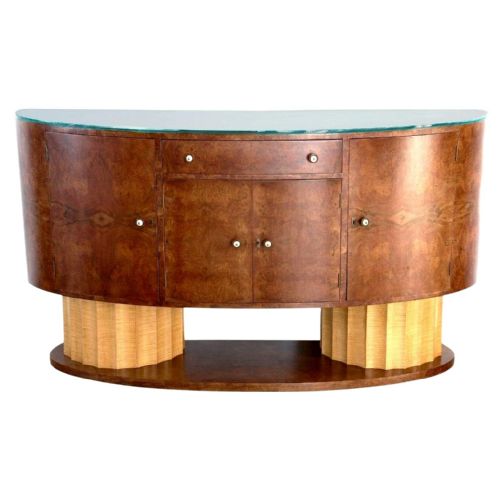
An art deco wooden credenza brings bold geometric lines and rich grain figures into a room, serving as both storage and statement.
Art Deco Wooden Credenza
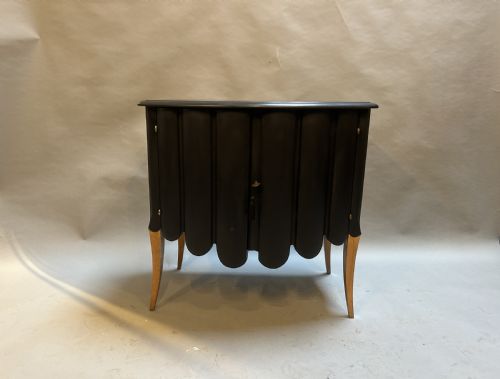
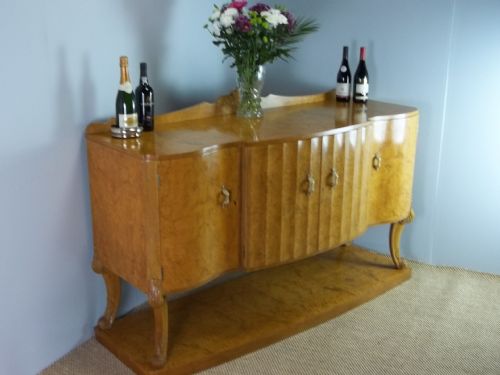
When you search for an art deco wooden credenza, you are looking at substantial storage furniture shaped by the design movements of the nineteen-twenties and nineteen-thirties. These pieces appear mostly as sideboards, side cabinets, and cocktail drinks cabinets designed to anchor a dining room or living space.
The versions you are most likely to meet on this page hail from nineteen-thirty, with occasional examples reaching back to nineteen-twenty-five. They combine functional storage compartments with the characteristic low, horizontal proportions of the period.
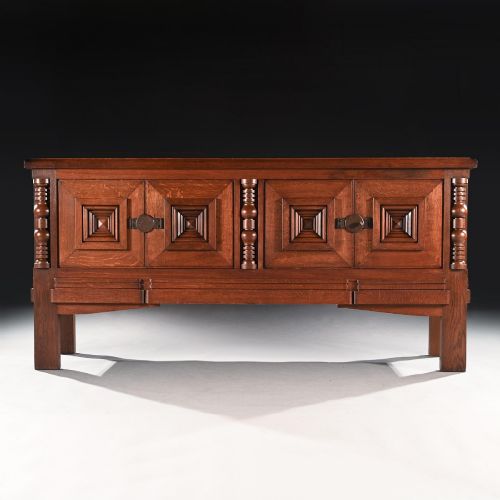
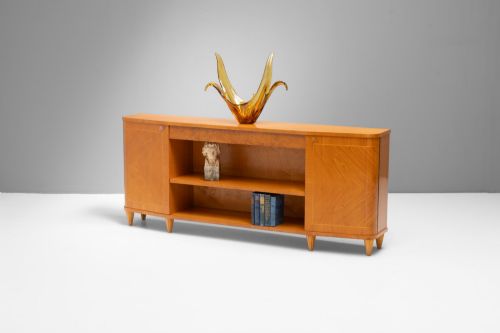
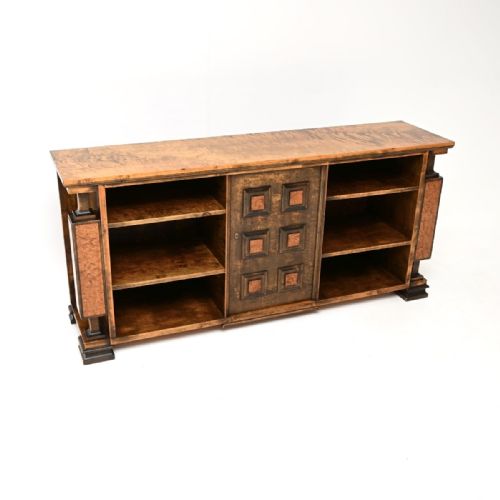
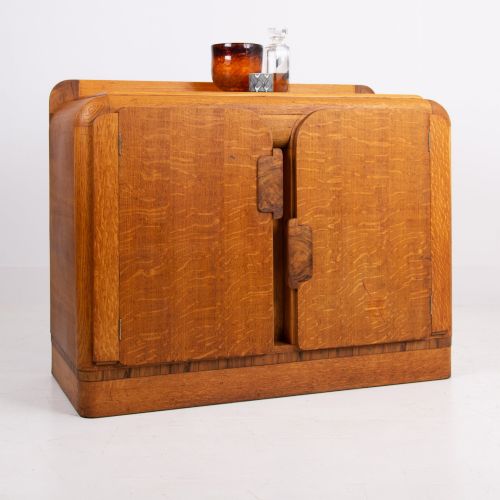
Origin details in the evidence point towards British, French, and Swedish workshops, each bringing a distinct local interpretation to the aesthetic. Swedish Grace examples sit alongside robust British oak designs and sophisticated French side cabinets.
How they were made
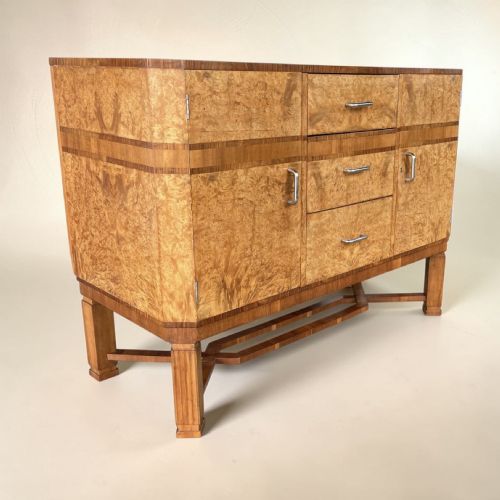
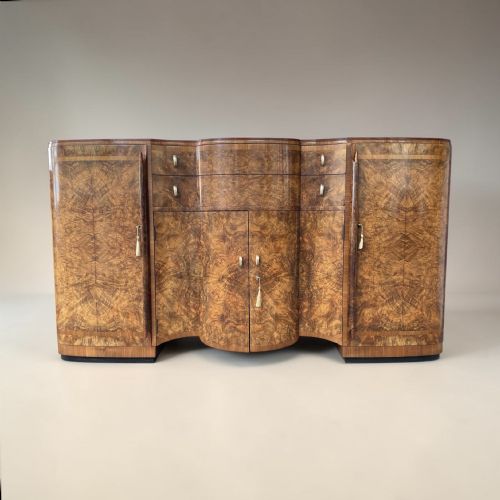
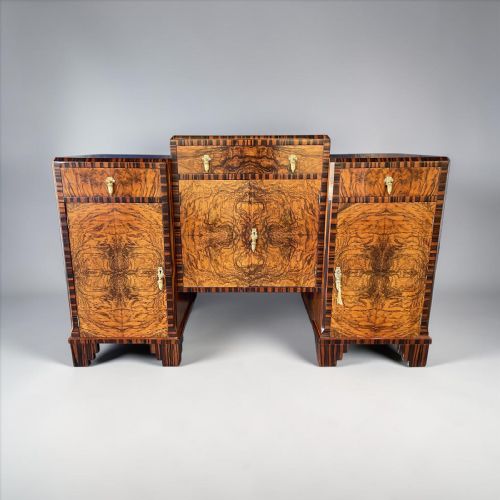
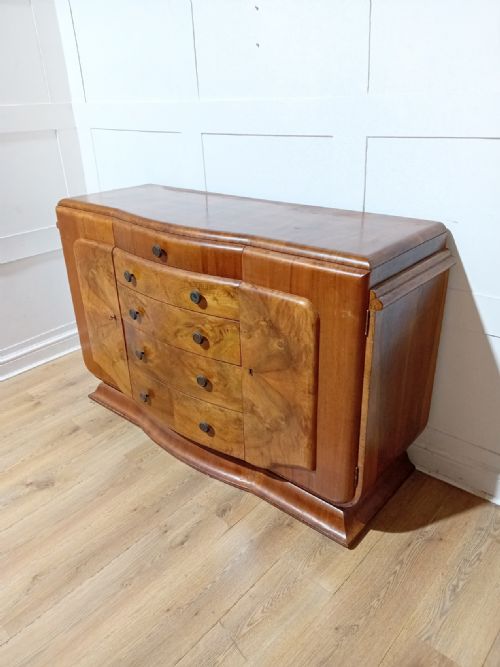
Cabinet makers relied heavily on walnut and burr walnut veneers to create striking symmetrical grain patterns across large cabinet doors and drawer fronts. Sycamore, satin birch, oak, and general timber provided contrasting borders and sturdy internal carcases.
Metal and brass components appear frequently as functional hardware and decorative trim, accentuating the geometric symmetry of the cabinetry. Glass panels are also utilised in cabinet and bookcase variations to display contents while keeping them enclosed.
Some pieces double as cocktail cabinets, keeping your evening gin safely hidden behind geometric walnut veneers.
What varies in quality
The distinction between ordinary production and exceptional cabinet-making lies in the selection and bookmatching of the wood veneer. Workshops that employed master craftsmen aligned burr walnut and walnut grains with absolute precision across multiple doors.
Attribution to documented makers and designers elevates certain pieces above standard anonymous production. Pieces carrying the marks of known furniture houses demonstrate superior structural joinery and thoughtful proportioning that lesser items lack.
Maurice Adams·Gomme·Hille·Bowman Brothers·Epstein
The Art Deco Wooden Credenza Glossary
- Veneer
- A thin layer of choice wood applied over a base timber carcase. This technique allowed makers to display dramatic grain figures without using solid expensive timber throughout.
- Bookmatching
- A method of arranging veneer sheets side by side to mirror each other. The resulting pattern creates symmetrical designs that define the fronts of many cabinets.
- Carcase
- The main structural body or framework of a piece of furniture before doors, drawers, and decorative veneers are attached. It provides the essential strength for large storage units.
- Swedish Grace
- A sophisticated architectural and design movement bridging neoclassical restraint and early modernism. In these listings, it manifests through refined timber cabinets and sideboards.
Art Deco Wooden Credenza: Frequently Asked Questions
Where should I place a credenza?
These large storage items sit best against a primary wall in a dining room, hallway, or spacious living area where their horizontal proportions can anchor the room. Their flat tops also function well as serving surfaces or display areas for lamps and decorative objects.
Ensure you measure the available floor space carefully, as these pieces often feature substantial depth alongside their characteristic length. Allow enough clearance for cabinet doors to swing open fully without obstruction.
How do I distinguish a cocktail cabinet from a sideboard?
Cocktail and drinks cabinets generally feature specialised internal compartments, pull-out mirrored serving trays, and glass shelves designed specifically for glassware and bottles. Sideboards focus more on broader cupboard space and cutlery drawers for dining room storage.
Many examples combine these functions or present as side cabinets with tailored internal fittings. Inspecting the internal layout reveals whether the piece was built for dining linens or beverage storage.
What defines Swedish Grace design?
Swedish Grace represents a refined design movement from the early twentieth century that paired classical balance with modern simplicity. In furniture, this translated to clean silhouettes executed in pale timbers like satin birch combined with walnut.
Pieces from this tradition rely on subtle proportions and understated elegance rather than heavy ornamentation. They offer a distinct visual lightness compared to heavier contemporary British oak sideboards.