


1930s Dining Room Buffet
A 1930s dining room buffet provides generous storage and striking period presence, anchoring a dining space with distinctive wood grains and confident proportions.
1930s Dining Room Buffet
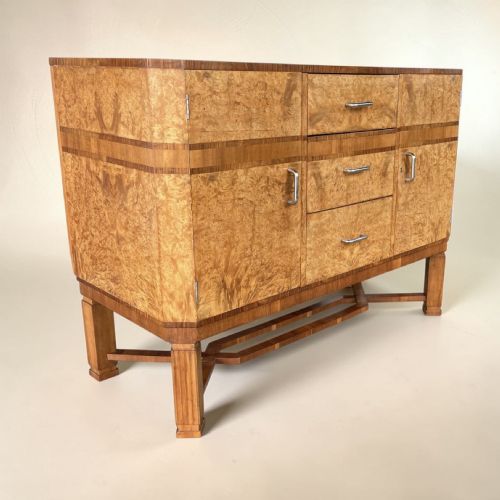
A 1930s dining room buffet serves as a substantial storage cabinet and serving surface for the dining room. These pieces combine practical capacity for tableware with the decorative ambition of the period.
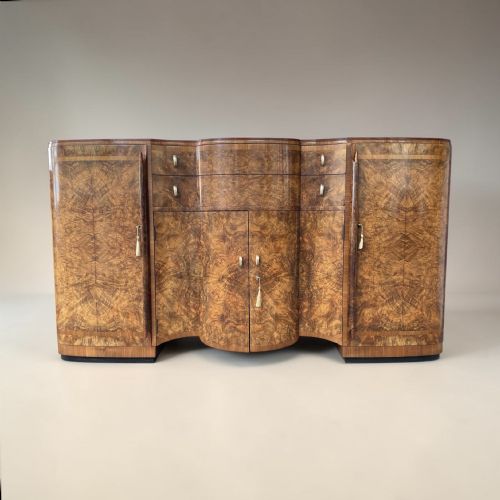
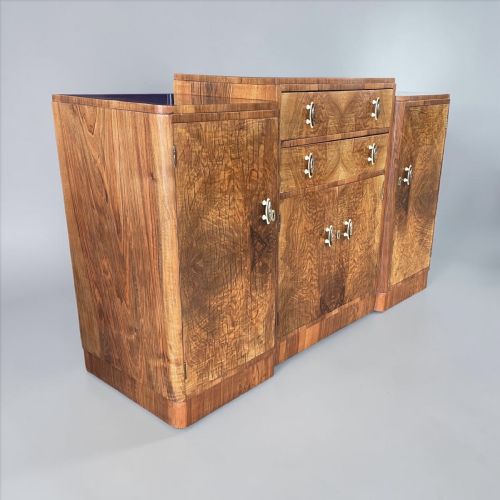
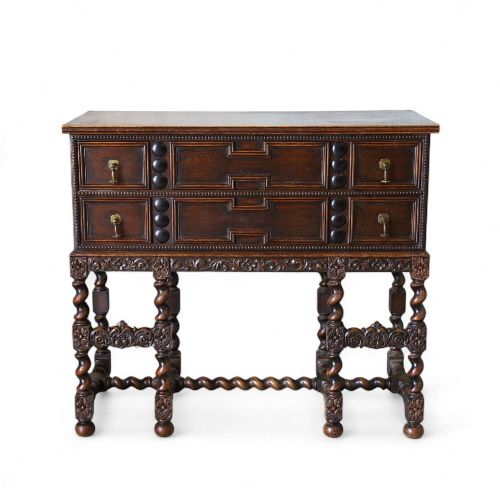
The selections available here lean heavily into the Art Deco aesthetic alongside traditional revival styles. Walnut and oak dominate the forms, offering either sleek modern lines or heavy carved detail.
How they were made
Cabinet makers utilised solid timber alongside figured veneers to create striking surface patterns. Burr walnut and standard walnut veneers appear frequently, contrasted with solid oak in revival pieces.
Metal hardware plays a functional and decorative role in these builds. Brass and chrome fittings accent the doors and drawers, while barley-twist supports and parquetry tops showcase traditional woodworking skills.
The site listings feature walnut, burr walnut, and oak alongside glass, brass, and chrome elements.
What varies in quality
The choice of surface veneer largely dictates the visual impact and standing of the piece. Highly figured burr walnut and French parquetry tops represent the upper tier of design ambition.
Joinery execution and maker attribution separate standard production from exceptional examples. Pieces bearing the mark of known makers or retailers command greater interest through superior craftsmanship.
Maurice Adams·Epstein·Hamptons of Pall Mall London
The 1930s Dining Room Buffet Glossary
- Art Deco
- A design style characterised by sleek geometric shapes, streamlined forms, and lavish materials. It dominated international design during the interwar period.
- Burr Walnut
- A highly prized wood veneer showing intricate, swirling grain patterns formed by growth deformations on the tree. It creates a decorative surface finish on cabinet doors.
- Carolean Revival
- A style drawing inspiration from the late seventeenth-century reign of Charles II, featuring carved details and turned supports. It experienced popularity in interwar British furniture production.
- Parquetry
- A geometric mosaic of wood pieces used for decorative effect on furniture surfaces. French examples frequently employ this technique on table and cabinet tops.
- Barley-Twist
- A spiral turning technique applied to wooden furniture legs and supports. This decorative detail appears on revival oak pieces from the period.
1930s Dining Room Buffet: Frequently Asked Questions
What is a 1930s dining room buffet used for?
A 1930s dining room buffet provides enclosed storage for dinnerware, cutlery, and table linens while offering a surface to serve food during meals. They function as both practical storage units and focal points within the dining room.
Historically, these pieces sat against the dining room wall to assist hosts in managing service without constant trips to the kitchen. Their deep cupboards and fitted drawers accommodate bulky items with ease.
How do I identify Art Deco style?
Art Deco furniture relies on clean geometric lines, symmetrical compositions, and the clever use of contrasting wood veneers. Designers embraced modern industrial materials alongside luxury timbers.
Unlike heavily carved revival styles, Art Deco pieces emphasise smooth surfaces and curved silhouettes. Metal accents in brass or chrome frequently complete the look.
What is the difference between walnut and oak pieces?
Walnut pieces from this decade typically follow the modern Art Deco aesthetic with smooth veneered surfaces and rich brown tones. They often feature dramatic grain patterns like burr walnut.
Oak pieces in this category generally adhere to revival styles such as Carolean designs. These incorporate heavy carving, barley-twist supports, and a more traditional British vernacular.
How do I care for a walnut veneer surface?
Walnut veneer requires protection from direct sunlight and excessive moisture to prevent fading and lifting. Regular dusting with a soft, dry cloth preserves the polished finish.
Avoid placing hot serving dishes directly on the wood surface to prevent heat rings. Applying a suitable furniture wax occasionally will maintain the lustre of the timber.