

Antique Walnut Sideboards
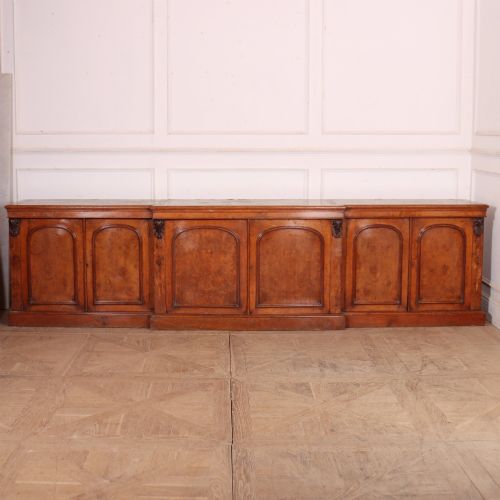
Low walnut serving and side furniture for the dining and drawing room, most of it the Victorian burr walnut credenza with two to four doors.
Antique Walnut Sideboards
The sideboard began in the later 18th century as a dining-room serving piece with drawers and cupboards for linen, cutlery and bottles. The credenza takes its name from the Italian for a serving cabinet, and by the mid-19th century it had become a drawing-room display and serving form: low, panelled or glazed, often with shaped or open ends.
Titles run through a family of overlapping words. Sideboard and credenza dominate, with side cabinet, buffet, chiffonier, server, dresser and enfilade behind them. Nearly half of all titles say burr, so burr walnut is the default veneer description; figured is the other word dealers reach for.
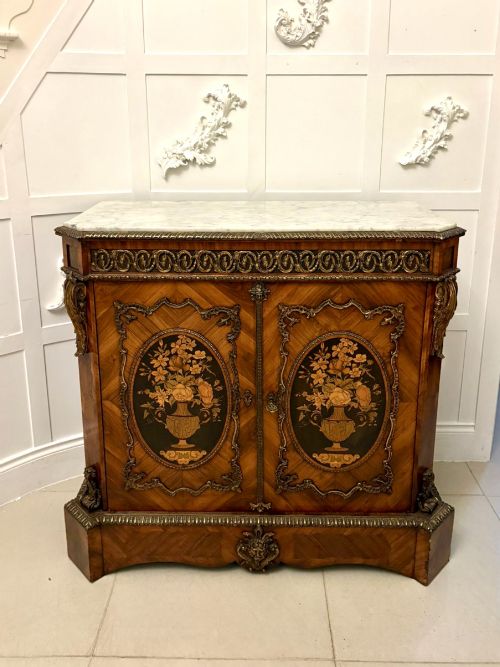
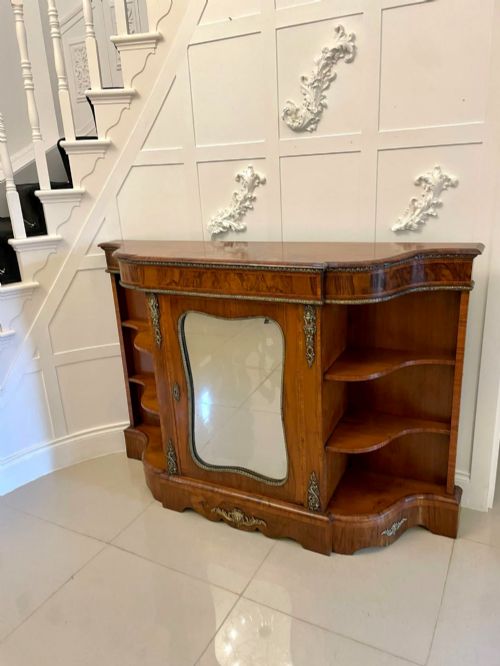
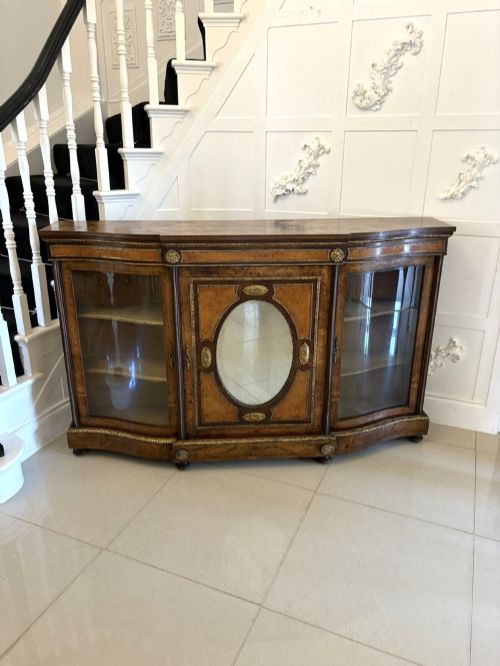
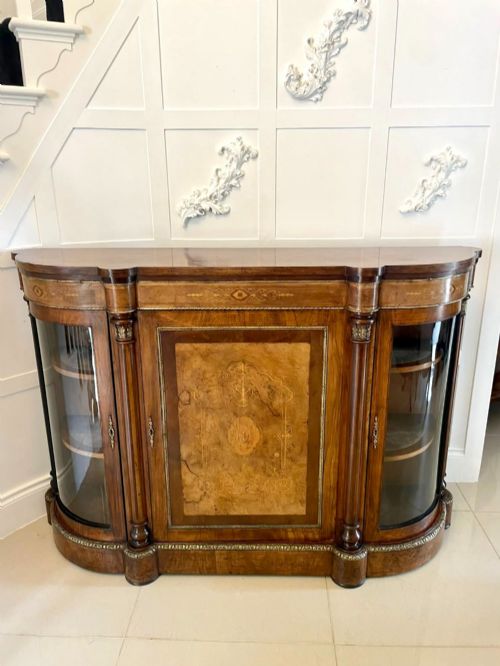
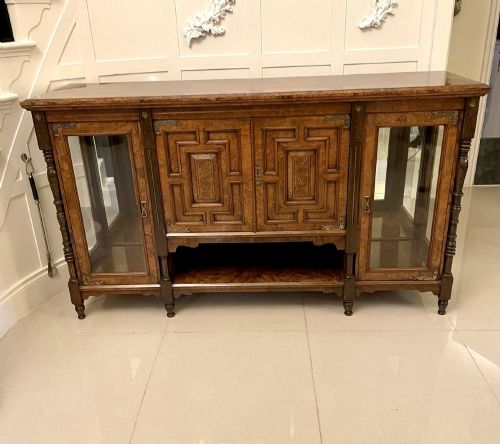
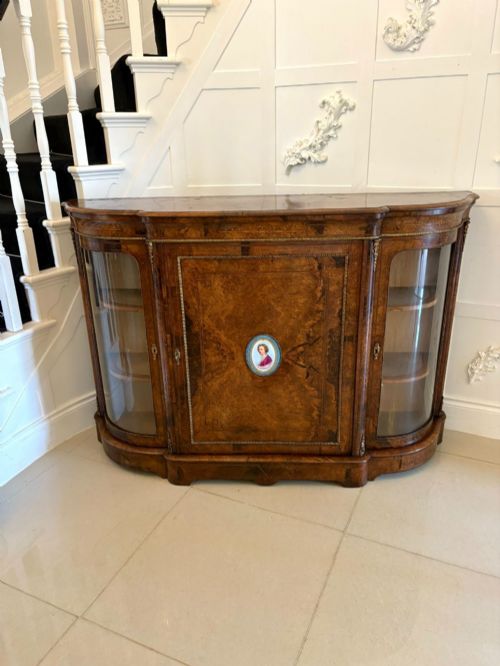
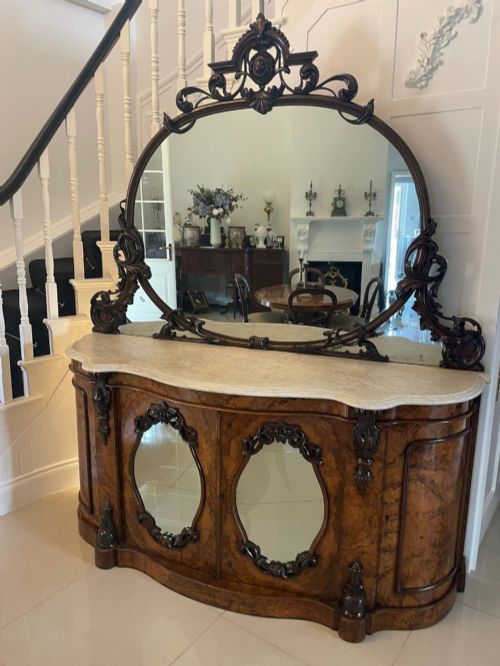
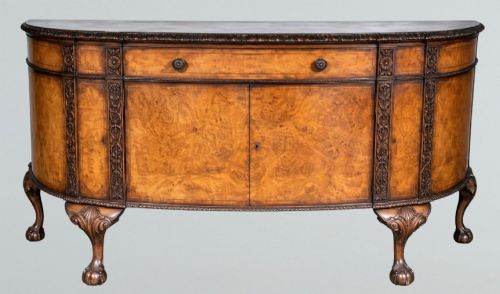
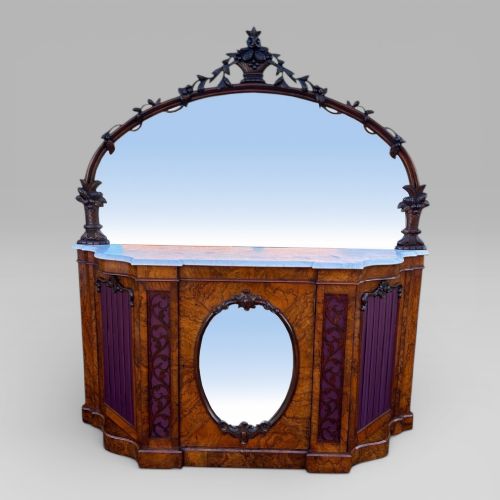
The piece you meet most often is the Victorian credenza, low, sometimes serpentine or bow-ended, frequently inlaid, sometimes ormolu-mounted or marble-topped, occasionally with a mirrored or shaped back. Around half the category sits here, with period counts crowding into the 1860s and the decades either side.
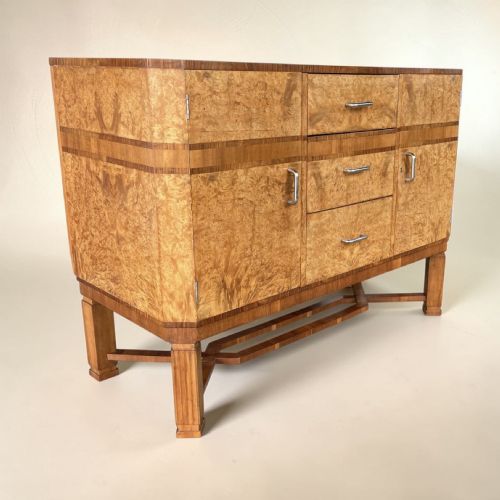
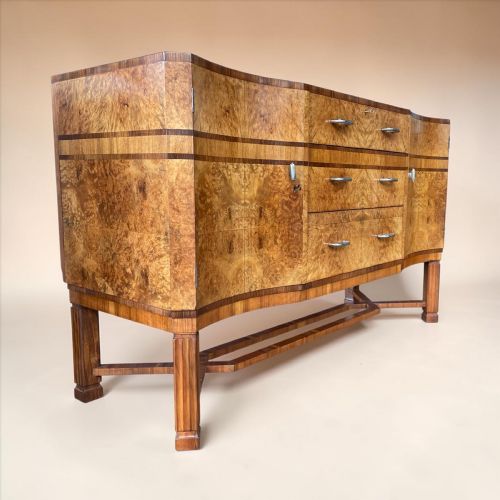
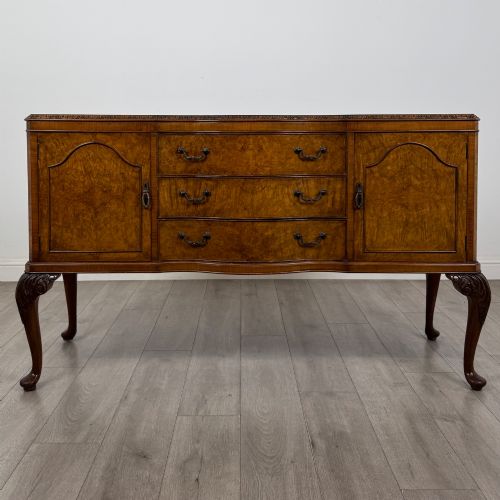
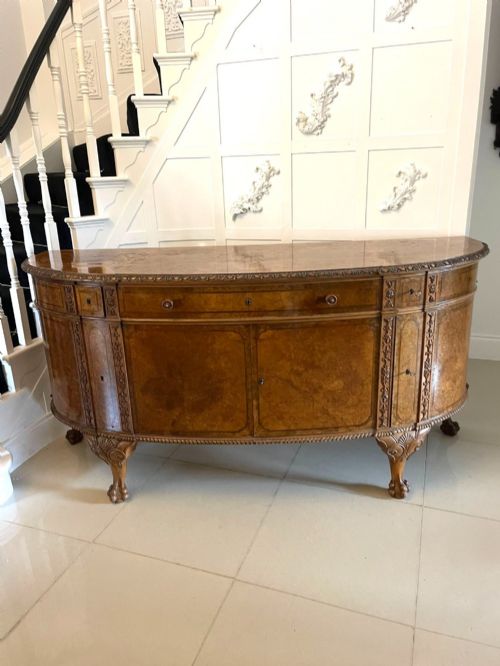
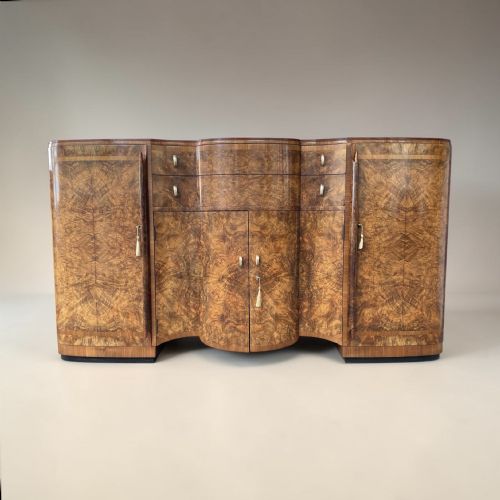
The second crest is twentieth century: burr walnut sideboards and servers of the 1920s and 1930s, much of it Queen Anne and other period revival, alongside Art Deco walnut cabinets that mix in sycamore, burr maple and satin birch. A thinner seam of French and Continental buffets, enfilades and commodes runs through, with marble tops recurring, plus Victorian chiffoniers, dresser bases and carved mirror-back sideboards. About 116 come to market a year on Sellingantiques, and 156 different dealers have listed one.
Where The Range Sits
Veneer sets the floor. Plain walnut sideboard titles cluster at the bottom, while burr and figured walnut carry the pieces that run to the top. Above that, decoration does the work: inlay, then floral marquetry, then ormolu mounts, then porcelain plaques, and the highest-priced titles stack several of these at once alongside satinwood, kingwood, tulipwood and amboyna.
Shape counts too. Serpentine, bow-ended, breakfront and shaped fronts concentrate in the upper half of the range, straight rectangular carcasses in the lower. Twenty titles claim exhibition quality, which is the dealer's shorthand for the most elaborate credenzas.
A named retailer or workshop pushes a piece upward, whether stamped, labelled or only attributed. So does scale: large examples sit above small, and matched pairs occupy the very top, pairs of marquetry credenzas, pairs of porcelain-mounted side cabinets, a pair of carved solid Italian side cupboards.
Antique Walnut Sideboards Retail Price Guide 2026
Typical UK retail prices for walnut sideboards, calculated from the Sellingantiques database of over a million retail prices indexed since 2003. This retail price guide relies exclusively on Sellingantiques data; no external sources or auction records are used, so the figures do not describe the wider market.
Dated walnut sideboards on Sellingantiques run from 1700 to 1940. The earliest is a walnut dresser base dated 1700.
Maple and Co·Hille·Harry and Lou Epstein
The Antique Walnut Sideboards Glossary
- Credenza
- Low side cabinet with two or more doors, often with shaped or open ends. After walnut itself, it's the commonest word in these titles.
- Burr
- Veneer cut from a burr or knotty growth on the tree, giving the swirled figure named in about half of all listings.
- Figured walnut
- Veneer chosen for pronounced grain pattern. The alternative to burr when a dealer describes the surface.
- Serpentine
- Front or ends shaped in a shallow S-curve rather than straight. Breakfront means the centre section projects forward of the flanking ones, and inverted breakfront is the reverse.
- Chiffonier
- Low cupboard-and-shelf sideboard, in these titles usually with a mirrored back.
- Enfilade
- Long low French multi-door sideboard, turning up in the Continental part of the category.
Antique Walnut Sideboards: Frequently Asked Questions
What is the difference between a credenza and a sideboard?
In these listings the words overlap heavily. Credenza describes a low two- to four-door cabinet, often with shaped or open ends, and side cabinet is used for the same form.
Sideboard is the broader word, covering dining-room serving furniture of both the Victorian and twentieth-century crests. Compound titles like credenza sideboard appear where a dealer wants both.
Which period do most walnut sideboards come from?
The dated listings run from 1700 to 1940 and have two crests rather than one. The 1860s is the mid-Victorian peak, with the 1850s, 1870s and 1880s filling in behind it.
The second crest is the 1920s and 1930s. Between them, Victorian and 19th Century appear as era labels on many listings rather than precise years.
Why do so many titles say burr walnut?
Burr appears in 524 titles, nearly half the category, which makes it the default veneer description here.
Burr veneer is cut from a knotty growth on the tree and gives a swirled figure. Where a piece isn't burr, dealers tend to reach for figured instead.
Are French and Continental examples common?
They're a thin but varied seam. French entries are the largest group, followed by Italian, with one-off Dutch, Flemish, Spanish and Swedish pieces.
They arrive as buffets, enfilades and commodes, and marble tops turn up throughout this branch. Louis XV and Louis XVI labels appear, and the latest dated entry sampled is a signed French Art Deco parquetry buffet.
What does exhibition quality mean in a title?
It's a dealer's term, used in twenty titles, for the most elaborate credenzas.
Those pieces tend to pile up several features at once: floral marquetry, ormolu mounts, satinwood, kingwood, tulipwood, amboyna, and porcelain plaques.
Do unusual forms turn up in this category?
They do, mostly as one-offs. A walnut hunting sideboard, a metamorphic buffet, a French bakers table and an early 19th-century Dutch travelling cabinet have each appeared once.
Others include a demi-lune sideboard supplied with a twelve-piece cutlery set and a Gothic Revival sideboard with Romayne panels and rampant lions.