


Antique Rosewood Sideboards
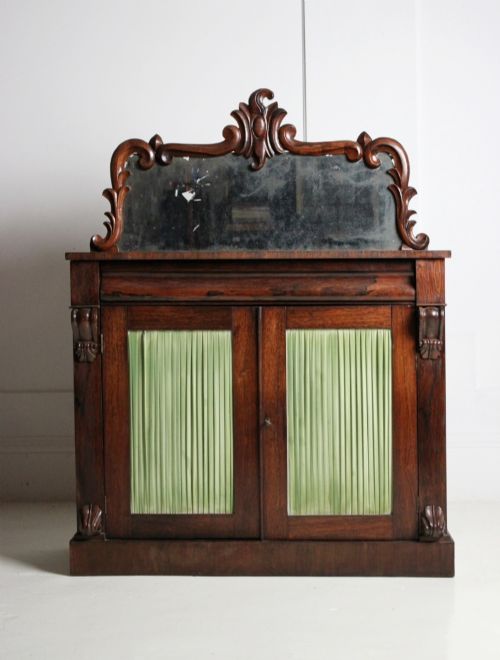
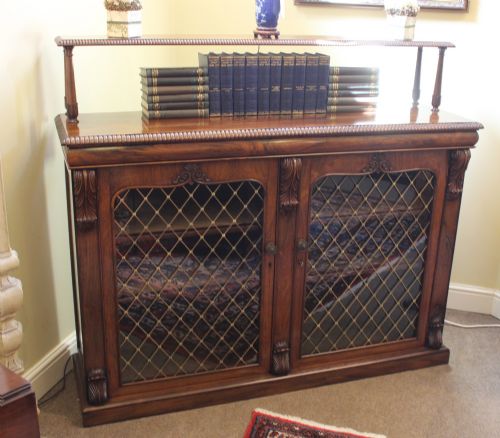
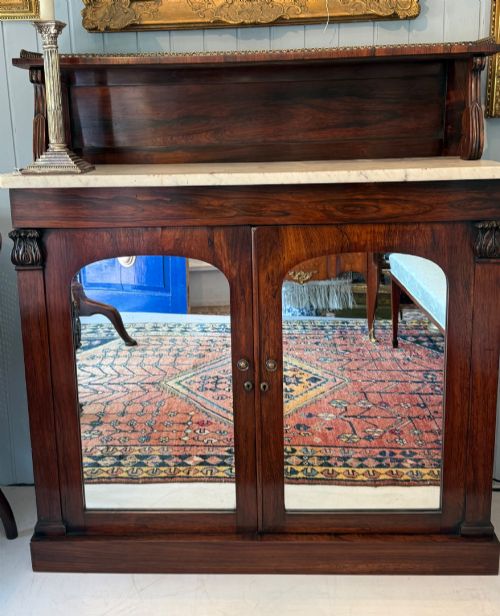
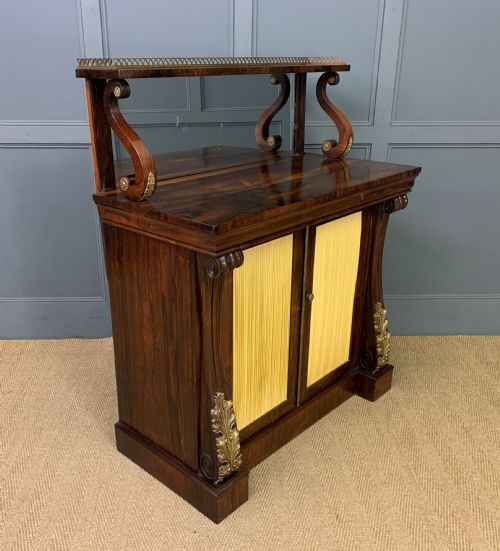
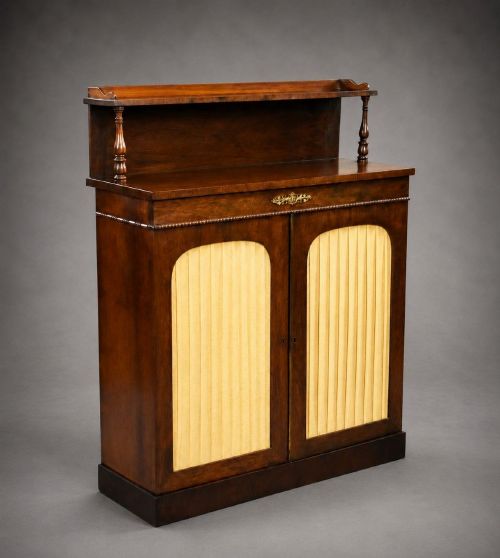
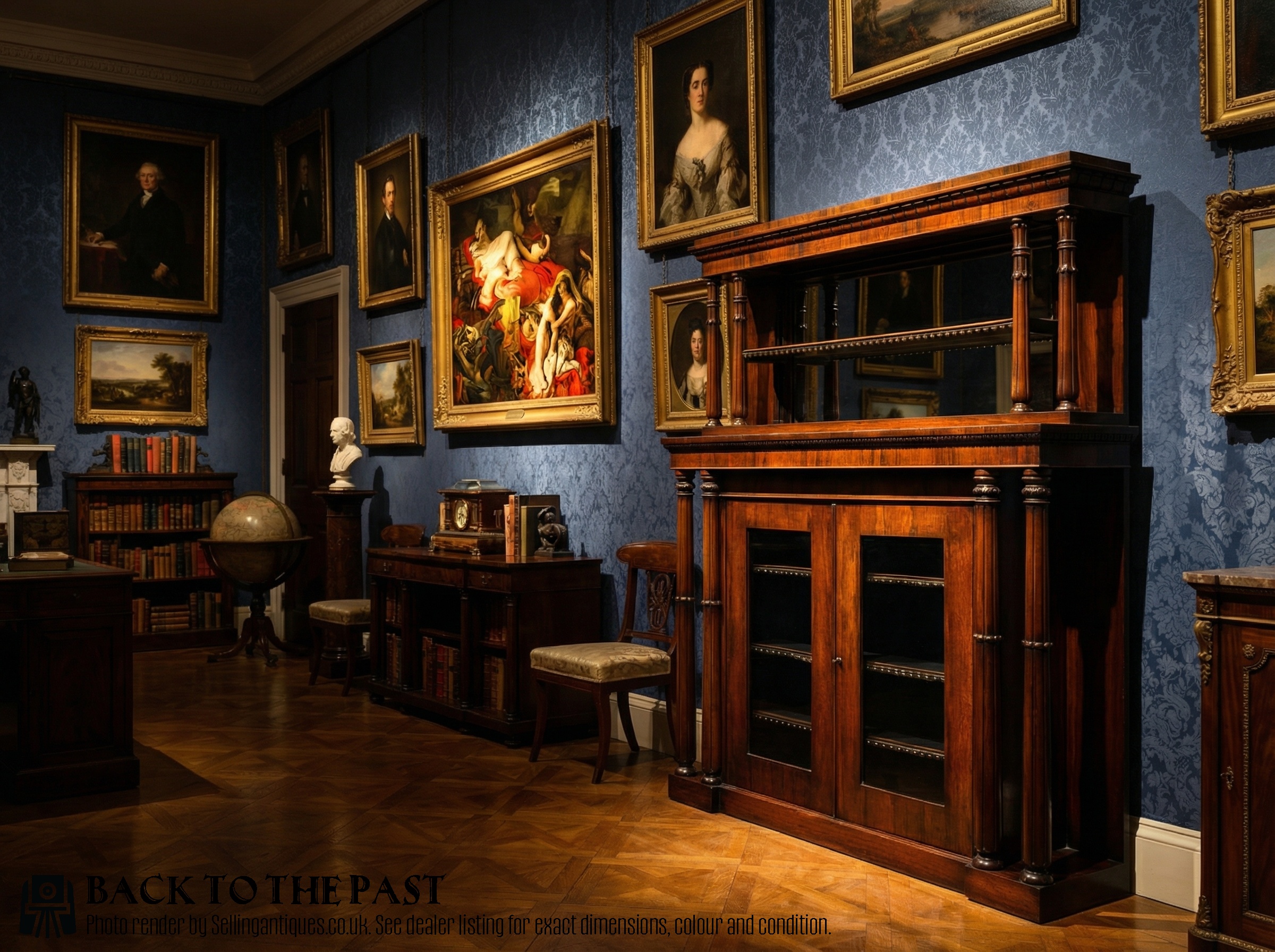
A low rosewood cupboard, usually two doors on a plinth with a shelved back above, made to store and show tableware in the dining or drawing room.
Antique Rosewood Sideboards
The heading says sideboard, but the chiffonier dominates. Of 347 listings on Sellingantiques, 191 carry chiffonier in the title and 115 say cabinet or side cabinet, against 67 for sideboard. Only two pedestal sideboards of the conventional sort appear in the whole archive.
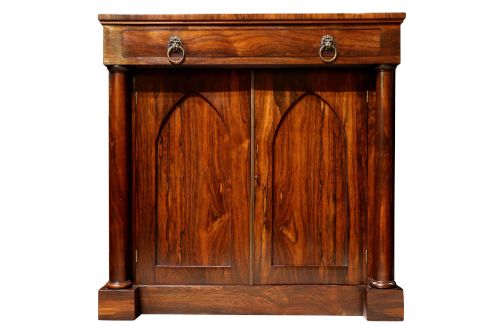
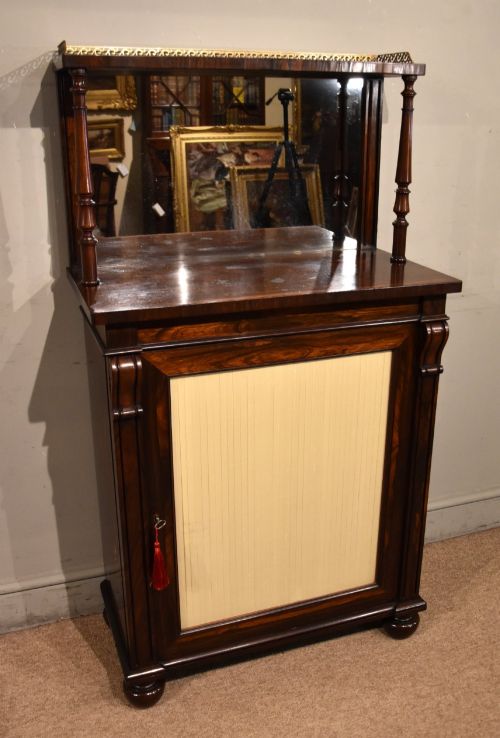
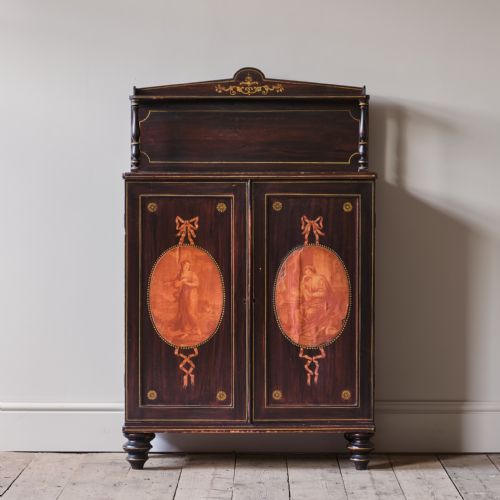
The form you are most likely to meet is a Regency or William IV two-door chiffonier or side cabinet in rosewood or rosewood veneer, low, on a plinth or short feet, often with a shelved or ledged back rising behind the top. Regency is the commonest label by a distance, attached to 133 listings.
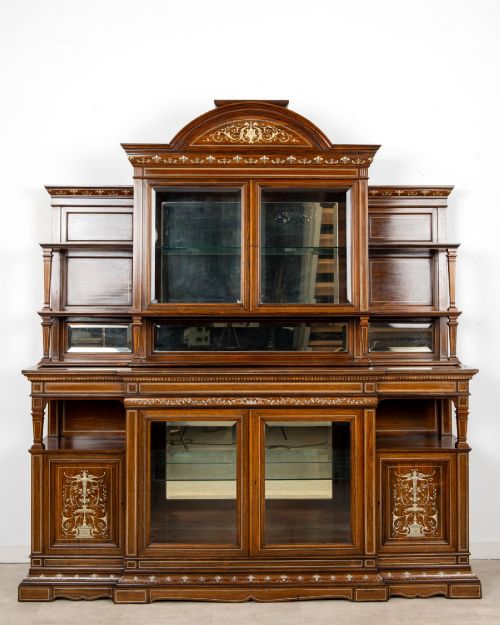
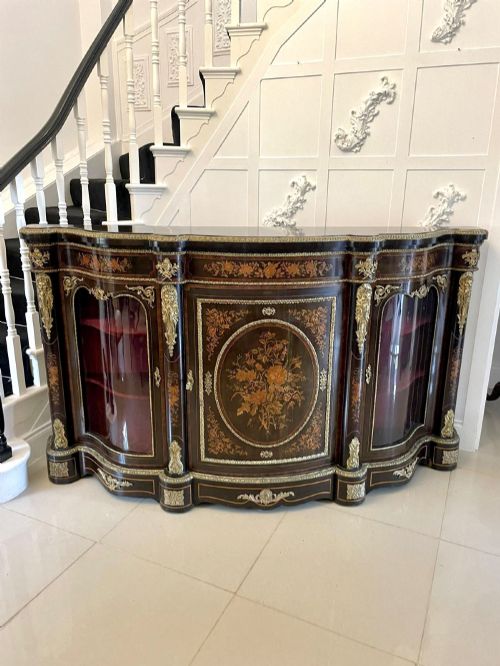
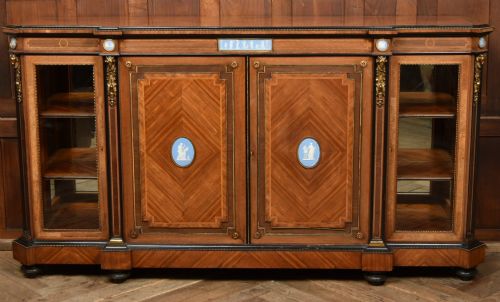
The vocabulary is unsettled and dealers hedge. Twenty titles read "chiffonier side cabinet" and nineteen "chiffonier sideboard", describing much the same object. Credenza turns up for the Victorian display cabinets, bow-ended or serpentine, which with other Victorian pieces make up about a fifth of the category.
Dating is mostly by period name. Regency, 19th Century and Victorian cover the bulk of it, and only 72 listings give a clean year, running 1800 to 1930 with a cluster in the 1850s and 1860s. Read Regency as a broad label rather than a tight bracket, since the same piece is sometimes filed as 19th Century or Georgian by the dealer who titled it Regency.
Where The Range Widens
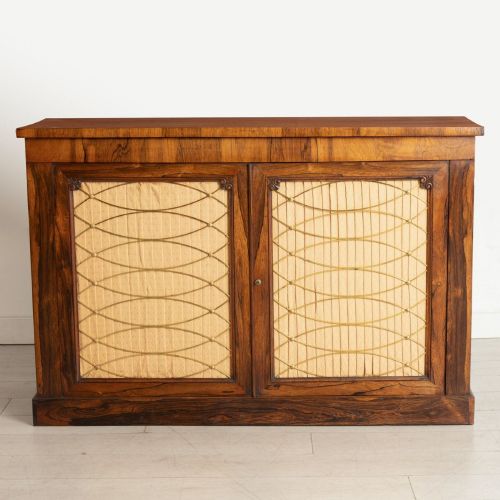
Brass does the most work. Brass inlay, brass line and scroll let into the dark ground, or a pierced brass grille in place of a solid door panel, appears in 34 titles and clusters in the upper half of the range. Brass-inlaid chiffoniers sit at the very top.
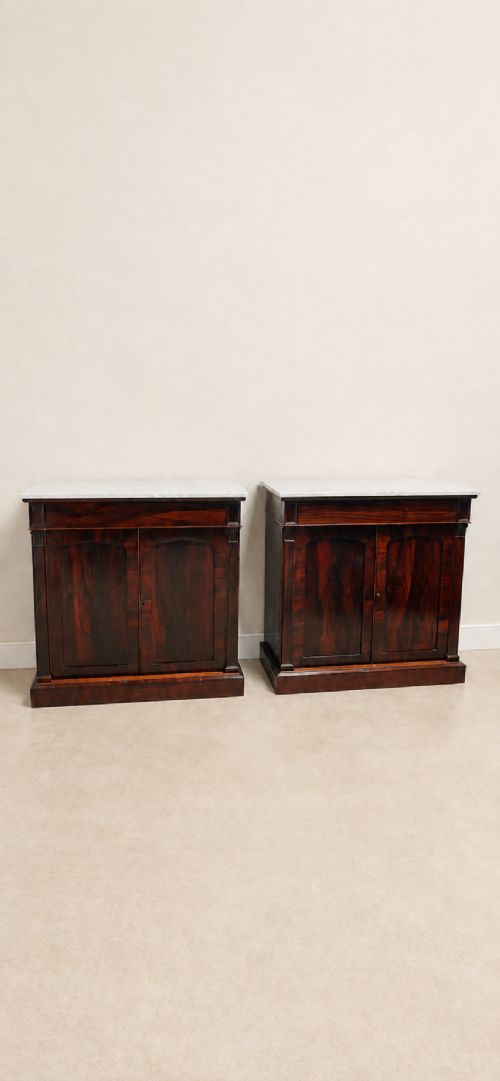
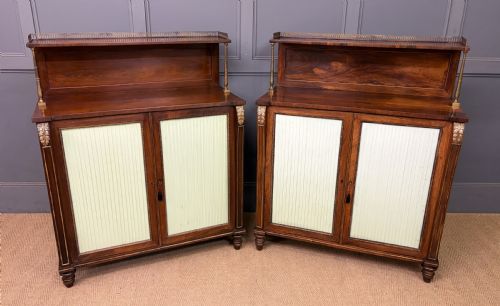
Scale and multiplication push the same way. Breakfront and inverted-breakfront fronts appear in 21 titles, and the three- and four-door breakfront side cabinets sample above the middle. Pairs are the strongest single lift: nine titles offer two matching cabinets and every one sits near the expensive end. Where a workshop name is attached, the titles say manner of, attributed to or pos rather than claiming it outright, and those pieces sample high.
At the other end sit the pieces that only look the part. Four listings state simulated or painted rosewood, another timber grained to imitate it, including a Regency pine chiffonier in rosewood paint, and these sit at or below the middle. Marble tops, named in 25 titles, are a feature of about one in ten rather than the norm.
Antique Rosewood Sideboards Retail Price Guide 2026
Typical UK retail prices for rosewood sideboards, calculated from the Sellingantiques database of over a million retail prices indexed since 2003. This retail price guide relies exclusively on Sellingantiques data; no external sources or auction records are used, so the figures do not describe the wider market.
Pairs are scarce. Nine titles in the Sellingantiques archive offer two matching rosewood cabinets rather than one.
The Antique Rosewood Sideboards Glossary
- Chiffonier
- A low side cupboard, usually two doors, often with a shelved or ledged back above. The commonest word in these titles by some way.
- Side cabinet
- Used almost interchangeably with chiffonier in this category, generally for examples with no superstructure over the top.
- Ledged back
- The raised shelf or gallery standing above the cupboard section, sometimes called an upstand.
- Breakfront
- The front stepped forward in the centre. Inverted breakfront steps that centre section back instead.
- Brass grille
- A pierced brass panel set in the door in place of a solid one, usually silk-backed.
- Palisander
- The continental name for rosewood. Two titles use it rather than rosewood, and one piece is called Rio Rosewood.
Antique Rosewood Sideboards: Frequently Asked Questions
Is a chiffonier the same as a sideboard?
Not quite, but the titles treat them as near neighbours. A chiffonier is a low two-door cupboard, often with shelves above, while sideboard in its conventional pedestal sense barely features here: two listings in the whole archive.
Dealers hedge openly. Nineteen titles read "chiffonier sideboard" and twenty "chiffonier side cabinet", using both words for one object.
How many come up for sale each year?
Around 29 rosewood sideboards and chiffoniers reach the market on Sellingantiques in a year.
They come from a wide field. A total of 114 different dealers have listed one, so no single dealer or region defines what turns up.
What does brass inlaid mean on these cabinets?
Brass line or scroll work let into the surface of the rosewood, a Regency treatment. Twenty-one titles use the phrase, and brass appears in 34 titles overall.
The other brass note is the grille: a pierced brass panel filling the door opening instead of a solid one. Both sit in the upper half of the range.
Do rosewood chiffoniers usually have marble tops?
No. Marble is named in 35 titles and marble top in 25, so roughly one in ten of the category.
Carrara and serpentine forms both appear, and a few of the breakfront cabinets carry shaped marble to match the front.
What period are most of these?
Regency is the commonest label, attached to 133 listings, and the word appears in 155 titles. William IV and George follow well behind.
Victorian pieces, including the credenzas, make up about a fifth. Where dealers give a year at all, the range runs 1800 to 1930 with a thin 1920s tail.
Why do some listings say simulated rosewood?
Because the piece is another timber, often pine, grained or painted to imitate rosewood figure. Four titles say so outright, one of them a Regency pine chiffonier in rosewood paint.
Those four sit at or below the middle of the range.