
Antique Bow Front Sideboards
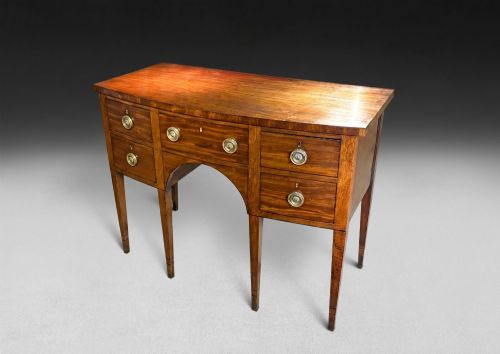
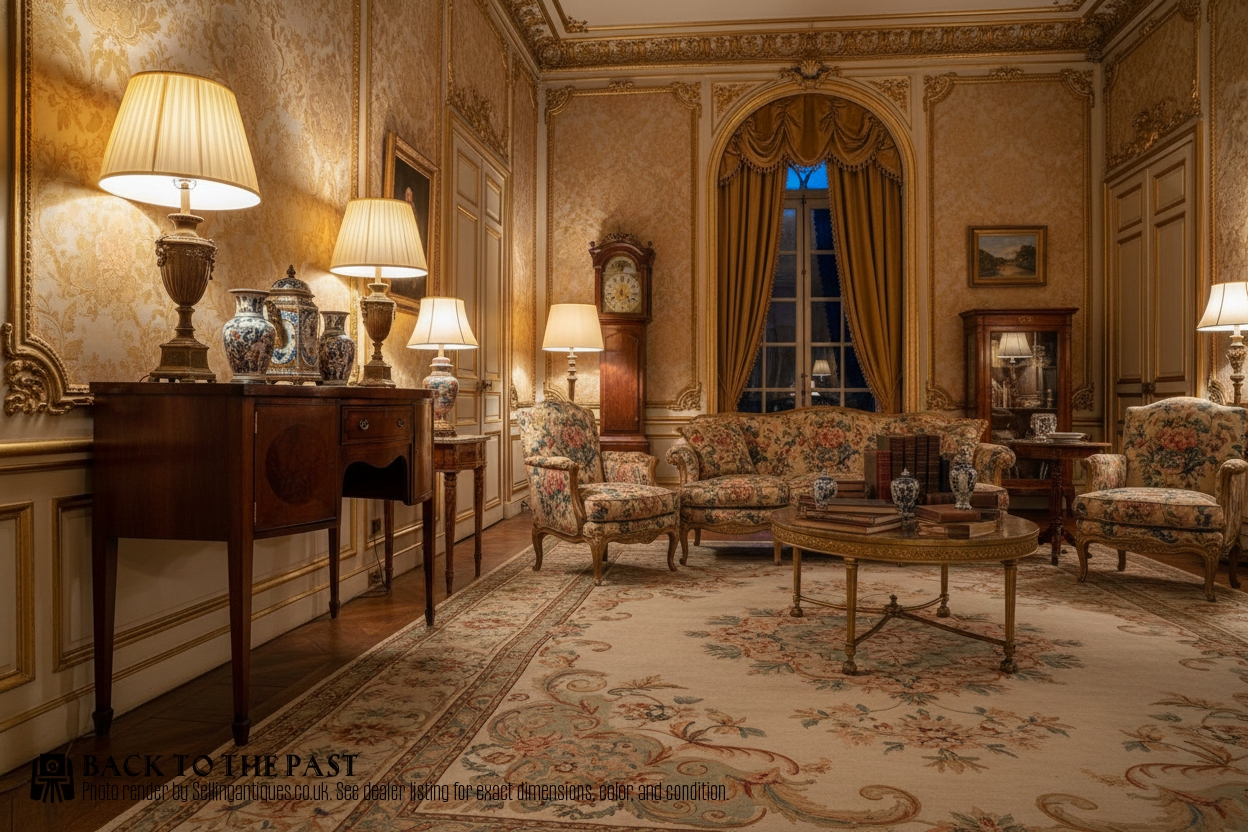
A dining-room serving cupboard with an outward-curved front, usually in mahogany, built to hold bottles, cutlery and linen close to the table.
Antique Bow Front Sideboards
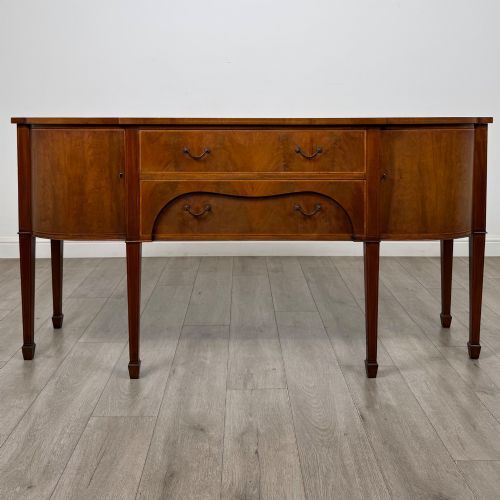
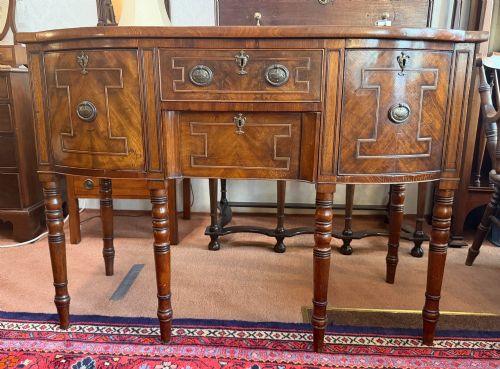
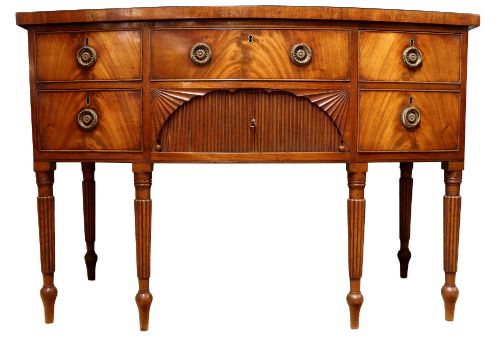
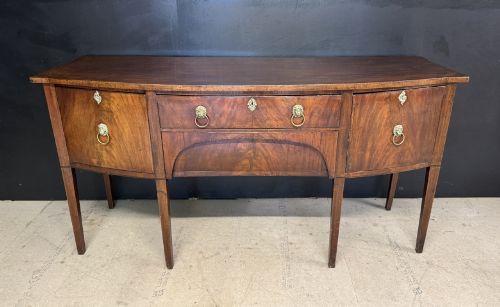
The form settled in Britain in the later 18th century, when the sideboard became a serving table standing on legs with drawers and cupboards beneath. The front was shaped into a shallow outward sweep, a neoclassical line that also made it easier to pass in a crowded dining room. It carried on through the Regency and was revived from the late 19th century onward.
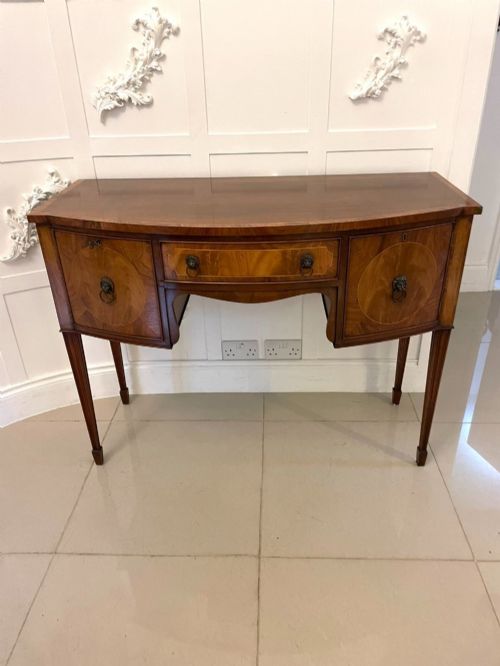
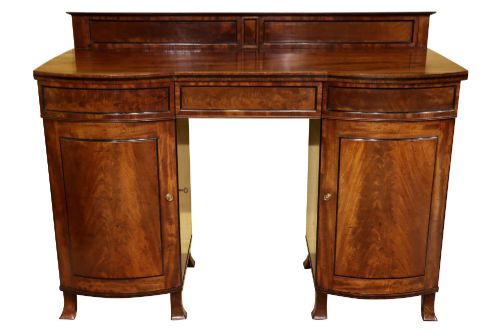
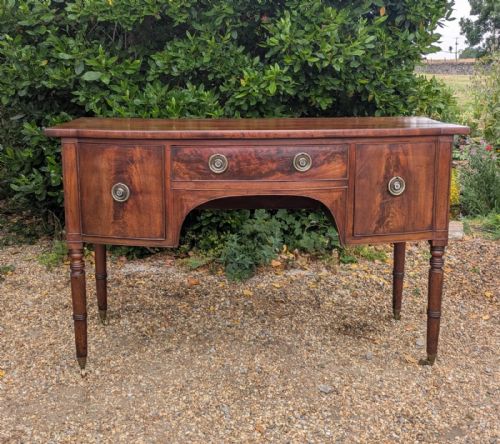
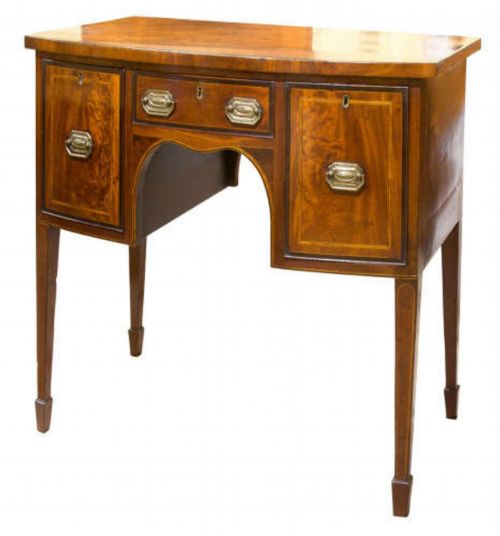
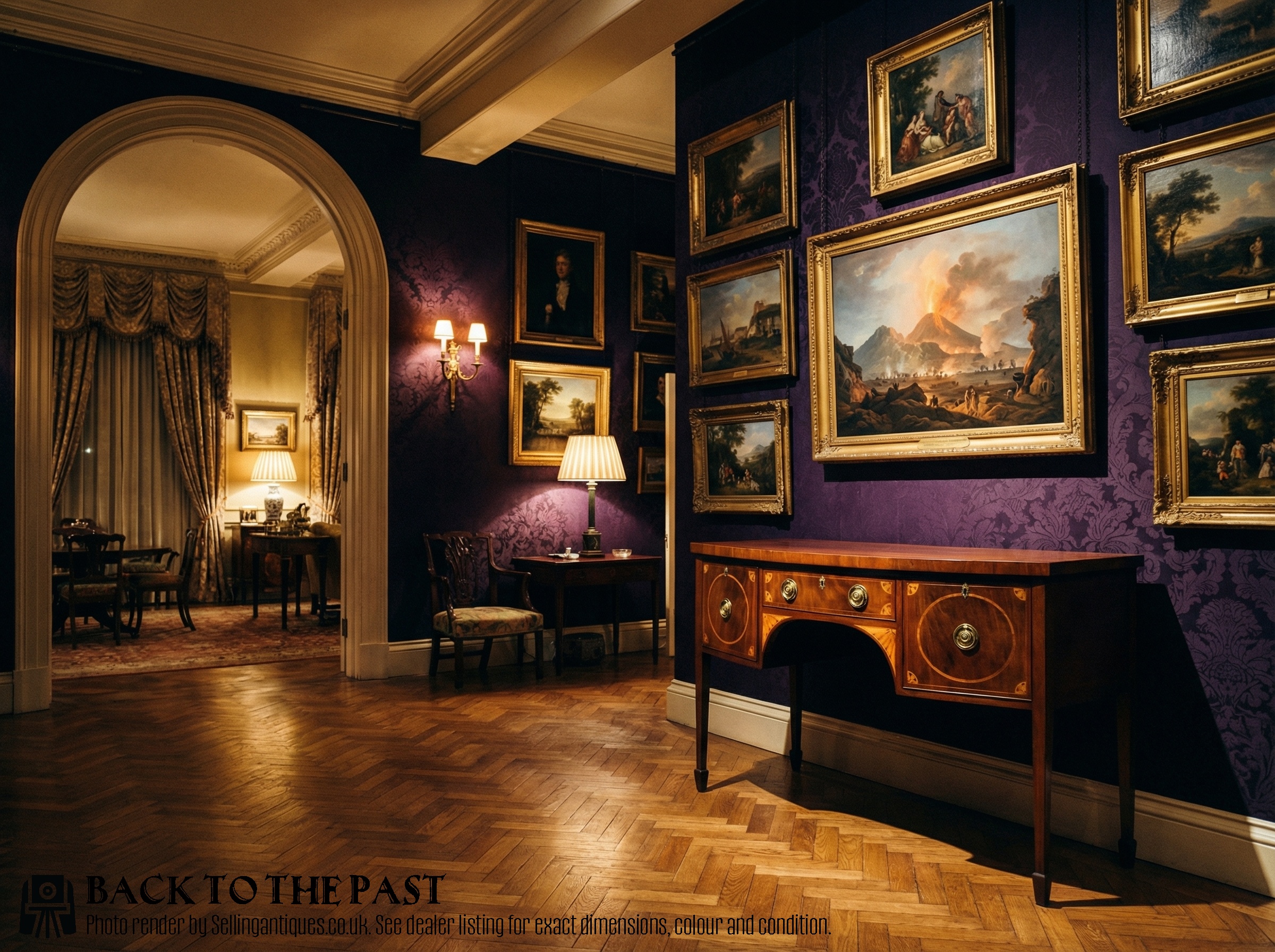
The piece you meet most often is a mahogany bow front on legs, dated somewhere between about 1790 and 1830. 'Sideboard' appears in 217 of the 261 listings and 'mahogany' in 170, with a central drawer flanked by cupboards or deep cellaret drawers, and often six turned legs. Georgian labelling dominates the period words, George III and Regency close behind.
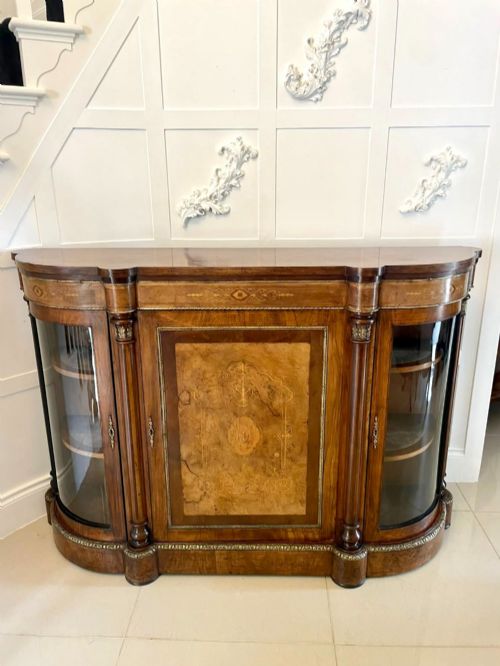
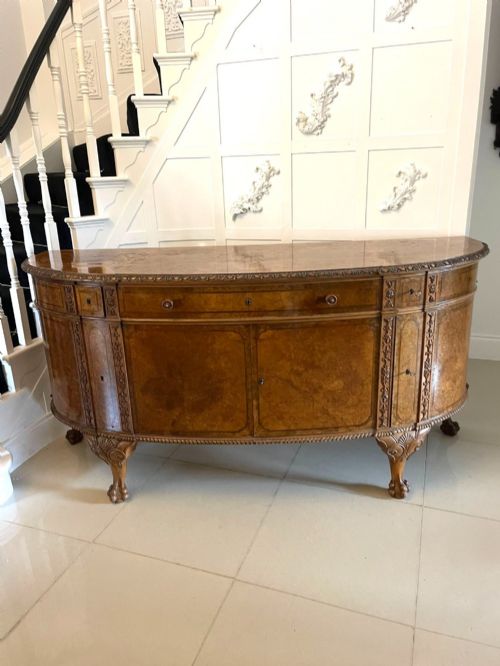
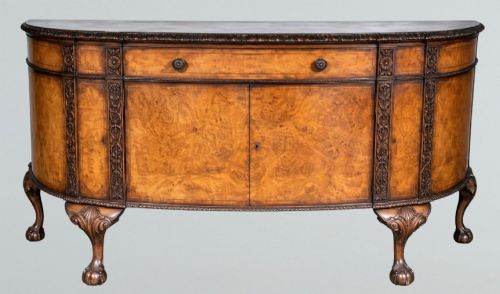
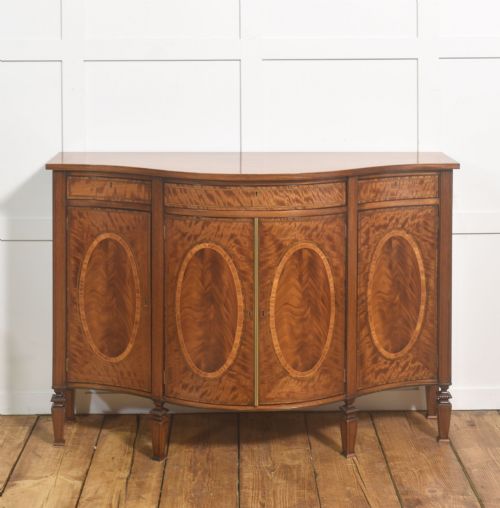
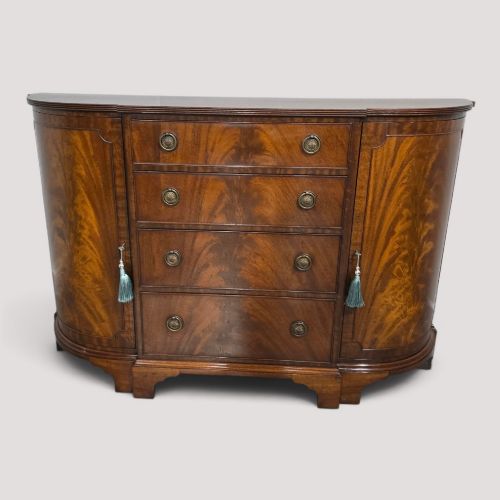
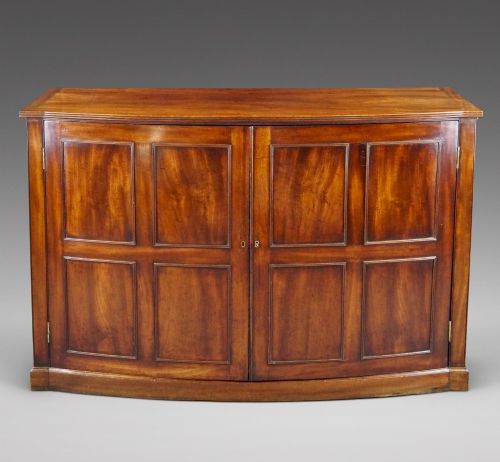
Around a fifth of the archive is revival work: titles reading Georgian style, Georgian Revival or Regency style, with Edwardian and 1920s dates attached. A further group of roughly one in ten sits slightly outside the sideboard proper, bow-ended burr walnut credenzas and side cabinets, some ormolu or porcelain mounted. Marble-topped bowed side and pier cabinets of about 1900 to 1930 turn up in small numbers, along with a French buffet and a French commode.
Dates need reading with care. Only 100 of the listings carry a clean year, and those run 1800 to 1930; the rest sit under brackets such as Georgian, 19th Century or 1800s, used loosely enough that a piece labelled Georgian in one field can be dated c.1820 in its title. Revival pieces are sometimes dated to the style rather than the making, so title and dated field are best read together.
Where The Range Splits
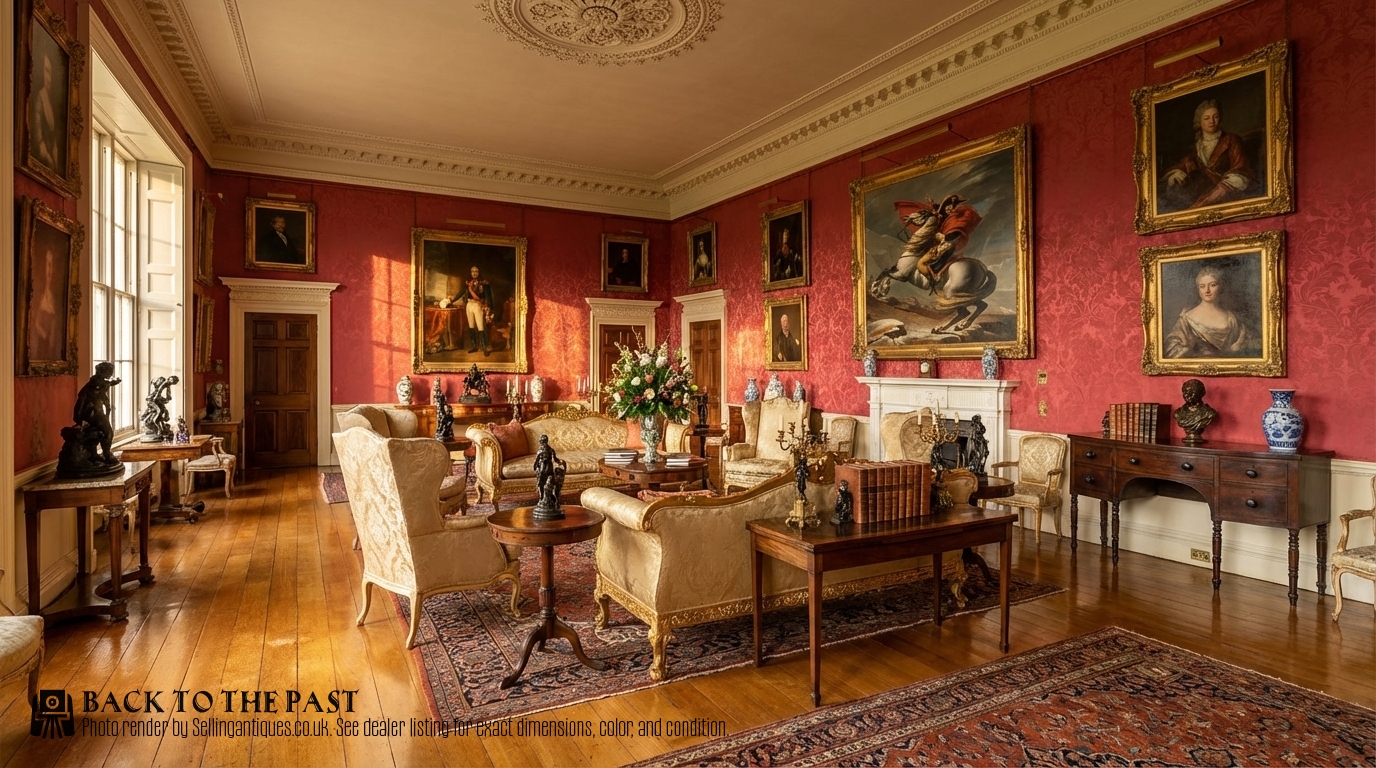
Decoration is the clearest divide. 'Inlaid' appears in 39 titles, and the upper part of the range is where marquetry, purpleheart banding, boxwood and ebony stringing and crossbanding cluster. The lower end is mostly a plain mahogany bow front with nothing said about the surface beyond the timber.
Figure in the veneer moves with it. Figured and flame mahogany, and burr walnut on the credenzas, sit in the middle and upper range, while unqualified mahogany spreads across the bottom. Applied mounts and stone tops work the same way: ormolu, brass, porcelain mounts and pietra dura appear only near the top. So does a named period. Titles reading George III period or Regency period concentrate higher than those reading Georgian style or Regency style.
Size cuts both ways. 'Small' is in 36 titles against 13 for 'large', so the trade sells this form on neatness more often than on presence, and small Georgian examples reach right to the top of the range as well as sitting at the bottom of it. Large attaches to some of the highest-priced Georgian and burr walnut pieces too.
Antique Bow Front Sideboards Retail Price Guide 2026
Typical UK retail prices for bow front sideboards, calculated from the Sellingantiques database of over a million retail prices indexed since 2003. This retail price guide relies exclusively on Sellingantiques data; no external sources or auction records are used, so the figures do not describe the wider market.
About twenty-seven bow front sideboards are listed on Sellingantiques each year, and eighty-four different dealers have handled one.
The Antique Bow Front Sideboards Glossary
- Bow front / bow fronted
- Front curved outward in one shallow convex sweep. Dealers use the two spellings interchangeably, along with bowed and the closed-up bowfront.
- Bow ended
- Only the two ends are curved and the centre stays flat, a shaping common on the credenzas and side cabinets in this category.
- Cellaret
- Deep bottle drawer in a sideboard pedestal, sometimes lined or partitioned to hold bottles upright.
- Crossbanded
- Border veneer laid with the grain running across the edge, used to frame doors and drawers.
- Boxwood strung / ebony strung
- A fine light or dark line of inlay outlining panels and legs.
- Stage back
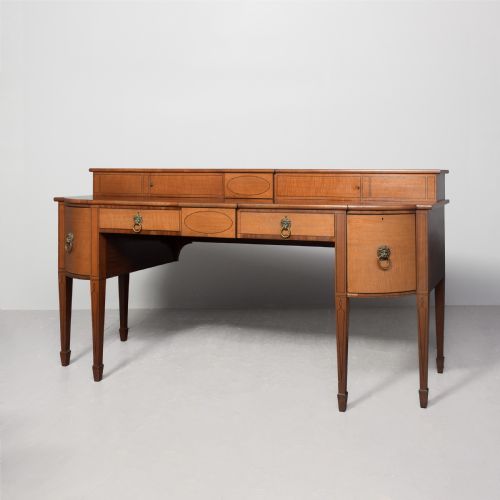
- Raised superstructure across the back of a sideboard, a term that turns up on Scottish George III examples.
Antique Bow Front Sideboards: Frequently Asked Questions
What wood are they usually made from?
Mahogany accounts for two-thirds of the titles, 170 out of 261. Walnut, including burr walnut, is a distant second at 27, and it concentrates on the credenzas and side cabinets rather than the sideboards.
Satinwood, oak, pine and kingwood appear only in single figures across the samples.
How many come up for sale each year?
Around 27 are listed on Sellingantiques in a year, and 84 different dealers have handled one.
That spread means the form travels widely through the trade rather than sitting with a handful of specialists.
Why do dealers spell it so many different ways?
There is no settled usage. 96 titles say 'front' and 89 say 'fronted', which makes the two effectively interchangeable.
A further 11 use 'bowed' and only 9 close it up to 'bowfront'. All four describe the same outward curve.
Are marble tops common on these?
No. Marble appears in only 8 titles across the whole archive.
When it does turn up, it is usually on a bowed side or pier cabinet of about 1900 to 1930 rather than on a sideboard proper.
Do bow fronts appear on other furniture?
The bowed idea leaks into neighbouring forms. Dressers, secretaires, a bookcase, a pier cabinet, a commode, a painted pine server and a pietra dura side cabinet each appear once.
Credenzas, chiffoniers, buffets and serving tables come up more regularly, most of them bow ended rather than bow fronted.
Which regions are named in the listings?
Scotland is the origin that recurs, with three samples naming Scottish George III sideboards, two of them with a stage back.
France supplies two more, an oak buffet and a kingwood commode. Beyond those, listings rarely state a region.