
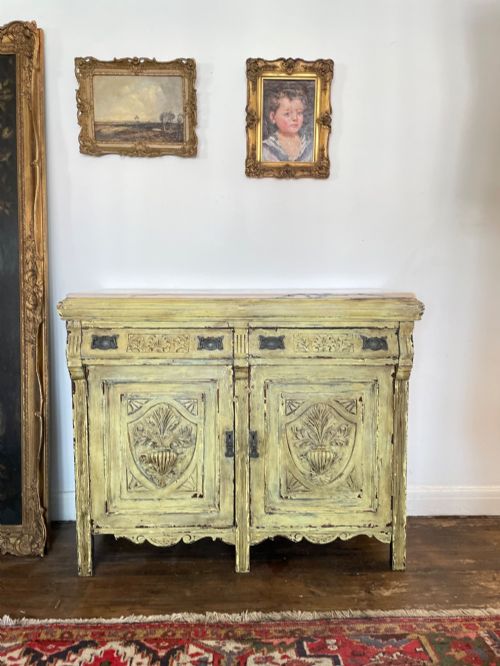
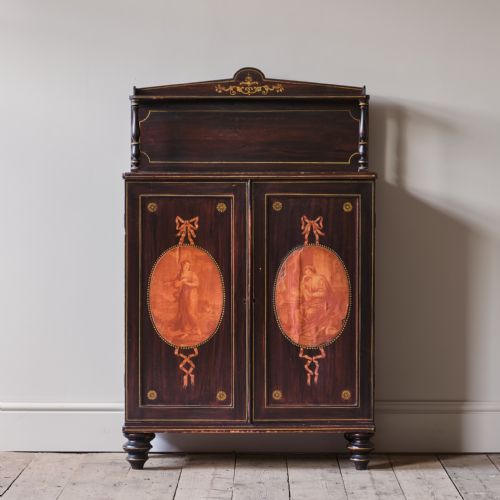
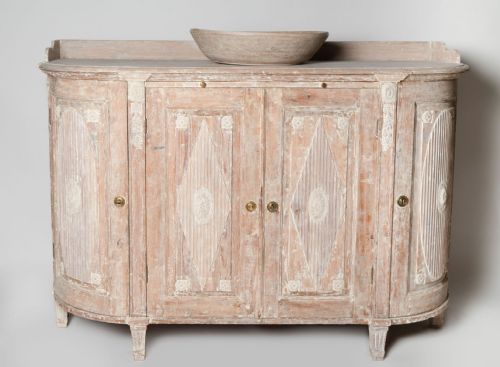
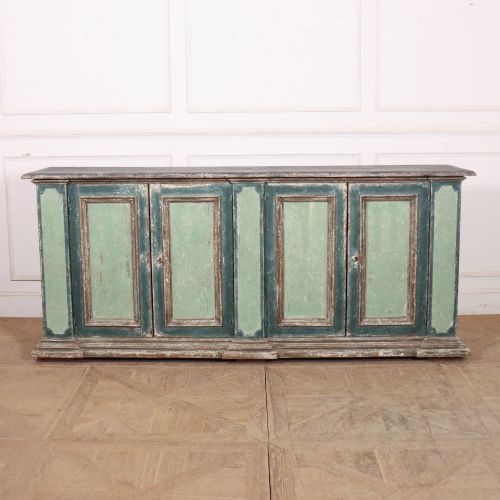
Antique Painted Sideboards
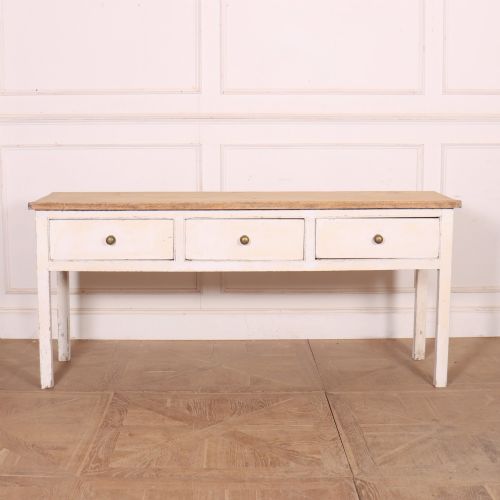
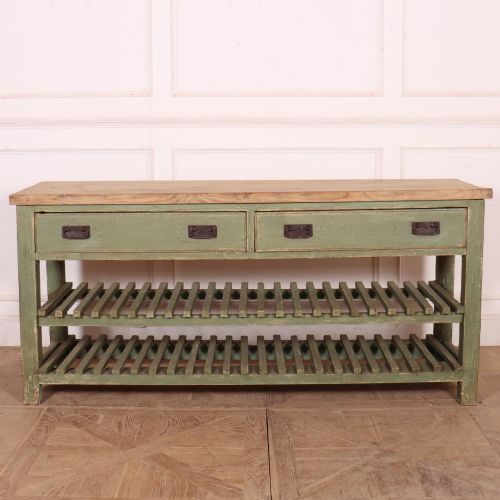
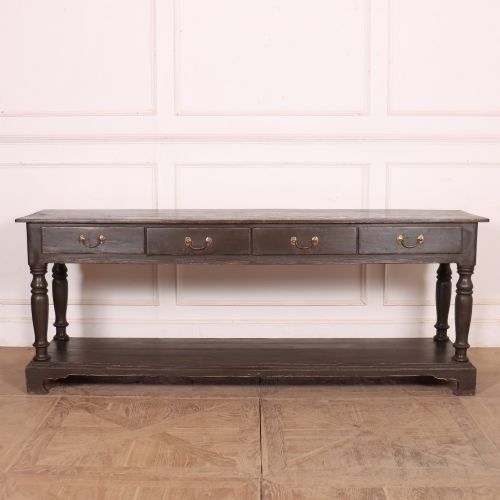
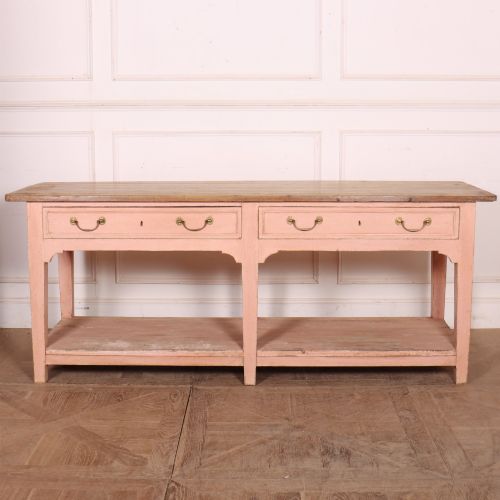
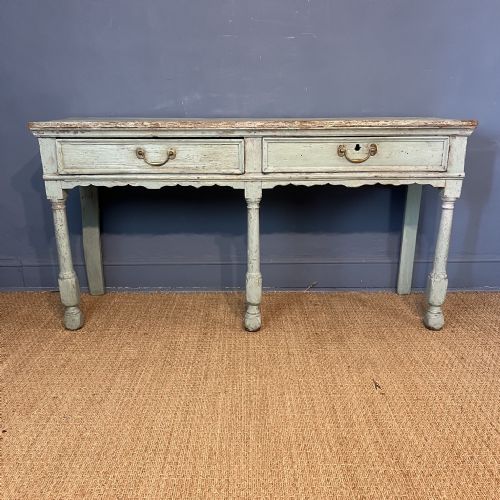
Painted low storage furniture for the dining or kitchen wall, most of it the bottom half of a country dresser, used on its own for pots, plates and linen.
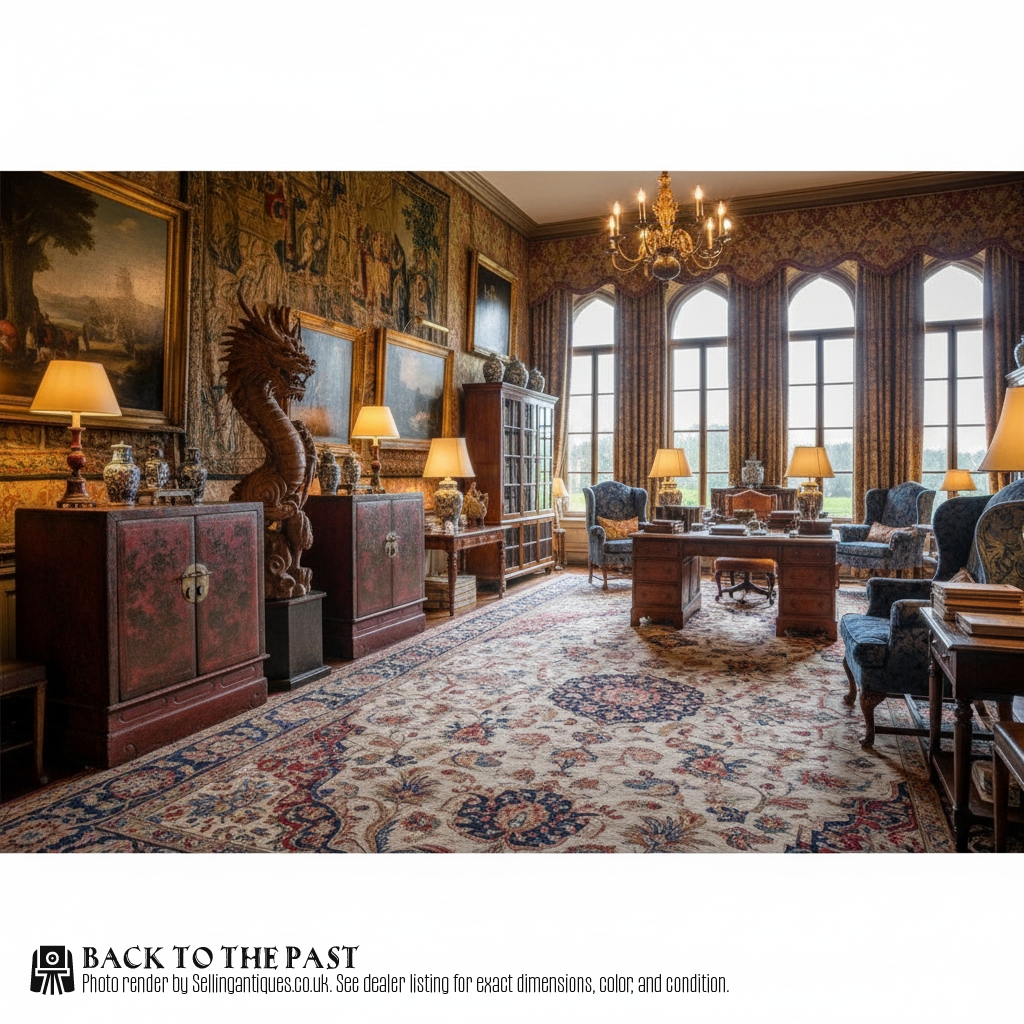
Antique Painted Sideboards
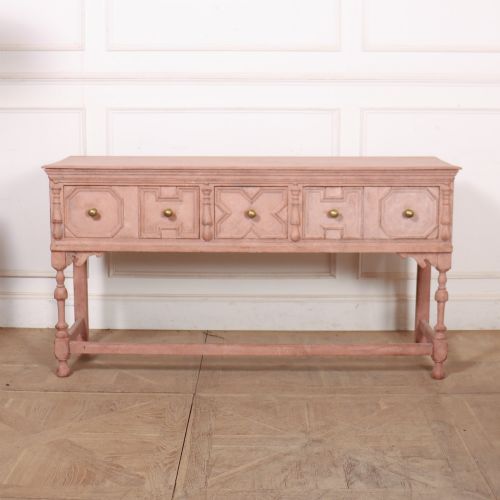
The heading covers painted low case furniture, but one form dominates. Half the titles on Sellingantiques contain the word "dresser", and a similar share carry the exact phrase "dresser base": the lower cupboard-and-drawer section of a kitchen dresser, sold without its rack and used as a sideboard. The bare title "English Painted Dresser Base" is the commonest listing in the archive.
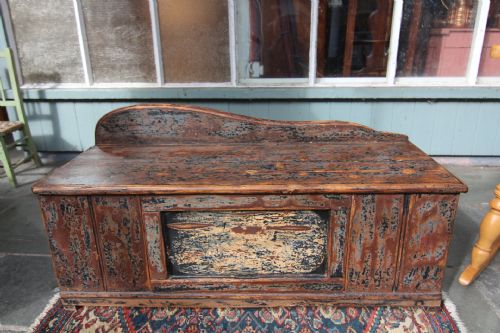
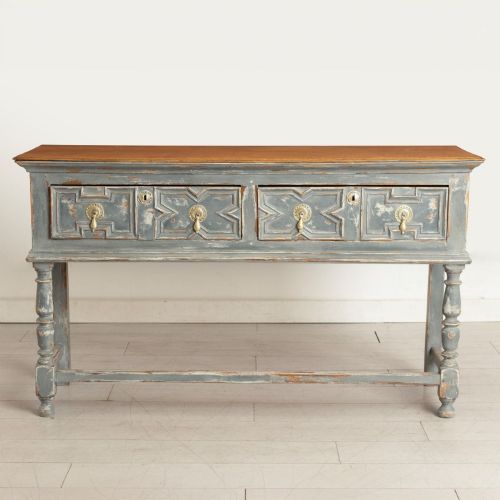
Paint explains the timber. Pine is named in roughly a fifth of titles and oak in a small handful, an inversion of the usual run of English case furniture and a direct result of paint being a softwood finish. Dealers describe surfaces as original, later, scraped, chalky, scumbled or simulated, and a slice of the pine stock is sold bare, "to wax/paint", for the buyer to finish.
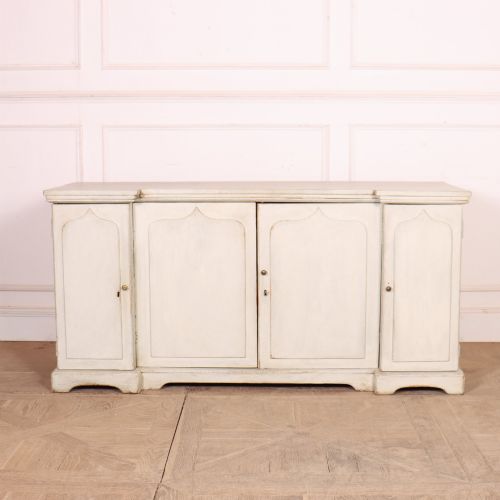
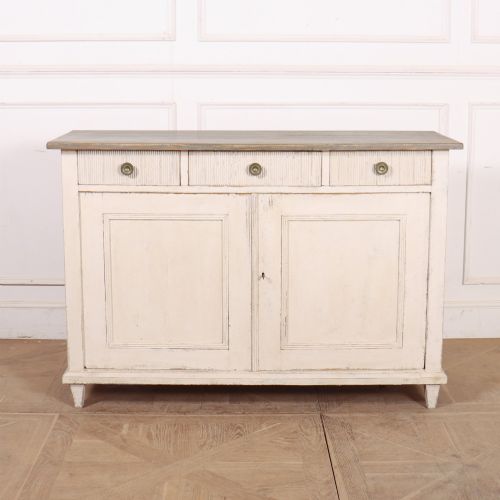
After the English, Welsh and Scottish dresser bases come the French: buffets and enfilades, the long multi-door run that sits reliably in the upper half of the range. Swedish pieces number 23 and Italian 19, with Austrian, Hungarian, Irish, Dutch and Spanish examples turning up once each.
Dating is loose by the dealers' own hand. "19th Century" alone accounts for 203 listings and "18th Century" 65, with Victorian and Georgian used as period labels rather than years. Only 153 of 516 listings pin a clean year, and where decades are given they cluster in the 1860s, 1880s and 1890s. The overall span runs 1750 to 1940.
Where The Range Splits
Surface does most of the work. Original paint recurs through the middle and upper range, while "later painted" titles and the stripped pine sold to wax or paint cluster at the bottom, often as near-identical Victorian two-door bases. Age pulls the same way: eighteenth-century dresser bases sit consistently in the upper half, Victorian pine at the foot.
Size and architecture separate the rest. Long pieces, breakfront fronts and potboard bases carry more weight than a plain flat-fronted cupboard, and the architectural enfilades run high. Pairs are uncommon but real, in dresser bases, buffets, servers, enfilades and side cabinets, and they sit near the top.
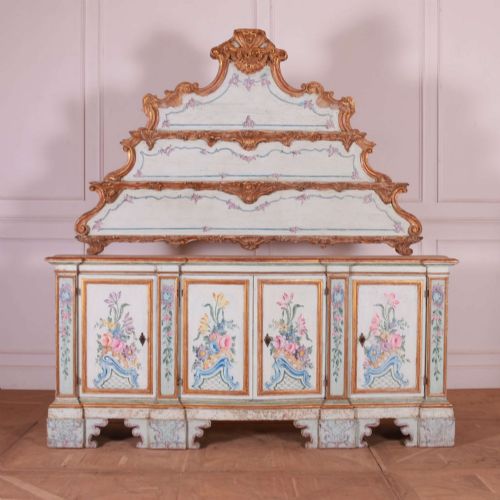
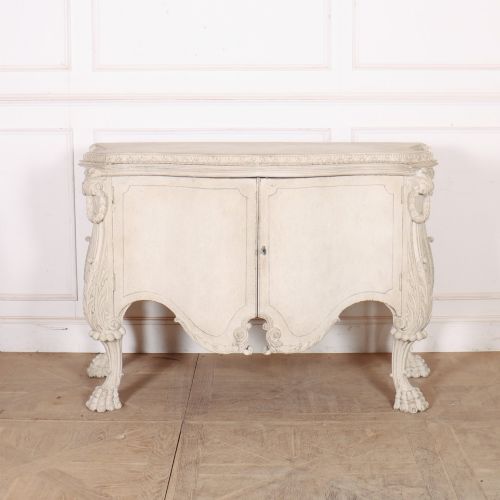
Decoration beyond plain painted timber takes the peak. Carving, parcel-gilt, painted panels and marble tops occupy the highest levels recorded, and the extreme top of the category is not English but Italian: eighteenth-century painted credenzas, clear of everything else. Named origins help too. Welsh, Scottish dairy, West Country, Cumbrian and Bath attributions appear above the middle, against the unadorned "Painted Dresser Base" below.
Antique Painted Sideboards Retail Price Guide 2026
Typical UK retail prices for painted sideboards, calculated from the Sellingantiques database of over a million retail prices indexed since 2003. This retail price guide relies exclusively on Sellingantiques data; no external sources or auction records are used, so the figures do not describe the wider market.
Half the painted sideboard titles on Sellingantiques carry the word dresser, and a good many the phrase dresser base.
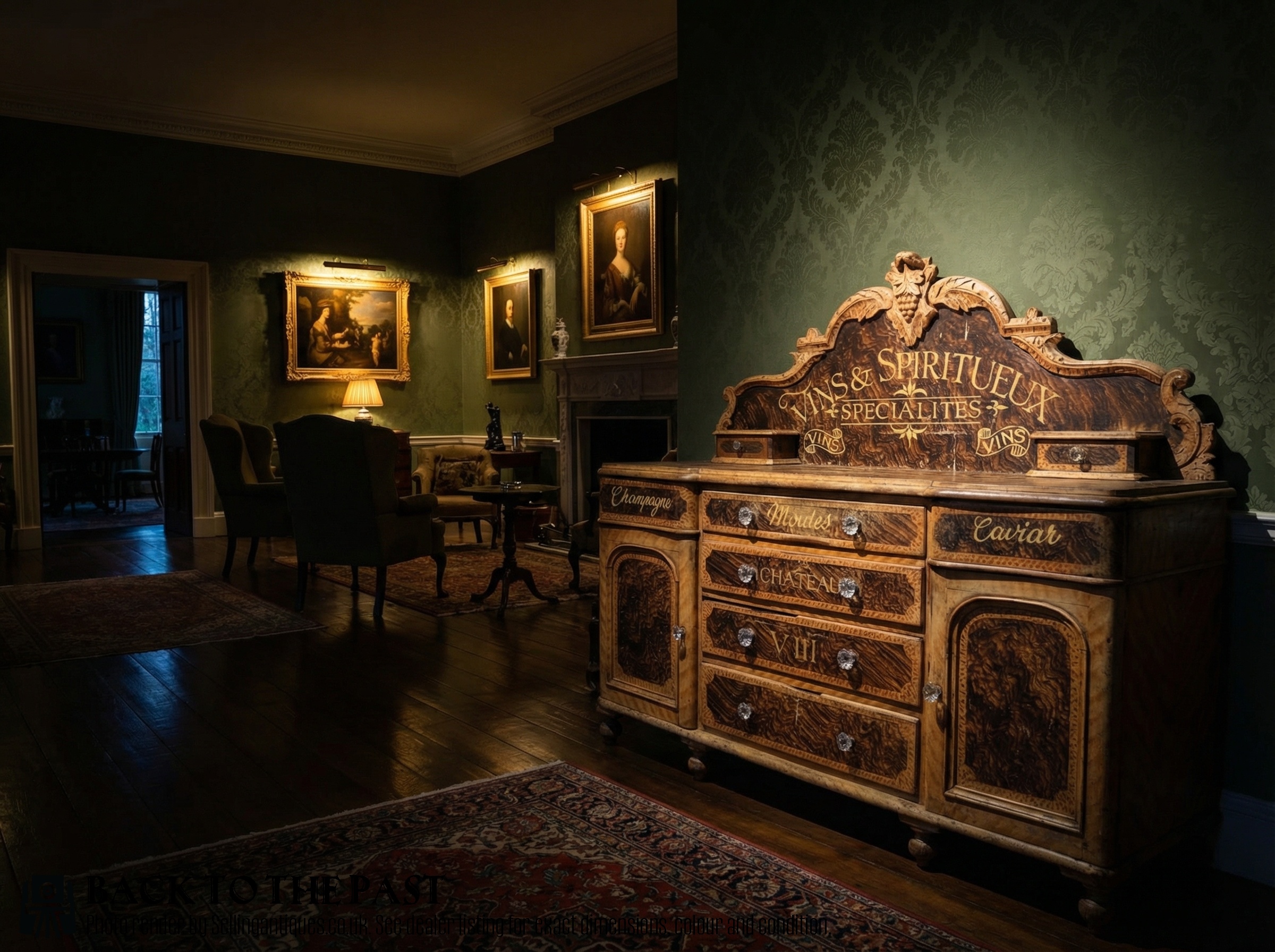
The Antique Painted Sideboards Glossary
- Dresser base
- The lower cupboard-and-drawer section of a dresser, used on its own as a sideboard. The commonest form in this category by a wide margin.
- Enfilade
- A long, low French sideboard, usually several doors wide in a single run. They sit in the upper half of the range.
- Buffet
- French cupboard-sideboard, typically two doors with drawers above. The French dining-room answer to the English dresser base.
- Potboard
- The open shelf at floor level between the end supports of a dresser base or server. Named in a run of titles as a selling point.
- Scumbled
- Paint dragged or combed over a ground to imitate figured timber. Related is "simulated", where the paint copies a named wood; mulberry and rosewood both appear.
- To wax/paint
- Sold with a bare stripped surface for the buyer to finish. It turns up mostly in current pine stock.
Antique Painted Sideboards: Frequently Asked Questions
Why are so many listed as dresser bases?
Because that is what the category mostly is. The word "dresser" appears in one title in every two, and the phrase "dresser base" in a little under half, so this reads less as a sideboard category than a dresser-bottom one.
A dresser base is the lower cupboard-and-drawer half of a kitchen dresser. Sold without the rack, it stands at sideboard height against a dining or kitchen wall.
Is pine normal for this kind of furniture?
Here, yes. Pine is named in around a fifth of titles and oak in only a few, which reverses the usual pattern for English case furniture.
Paint is the reason. It began as a cheap protective and decorative finish on softwood, and later became a decorative choice in its own right.
What does French add to the category?
French pieces make up close to a fifth of titles. Buffets are usually two doors with drawers above; enfilades are the long multi-door run in a single line.
Louis XV, Empire style and buffet de corps forms all appear. Enfilades reliably occupy the upper half of the range, and Swedish, Danish, Italian and Spanish examples sit among them.
How old are these pieces?
The dated field spans 1750 to 1940. "19th Century" alone covers 203 listings and "18th Century" 65, with Victorian and Georgian used as period labels rather than years.
Only 153 of 516 listings carry a clean year. Where decades are given they cluster in the 1860s, 1880s and 1890s, with a thin 1920s tail. One sampled oak dresser base is put in the seventeenth century, the earliest thing recorded.
Are named makers usual in this category?
No. Nothing in the archive points to workshops or retailers as a feature of painted sideboards.
What dealers name instead is place. Welsh, Scottish, Cumbrian, West Country, Bath and Irish attributions appear, along with French, Swedish, Italian and Continental origins.
What does "to wax or paint" mean in a title?
It means the piece is offered with a bare stripped surface, ready for the buyer to finish. The phrase belongs mostly to current stock rather than the sold archive.
These sit at the bottom of the range, often near-identical Victorian pine two-door dresser bases and cupboards.