
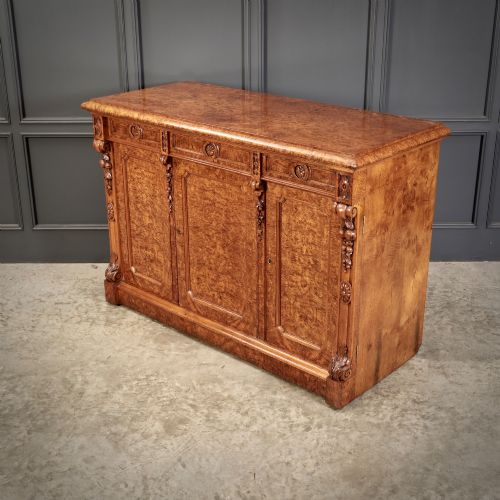
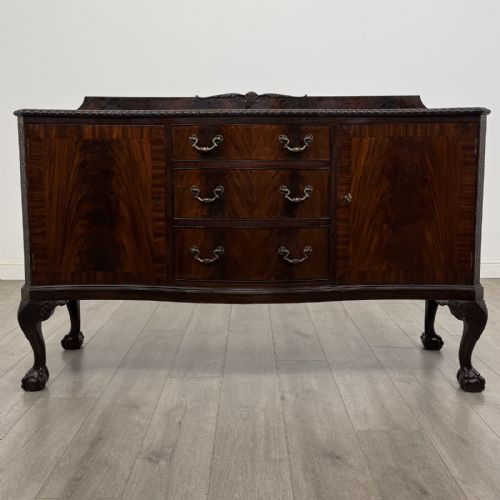
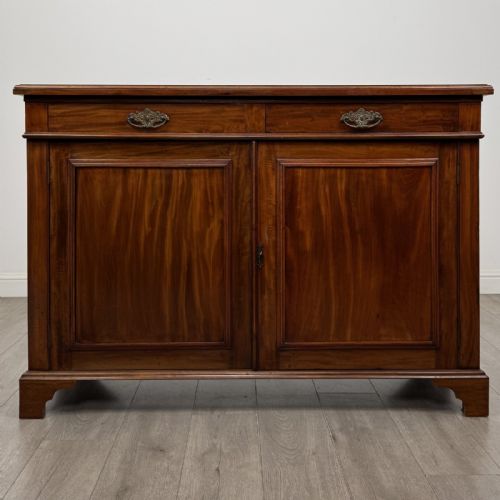
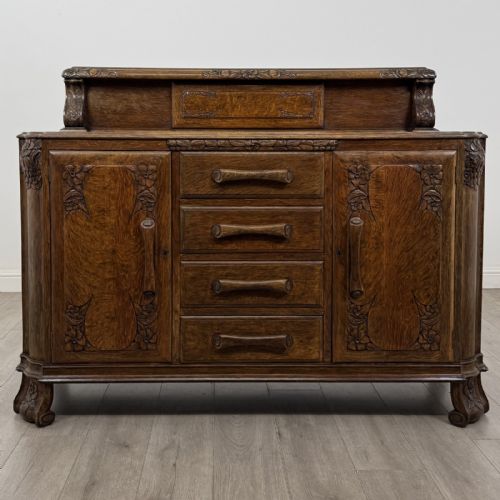
Antique Servers
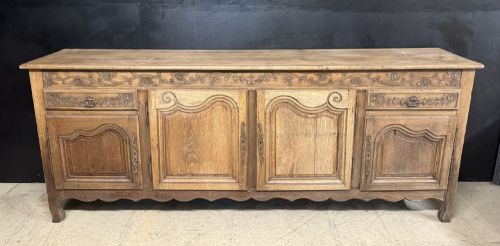
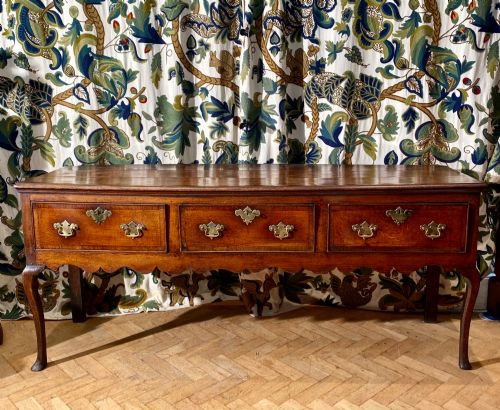
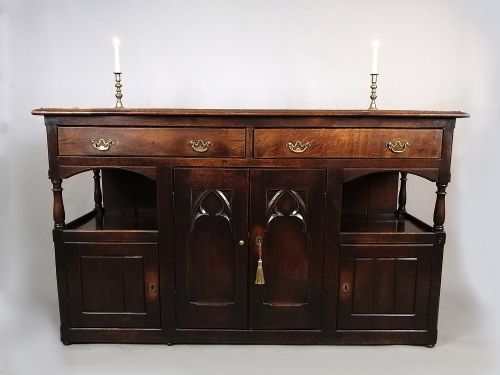
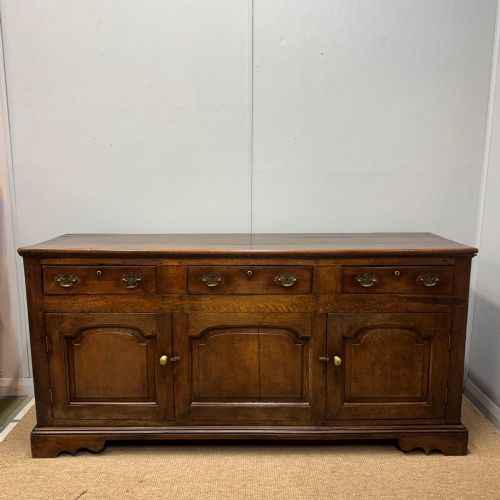
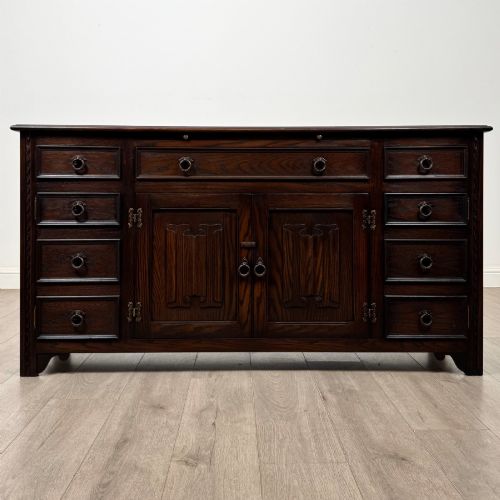
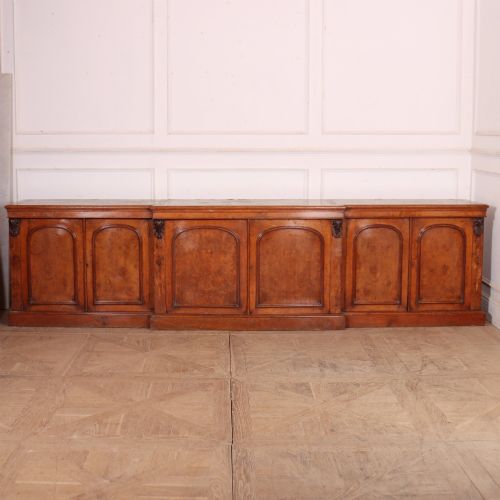
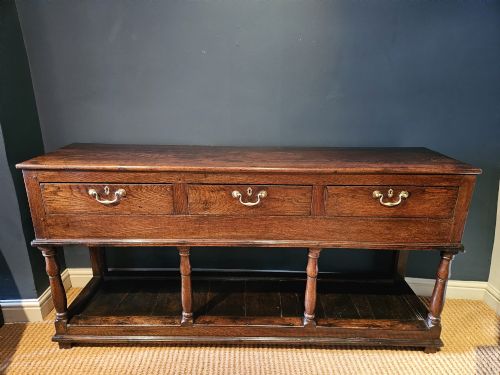
A server is long, low, waist-height case furniture for the dining room or kitchen, drawers over cupboards, made for carving, serving and storing plate and linen.
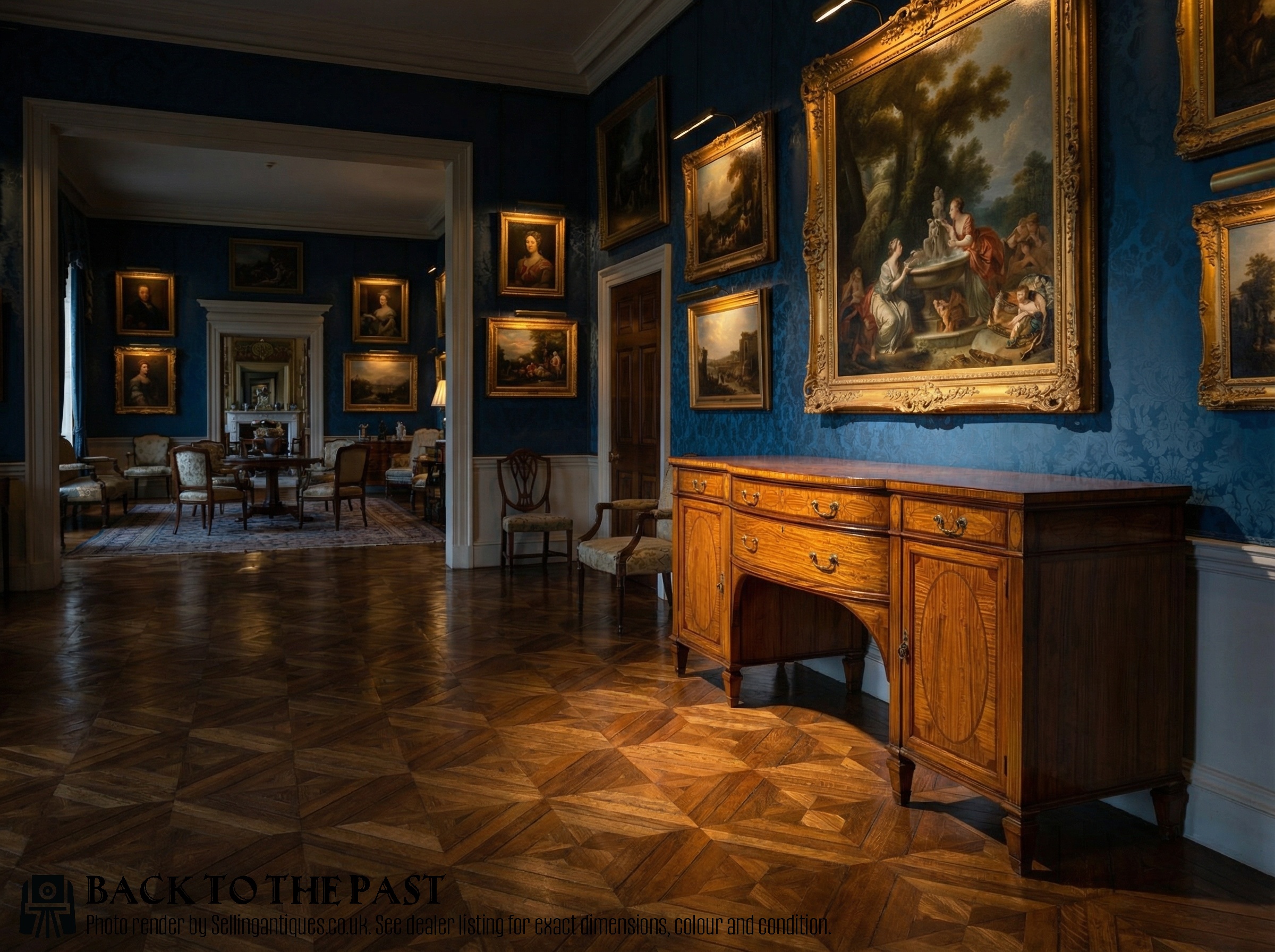
Antique Servers
It's one family of forms described from several angles. Of 912 listings, 539 titles say sideboard, 176 say dresser base, 80 buffet and 48 chiffonier, and "server" or "serving table" runs across all of them. The same piece often carries two or three of those words at once.
The form took shape in Britain in the later 18th century, when the side table flanked by pedestals became a single case piece for plate, linen and bottles. In kitchens and provincial houses, the low dresser without its rack and the French buffet did the same job.
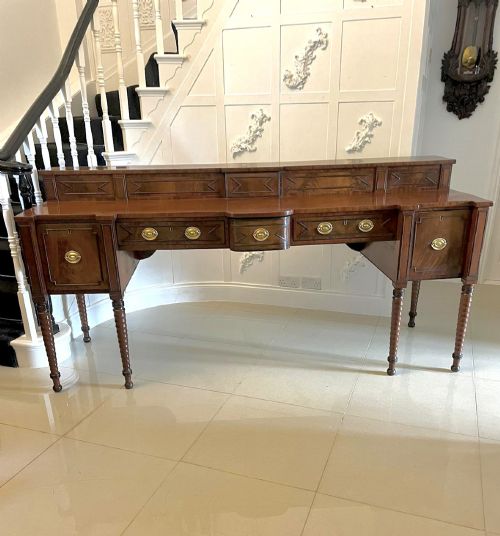
The one you're most likely to meet is a mahogany sideboard of the Georgian-to-Victorian type. Mahogany appears in 359 titles, oak in 202, walnut in 92, with the odd pine, rosewood, elm, chestnut, cherrywood and satinwood body behind them. Fronts are commonly shaped: bow or bowfront in 59 titles, serpentine in 37.
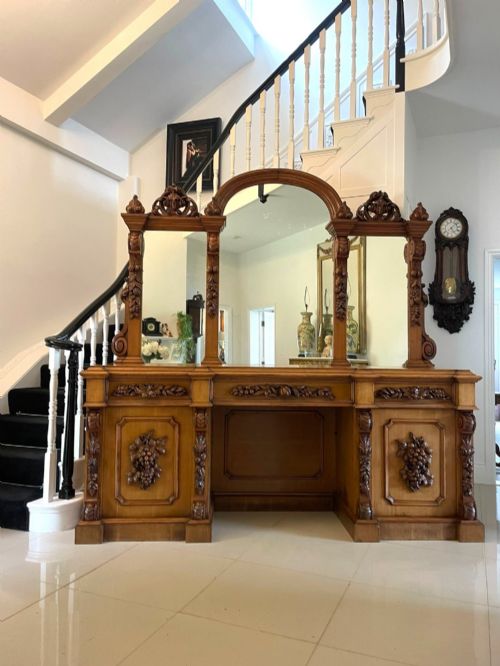
Around 85 come to market in a year on Sellingantiques, listed by 191 different dealers. Roughly a third are Georgian and Regency mahogany, about a quarter Victorian sideboards, chiffoniers and mirror-back buffets, close to a fifth country oak, pine and fruitwood dresser bases, with Edwardian and 1920s-30s walnut revival servers and a smaller run of French and Continental buffets and enfilades.
Top And Bottom
Shape at the front is the clearest divide. Bowfront, serpentine and breakfront pieces cluster in the upper half of the range, while plain two- and three-door sideboards and late side cabinets fill the bottom. A shaped front meant more work in the carcase and it still reads that way.
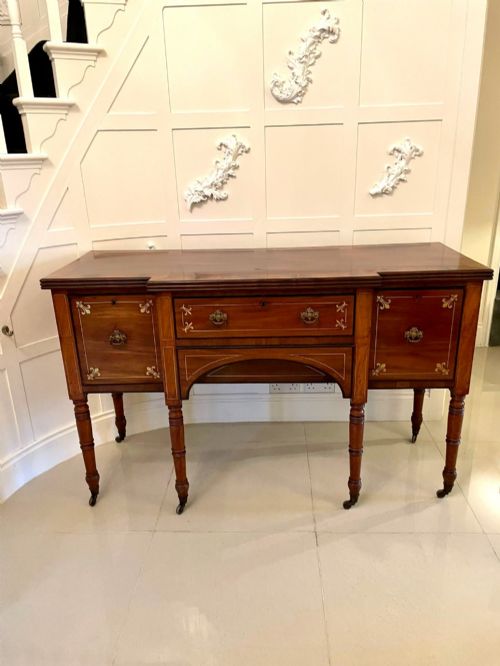
After shape comes figure and date. Burr appears in 49 titles, figured in 21, flame in 21, and pollard oak recurs among the Victorian mirror-backs; unqualified "mahogany" or "oak" dominates the cheaper end. Inlay, marquetry, brass stringing, crossbanding, carving and ormolu mounts run through the dearer pieces, with inlaid in 58 titles and carved in 56.
Early wins. The highest sampled positions go to 18th-century George III mahogany sideboards and to 17th and 18th-century oak dresser bases, while 1900s to 1930s revival servers sit low. Scale pulls both ways: large appears in 51 titles and small in 44, and either extreme can sit high, alongside exceptionally big or heavily mounted Victorian and French pieces.
Antique Servers Retail Price Guide 2026
Typical UK retail prices for servers, calculated from the Sellingantiques database of over a million retail prices indexed since 2003. This retail price guide relies exclusively on Sellingantiques data; no external sources or auction records are used, so the figures do not describe the wider market.
The oldest server to pass through Sellingantiques is a Welsh oak one, placed at about 1670.

The Antique Servers Glossary
- Dresser base
- The low half of a dresser, drawers over cupboards or an open potboard, with no rack above. It appears in 176 titles and is routinely also called a server.
- Chiffonier
- A low cupboard sideboard, often with a raised shelf or mirror back. In 48 titles, 21 of them mahogany.
- Buffet
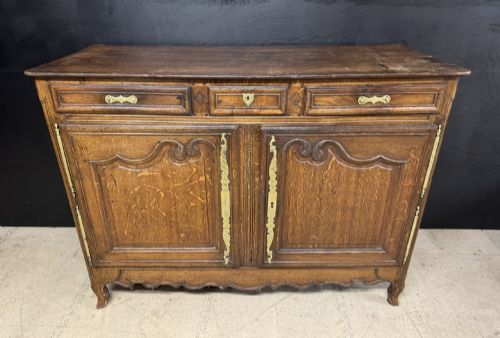
- A sideboard, or in the tiered form a set of open shelves for serving. In 80 titles, and the usual word on French and Continental pieces.
- Bowfront
- A convex curved front, the commonest shaped front in this category, with bow and bowfront together in 59 titles.
- Breakfront
- A front whose centre section projects forward of the flanking ends. Twenty-two titles carry it; serpentine, curving out at the centre and in at the ends, carries 37.
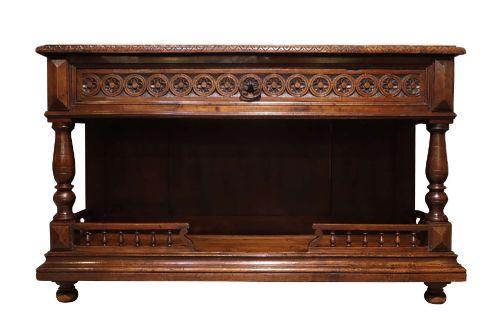
- Potboard
- An open shelf at floor level on a dresser base or server, meant for pots. Pedestal sideboard, by contrast, is a top over two cupboard pedestals, often with a drop-well centre.
Antique Servers: Frequently Asked Questions
Why are these called sideboards, dressers and servers at once?
Because the vocabulary is elastic and dealers list to how people search. A single piece may be titled "Antique Walnut Sideboard Server Dresser Base" or "Dresser base / server".
Across the archive, 539 titles say sideboard, 232 say dresser, 80 buffet and 48 chiffonier, and many say two or three together. The same object can be found under four different words.
What period do these date from?
The dated field runs from 1700 to 1930, with 390 of the 912 listings carrying a clean year. The rest are placed by century or reign.
The profile is broad rather than peaked: 19th Century 140, 18th Century 72, Victorian 67, 1920s 61, Georgian 56. A handful of samples sit earlier than the field's floor, including oak servers called 17th century and one Welsh oak server placed around 1670, the earliest thing in the archive.
Which timbers turn up most often?
Mahogany leads with 359 titles, then oak at 202 and walnut at 92. Burr walnut alone accounts for 43, mostly on Edwardian and 1920s-30s revival servers.
Pine, rosewood, elm, ash, chestnut, cherrywood and satinwood appear in smaller numbers, chestnut and cherrywood usually on French pieces.
Are French and Continental examples common?
French pieces are a real but minor branch: french appears in 58 titles, and buffet in 80. Louis XV and Louis Philippe buffets, enfilades and chestnut or cherrywood servers run through the samples.
Beyond France, origins thin out fast. Swedish birch buffets, Italian walnut, Dutch, Flemish, Hungarian, Chinese elm and Anglo-Indian padouk each appear only once or twice.
Do unusual variants of this form exist?
They do, but singly rather than in runs. The archive holds a metamorphic buffet, a rise-and-fall buffet, a zinc-topped server, a drapers console, a bar, a dumbwaiter and a whatnot.
There's also a sideboard sold with a twelve-piece cutlery set, and a pair of painted servers, the only pair recorded.
How does size vary across the category?
Scale is described at both extremes with almost equal frequency: large in 51 titles, small in 44. The phrase "of small proportions" recurs on its own.
No dimensions are recorded in this evidence, so the words in the titles are the guide. Both ends can sit high in the range, with monumental Victorian and French pieces at one extreme and compact servers at the other.