

Antique Inlaid Sideboards
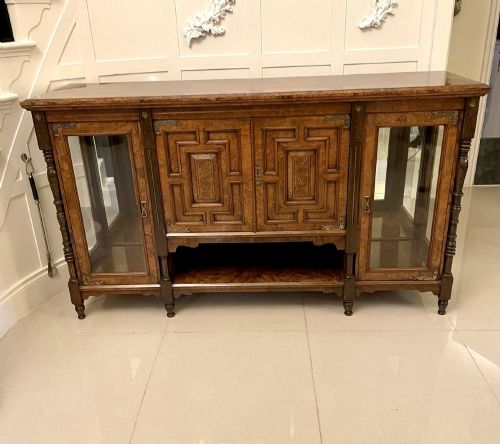
Case furniture for the dining and drawing room, joined by decorative inlay rather than by one shape: serving sideboards, low display credenzas, chiffoniers and side cabinets in veneered mahogany and walnut.
Antique Inlaid Sideboards
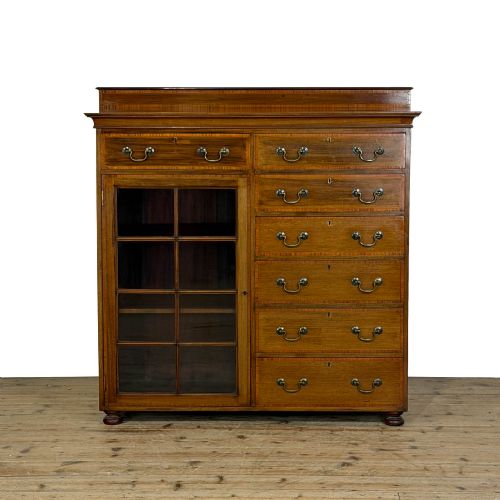
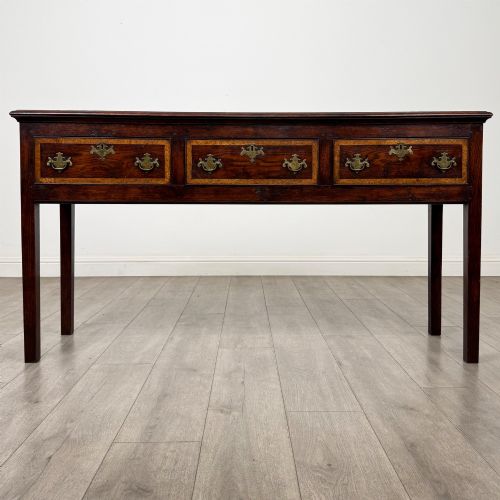
The heading covers two things in near-equal measure. Just over half the titles say "sideboard" outright, and the rest arrive as credenzas, side cabinets, chiffoniers, dresser bases, serving tables, buffets and commodes. What ties them together is surface decoration: line inlay, crossbanding, marquetry or brass let into a veneered case.
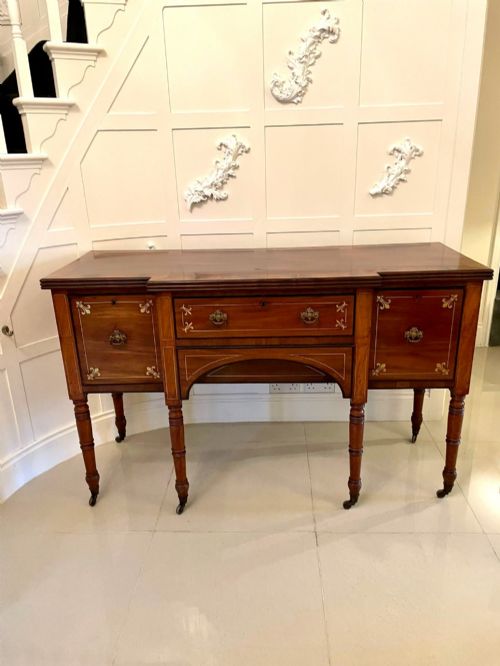
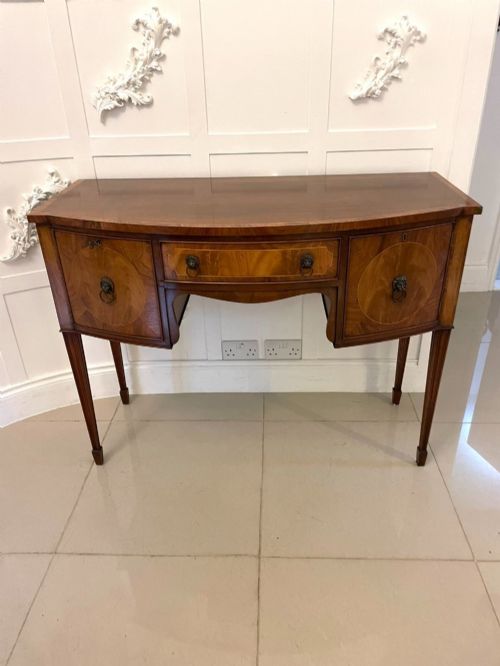
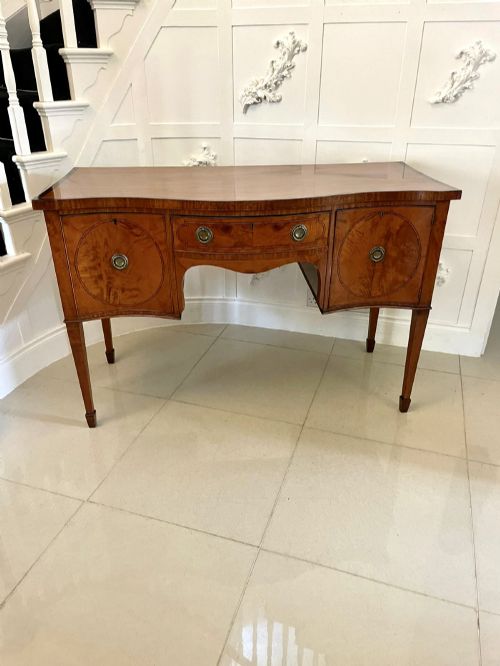
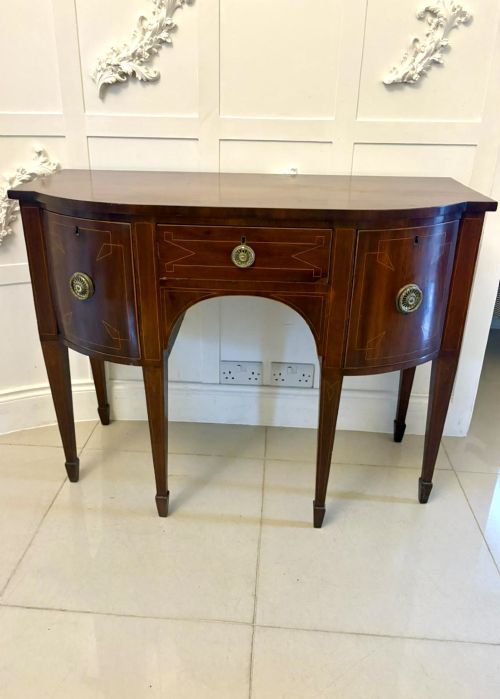
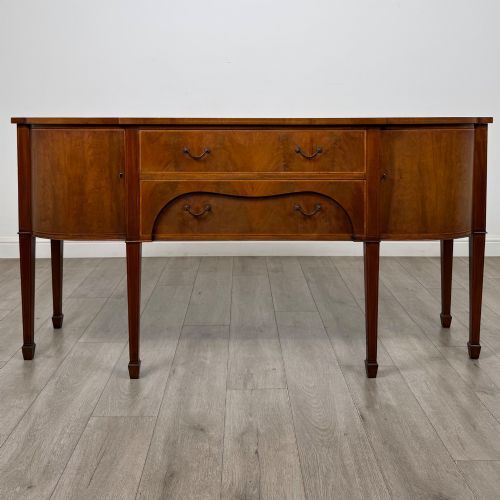
The first form you're likely to meet is the mahogany sideboard, usually with a Georgian or Regency label. Mahogany runs through around two-fifths of titles. Fronts are commonly bowed or serpentine, and the form itself began in later 18th-century Britain as a dining-room serving piece, a side table with pedestals or drawers for cutlery, linen and bottles.
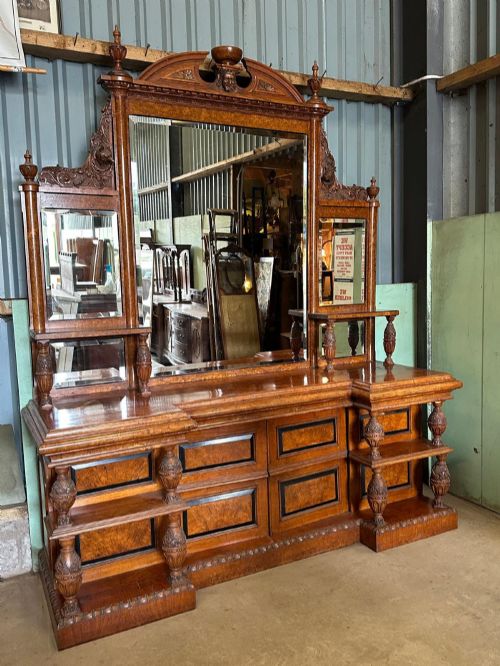
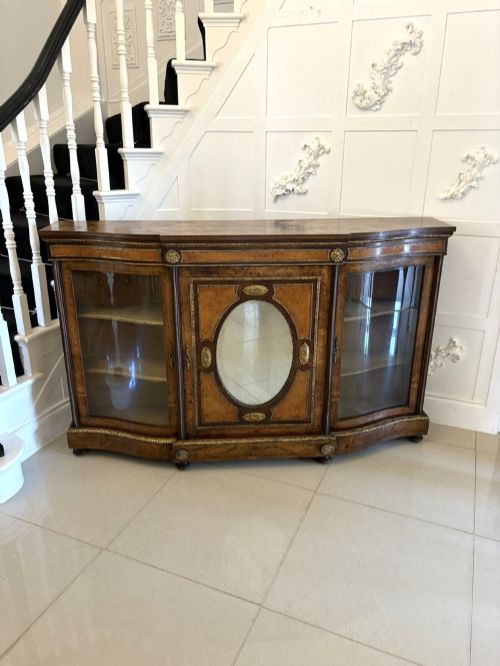
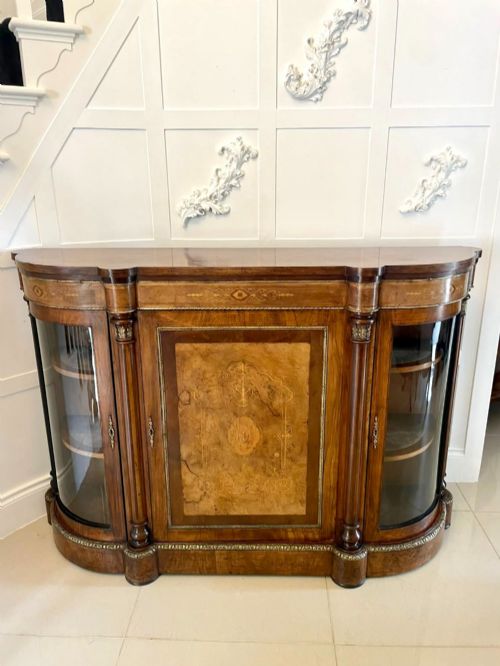
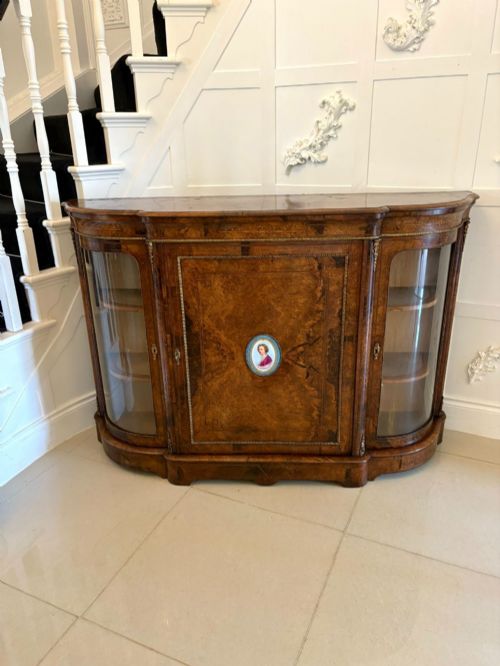
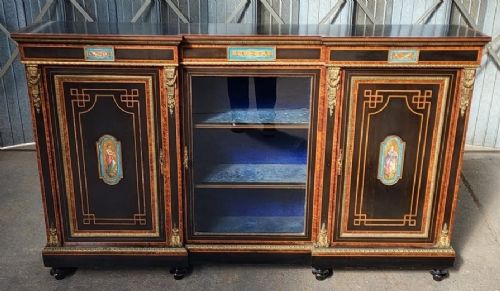
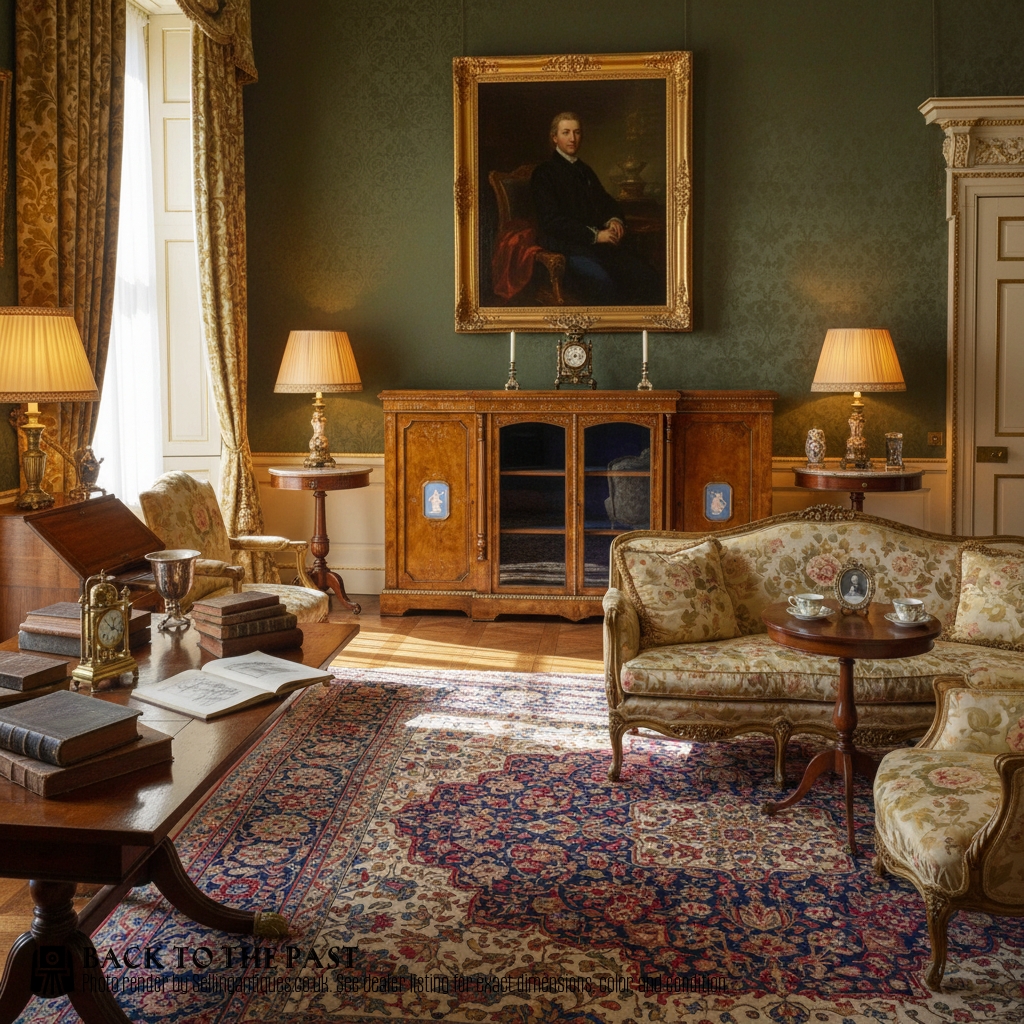
The second is the Victorian walnut credenza, roughly a third of the category. Burr walnut is named in around one title in six, marquetry in one in ten, and gilded ormolu mounts turn up on the credenzas more than anywhere else. The credenza was a drawing-room piece for display, not for carving and serving.
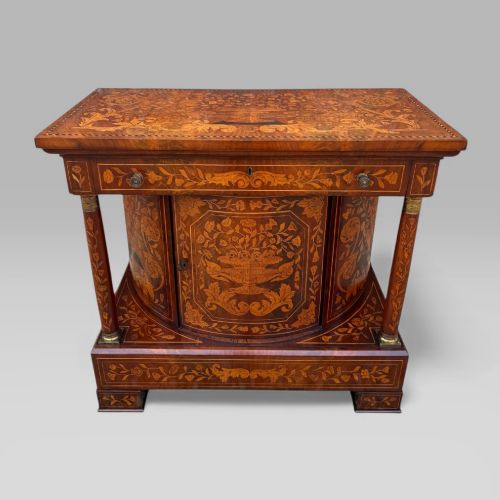
Smaller streams sit behind those two. Regency rosewood chiffoniers with brass inlay recur, and so do revival-taste and Edwardian sideboards using satinwood, dated between the 1890s and the 1930s. Continental work is the scarcest thing in the category, with Dutch, Swedish and French examples appearing only in ones and twos against hundreds of English pieces.
Where The Range Sits
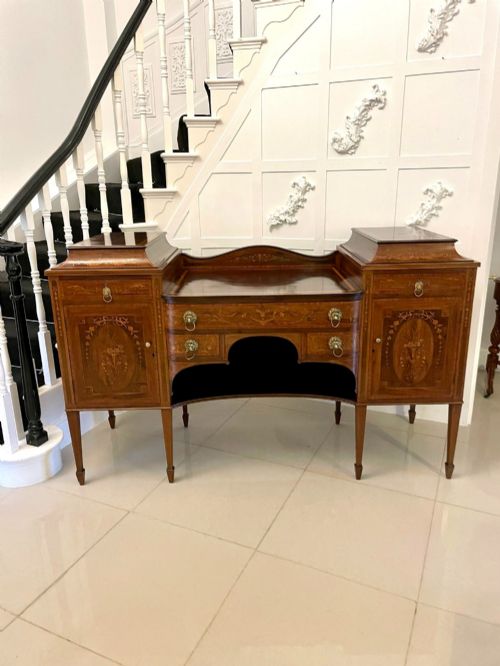
Inlay does most of the work. At the bottom sit pieces described simply as inlaid, lightly inlaid or strung with ebony lines. At the top the inlay becomes pictorial: floral marquetry across doors and frieze, and the occasional boulle, pietra dura or Tunbridgeware treatment that shows up once each across the sampled titles.
Applied ornament pushes the same way. Ormolu mounts, porcelain plaques and gilt bronze concentrate at the upper end, almost all of it on credenzas. So does timber figure, with burr, flame and figured cuts, satinwood, amboyna and kingwood standing above plain veneer. A shaped outline counts too: serpentine and breakfront fronts sit above straight ones, and the words "quality" and "outstanding" keep company with them in the same titles.
Scale and pairing mark the extremes. Titles using "large" and "small" appear in almost equal numbers, and "of small proportions" or "neat proportions" describes the modest end. Matched pairs of credenzas and side cabinets surface only occasionally, and they occupy the very top of the range. A named London retailer or a workshop attribution also lifts a piece clear of the generic titles below.
Antique Inlaid Sideboards Retail Price Guide 2026
Typical UK retail prices for inlaid sideboards, calculated from the Sellingantiques database of over a million retail prices indexed since 2003. This retail price guide relies exclusively on Sellingantiques data; no external sources or auction records are used, so the figures do not describe the wider market.
The most expensive inlaid sideboard ever sold on Sellingantiques was a brass inlaid Regency rosewood chiffonier sideboard, in May 2023.
The Antique Inlaid Sideboards Glossary
- Credenza
- A low side cabinet made for display rather than dining service. Named in roughly a third of titles here, and usually Victorian and walnut.
- Bowfront
- A front curved outward in one sweep. Bow, bowfront and bow front together account for around ninety titles, most of them on mahogany sideboards.
- Serpentine
- A front of double curve, convex at the centre and concave at the ends. Sixty-six titles use it, and it sits above a plain straight front.
- Breakfront
- A front whose central section projects forward of the sections flanking it. Twenty-nine titles.
- Crossbanding
- A border veneer laid with its grain running across the edge of a panel or top, often satinwood against mahogany.
- Chiffonier
- A low cupboard, often with a shelf or mirror back. Thirty-six titles, and frequently rosewood with brass inlay in the Regency taste.
Antique Inlaid Sideboards: Frequently Asked Questions
What is the difference between a sideboard and a credenza?
A sideboard is a dining-room serving piece, descended from a side table with flanking pedestals or drawers for cutlery, linen and bottles. Most carry Georgian or Regency labels and most are mahogany.
A credenza is a low side cabinet for the drawing room, made for display. In this category it is usually Victorian and walnut, often with ormolu mounts and marquetry.
Which woods turn up most often?
Mahogany leads, named in around two-fifths of titles, and walnut follows at close to a third. Burr walnut alone accounts for about one title in six.
Behind those come rosewood, usually with brass inlay, and satinwood on the revival-taste and Edwardian pieces. Amboyna, kingwood, pollard oak, burr yew and burr elm appear occasionally.
How accurate are the dates in these listings?
Only 304 of 756 listings carry a clean year. The rest rest on reign or century labels, with Victorian and a flat "19th Century" the two commonest.
Read those labels as an era. A "Victorian" piece may date from the 1840s or the 1890s. Where clean years do appear they pile up on the 1860s, more than any other decade.
What does ormolu mounted mean on a credenza?
Ormolu is gilded metal ornament applied to the case: mounts at the corners, around the doors, along the frieze. It appears in thirty-two titles, concentrated on Victorian walnut credenzas.
Mounts of this kind sit at the upper end of the range, alongside porcelain plaques and gilt bronze.
Are these mostly English pieces?
Yes. English sideboards, credenzas and side cabinets make up the bulk of the category by a wide margin.
Continental work is the scarcest thing in it. Against hundreds of English pieces the samples yield only a handful of Dutch, Swedish and French examples, Swedish rarest of all.
How wide a choice comes up in a year?
Around eighty-six inlaid sideboards and related side cabinets are listed on Sellingantiques in a year.
They come from a broad base of trade: 133 different dealers have handled them, which makes this one of the more widely stocked furniture forms.