



1930s Art Deco Buffet
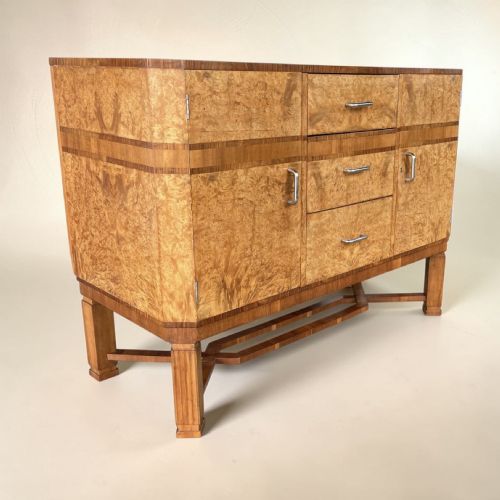
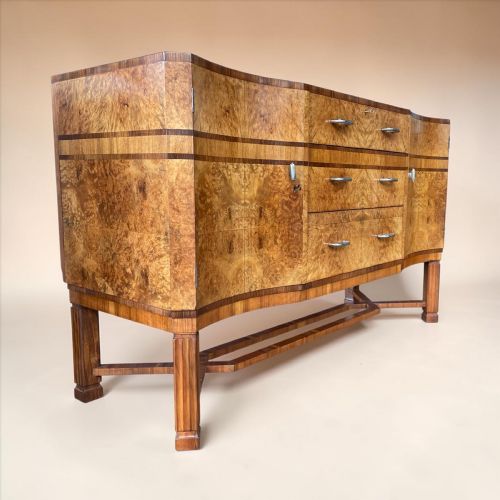
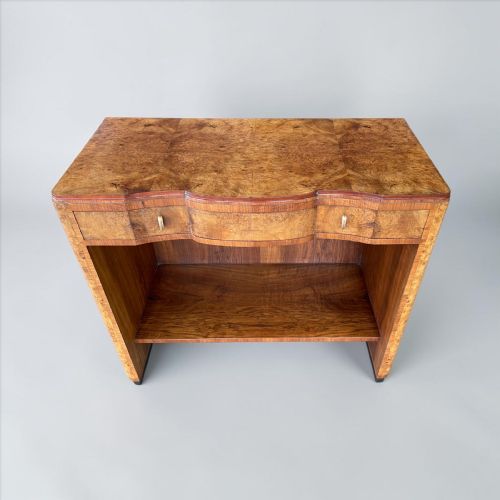
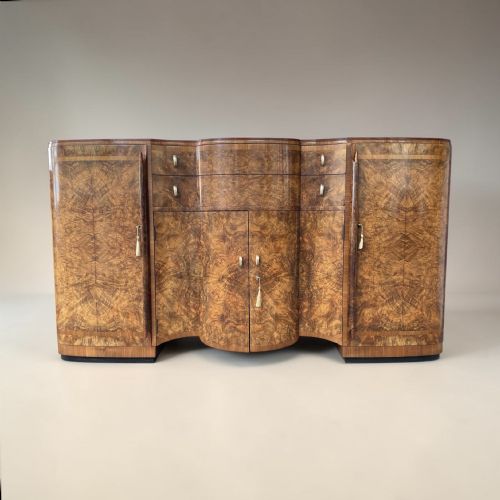
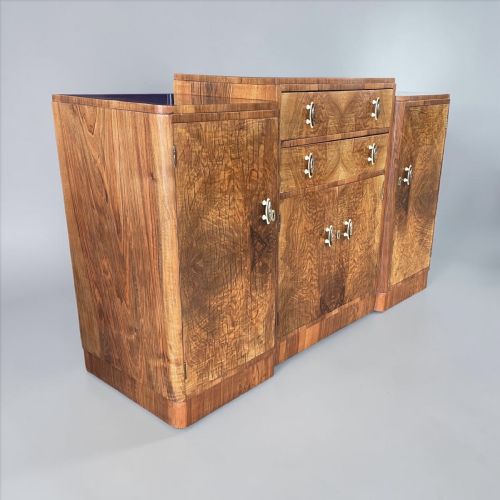
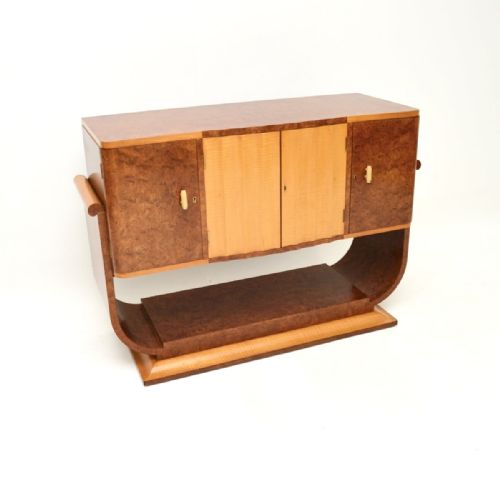
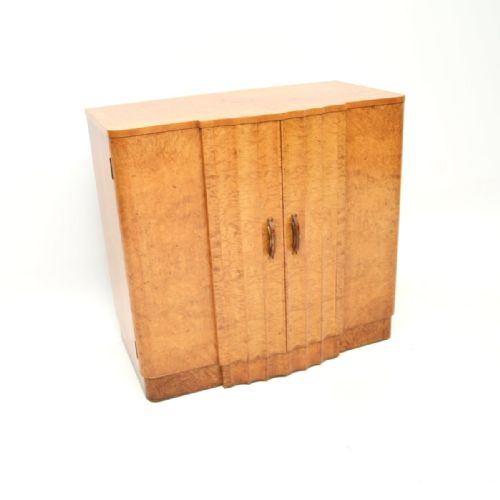
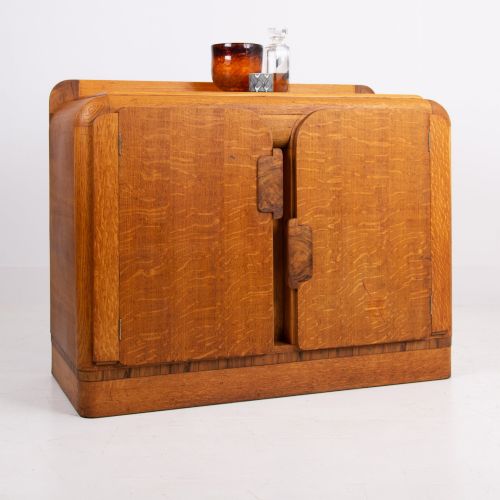
A 1930s art deco buffet brings sculptural geometry and striking wood grains into a dining room.
1930s Art Deco Buffet
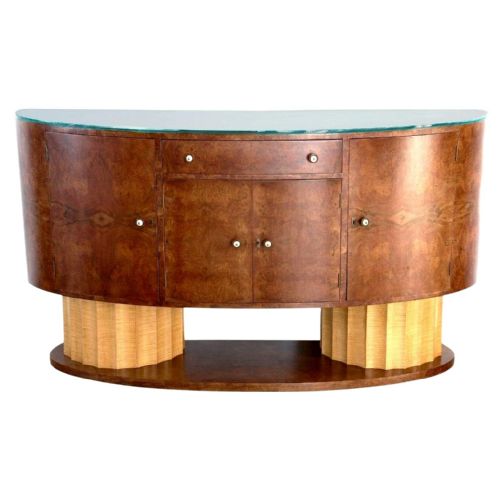
A 1930s art deco buffet spans substantial sideboards, serving tables, and specialised drinks cabinets designed for interwar entertaining. These pieces form the structural centrepiece of a dining room, offering deep cupboards and fitted drawers behind bold geometric silhouettes.
The version most commonly met on this page is the walnut sideboard from the 1930 period, often featuring contrasting sycamore or mahogany veneers. French and British workshops dominate the selection, bringing architectural presence and practical storage together.
Makers such as Harry and Lou Epstein, Maurice Adams, and Hille defined the upper tier of these forms with sweeping curves and heavy pedestals. Alongside them, firms like Gomme and the Bowman Brothers produced robust domestic cabinets with clean geometric lines.
Materials and Construction
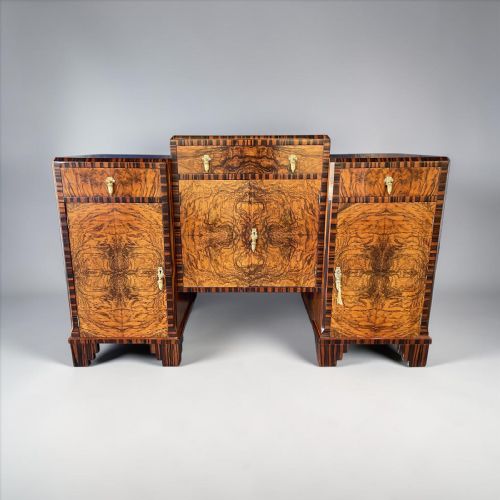
Makers utilised figured walnut, burr walnut, and macassar veneers laid over solid wood cores to create dramatic swirling grain patterns across large cabinet doors. Contrasting timbers such as sycamore, mahogany, and maple added geometric banding and decorative borders.
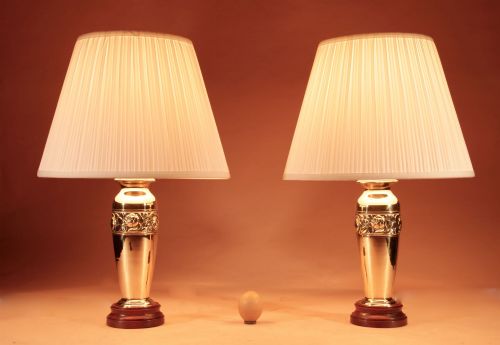
Metal components played a structural and decorative role, with brass hardware, handles, and occasional metal mounts defining the opening edges of doors and drawers. Bakelite surfaces and glass elements also appear on specialised serving pieces and table lamps.
Listings feature walnut, burr walnut, and macassar veneers alongside brass hardware, bakelite, and glass across the 1920 and 1930 periods.
Judging Quality and Execution
The ambition of the veneer layout dictates the visual weight of the piece, with book-matched burr walnut creating symmetrical patterns that demand high skill from the cabinetmaker. Simpler domestic carcases rely on plain walnut or oak veneers.
The distinction between standard commercial production and bespoke maker-attributed work lies in the handling of curved corners, plinths, and fitted internal compartments. Master workshops integrated solid brass and specialised glass hardware that matched the exterior geometry.
Maurice Adams·Harry and Lou Epstein·Gomme·Hille·Hamptons of Pall Mall London·The Bowman Brothers
The 1930s Art Deco Buffet Glossary
- Burr walnut
- A prized timber harvested from growth excrescences on walnut trees, yielding highly figured, swirling grain patterns. Cabinetmakers used these veneers symmetrically on primary display surfaces.
- Veneer
- A thin layer of decorative wood applied over a stable secondary timber core. This technique allowed makers to display dramatic grain patterns without warping the structural carcase.
- Sideboard
- A large dining room storage piece intended for serving food and storing tableware. These forms evolved into elaborate architectural statements during the interwar period.
- Drinks cabinet
- A specialised storage unit fitted with internal spaces for bottles, glassware, and mixing trays. They represent the specialised entertaining habits of the period.
- Book-matching
- A veneer technique where adjacent slices of timber are opened like a page to mirror each other. This creates symmetrical patterns across large cabinet doors.
1930s Art Deco Buffet: Frequently Asked Questions
What is a 1930s art deco buffet?
A 1930s art deco buffet is a substantial storage piece designed for the dining room, combining bold geometric forms with figured wood veneers.
These items served as both functional serveries and decorative statements during an era of modern interior design.
How do I use a buffet in a modern room?
A buffet functions well as a dining room storage cabinet for tableware, glassware, and linens while providing a surface for serving food.
In contemporary spaces, these cabinets also serve as media consoles or hallway focal points due to their sculptural presence.
Which woods were used on these buffets?
Makers relied heavily on walnut, burr walnut, and macassar ebony for the primary exterior surfaces of these storage pieces.
Contrasting timbers like sycamore, mahogany, and maple were frequently introduced as geometric banding and inlay details.
How do I distinguish French and British art deco pieces?
French examples often favour exotic veneers like macassar ebony and dramatic serpentine shapes with heavy brass mounts.
British pieces from makers like Epstein or Hille typically showcase figured burr walnut and architectural, rectilinear volumes.