


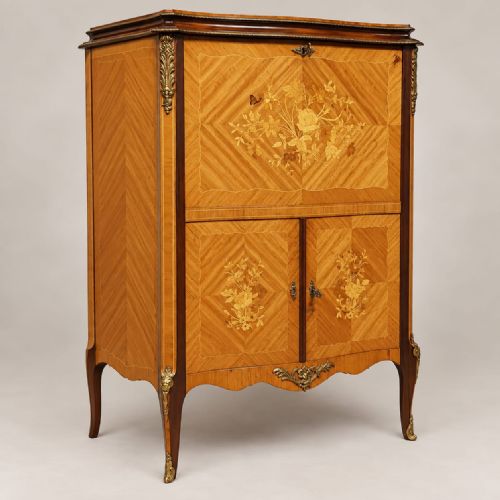
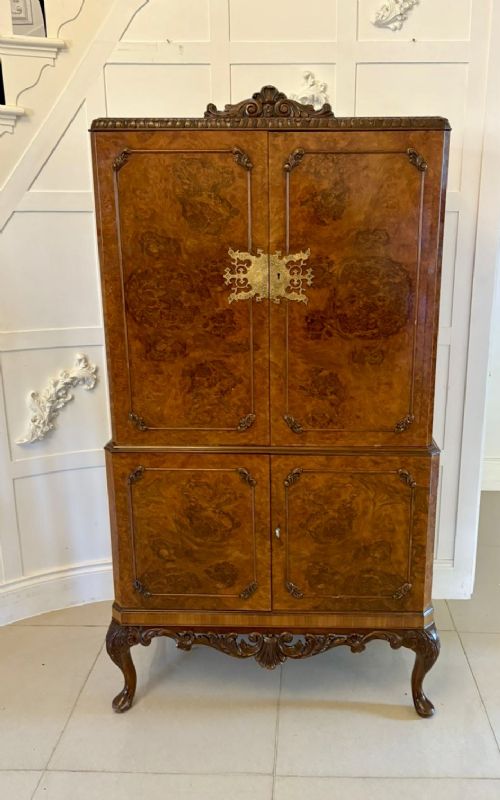
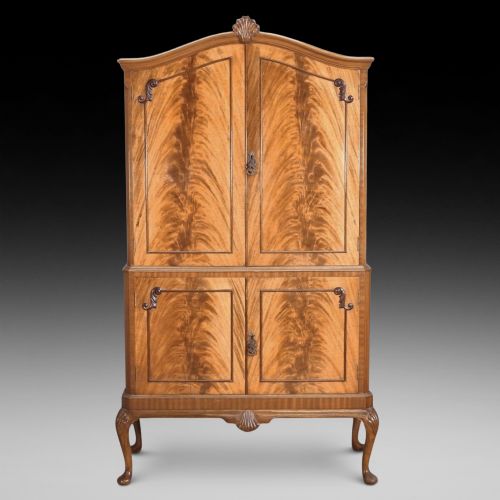
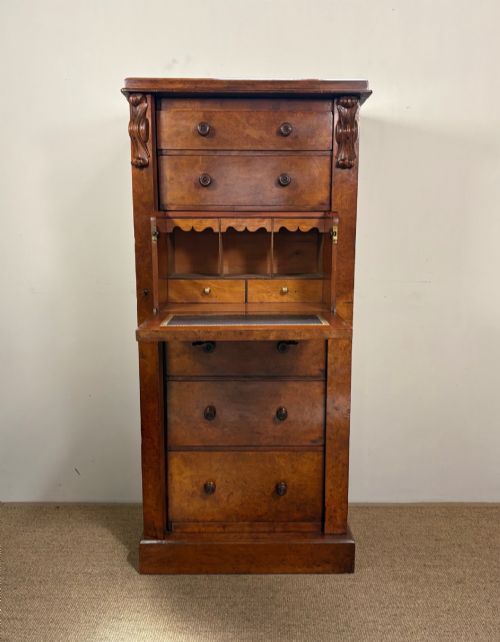
Walnut Bar Cabinet
When a walnut bar cabinet catches the eye, it brings the distinct social glamour of the interwar period straight into a modern room.
Walnut Bar Cabinet
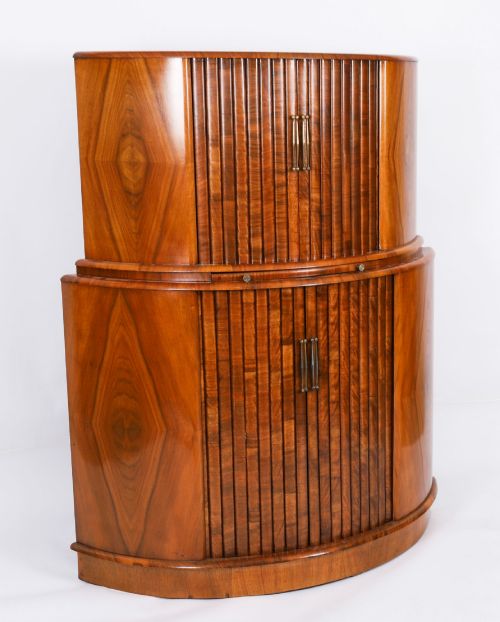
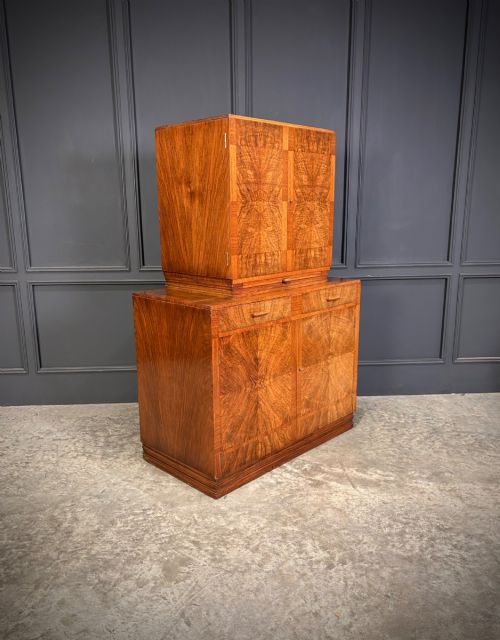
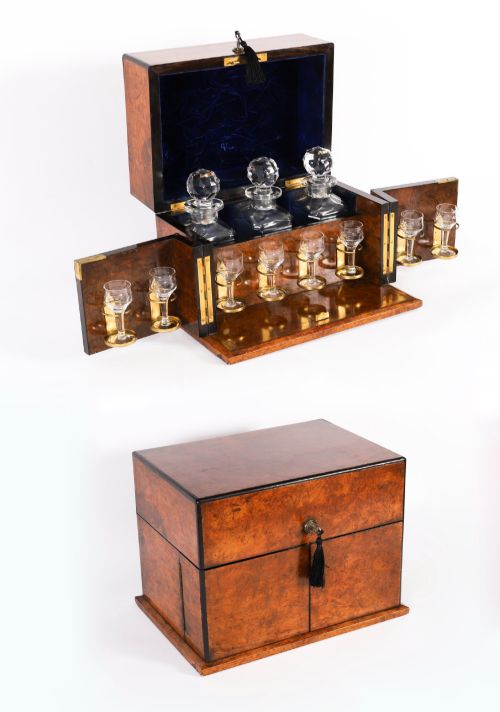
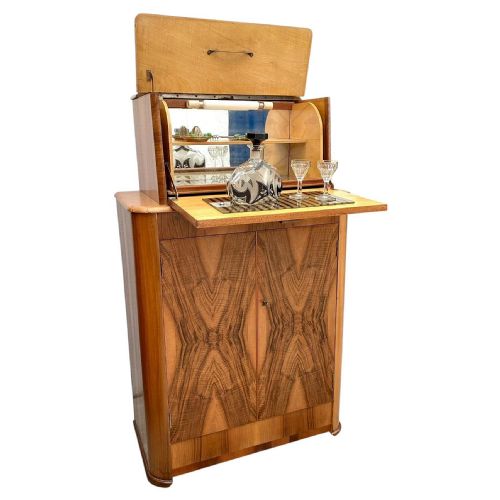
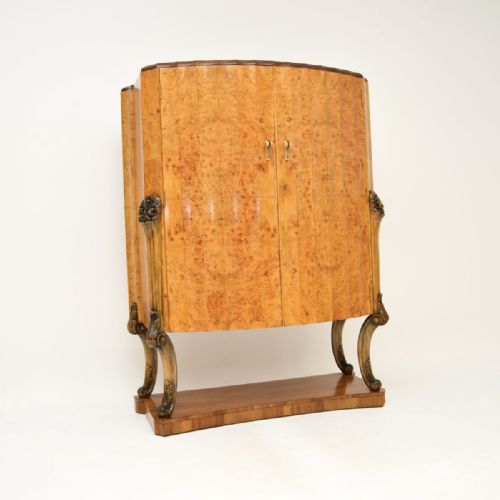
A walnut bar cabinet serves as a dedicated vessel for entertaining, designed specifically to house bottles, glassware, and mixing equipment behind closed doors. These pieces most frequently emerge from the Art Deco period of the 1920s and 1930s, reflecting the era's enthusiasm for home cocktail culture.
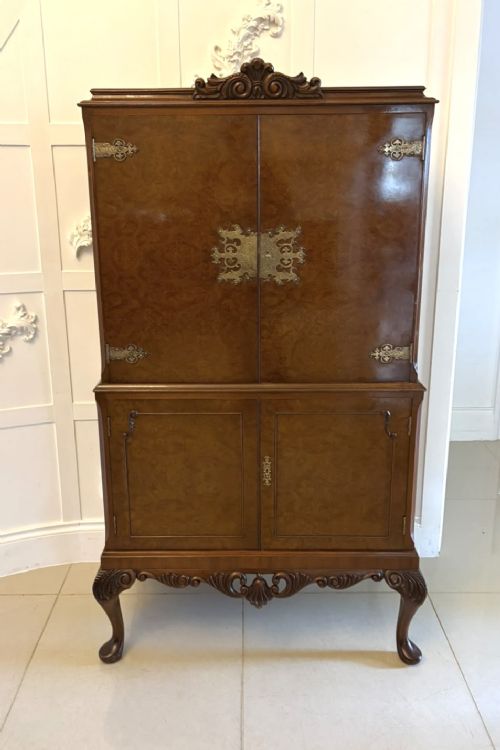
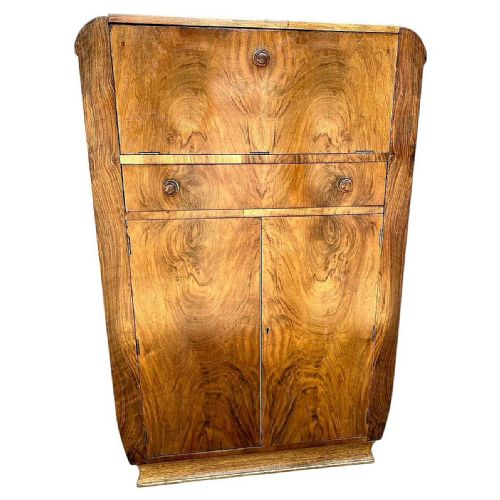
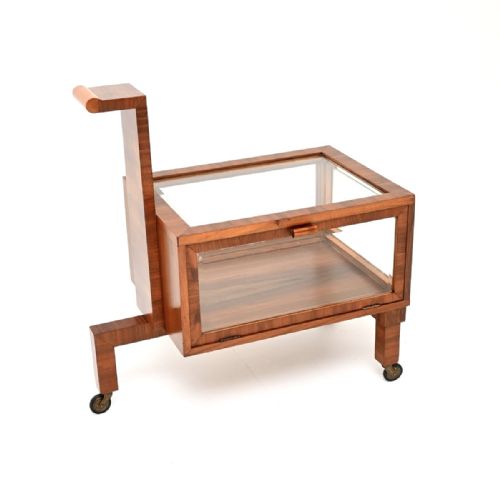
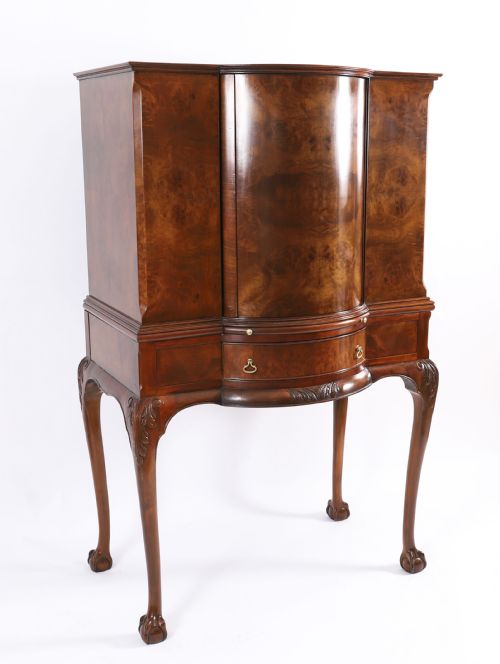
Beyond the predominant 1930s forms, buyers encounter occasional examples drawing on earlier aesthetics, including Queen Anne Revival and Georgian Revival styling. The selection spans upright double-door chests, curved bow-front configurations, and metamorphic serving carts designed to transform during social gatherings.
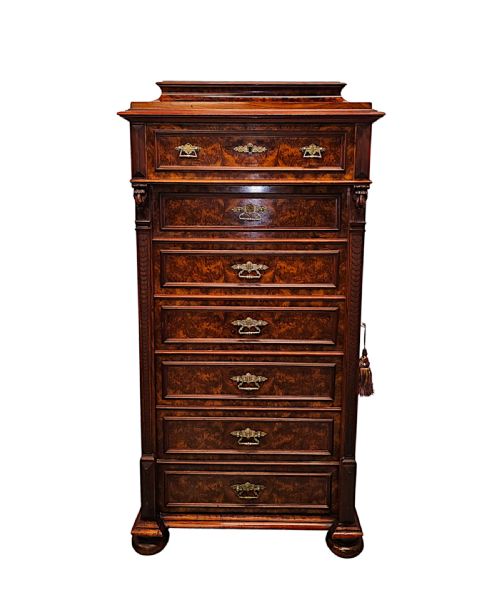
While many pieces function strictly as dry bars or cocktail cabinets, related forms such as sideboards, serving tables, and tall chests occasionally share the category. The core of the selection remains centred on specialised drinks furniture intended to make a visual statement in a dining or living space.
Assessing quality and craftsmanship
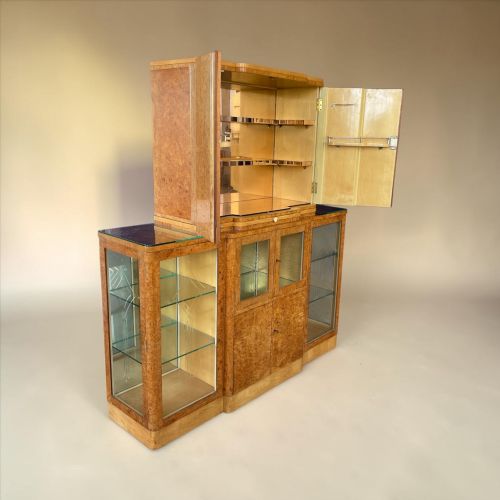
Quality reveals itself primarily in the selection and matching of the burr walnut veneer across the doors and top surface, where superior examples display symmetrical, book-matched grain patterns. The complexity of the internal fittings, such as specialised glass racks, custom pull-out trays, and intact original mirrored backs, also separates standard production from finer workshop output.
Structural integrity and the precision of mechanical elements, including folding fronts, pop-up mechanisms, and smooth-running drawers, indicate the standard of original manufacture. Maker attribution to notable workshops adds historical weight and reflects a higher tier of period design execution.
Walnut Bar Cabinet Retail Price Guide 2026
Typical asking prices for walnut bar cabinet among the pieces listed under this phrase on Sellingantiques today, from the lower quarter to the upper quarter. They describe what is for sale here now, not the wider market.
Listings span several decades, featuring Edwardian, Victorian, and 19th-century baseline forms alongside the dominant 1920s and 1930s Art Deco movement.
Epstein·Hille·Harry and Lou Epstein·Waring and Gillow·Barkers of Kensington·Harrods, London
The Walnut Bar Cabinet Glossary
- Burr walnut
- A thin slice of wood veneer taken from the knotted growth of a walnut tree, prized for its complex, swirling grain pattern.
- Marquetry
- Decorative patterns created on the surface of a cabinet by fitting together small pieces of tinted woods and veneers.
- Metamorphic
- Describing a piece of furniture designed to fold, open, or transform its shape to serve a secondary function.
- Bow front
- A convex, outwardly curved cabinet front that softens the linear angles of a traditional rectangular case.
Walnut Bar Cabinet: Frequently Asked Questions
How were walnut bar cabinets used originally?
These cabinets functioned as private home bars during the height of the cocktail era, keeping spirits, glassware, and mixing tools neatly concealed until evening gatherings began.
Drop-down doors frequently doubled as mixing shelves lined with moisture-resistant materials, while specialised interior racks kept bottles secure during parties.
Where should I place a walnut bar cabinet?
Positioning these pieces in a living room, dining room, or entertaining space allows the figured veneer grain to act as a focal point while keeping hospitality items close at hand.
Because many examples feature finished backs and polished internal mirrors, placing them perpendicular to a wall or near seating areas works well in larger rooms.
How do I care for burr walnut surfaces?
Maintaining the finish requires keeping the wood away from direct sunlight and steady moisture to prevent the delicate veneer from fading or lifting over time.
Routine dusting with a soft, dry cloth preserves the polished lustre without stripping the historical patination built up across decades of use.
How can I distinguish Art Deco examples from revival pieces?
Art Deco models typically favor streamlined curves, waterfall edges, and dramatic burr walnut veneers without historical decorative carving.
Revival pieces draw on earlier idioms like Queen Anne styling, featuring distinct cabriole legs, shell carvings, or traditional bracket feet that separate them from 1930s modernism.