

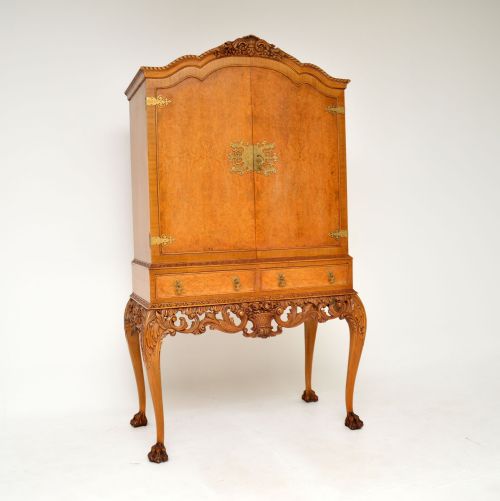
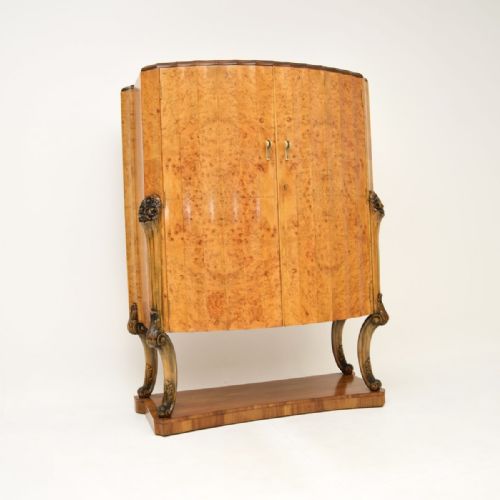
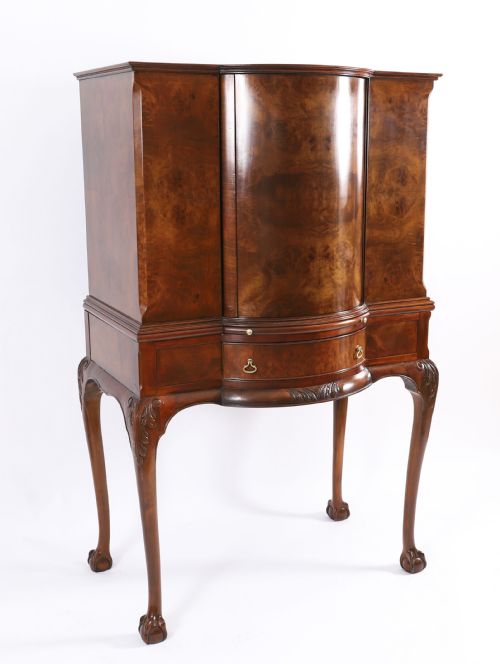
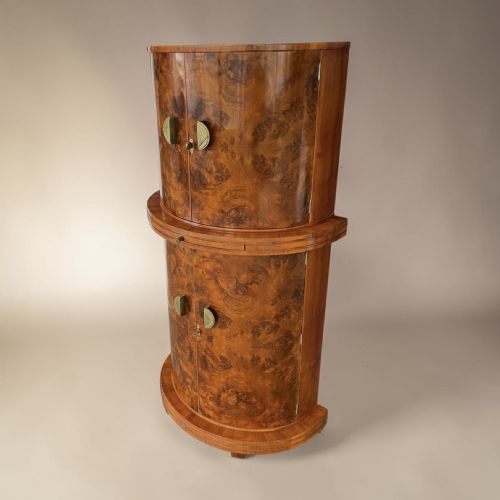




Walnut Liquor Cabinet
A walnut liquor cabinet brings the unmistakable glamour of the 1920s and 1930s directly into a modern reception room with figured wood and fitted interiors.
What a walnut liquor cabinet is
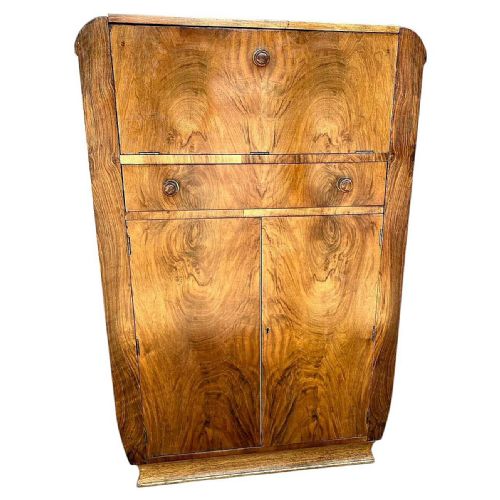
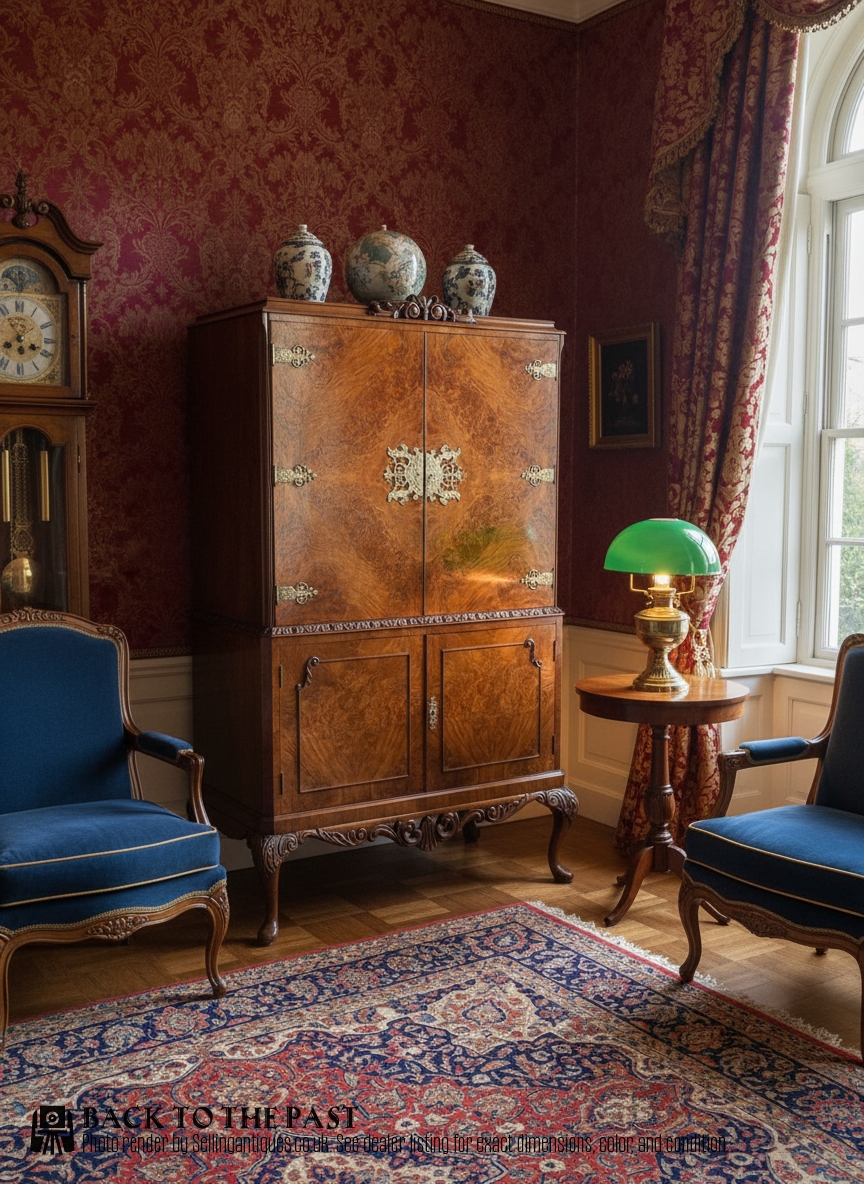
A walnut liquor cabinet is designed for home entertaining, taking the form of cocktail cabinets, drinks cabinets, and related storage pieces from the early twentieth century. These furnishings accommodate bottles, glassware, and mixing equipment within dedicated compartments.
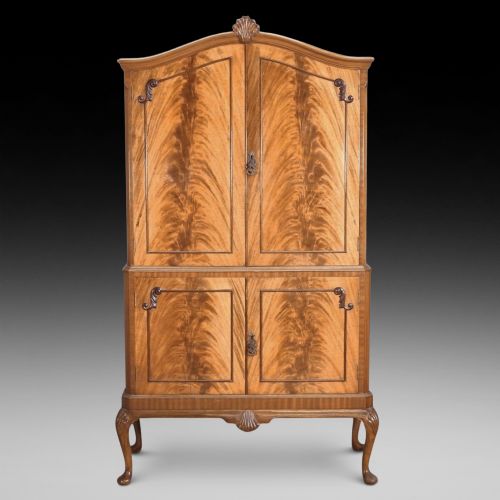
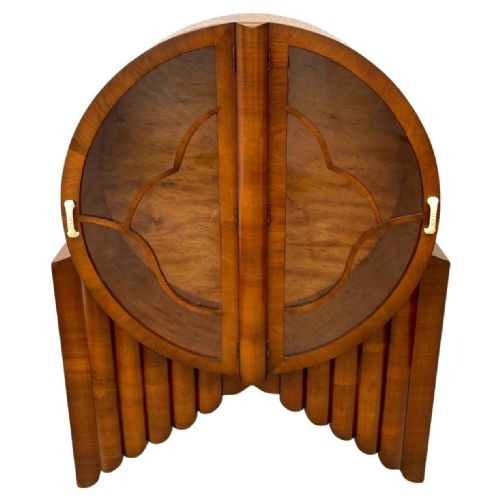
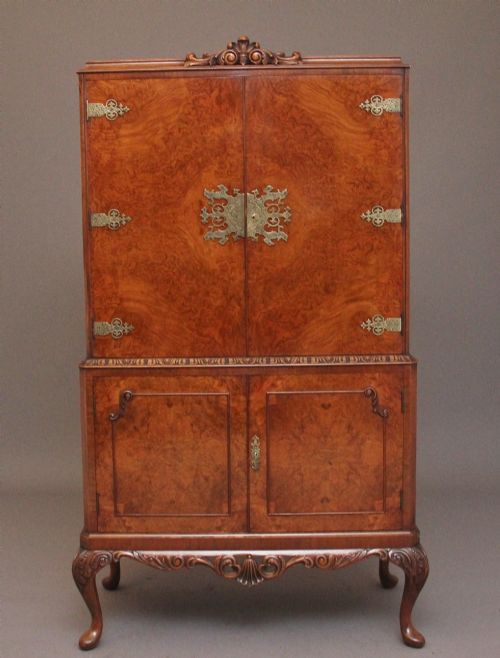
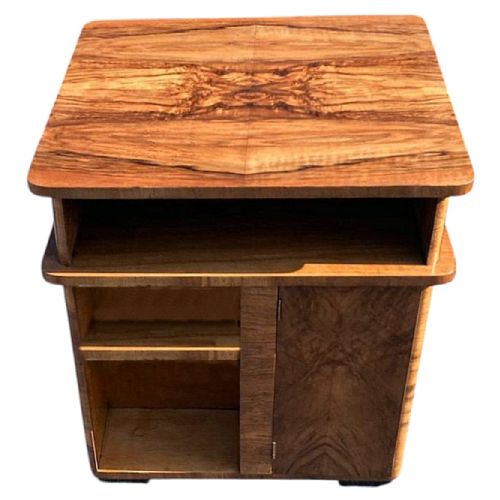
The versions most frequently encountered on this page date from the 1920s and 1930s, reflecting the design priorities of the interwar period. Cabinets span distinct aesthetic movements, encompassing both streamlined Art Deco creations and traditional Queen Anne Revival influences.
Makers of the era utilised striking cabinet forms to showcase rich timber grains in domestic settings. Each piece functions as a social centrepiece intended for the display and service of drinks.
How they were made
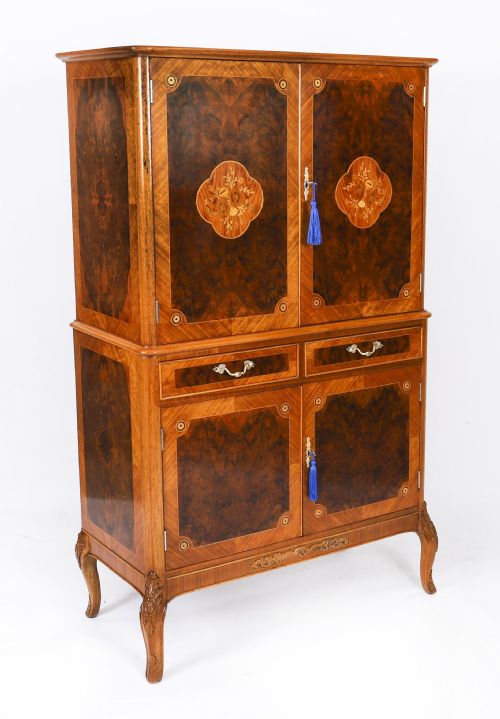
Construction relies heavily on walnut and burr walnut veneers applied to carcases of oak or secondary timbers to achieve symmetrical pattern work across the doors. Marquetry details occasionally accent the primary surfaces, adding geometric or floral flourishes.
Interiors frequently incorporate mirror glass panels, glass shelving, and metal hardware such as brass handles and hinges. These materials combine to create a reflective, luminous backdrop when the cabinet doors open.
Retail Price Guide 2026
Typical UK retail prices for walnut liquor cabinet, calculated from the Sellingantiques database of over a million retail prices indexed since 2003. This retail price guide relies exclusively on Sellingantiques data; no external sources or auction records are used, so the figures do not describe the wider market.
Current listings span the 1920s and 1930s, uniting Art Deco and Queen Anne Revival styles through the use of walnut, burr walnut, brass, and mirror glass.
What varies in quality
Quality separates through the selection and matching of the burr walnut veneer, where superior examples exhibit symmetrical, swirling grain patterns across every surface. The depth of the timber's figuring and the precision of the marquetry dictate the visual impact.
Interior execution distinguishes the standard of manufacture, particularly the complexity of the pull-out mixing trays and fitted glass compartments. Cabinets attributed to notable workshops show superior interior joinery and heavier brass hardware.
Epstein
The Walnut Liquor Cabinet Glossary
- Burr walnut
- A prized veneer sliced from the gnarled growths of a walnut tree, yielding dense, swirling grain patterns. This material forms the primary visual draw of many Art Deco drinking furniture pieces.
- Marquetry
- The art of applying pieces of veneer to a structure to form decorative patterns and pictures. Craftsmen utilise this technique to enhance cabinet doors and tabletops.
- Art Deco
- A design style prevalent in the 1920s and 1930s characterised by sleek geometric shapes, stylised motifs, and modern industrial materials. It strongly influences the cocktail cabinets of this era.
- Queen Anne Revival
- A traditional style reviving early eighteenth-century furniture forms, often featuring cabriole legs and restrained classical ornament. Examples on this page adapt these historic cues to interwar drinks storage.
Frequently Asked Questions
What is a walnut liquor cabinet?
A walnut liquor cabinet is a specialised interwar storage piece designed for holding bottles, glassware, and cocktail accessories during the 1920s and 1930s.
These items usually take the form of dedicated cocktail or drinks cabinets featuring drop-front or double doors that open to reveal fitted, mirrored interiors.
How do I date a walnut liquor cabinet?
Dating relies on stylistic clues and construction methods pointing primarily to the 1920s and 1930s periods. Art Deco geometry and Queen Anne Revival styling provide the primary chronological markers.
The presence of specific materials like burr walnut veneer, brass hardware, and internal mirror glass also helps place the piece within the early twentieth century.
Where were these cabinets used?
These cabinets served as focal points in the reception rooms, dining rooms, and home bars of interwar households. They were built to facilitate entertaining by keeping spirits and glassware close to hand.
The drop-front surfaces often doubled as temporary mixing shelves when hosting guests.
How do I care for burr walnut?
Burr walnut requires protection from direct sunlight and excessive heat fluctuations to prevent the delicate veneer from drying out or splitting. Gentle dusting with a dry, soft cloth preserves the polished surface.
Occasional application of appropriate furniture wax maintains the natural lustre of the timber without building up heavy residue.