


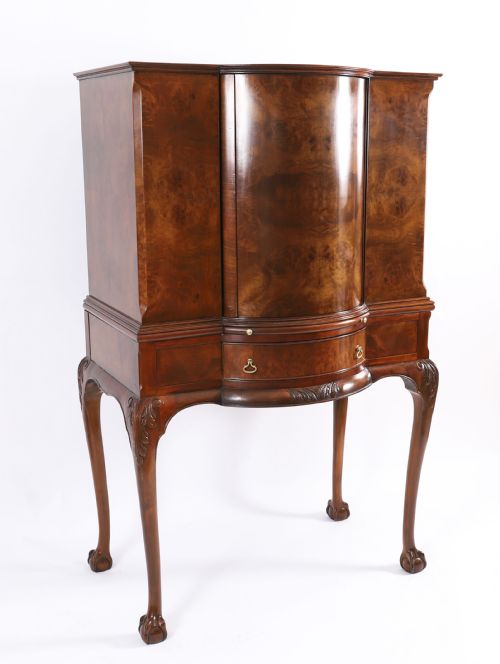


1920s Walnut Cocktail Cabinet
A 1920s walnut cocktail cabinet brings striking grain and period glamour to a room, offering a dedicated place to store and pour spirits.
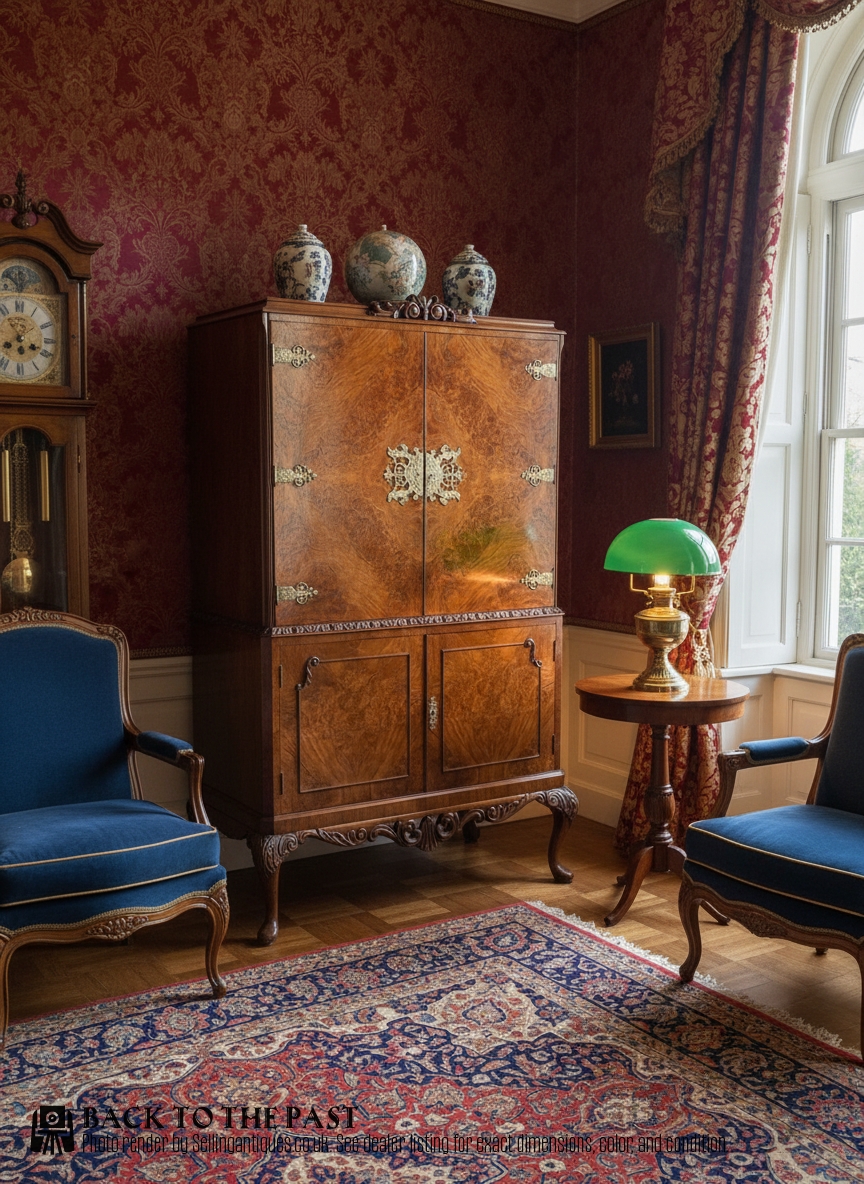
1920s Walnut Cocktail Cabinet
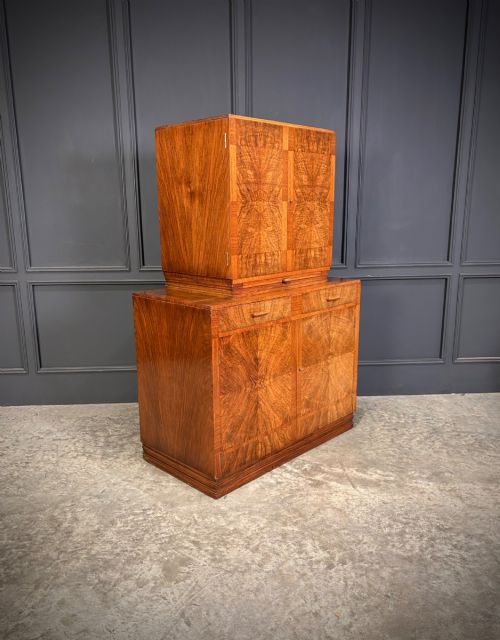
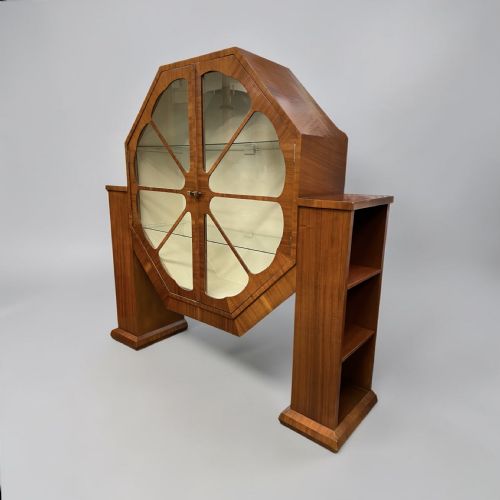
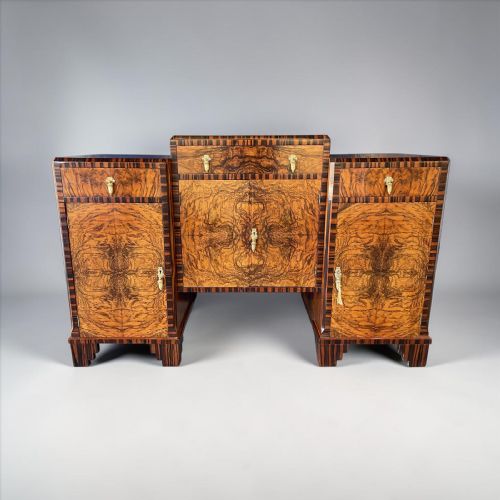
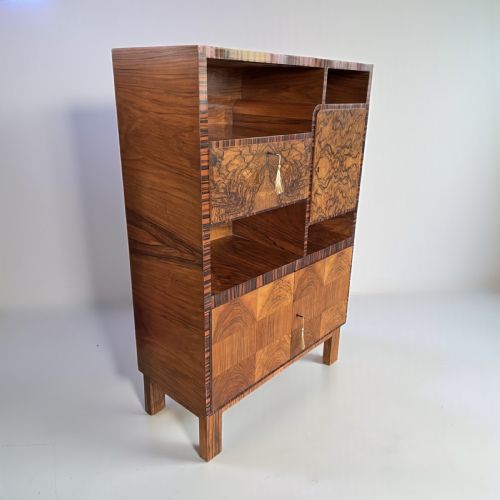
A 1920s walnut cocktail cabinet is a sophisticated piece of furniture designed specifically for entertaining, merging storage for bottles and glassware with a dedicated serving surface. When searching this phrase, buyers encounter several variations ranging from dedicated dry bar cabinets to related forms like sideboards, display cabinets, and general cabinets.
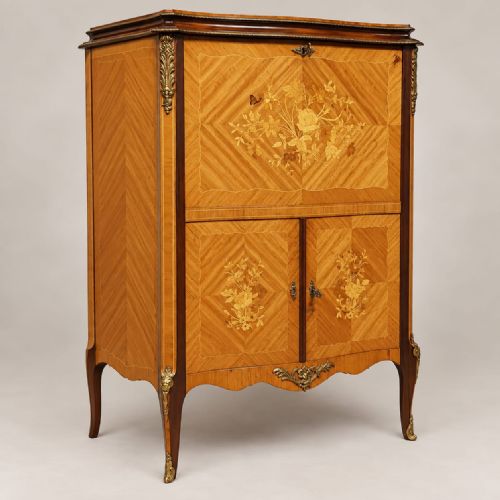
The pieces on this page span the 1920s and 1930 periods, capturing the stylistic shift from revivalism to modernism. Buyers are most likely to meet striking Art Deco examples alongside pieces influenced by the Queen Anne Revival and Colonial styles.
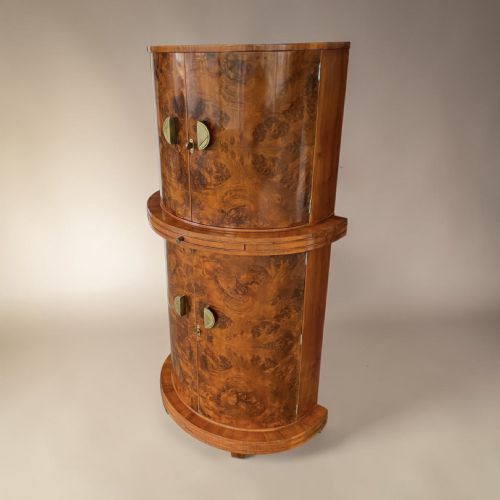
Many of the cabinets listed feature specialist forms such as revolving drinks cabinets and oval display tables. Alongside dedicated cocktail and drinks cabinets, these designs reflect the changing social habits of the early twentieth century.
How they were made
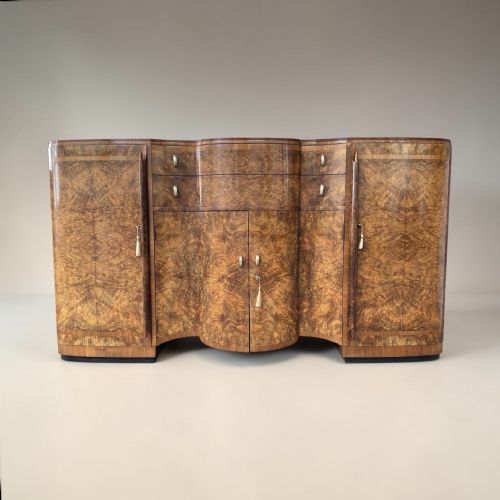
Cabinet makers utilised solid walnut and walnut veneer, frequently selecting burr walnut veneer to create dramatic, highly figured patterns across the exterior surfaces. This careful book-matching of grain highlights the natural beauty of the timber.
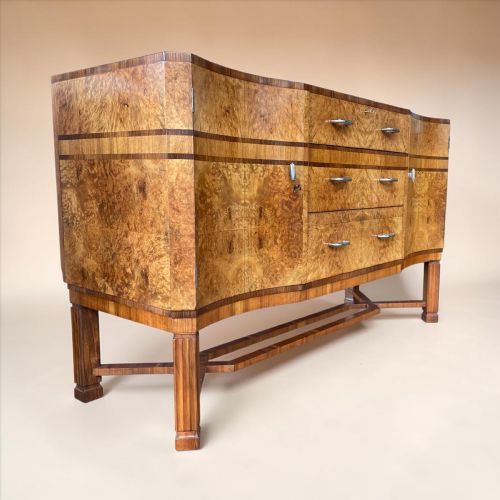
Hardware played a functional and decorative role, with makers incorporating brass and chrome hardware to accent the timber doors and fittings. Interior spaces often integrated glass elements to display glassware and bottles.
1920s Walnut Cocktail Cabinet Retail Price Guide 2026
Typical asking prices for 1920s walnut cocktail cabinet among the pieces listed under this phrase on Sellingantiques today, from the lower quarter to the upper quarter. They describe what is for sale here now, not the wider market.
What varies in quality
Quality in a 1920s walnut cocktail cabinet is largely defined by the choice and application of timber veneers. Cabinets that display exceptionally rich burr walnut veneer with symmetrical grain patterns across the front stand apart from simpler iterations.
Construction methods and the integration of internal fittings also separate the range, particularly in how smoothly doors open, how securely revolving mechanisms operate, and the inclusion of original glass and metal hardware.
Maurice Adams
The 1920s Walnut Cocktail Cabinet Glossary
- Burr walnut
- A veneer sliced from the wart-like growths on walnut trees. It creates intricate, swirling grain patterns highly prized in cabinet making.
- Art Deco
- A design style emerging in the interwar period characterised by sleek geometric shapes, stylised motifs, and modern materials.
- Queen Anne Revival
- A style drawing on eighteenth-century furniture designs, often featuring cabriole legs and traditional walnut surfaces.
- Drinks cabinet
- A specialised piece of furniture built to house bottles, decanters, and glassware, often featuring a fold-down flap used as a serving shelf.
- Veneer
- A thin layer of superior wood glued to a base timber foundation to provide decorative visual impact without structural waste.
1920s Walnut Cocktail Cabinet: Frequently Asked Questions
What is a cocktail cabinet?
A cocktail cabinet is a dedicated piece of furniture designed to store bottles, decanters, and glassware for entertaining guests.
These pieces often feature fold-down serving flaps and specialised internal compartments tailored for home mixology.
How do I spot Art Deco style?
Art Deco pieces typically display clean geometric lines, streamlined forms, and an embrace of modern design principles.
In walnut furniture, this style is often paired with dramatic veneer patterns and polished metal hardware.
What is burr walnut?
Burr walnut comes from a growth on the tree that produces dense, highly figured, and swirling grain patterns.
Cabinet makers used this decorative veneer on prominent exterior surfaces to create striking visual appeal.
Where were these cabinets used?
These cabinets were designed for entertaining spaces in homes, such as reception rooms, dining rooms, and private sitting areas.
They provided a discreet and elegant way to keep drinks and glassware close at hand during social gatherings.