

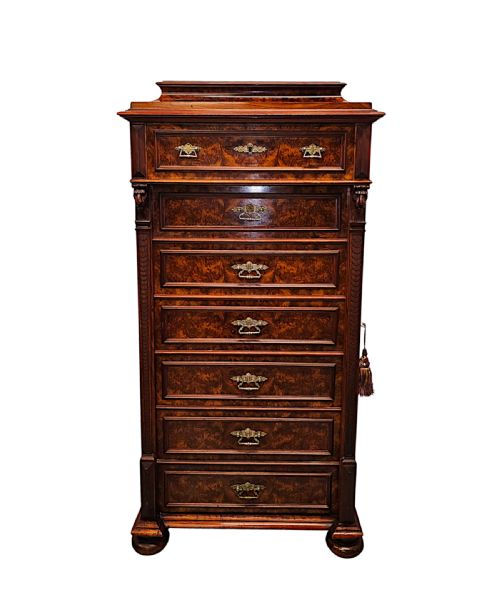
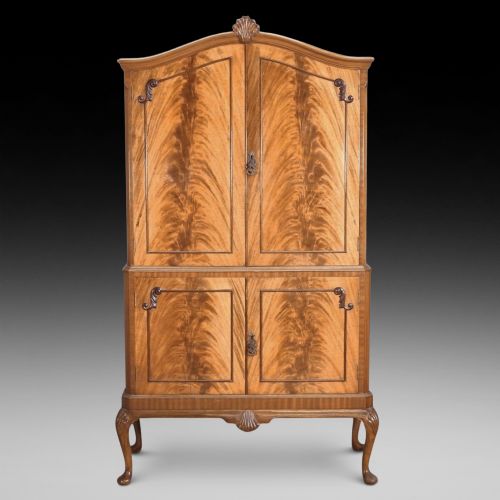
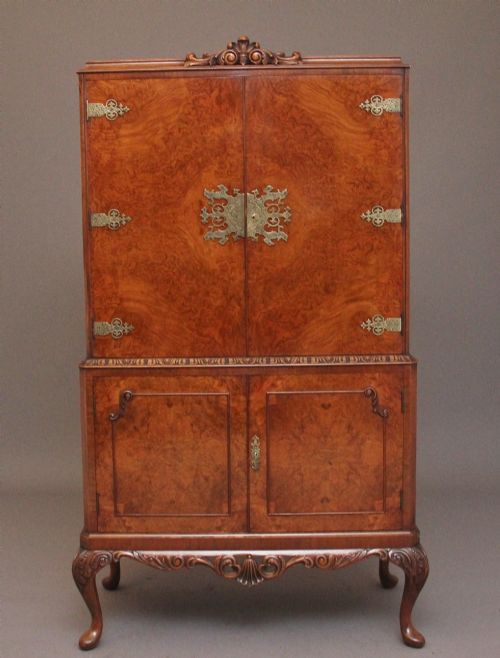
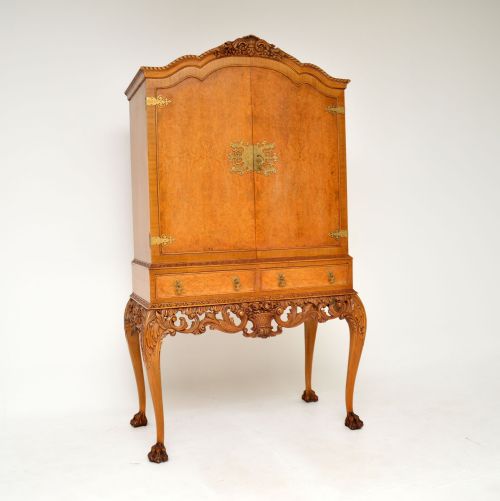
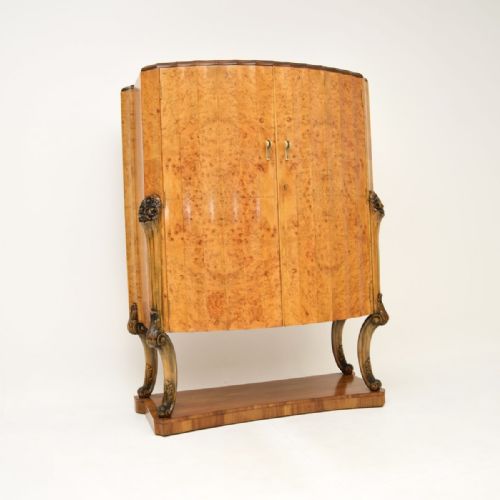
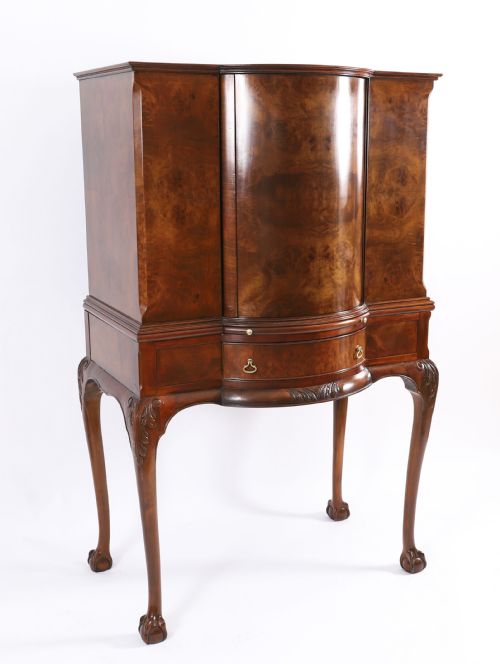
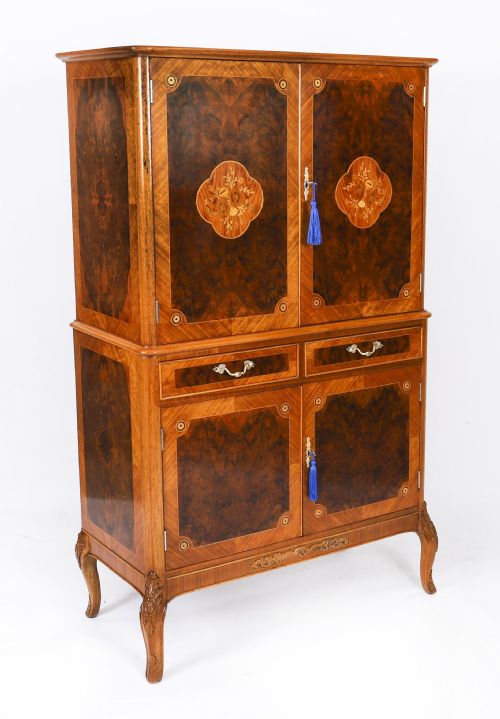


Carved Walnut Bar Cabinet
A carved walnut bar cabinet brings period elegance and serious presence into a room, serving spirits with sophisticated craft.
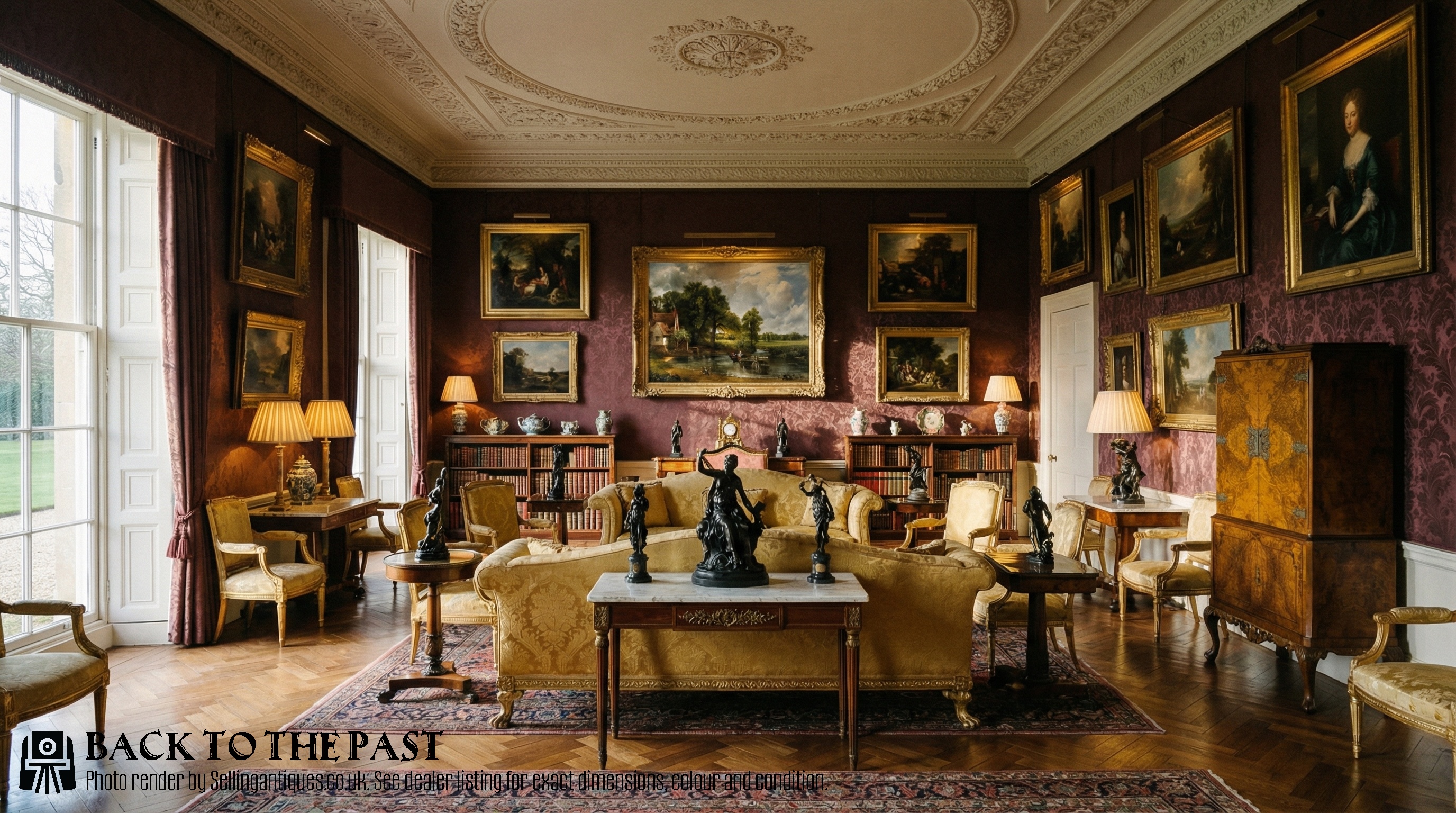
Carved Walnut Bar Cabinet
A carved walnut bar cabinet combines sturdy timber frames with specialised interior storage designed for hosting and serving drinks. Buyers browsing this selection typically encounter pieces originating from the Victorian, Edwardian, and 1920 to 1930 decades.
Stylistic influences span Queen Anne revival, Art Deco, and French revival aesthetics. Many incorporate internal mirrors, glass shelving, and pull-out trays alongside their substantial carved wooden exteriors.
Distinguishing Quality and Craftsmanship
The choice of surface timber dictates visual impact, with figured burr walnut and symmetrical flame veneers commanding attention above plain grain. The precision of marquetry inlay and the depth of hand carving separate standard production from superior pieces.
Interior fittings reveal structural thoughtfulness through sliding shelves, integrated mirror glass, and robust brass hardware that operates smoothly. Maker attribution also influences standing, as workshops like Epstein produced distinctive designs that collectors seek out.
Many a 1920s cocktail cabinet hides its party supplies behind sedate Queen Anne revival carving.
Epstein·Liberty's of London
The Carved Walnut Bar Cabinet Glossary
- Burr walnut
- A prized timber veneer sourced from the growth growths of walnut trees, displaying swirling, highly figured grain patterns. It forms the primary visual draw on many cocktail cabinets.
- Marquetry
- The art of applying small pieces of veneer to a structure to form decorative patterns and pictures. Floral and geometric motifs frequently appear on cabinet doors.
- Demi-lune
- A half-moon shape used for furniture footprints, allowing cabinets to sit flush against walls while maintaining curved profiles. These pieces offer compact elegance.
- Serpentine
- A shaped furniture front featuring a concave centre flanked by convex curves. This undulating profile requires skilled carpentry to execute successfully.
- Wellington chest
- A tall chest of drawers traditionally secured by a single locking side-hinged locking bar. These robust pieces provide substantial internal storage.
Carved Walnut Bar Cabinet: Frequently Asked Questions
What periods do these cabinets come from?
The selection spans pieces from the Victorian and Edwardian eras, alongside notable numbers from the 1920s and 1930s.
Art Deco and Queen Anne revival styles dominate the later twentieth-century decades represented here.
How were these cabinets originally used?
These pieces served as dedicated furniture for storing glassware, bottles, and mixing accessories for home entertaining.
Drop-down front panels often functioned as mixing shelves when opened during cocktail preparation.
What woods are used in construction?
Walnut serves as the primary timber, frequently enhanced with decorative burr walnut and flame walnut veneers.
Secondary woods like oak appear in internal frames, supported by brass hardware and mirrored glass.
How do I care for burr walnut veneer?
Keep wooden cabinets away from direct sunlight and radiators to prevent the delicate veneer from drying out or cracking.
Apply quality beeswax sparingly and buff gently with a soft cloth to maintain the polished finish.