

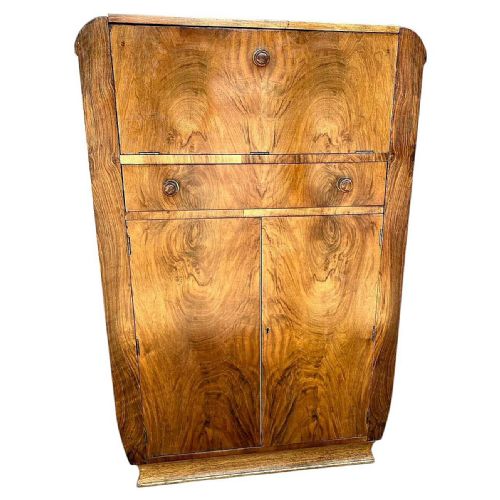
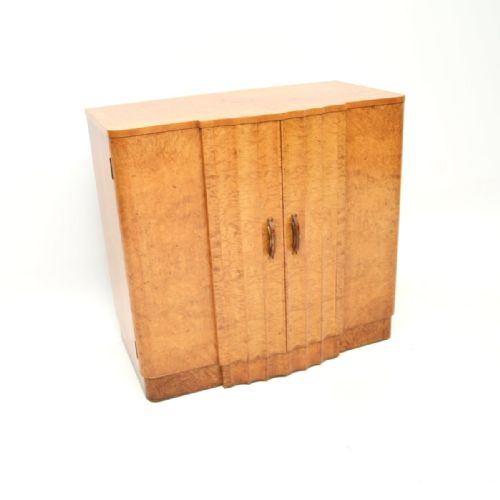
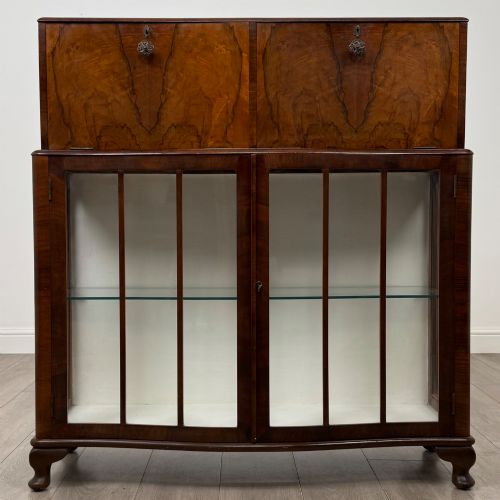
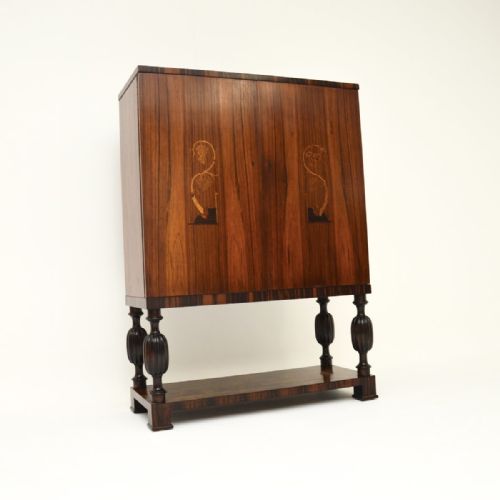


Art Deco Drinks Cupboard
An art deco drinks cupboard brings the glamour of the 1930s into a modern room with figured veneers and clever internal fittings.
Art Deco Drinks Cupboard
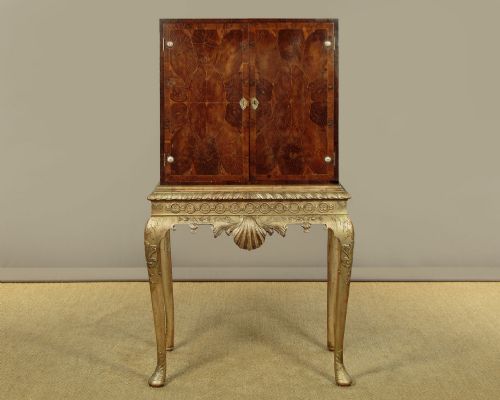
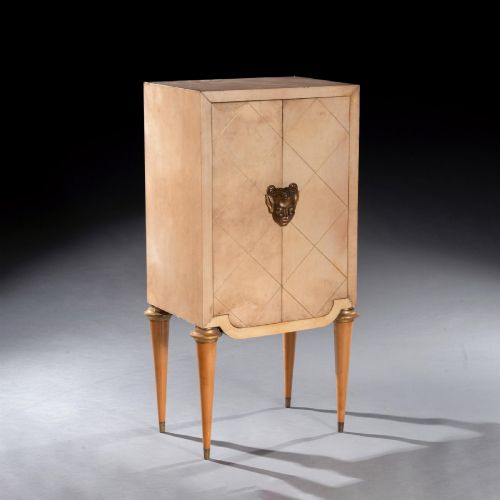
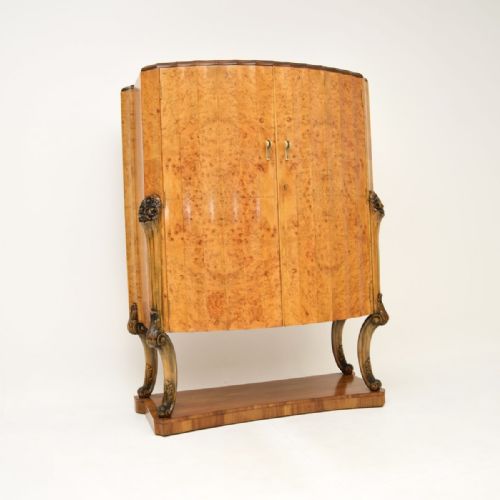
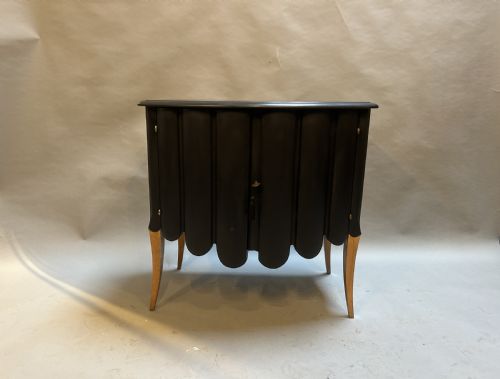
An art deco drinks cupboard stands as a dedicated piece for entertaining, designed specifically to house bottles, glassware, and mixing equipment behind handsome panelled doors. Buyers seeking an art deco drinks cupboard will find that cocktail cabinets, side cabinets, and occasional tables dominate the selection.
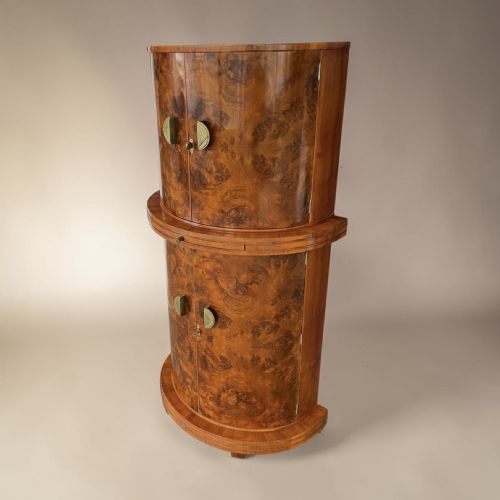
The majority of these pieces originate from the nineteen-thirties, though examples also draw from the nineteen-twentys, the Edwardian period, and the nineteen-forties. Forms range from double bow front cupboards and corner units to cabinets raised upon stands.
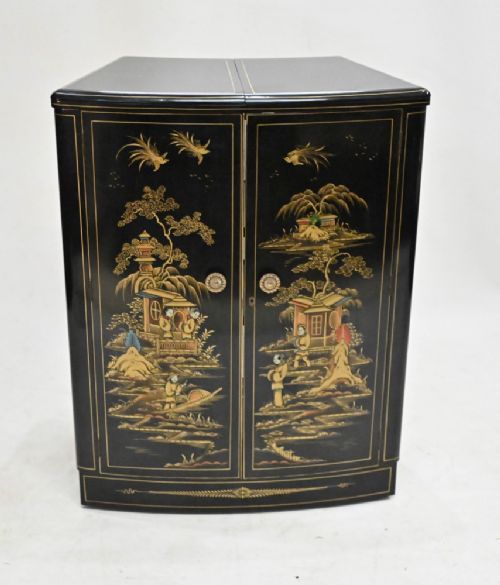
Makers and designers working in England, France, and Scandinavia shaped the aesthetic, producing variations that include marquetry, lacquered chinoiserie, and geometric grain patterns. Most examples employ rich figured woods to create visual impact before the doors are even opened.
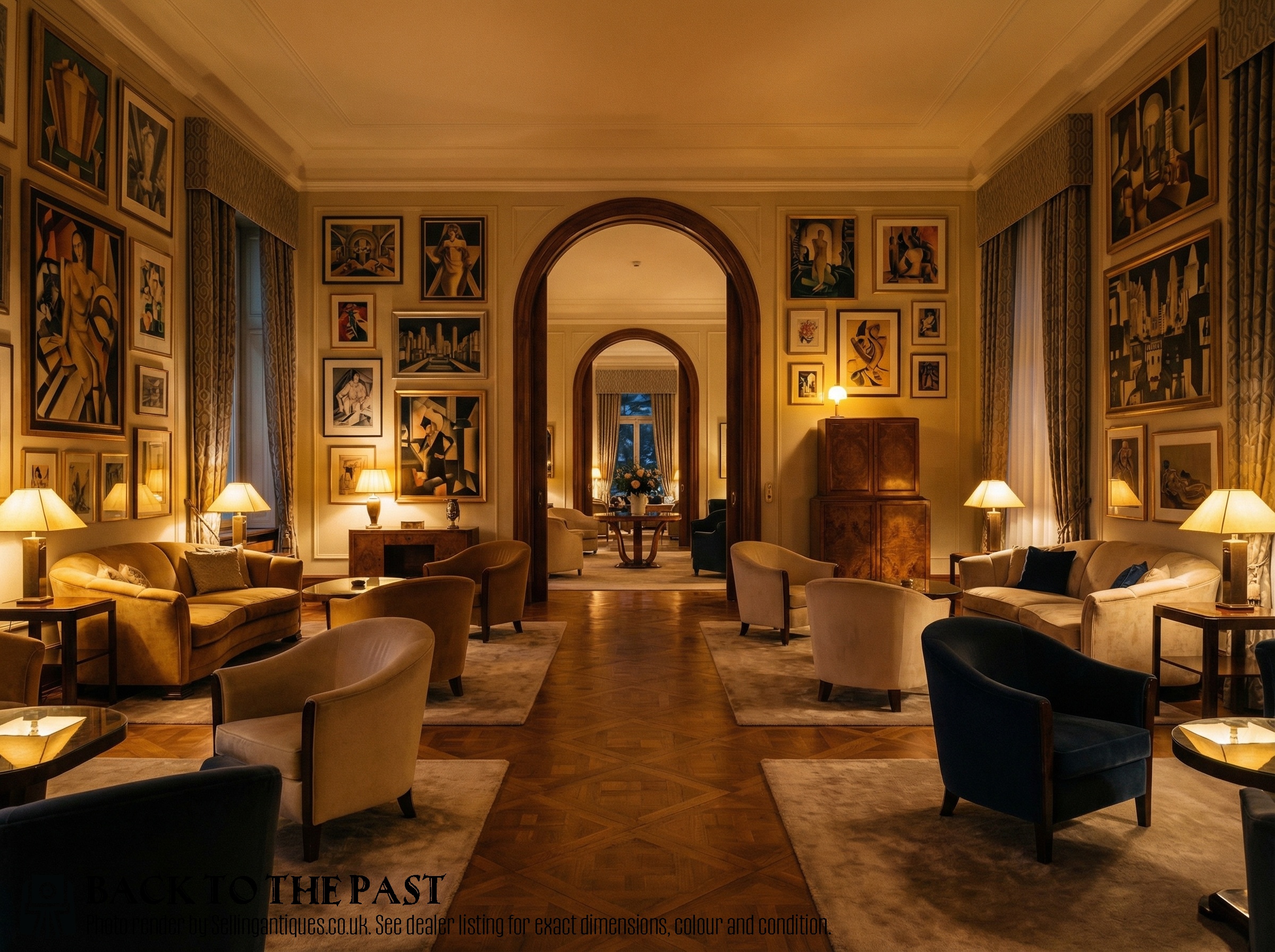
Materials and construction methods
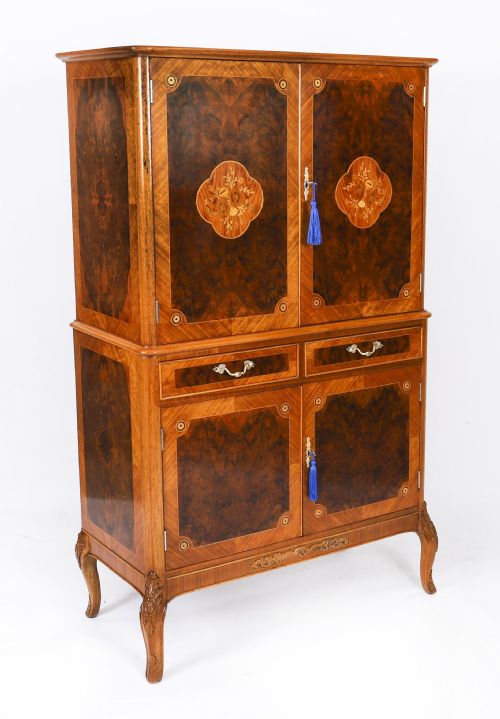
Cabinet makers relied heavily on burr walnut and figured walnut veneers, laid carefully over solid timber carcases to produce dramatic, symmetrical grain patterns across the front doors. Walnut veneer and standard walnut remain the most prevalent surfaces, complemented by occasional uses of mahogany, birch, elm, rosewood, and parchment.
Metal and glass feature prominently in the fittings and hardware, providing contrast through brass accents, mirrored tops, and internal display shelving designed to hold cocktail glass sets. Skilled craftsmen also incorporated marquetry, inlay, and specialised lacquering techniques such as chinoiserie to elevate the decorative scheme.
Current listings feature pieces spanning from the Victorian and Edwardian eras through to the 1940s, with the 1930s representing the vast majority of available stock.
Judging the standard of execution
The ambition of the cabinet maker dictates the distinction between standard production and exceptional studio work, particularly when comparing signed pieces by prominent makers to anonymous workshop output. Superior examples display meticulous book-matching of burr walnut veneers across multiple doors and drawers.
Internal complexity and the survival of original mirror glass, lighting fittings, and pull-out mixing trays separate utilitarian storage from true entertaining furniture. The precision of the joinery and the integration of specialised stands or plinths complete the measure of the piece.
Harry and Lou Epstein·Epstein·Hille·Maurice Jallot·Waring and Gillow
The Art Deco Drinks Cupboard Glossary
- Burr walnut
- A prized wood harvested from walnut tree growths, known for its swirling, highly figured grain patterns. Cabinet makers prized this material for creating decorative door panels on cocktail furniture.
- Marquetry
- The art of applying pieces of veneer to a structure to form decorative patterns and pictures. Makers used this technique to add geometric or pictorial detail to cabinet fronts.
- Chinoiserie
- European decorative art influenced by Chinese artistic traditions, often featuring painted or lacquered scenes. These finishes appeared on specialised cocktail cabinets of the period.
- Cocktail cabinet
- A specialised storage unit fitted with internal shelves, glass panels, and sliding trays for mixing drinks. These pieces became central to interwar entertaining.
Art Deco Drinks Cupboard: Frequently Asked Questions
How were these cabinets used originally?
These cabinets served as home bars during the interwar cocktail revival, holding spirits, mixers, and specialist glassware behind locking doors. Owners kept the preparation surfaces hidden until cocktail hour arrived.
Drop-down front panels often doubled as mixing shelves lined with glass, mirror, or pull-out pull trays. The lower cupboards stored larger bottles, while upper compartments organised stemmed glasses and cocktail accessories.
How do I spot an Epstein cabinet?
Epstein pieces typically showcase exceptionally bold burr walnut veneers, heavy proportions, and confident geometric styling. The London-based firm employed master craftsmen who favored dramatic wood grain presentation.
Many examples feature distinct curved fronts or elaborate internal fittings that mark them out from standard production furniture of the era.
Are these pieces suitable for modern living rooms?
These cabinets provide practical storage for modern glassware and bottles while acting as a strong focal point in a living or dining space. Their compact footprints allow them to sit comfortably against most walls.
The internal mirrors and pull-out trays function just as well for contemporary entertaining as they did nearly a century ago.
How do I distinguish 1920s from 1930s pieces?
Nineteen-twenties pieces often retain transitional Edwardian influences or heavier revival styles such as Queen Anne elements alongside early geometric lines. Walnut and mahogany woods dominate this earlier decade.
Nineteen-thirties examples embrace streamlined modernism, utilising starker geometric veneer layouts, chrome or brass hardware, and specialised finishes like parchment or lacquer.