
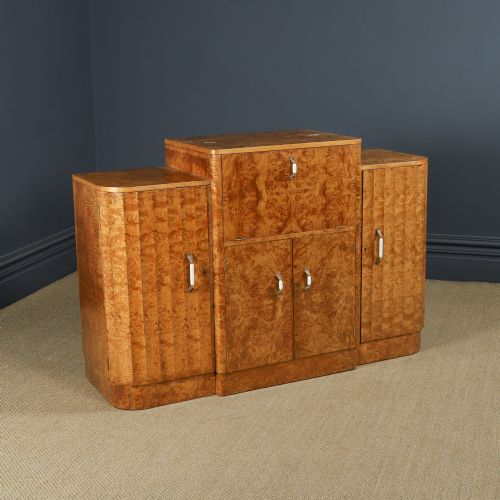

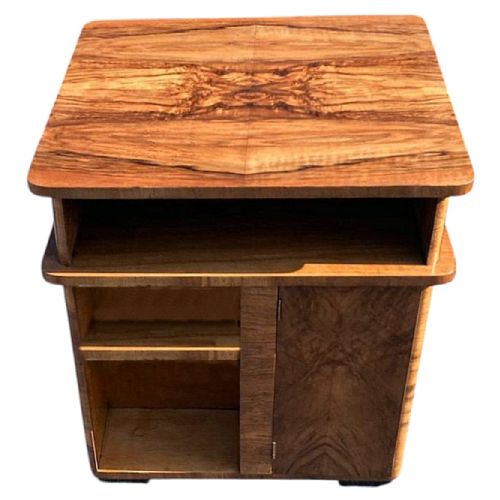

Vintage Dry Bar Cabinet
A vintage dry bar cabinet brings period elegance and sophisticated entertaining space into the modern home with fitted compartments and drop-down preparation ledges.
Vintage Dry Bar Cabinet
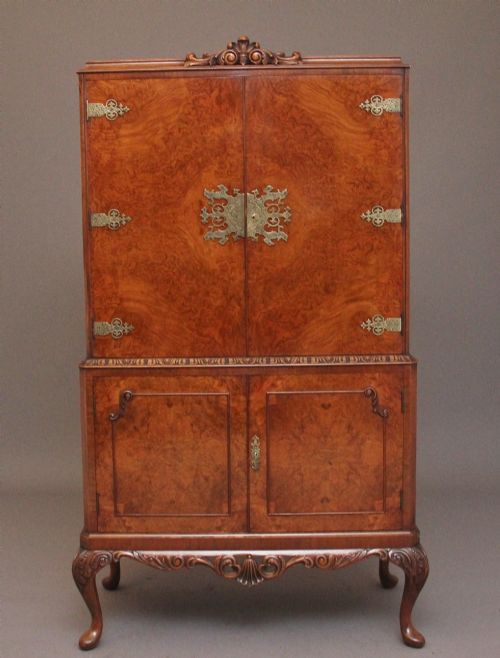
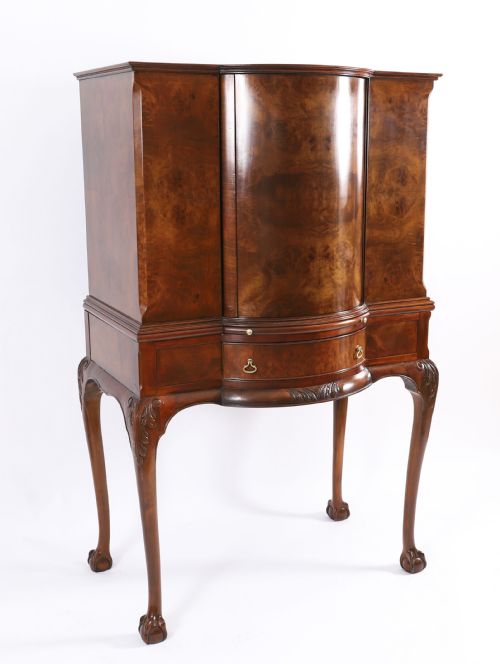
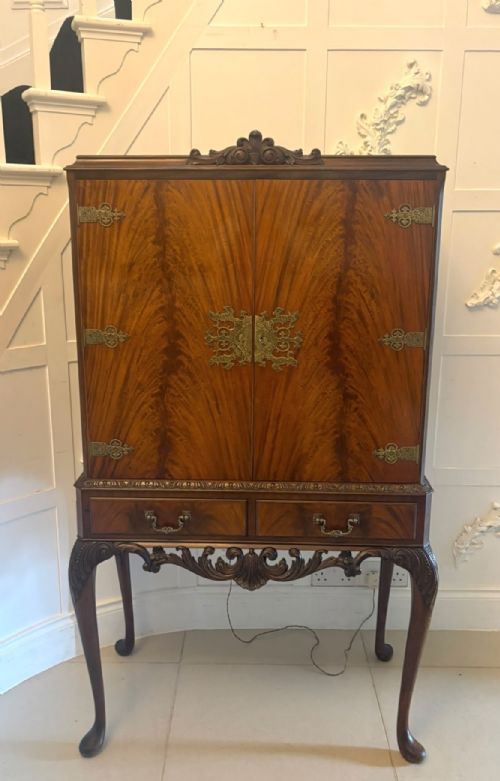
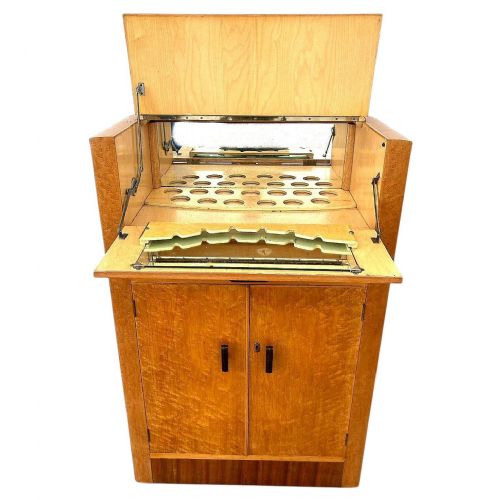
A vintage dry bar cabinet serves as a dedicated piece of furniture designed for storing spirits, glassware, and mixing accessories. When searching this phrase, buyers encounter substantial freestanding chests, sideboards, and standing units created primarily for home entertaining.
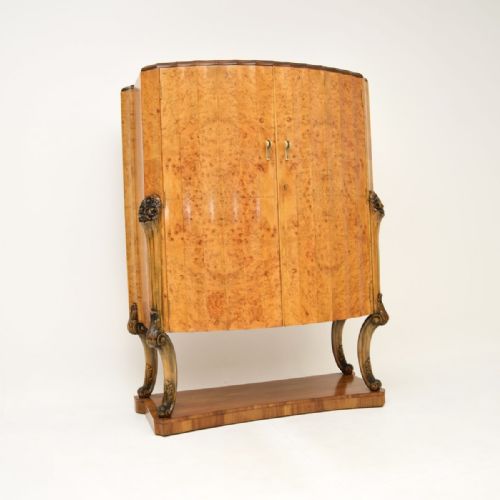
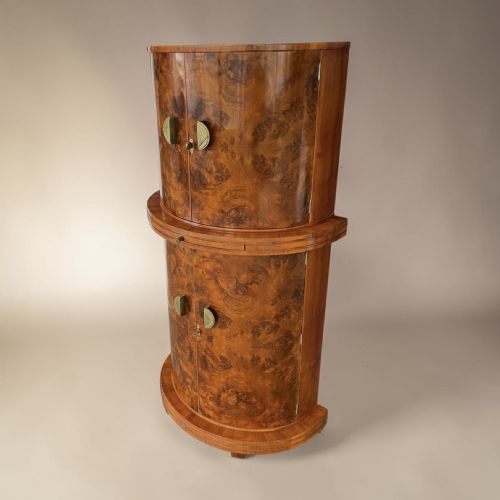
The selections span from the late nineteenth century through the mid-twentieth century, with Art Deco examples from the nineteen-twenties and thirties appearing most frequently. These pieces take various forms, including cocktail cabinets, drinks cabinets, revolving dry bars, and corner units.
Originating largely from English workshops, these items reflect changing social habits across different decades. Makers adapted traditional furniture forms to accommodate the specific requirements of serving mixed drinks and cocktails at home.
Materials and Construction
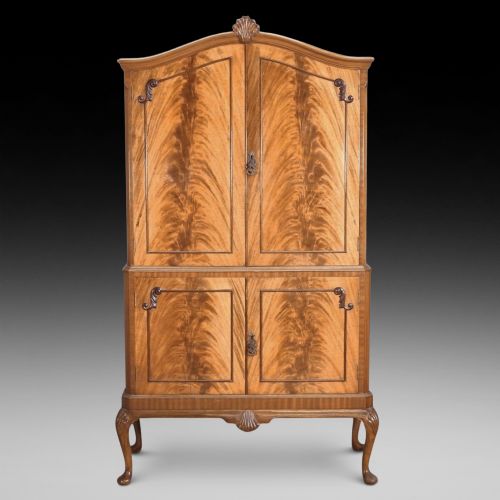
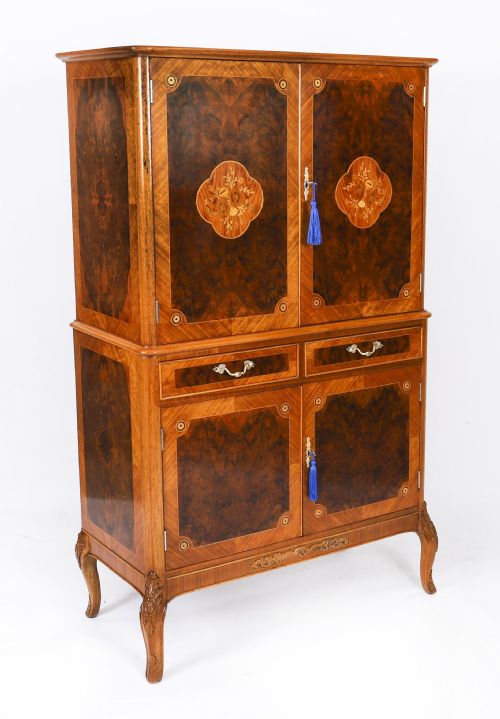
Cabinet makers utilised richly figured timbers such as burr walnut, mahogany, bird's-eye maple, satinwood, and blonde oak for the primary carcases and exterior veneers. These woods were often polished to a high sheen to highlight the natural grain patterns and decorative marquetry.
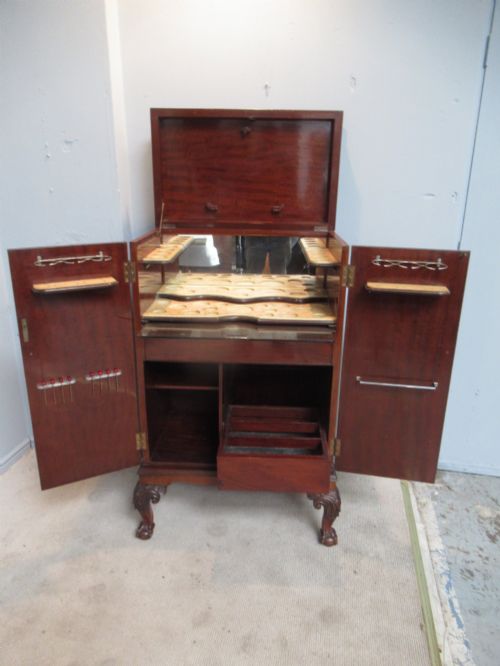
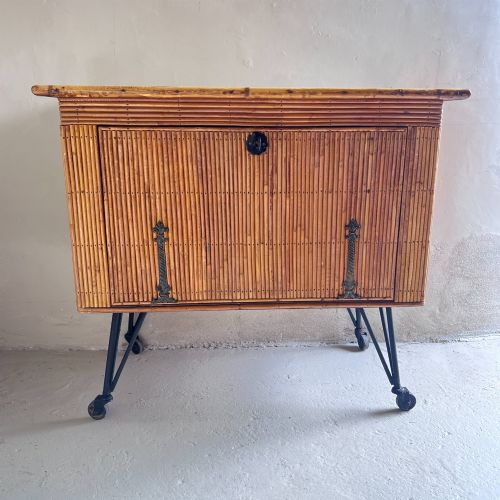
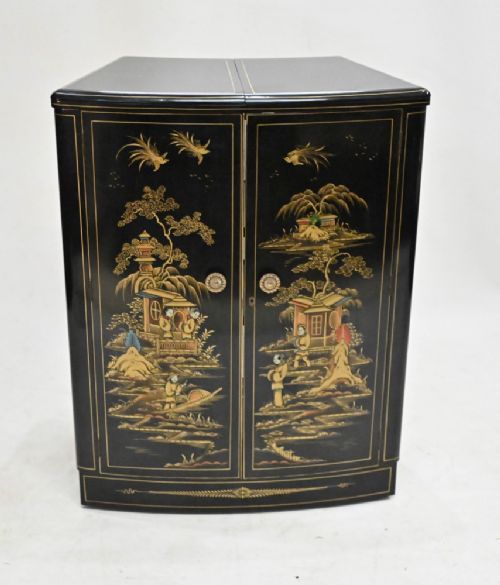
Interiors frequently incorporate specialised materials including mirrored back panels, glass shelving, chrome fittings, brass hardware, and electric lighting systems. Some designs feature specialist finishes like lacquered Chinoiserie or incorporate unexpected elements such as cast-iron legs and bamboo frames.
Vintage Dry Bar Cabinet Retail Price Guide 2026
Typical asking prices for vintage dry bar cabinet among the pieces listed under this phrase on Sellingantiques today, from the lower quarter to the upper quarter. They describe what is for sale here now, not the wider market.
Materials recorded across the inventory include burr walnut, mahogany, satinwood, bamboo, mirror glass, chrome, and brass.
Evaluating Craftsmanship
The distinction between standard production and superior examples rests on the choice of veneers and the precision of the cabinet work. Master makers selected timbers with exceptional figuring, matched the grain symmetrically across doors and drawers, and executed complex internal mechanisms with absolute accuracy.
Fittings and interior appointments also differentiate the standard from the exceptional. High-grade pieces integrate original mirrored glass, robust brass hinges, integrated lighting, and comprehensive pull-out preparation slides that operate smoothly within the timber framework.
Epstein·Harry and Lou Epstein·Hille·Maurice Adams·Waring and Gillow
The Vintage Dry Bar Cabinet Glossary
- Burr walnut
- A prized wood veneer harvested from the warted growths on walnut trees. It yields complex, swirling grain patterns highly valued for decorative cabinet fronts.
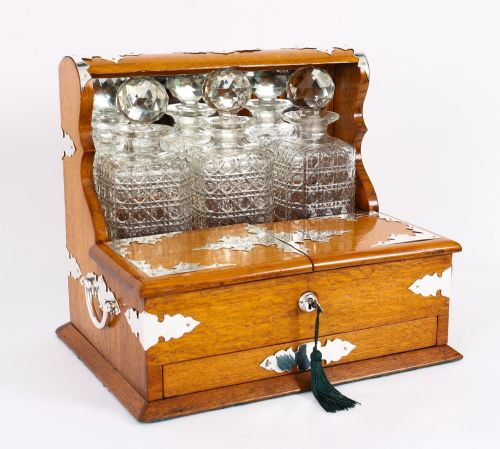
- Tantalus
- A locking wooden frame holding decanters securely while leaving their contents visible. This device prevented unauthorized access to spirits in nineteenth-century households.
- Chinoiserie
- European decorative style imitating Chinese artistic traditions. It involves hand-painted lacquerwork depicting landscapes, figures, and floral motifs.
- Marquetry
- The art of applying pieces of veneer to a structure to form decorative patterns. Craftsmen cut different coloured woods to fit together precisely into intricate designs.
- Games compendium
- A multi-use box or cabinet containing equipment for various table games. These sets were often integrated into nineteenth-century entertaining furniture.
Vintage Dry Bar Cabinet: Frequently Asked Questions
What is a vintage dry bar cabinet?
A vintage dry bar cabinet is a specialised piece of furniture built to house bottles, glassware, and bar accessories for entertaining guests at home.
These pieces typically feature drop-down serving flaps, internal mirrors, and dedicated storage compartments designed specifically for cocktail preparation.
How were these cabinets used historically?
Owners used these cabinets to store spirits and glassware securely in reception rooms and drawing rooms during social gatherings.
The drop-down doors served as preparation surfaces for mixing drinks before serving guests directly from the cabinet.
How do I date a Art Deco drinks cabinet?
Art Deco drinks cabinets generally date from the nineteen-twenties and nineteen-thirties, identifiable by geometric lines, streamlined forms, and exotic wood veneers.
Makers frequently employed burr walnut, bird's-eye maple, and contrasting black lacquer during this period.
Where should I place a drinks cabinet?
These cabinets suit dining rooms, living rooms, and reception areas where entertaining takes place.
Freestanding and corner models allow flexibility in room layout, provided they are kept away from direct sunlight to protect the wood polish and internal veneers.