


Curved Art Deco Cabinet
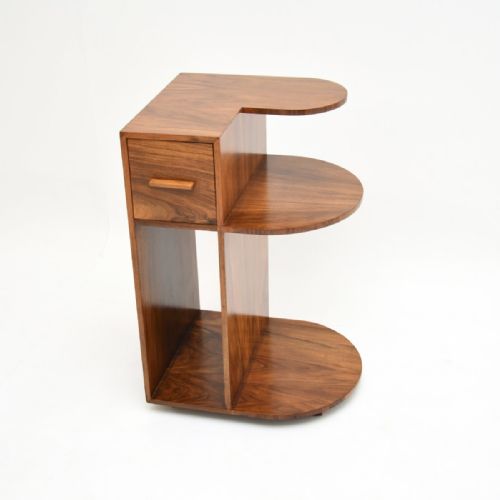
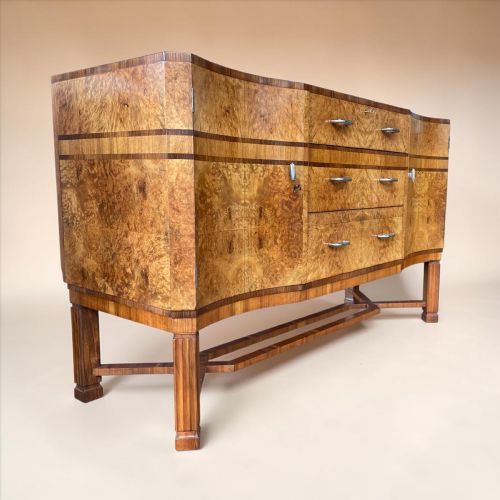
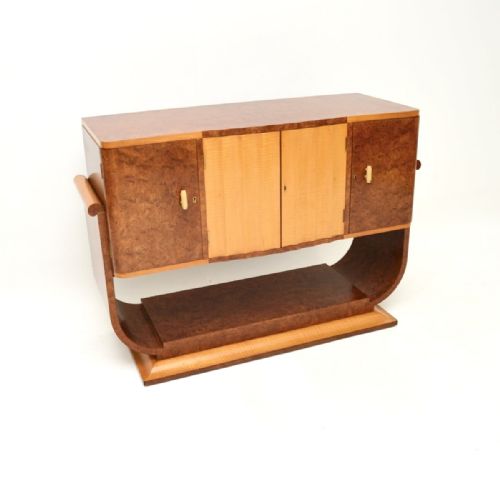
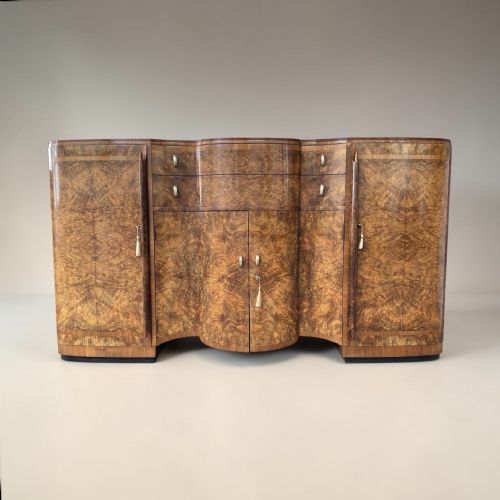
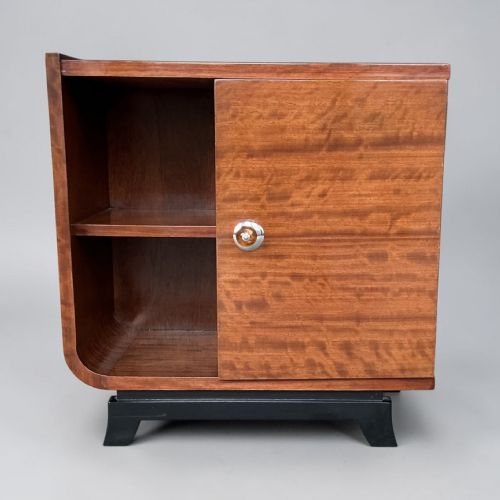
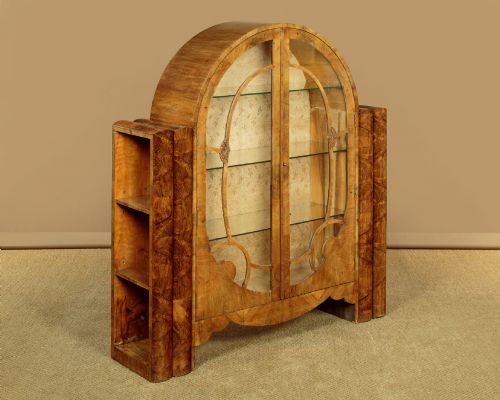
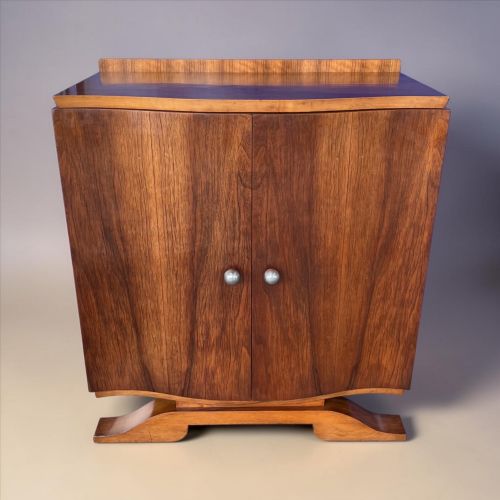
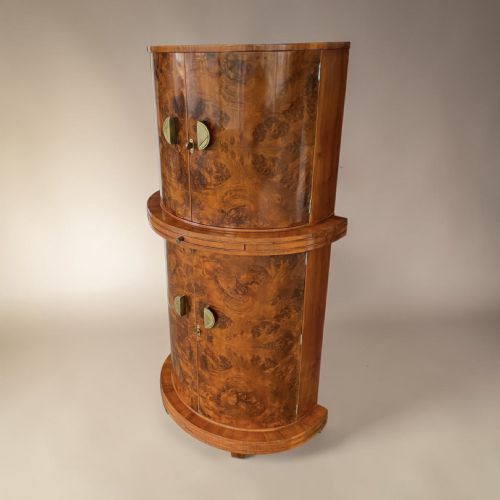
These curved art deco cabinet pieces bring flowing twentieth-century geometry and rich walnut surfaces into contemporary rooms.
Curved Art Deco Cabinet
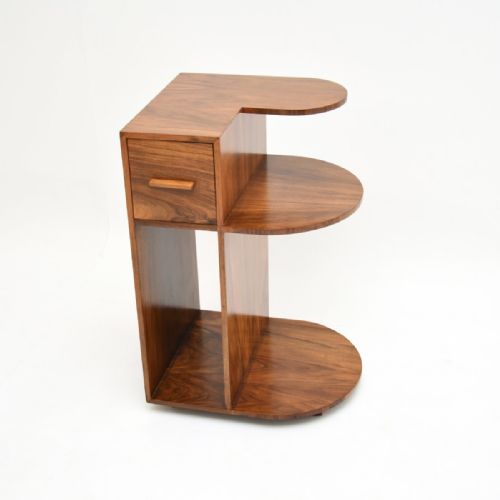
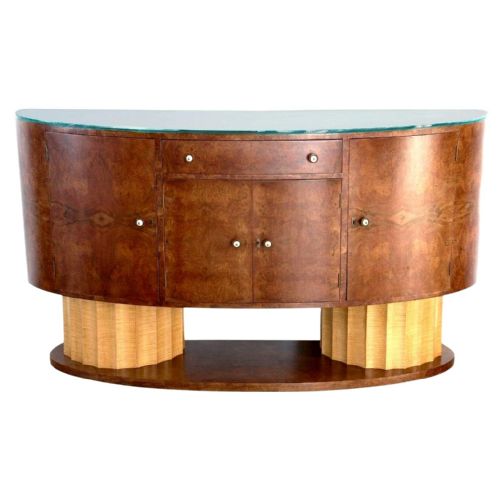
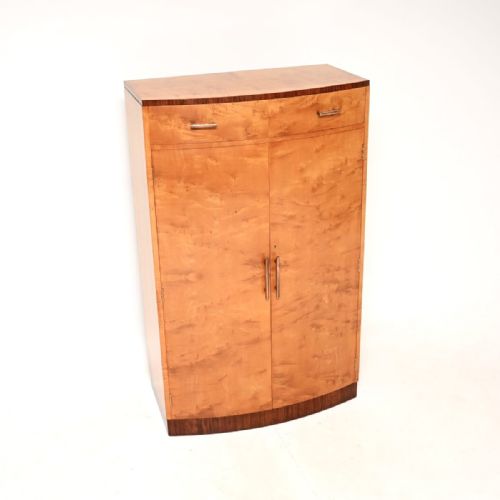
A curved art deco cabinet brings together the sweeping lines and dramatic forms characteristic of twentieth-century design. Buyers exploring this category encounter sideboards, display cabinets, cocktail cabinets, and bedside tables originating mainly from the 1930s, alongside examples from the 1920s, 1940s, and Edwardian periods.
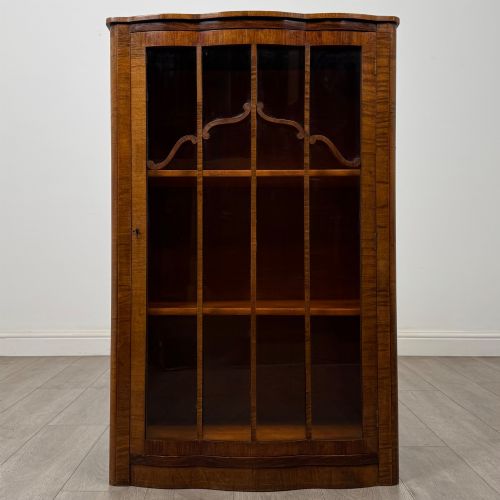
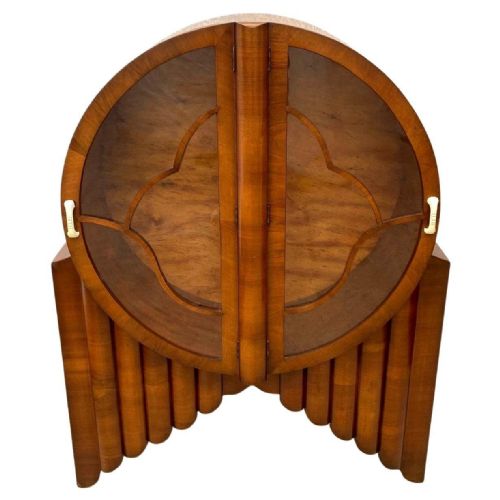
The version most frequently met on this page is the walnut or burr walnut sideboard or display cabinet, often featuring curved glass doors or circular and oval profiles. Pieces span English, French, and Italian origins, ranging from tall vitrines and compactum wardrobes to smaller side tables and drum-shaped bedside units.
Materials and construction
Makers utilised walnut, burr walnut, and wood veneers applied over solid carcases to achieve rich, patterned grain across sweeping curved surfaces. Sycamore, bird's eye maple, satin birch, and oak also appear as contrasting timbers or primary materials in specific pieces.
Glass panels, brass fittings, aluminium frames, and metal elements complement the wooden structures of display cabinets and sideboards. Traditional cabinet-making techniques allowed workshops to construct complex shapes such as oval display cabinets and clove-shaped or cathedral vitrines.
Curved Art Deco Cabinet Retail Price Guide 2026
Typical asking prices for curved art deco cabinet among the pieces listed under this phrase on Sellingantiques today, from the lower quarter to the upper quarter. They describe what is for sale here now, not the wider market.
Rocket cabinets and clove-shaped display units prove that storage can launch conversation.
Assessing quality
Quality in these pieces rests upon the selection and matching of wood veneers, particularly the dramatic grain patterns found in burr walnut and figured walnut. Workshops known for high-standard production applied veneers carefully across curved doors and rounded carcases to maintain visual continuity.
Design ambition separates standard storage from exceptional examples, as seen in bespoke creations with complex architectural silhouettes like rocket cabinets or cathedral vitrines. The integration of contrasting timbers such as sycamore and the inclusion of original glass and metal hardware distinguish finer commissions.
Maurice Adams·Gomme·Hille·Harry and Lou Epstein·Hamptons of Pall Mall London·Bowman Brothers·Betty Joel·Heal's
The Curved Art Deco Cabinet Glossary
- Veneer
- A thin layer of wood applied to a core structure to provide a decorative surface. Walnut and burr walnut veneers define the primary aesthetic of these items.
- Vitrine
- A glass-fronted cabinet designed for displaying objects. These pieces often incorporate curved or circular glass panels.
- Compactum
- A multi-functional wardrobe or storage unit. Examples combine hanging space with drawers and shelving within an integrated design.
- Sideboard
- A long low piece of furniture used for storage and serving. These items frequently feature prominent wood grain and curved side cabinets.
Curved Art Deco Cabinet: Frequently Asked Questions
How do I use a cocktail cabinet?
A cocktail cabinet functions as a dedicated home bar unit for storing bottles, glassware, and mixing accessories. These pieces often feature drop-down preparation flaps and mirrored interiors suited to entertaining.
Positioning the cabinet in a living room or dining area allows it to serve as both a functional drinks station and a striking focal point defined by its figured wood grain.
How do I date a 1930s cabinet?
Dating a 1930s cabinet involves examining the stylistic markers of the Art Deco movement, such as symmetrical curves, stepped cornices, and streamlined silhouettes. Construction methods, including the use of specific wood veneers and metal or glass hardware, offer further chronological clues.
Reference to known workshop signatures or labels from prominent makers of the era can also confirm the exact decade of manufacture.
Are bedside tables matched or paired?
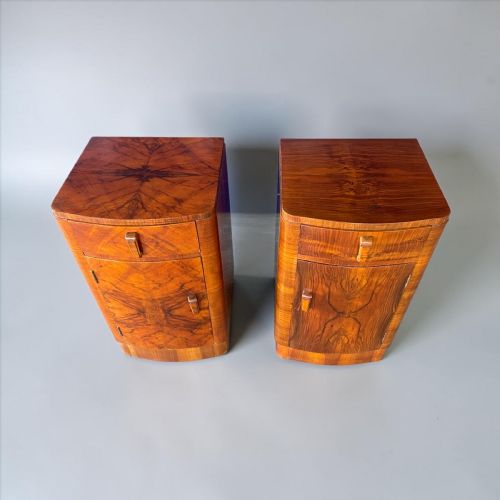
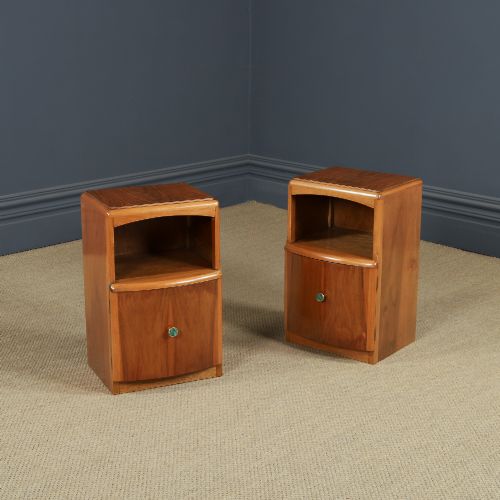
Bedside tables in this category frequently appear as matched pairs designed to sit symmetrically on either side of a bed. These units range from open-area nightstands to drum-shaped enclosed cabinets.
Matching pairs share identical timber grains, hardware, and curved profiles, creating a cohesive look across bedroom furnishings.