

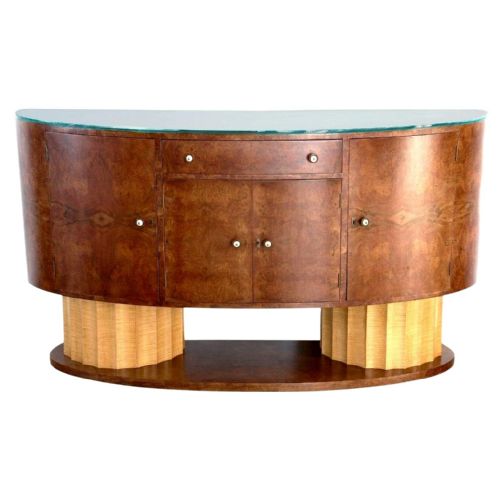


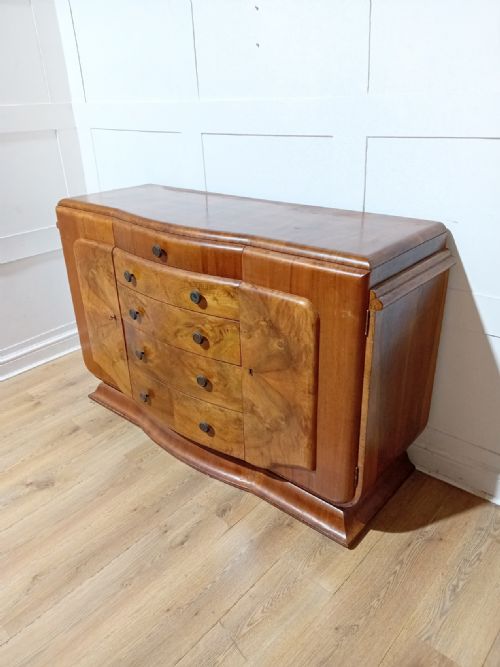


Streamlined Art Deco Sideboard
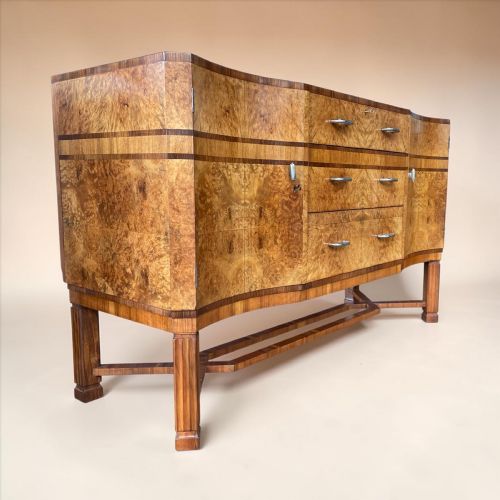
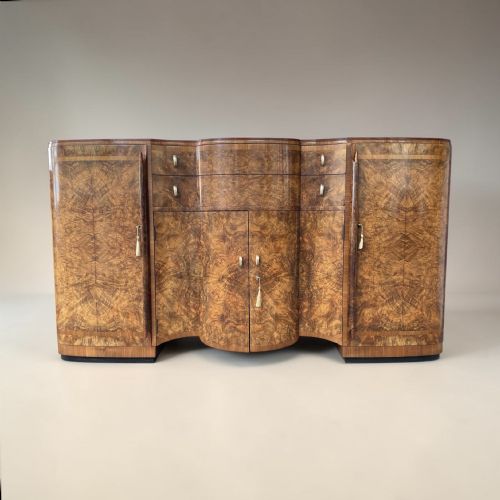
These streamlined art deco sideboards bring clean, curved geometry and striking wood veneers into the modern dining room or hall.
Streamlined Art Deco Sideboard
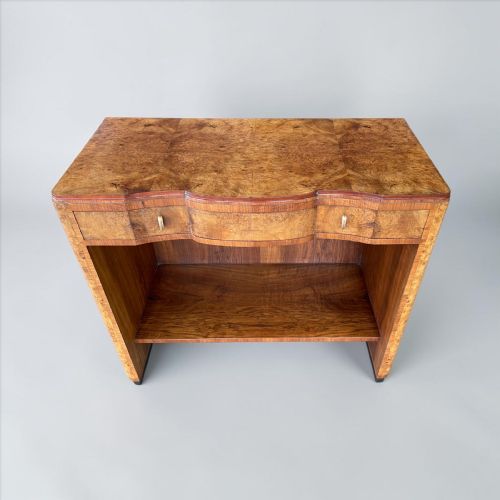
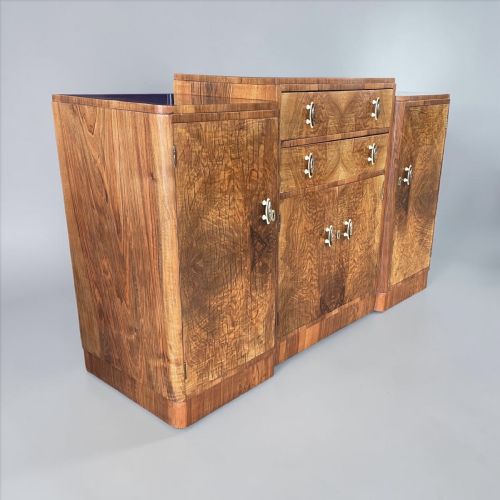
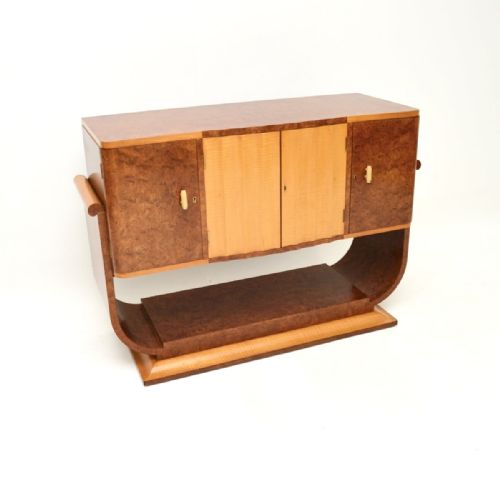
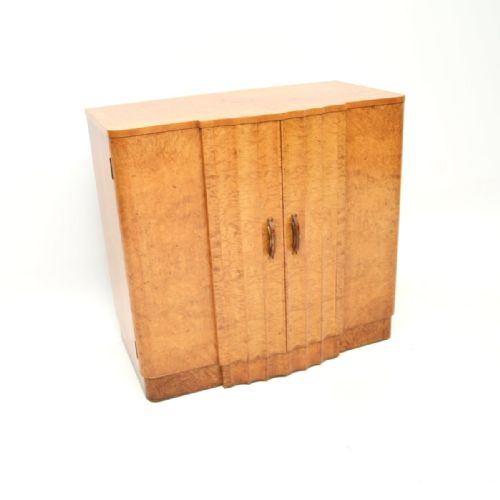
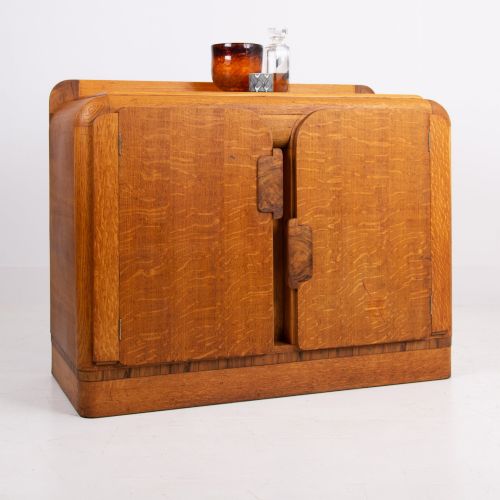
A streamlined art deco sideboard delivers the low, horizontal presence characteristic of early twentieth-century interior design. The pieces gathered here span the nineteen-twenties and nineteen-thirties, taking the form of sideboards, serving tables, and cocktail cabinets.
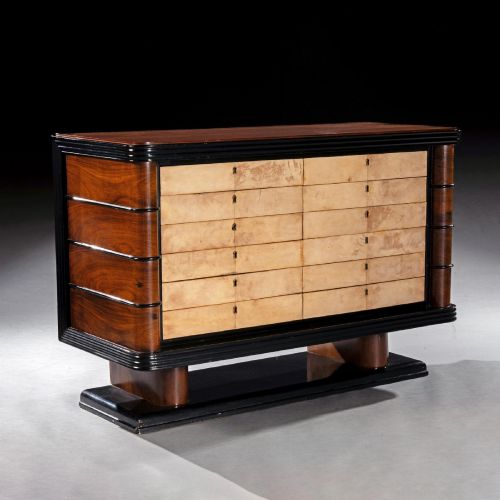
Most examples rely on walnut and burr walnut veneer, frequently contrasted with lighter sycamore or darker palisander. The primary forms range from traditional sideboards to commodes with parchment-covered drawers and specialised drinks cabinets.
Makers such as Maurice Adams, Harry and Lou Epstein, Hille, and Gomme dominate the better pieces in this selection. Buyers find both compact serving pieces and substantial dining room cupboards designed to anchor a room.
Construction and materials
Cabinetmakers constructed these pieces using solid wood carcases overlaid with decorative veneers including burr walnut, walnut, and palisander. Sycamore and contrasting timber provided interior details and banding, while parchment served as a tactile surface for specific drawers.
Metal and brass hardware such as handles and hinges completed the linear aesthetic typical of the period. Construction techniques combined traditional joinery with advanced veneering methods to achieve sweeping curves and unbroken horizontal grains.
Some nineteenth-century furniture was so heavy it required a team of footmen; art deco sideboards let you entertain without the staff.
Judging quality in art deco furniture
The distinction between standard production and exceptional work lies in the choice and matching of wood veneers. Master workshops aligned burr walnut figures symmetrically across drawer fronts and doors to create continuous patterns.
Attribution to documented makers like Maurice Adams or Hille elevates a piece above anonymous production. The precision of specialised elements, such as parchment-covered drawers or fitted cocktail interiors, also separates ordinary cabinets from superior examples.
Maurice Adams·Harry and Lou Epstein·Gomme·Hille·Hamptons of Pall Mall London
The Streamlined Art Deco Sideboard Glossary
- Veneer
- A thin layer of figured wood applied over a secondary wood carcase to provide a decorative exterior surface. Burr walnut and palisander veneers are typical of this period.
- Burr walnut
- A specific timber growth yielding intricate, swirling grain patterns highly prized by art deco cabinetmakers. It forms the primary visual feature on many high-end sideboards.
- Palisander
- A dense, dark exotic hardwood used during the interwar period for luxury furniture. It offers a strong contrast against lighter woods like sycamore.
- Sycamore
- A pale hardwood utilised for contrasting stringing, interior linings, and lighter decorative panels. It brightens darker walnut carcases.
- Cocktail cabinet
- A specialised storage piece fitted for glassware, bottles, and drink preparation. These interiors often feature mirrored backs and pull-down serving surfaces.
Streamlined Art Deco Sideboard: Frequently Asked Questions
How do I care for walnut veneer?
Keep these pieces away from direct sunlight and excessive heat sources to prevent the veneer from drying out or lifting. Dust regularly with a dry cloth and occasionally apply a suitable furniture wax.
Avoid using modern liquid polishes or silicone sprays, as these damage the traditional polish finish over time. Gentle handling ensures the delicate grain remains protected.
Are these sideboards practical for modern dining rooms?
These cabinets offer substantial internal storage for modern tableware, serving dishes, and glassware. Their low, wide proportions fit well against contemporary dining room walls without dominating the floor space.
Certain variations include dedicated cocktail compartments or felt-lined cutlery drawers, making them surprisingly functional for contemporary entertaining.
How can I tell a cabinet from a sideboard?
Sideboards and serving tables generally feature long, low horizontal proportions designed specifically for dining room storage and food service. Cabinets and commodes tend to be taller, narrower, or built with specialised interior configurations like drinks storage.
While both share the same decorative vocabulary, the intended domestic function dictates their internal layout and overall height.
What defines the streamlined art deco style?
The streamlined aesthetic strips away excessive ornamentation in favour of sweeping curves, rounded corners, and uninterrupted horizontal lines. The emphasis rests on the natural beauty of figured wood veneers rather than carved decoration.
Metal accents and contrasting timbers like sycamore reinforce this sleek, aerodynamic visual language.