





1930s Walnut Server
A 1930s walnut server delivers striking grain and practical storage for the dining room.
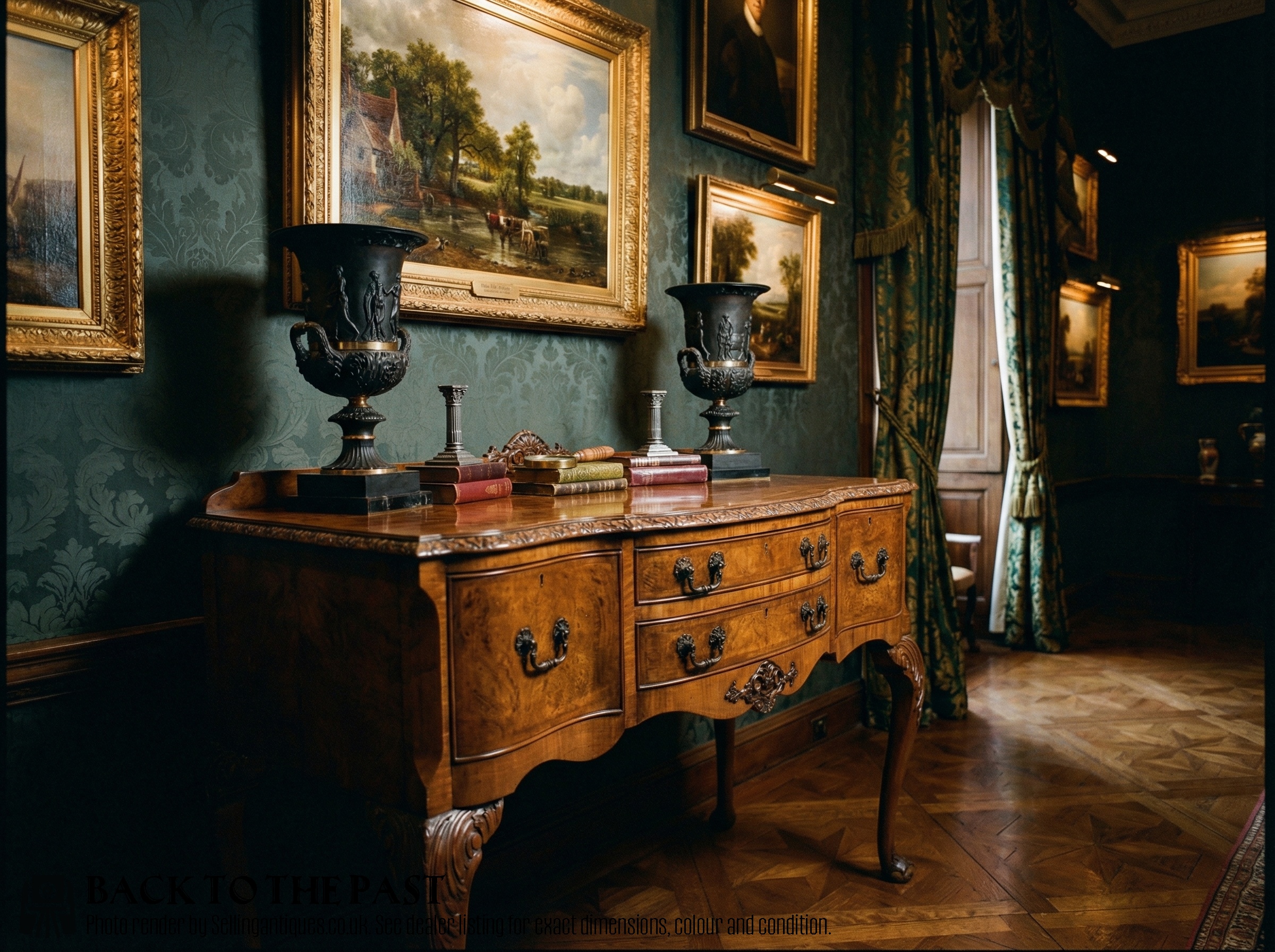
1930s Walnut Server
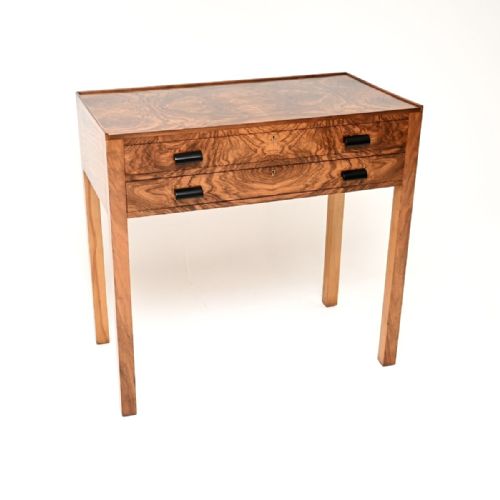
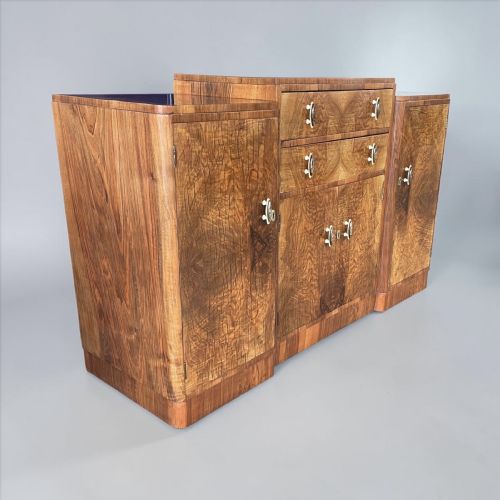
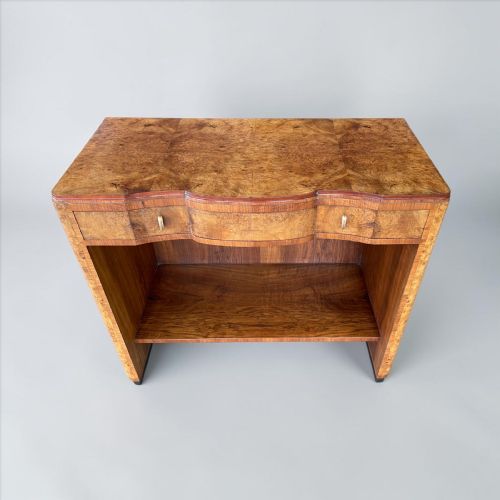
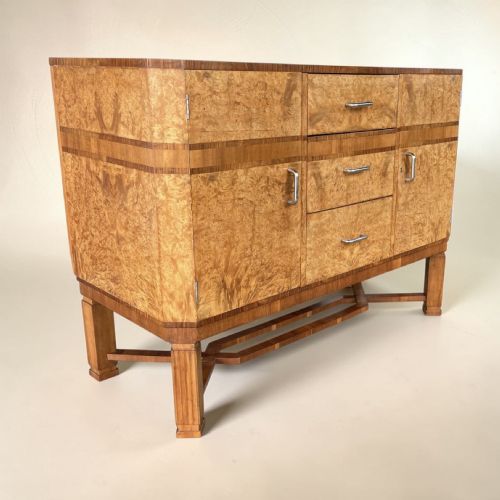
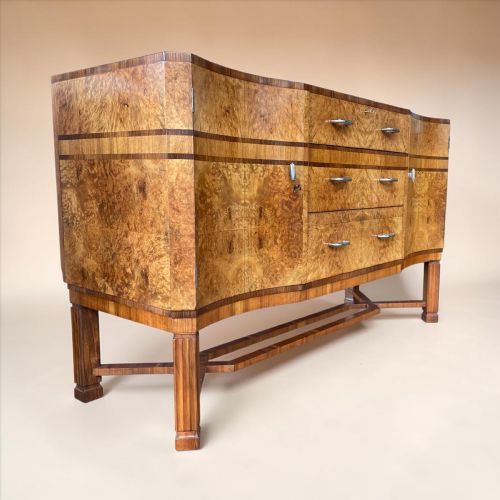
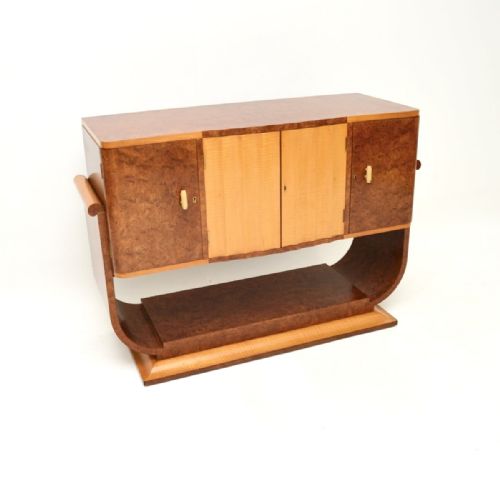
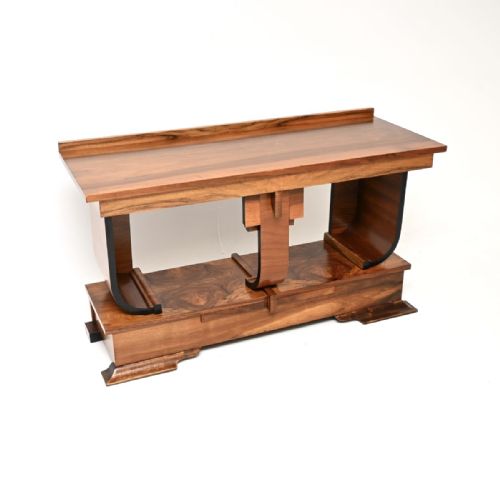
A 1930s walnut server encompasses substantial sideboards, cocktail cabinets, and serving tables designed to anchor a period interior. These pieces provide functional storage for dining ware while displaying the bold geometry typical of the era.
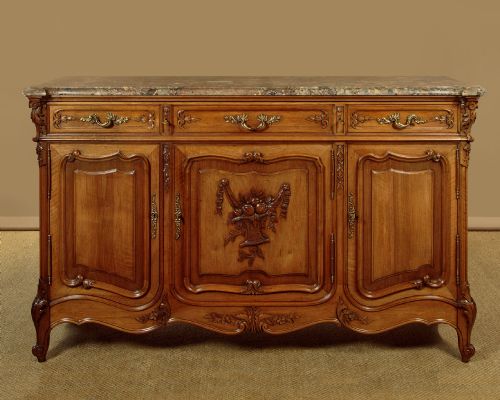
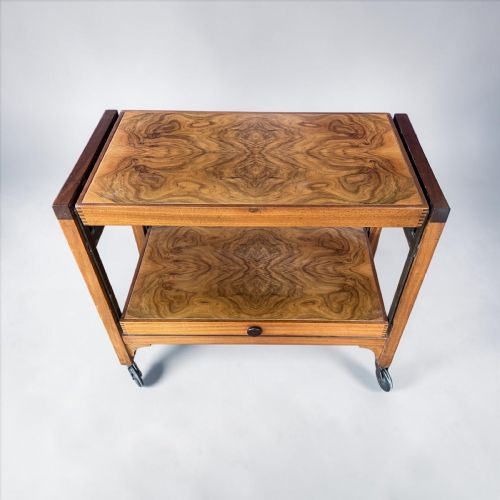
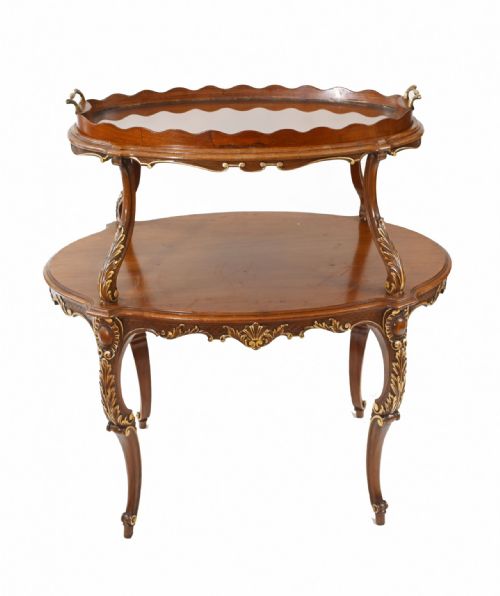
The prevailing style on this page is Art Deco, alongside French Provincial, Queen Anne Revival, and Rococo Revival influences. Sideboards and side cabinets dominate the selection, frequently paired with serving tables and drinks trolleys.
Most examples date firmly from the 1930s, though occasional pieces stretch back to the 1920s. Buyers encounter forms ranging from compact consoles to large Italian and French marble-topped servers.
Materials and construction
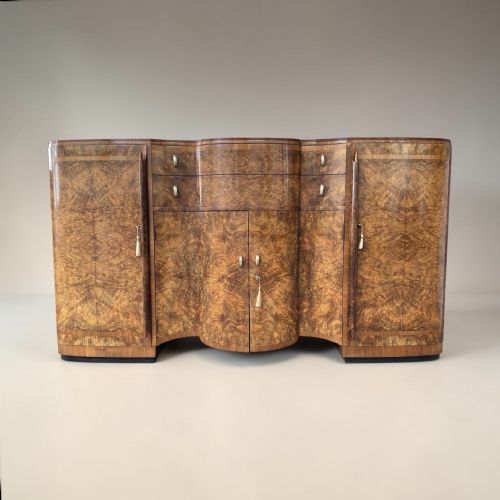
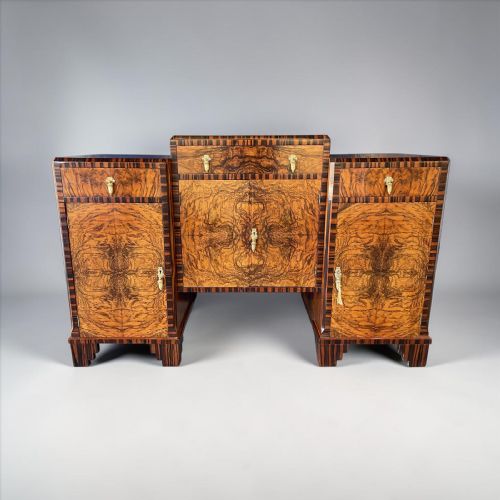
Craftsmen utilised walnut and burr walnut veneer over solid carcases to create dramatic figured surfaces on drawer fronts and doors. Sycamore sometimes appears as a contrasting secondary timber within the decorative scheme.
Hardware and trim incorporate brass, chrome, metal, and glass, adding metallic contrast to the warm timber tones. Certain servers also integrate marble tops and durable bakelite details for functional elegance.
1930s Walnut Server Retail Price Guide 2026
Typical asking prices for 1930s walnut server among the pieces listed under this phrase on Sellingantiques today, from the lower quarter to the upper quarter. They describe what is for sale here now, not the wider market.
Some servers double as secret cocktail bars, proving that interwar hosts took their hospitality very seriously indeed.
Judging quality in walnut servers
The choice of veneer defines visual hierarchy, with book-matched burr walnut commanding attention through complex, symmetrical grain patterns. Plain walnut surfaces offer a more subdued aesthetic.
Attribution to documented makers elevates a piece, as does the integration of specialised functions such as metamorphic mechanisms, fitted cocktail interiors, or inset marble tops.
Maurice Adams·Hille·Harry and Lou Epstein·Hamptons of Pall Mall London
The 1930s Walnut Server Glossary
- Burr walnut
- Timber taken from a tree growth that produces intricate, swirling grain patterns. This highly decorative veneer appears on the primary doors and drawer fronts of better servers.
- Veneer
- A thin layer of superior wood applied over a stable secondary timber base. This technique allows cabinetmakers to display striking grain figures without wasting scarce resources.
- Art Deco
- A design style characterised by streamlined forms, geometric symmetry, and lavish materials. It dominates the aesthetic of interwar British and continental cabinetmaking.
- Metamorphic
- Describing furniture designed to transform its function, such as a trolley or table that expands or alters configuration. These mechanical pieces introduce versatility to entertaining.
- Sideboard
- A long dining room cabinet fitted with cupboards and drawers for storing tableware and linens. It functions as the primary serving surface during meals.
1930s Walnut Server: Frequently Asked Questions
What is a 1930s walnut server used for?
These pieces serve primarily as dining room storage for cutlery, linen, and glassware, while the top surface provides space for serving food and drinks.
Many examples also function as cocktail cabinets or decorative console tables in living spaces.
How do I identify Art Deco furniture?
Art Deco furniture relies on symmetrical geometric shapes, clean lines, and contrasting veneers like burr walnut.
Details such as chrome handles, glass shelves, and stepped carcases further distinguish the style from earlier revival periods.
Are these servers made of solid walnut?
Cabinetmakers generally applied thin veneers of figured walnut over sturdy secondary timbers to create the characteristic decorative patterns.
This method prevented warping while displaying the striking grain configurations prized by interwar designers.
Where were these servers made?
The pieces originate from British workshops and prominent London firms, alongside continental European makers in France and Italy.
Imported examples frequently feature regional characteristics such as integrated marble tops.