





Bookmatched Walnut Sideboard
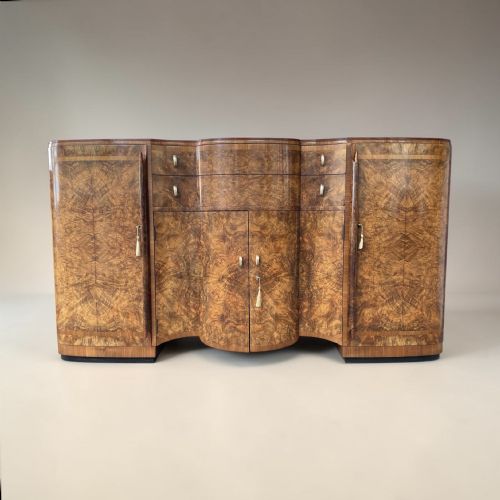
A bookmatched walnut sideboard brings striking symmetrical timber grain and deep historical character to a dining room or living space.
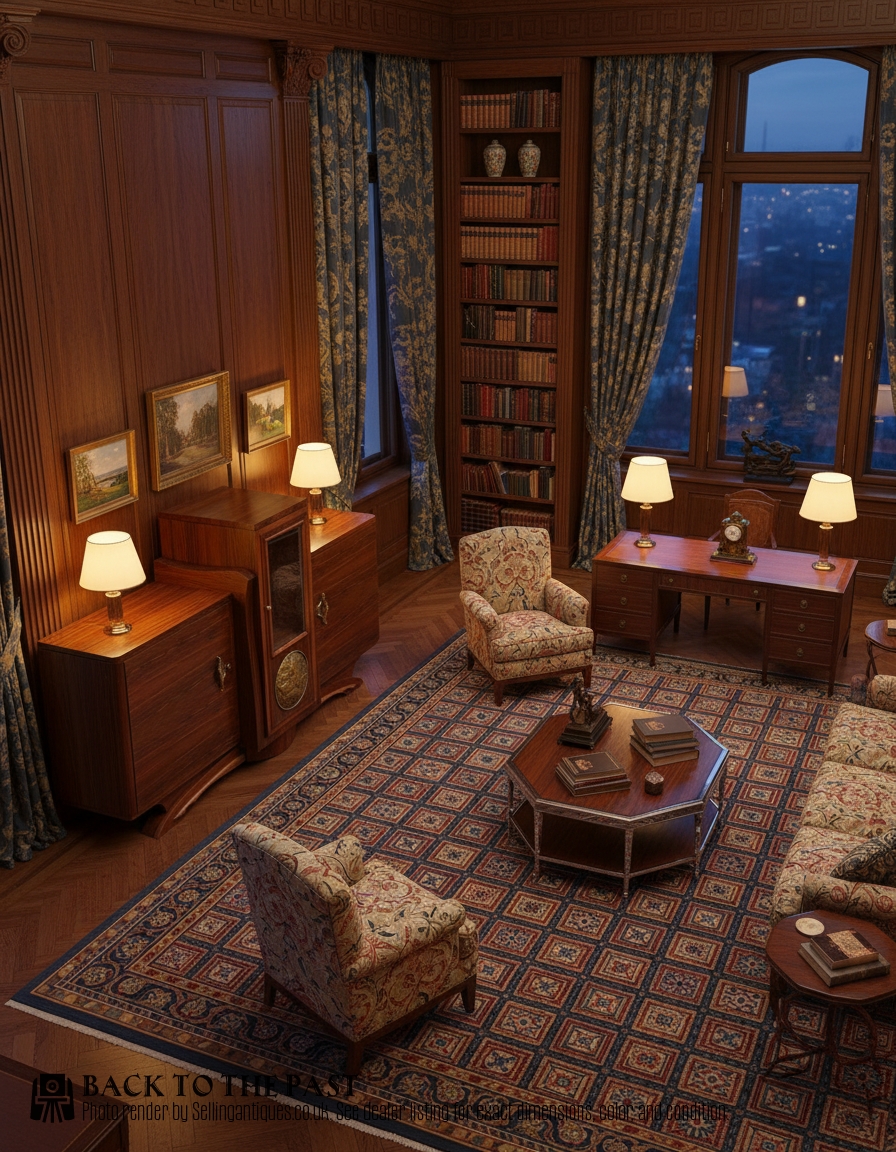
Bookmatched Walnut Sideboard
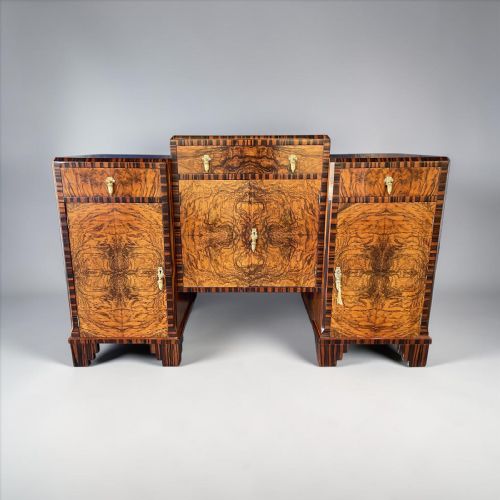
A bookmatched walnut sideboard is a substantial storage piece defined by symmetrical wood veneers opened like the pages of a book to create mirrored patterns. These pieces appear across several distinct historical eras, most notably the Art Deco period of the nineteen thirties, alongside Edwardian, Victorian, and nineteen twenty designs.
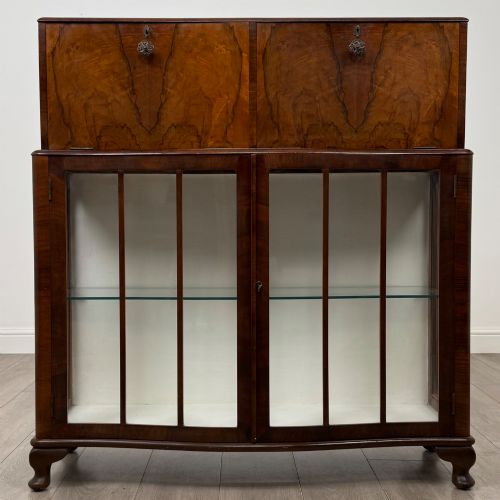
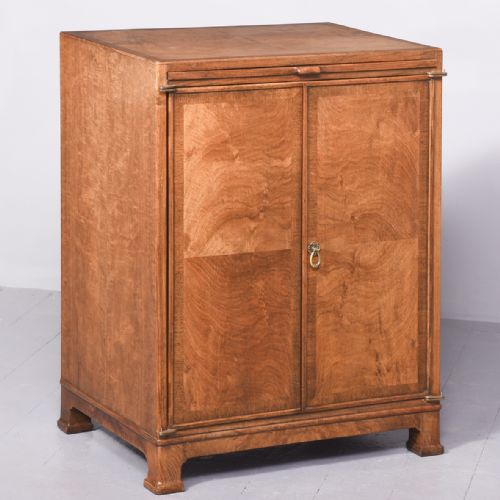
The form encompasses sideboards, credenzas, cocktail cabinets, console tables, and display cabinets designed for both utility and formal presentation. Buyers frequently encounter French and British examples constructed from figured walnut and burr walnut.
Makers utilised rich timber grains to create decorative impact on flat door panels and cabinet fronts, ranging from small sideboards to large fitted cabinets and mirror-backed credenzas.
How they were made
Cabinet makers utilised thin slices of walnut and burr walnut veneer applied over a secondary wood base to produce dramatic grain patterns. Skilled artisans mirrored adjacent veneer leaves to achieve the signature bookmatched effect across cabinet doors and drawer fronts.
Construction frequently incorporated brass hardware, glass panels, and ebony details to accent the rich brown tones of the walnut timber. French and British workshops employed traditional joinery methods to build robust carcases that support heavy fitted interiors.
Bookmatched Walnut Sideboard Retail Price Guide 2026
Typical asking prices for bookmatched walnut sideboard among the pieces listed under this phrase on Sellingantiques today, from the lower quarter to the upper quarter. They describe what is for sale here now, not the wider market.
Several nineteen thirties cocktail cabinets hide bright mirrored interiors behind solemn wooden doors, ready to transform an evening routine into an occasion.
What varies in quality
The artistry of the veneer selection and the precision of the mirror symmetry separate standard production from exceptional cabinet work. Artisans who carefully aligned the grain patterns across complex drawer banks and multiple doors achieved a harmonious visual rhythm.
The choice of secondary materials, such as the use of burr walnut versus straight-grained timber, determines the decorative presence of the piece. Furthermore, the integration of specialised fitted interiors and quality metal or brass mounts elevates the overall execution.
Maurice Adams·Whytock and Reid
The Bookmatched Walnut Sideboard Glossary
- Bookmatching
- A veneer technique where two adjacent slices of wood are opened like a book to mirror each other. This method creates symmetrical patterns that highlight the natural grain of the timber.
- Burr walnut
- Wood harvested from a growth on a walnut tree characterised by swirling, knotted grain patterns. Cabinet makers prized this material for its highly decorative appearance.
- Credenza
- A dining room or reception cabinet traditionally used for storing silverware and serving food. Victorian and later examples often featured display space or mirror backs.
- Cocktail cabinet
- A specialised storage piece designed for mixing and serving drinks. These cabinets frequently include mirrored interiors, glass shelves, and fitted compartments.
Bookmatched Walnut Sideboard: Frequently Asked Questions
What is a bookmatched walnut sideboard?
A bookmatched walnut sideboard is a storage cabinet featuring symmetrical wood veneers cut from the same log and opened like a book. These pieces rely on the natural grain patterns of walnut and burr walnut to create decorative symmetry across the front.
They serve as functional storage units for dining rooms and living spaces while acting as focal points through their distinct timber patterns.
How do I date a walnut sideboard?
Dating these pieces involves examining the overarching style, construction methods, and materials used in the carcase. Examples from the nineteen thirties typically display Art Deco geometry, whereas pieces from the eighteen seventies feature Victorian revival details like mirror backs.
Hardware choices, such as brass mounts and fitted interior fittings, also provide clear stylistic clues to the era of manufacture.
Where were these sideboards made?
The pieces originate from British and French workshops operating during the nineteenth and twentieth centuries. British makers in Edinburgh and London produced refined fitted cabinets and sideboards, while French ateliers focused on decorative Art Deco console tables and cocktail cabinets.
Regional preferences influenced whether a piece took the form of a formal credenza or a streamlined modern sideboard.
How do I care for walnut veneer?
Walnut furniture requires protection from direct sunlight and excessive humidity to prevent the wood and delicate veneers from fading or lifting. Regular dusting with a soft, dry cloth preserves the polished surface without the need for heavy chemical polishes.
Maintaining stable room temperatures helps protect the underlying timber joints and ensures the wood remains stable over time.