



Epstein Cocktail Cabinet
An Epstein cocktail cabinet brings high Art Deco flair to a room, offering clever storage for bottles and glassware.
Epstein Cocktail Cabinet
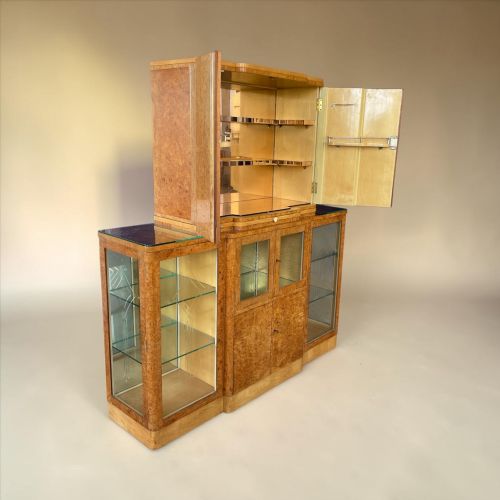
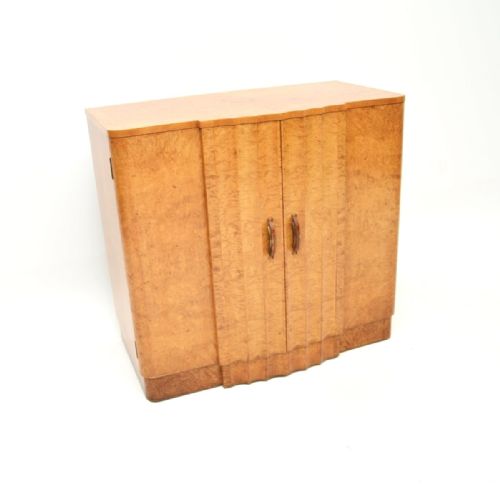
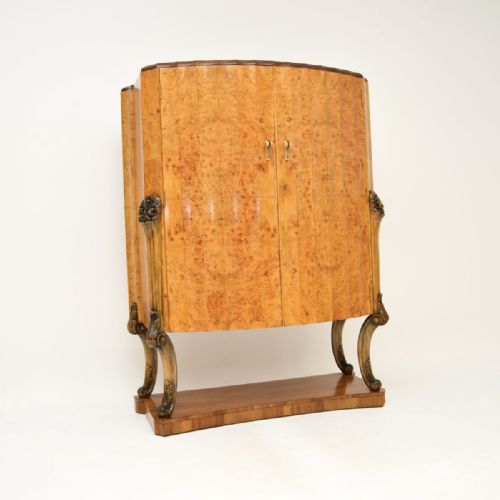
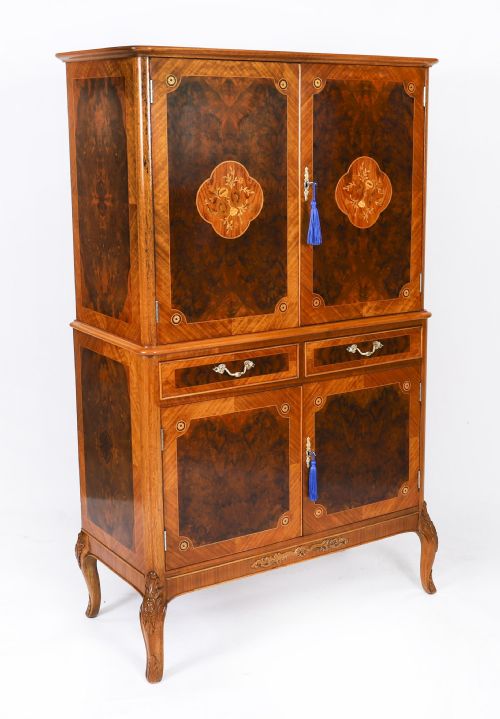
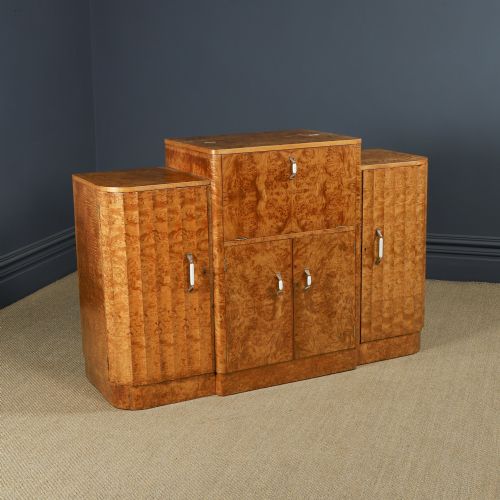
An Epstein cocktail cabinet is a sophisticated piece of furniture designed specifically for entertaining, emerging predominantly from the Art Deco period of the 1920s and 1930s. Buyers searching for an epstein cocktail cabinet encounter striking forms ranging from upright drinks chests to semi-circular cocktail bars and sideboard combinations.
The materials utilised in these pieces define their bold aesthetic, with burr walnut, blonde maple, and satinwood dominating the selection alongside contrasting elements like black lacquer and mirror glass. Forms often double as dry bars or sideboards, integrating specialised compartments for bottles, glasses, and mixing equipment.
Makers such as Harry and Lou Epstein produced these items with distinct architectural silhouettes, frequently incorporating fluted details and distinctive U-shaped bases. Surviving examples reflect a specific era of luxury furniture design that prioritised both visual impact and practical hospitality.
How they were made
Cabinet makers utilised carefully selected wood veneers like burr walnut and blonde maple applied over sturdy timber carcasses to achieve dramatic grain patterns across the front doors and top surfaces. This technique required precise hand-matching of the veneer sections to create symmetrical, decorative faces.
Interiors often featured integrated lighting, mirrored backs, and glass shelves, combining traditional cabinet-making with period electrical fittings where specified. Brass hardware, bakelite details, and fitted glass tops completed the construction, balancing decorative appeal with functional durability.
Epstein Cocktail Cabinet Retail Price Guide 2026
Typical asking prices for epstein cocktail cabinet among the pieces listed under this phrase on Sellingantiques today, from the lower quarter to the upper quarter. They describe what is for sale here now, not the wider market.
Some cabinets hide electric lights inside that switch on automatically just to flatter your gin bottle.
What varies in quality
The choice of veneer significantly influences the overall character, with dense, highly figured burr walnut or select blonde maple sitting at the upper end of visual desirability. The crispness of the joinery and the execution of complex curves, such as semi-circular fronts or fluted columns, mark out superior cabinet work.
The integrity of internal fittings, including original glass shelves, mirrors, and working electrical components, distinguishes standard production from more ambitious commissions. Pieces retaining their original surfaces and matched hardware demonstrate greater fidelity to the maker's original output.
Harry and Lou Epstein·Epstein and Co·Epstein Brothers·H and L Epstein
The Epstein Cocktail Cabinet Glossary
- Burr Walnut
- A wood veneer taken from the wart-like growths on walnut trees, creating swirling, highly decorative grain patterns. It forms the primary visual surface on many classic Art Deco drinks cabinets.
- Art Deco
- A design style spanning the 1920s and 1930s characterised by sleek geometric shapes, streamlined forms, and lavish materials. It provides the defining aesthetic for these cabinets.
- Dry Bar
- A furniture compartment equipped for storing and serving alcoholic beverages without plumbed water access. These sections often include mirrored surfaces and glass holders.
- Veneer
- A thin layer of superior wood applied over a base timber foundation to produce decorative exterior patterns. This method allowed makers to display dramatic grain figures across large cabinet doors.
Epstein Cocktail Cabinet: Frequently Asked Questions
What is an Epstein cocktail cabinet?
An Epstein cocktail cabinet is a high-end Art Deco drinks storage unit produced during the 1920s and 1930s. These pieces combine sculptural wood veneers with dedicated internal spaces for glassware and bottles.
Created by prominent makers of the period, they serve as both functional home bars and striking focal points in a room.
How do I identify an Epstein piece?
Identification relies on recognising signature Art Deco forms, characteristic wood veneers like burr walnut or maple, and specific construction traits associated with the makers. Many pieces feature bold curved silhouettes, fluted details, or distinctive base designs.
Examining the internal layout and joinery further helps confirm the origin of the cabinet.
Were all these cabinets fitted for electricity?
Some period examples were wired with internal lighting to illuminate the glass shelves and mirrored interiors when the doors opened. Surviving cabinets may retain these original electrical elements or function strictly as manual dry bars.
Buyers should inspect the specific wiring or consult a professional if intending to utilise the integrated lights.
How do I style a cocktail cabinet at home?
A cocktail cabinet suits living rooms, dining spaces, or entertaining areas where it can function as a standalone statement piece. Styling typically involves stocking the interior shelves with period glassware, decanters, and bottles to showcase the mirrored and lit backdrops.
Keeping the surrounding decor complementary allows the distinct wood grain and geometric form of the cabinet to stand out.