


Mirrored Cocktail Cabinet
A mirrored cocktail cabinet brings the glamour of the home bar into your sitting room, combining fitted glass interiors with striking period timbers.
Mirrored Cocktail Cabinet
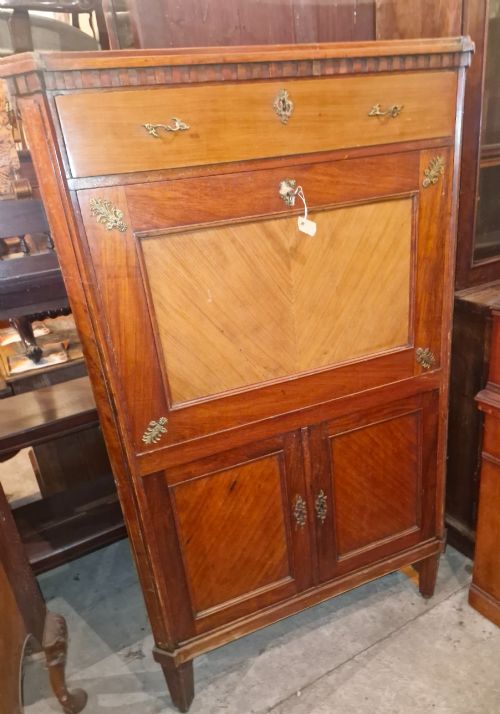
A mirrored cocktail cabinet is a specialised drinks storage piece designed to hold glassware, bottles, and bar accessories behind panelled doors. When you search for a mirrored cocktail cabinet, you encounter forms ranging from Victorian mahogany bars to elaborate Art Deco burr walnut creations.
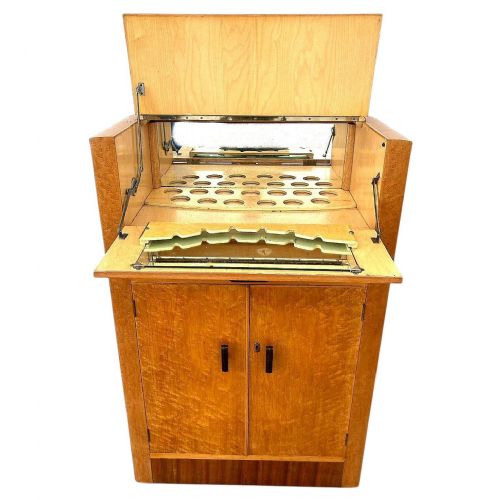
The most common examples on this page date from the 1930s and utilise striking veneers like bird's-eye maple and figured walnut. These twentieth-century pieces often feature drop-down mixing surfaces and illuminated mirrored interiors tailored for home entertaining.
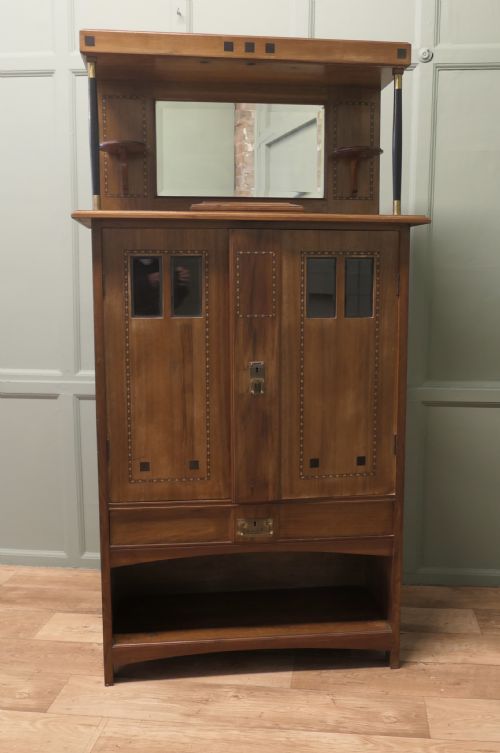
Earlier variants from the Victorian, Art Nouveau, and Secessionist periods also appear, showing how cabinetmakers adapted display furniture for social hosting long before the height of the cocktail era.
How they were made
Makers constructed these cabinets using sturdy internal carcases of oak or mahogany, overlaid with decorative veneers such as burr walnut and bird's-eye maple to catch the eye. The exterior surfaces relied on skilled french polishing or lacquering to bring out the natural grain patterns of the timber.
Interior compartments integrate bevelled mirror glass panels and chrome or brass hardware to reflect light and bottles effectively. Specialised fitted trays, pull-out slides, and sometimes integrated electric lighting demonstrated the high level of functional craftsmanship involved in their production.
Mirrored Cocktail Cabinet Retail Price Guide 2026
Typical asking prices for mirrored cocktail cabinet among the pieces listed under this phrase on Sellingantiques today, from the lower quarter to the upper quarter. They describe what is for sale here now, not the wider market.
Some vintage cocktail cabinets contain hidden internal mirrors that wink at you when you open the drinks flap.
What varies in quality
The distinction between ordinary production and top-tier execution lies in the choice of timber veneer and the precision of the cabinet joinery. Master workshops selected highly figured burr walnut or bird's-eye maple, arranging the grain symmetrically across the doors for a balanced decorative effect.
Internal sophistication also separates the standard piece from the exceptional design, seen in elaborate mirror work, integrated lighting systems, and custom metal fittings. Pieces bearing attribution to known makers command attention through superior proportion and meticulous interior detailing.
Maurice Adams·Harry and Lou Epstein·Epstein·Sol Garson
The Mirrored Cocktail Cabinet Glossary
- Burr walnut
- A wood harvested from the abnormal growth of a walnut tree, yielding a swirling, highly decorative grain pattern prized for cabinet fronts.
- Art Deco
- A design style dominant in the 1920s and 1930s characterised by streamlined geometric forms, sleek surfaces, and modern luxury.
- Secessionist
- A Central European art movement from the turn of the twentieth century that rejected traditional historicism in favour of clean lines and stylised ornamentation.
- Bird's-eye maple
- A figured timber showing small, swirling dots resembling tiny eyes, commonly used on high-end twentieth-century furniture.
- Bevelled glass
- Glass cut with an angled edge around the perimeter, adding depth and catching light within display interiors.
Mirrored Cocktail Cabinet: Frequently Asked Questions
What is inside a cocktail cabinet?
These cabinets typically feature mirrored back panels, glass shelving for glassware, and specialised holders for bottles and mixing tools. Many include a pull-down flap lined with slide glass or leather to serve as a preparation shelf.
The interior layout is engineered specifically for entertaining, keeping barware organised and visible behind closed doors when not in use.
How do I date a cocktail cabinet?
Dating relies on stylistic markers, construction methods, and materials seen across different decades. Pieces from the 1930s often show geometric Art Deco veneers and streamlined shapes, whereas Victorian examples feature darker timbers and traditional carving.
Hardware details, such as the use of chrome versus brass or fitted electrics, also provide clear clues to the manufacturing era.
Where should I place a drinks cabinet?
These cabinets suit principal reception rooms, dining areas, or studies where social hosting takes place. Because many incorporate mirrors and internal lighting, placing them near a natural light source enhances the reflective display.
Ensure adequate floor clearance is available for drop-down flaps and swinging cabinet doors during use.
Are Art Deco cabinets sturdy?
Art Deco pieces are built on solid timber carcases of oak or mahogany, ensuring robust structural integrity beneath decorative veneers. The weight of the internal glass and timber requires a solid foundation.
Routine care of the polish and gentle handling of mirrored interiors keep these vintage pieces stable and functional for daily use.