


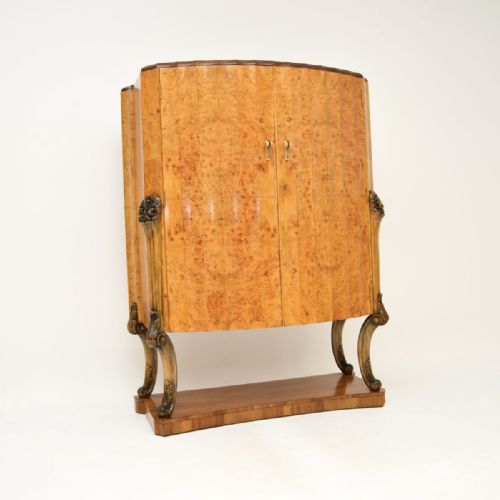
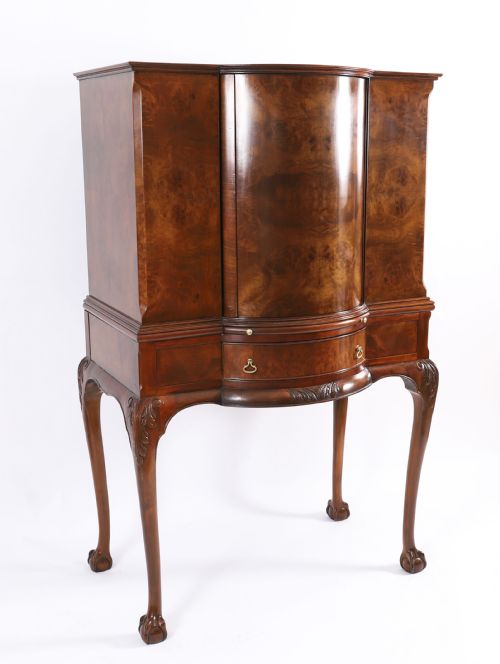
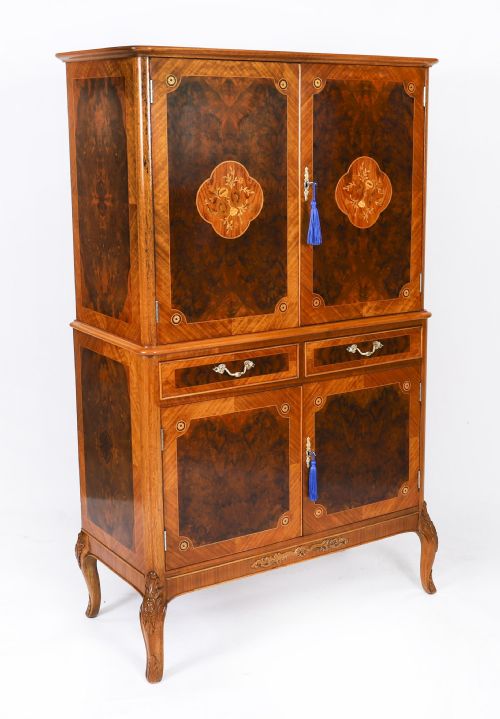
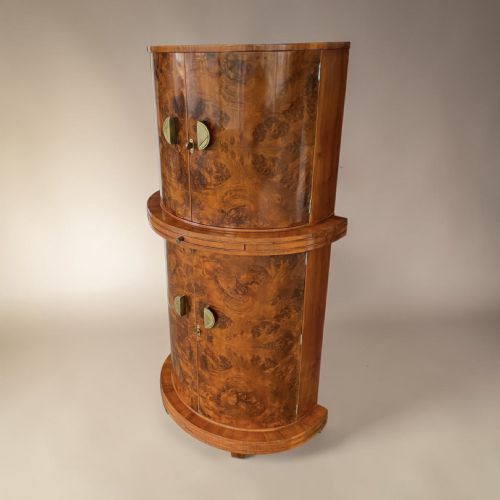
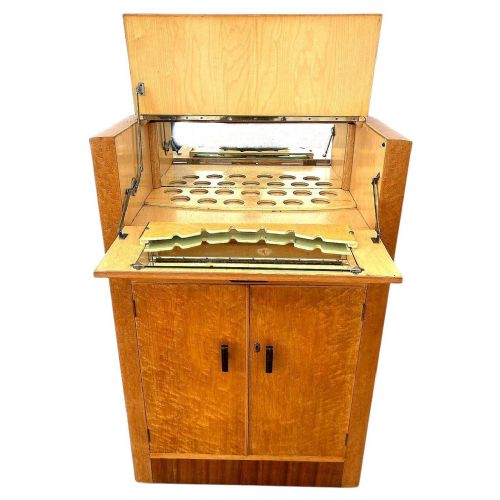

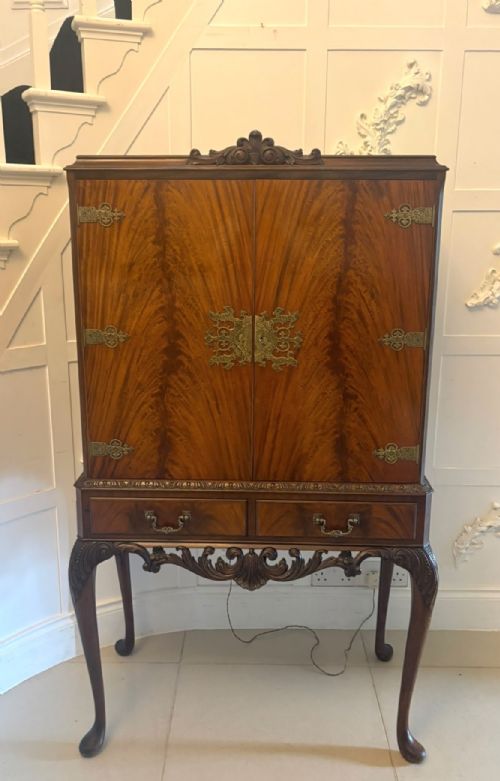
Antique Dry Bar Cabinet
An antique dry bar cabinet provides a designated home for spirits and glassware, bringing period character to a modern entertaining space.
Antique Dry Bar Cabinet
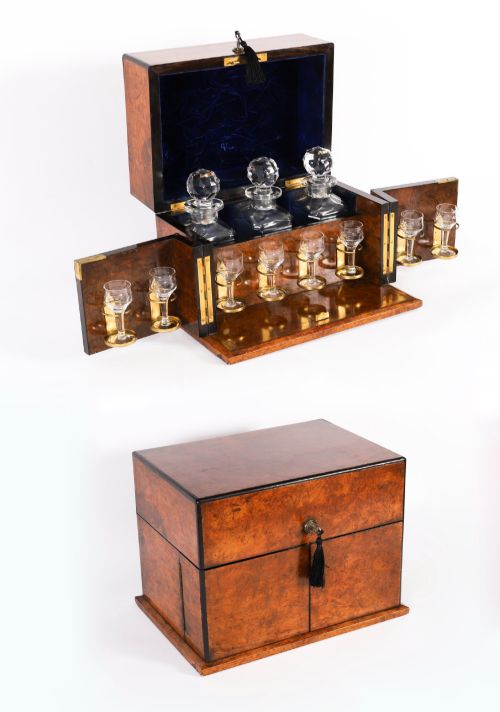
When searching for an antique dry bar cabinet, buyers encounter pieces designed primarily for the storage and service of drinks. These items span the nineteenth century through the mid twentieth century, encompassing utilitarian nineteenth-century tantalus boxes and elaborate twentieth-century cocktail cabinets.
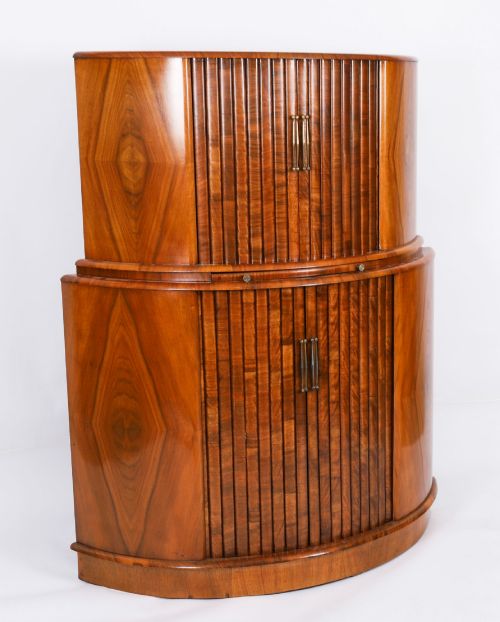
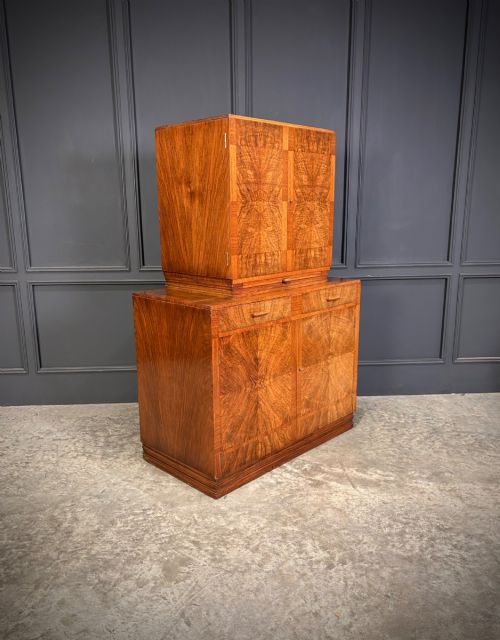
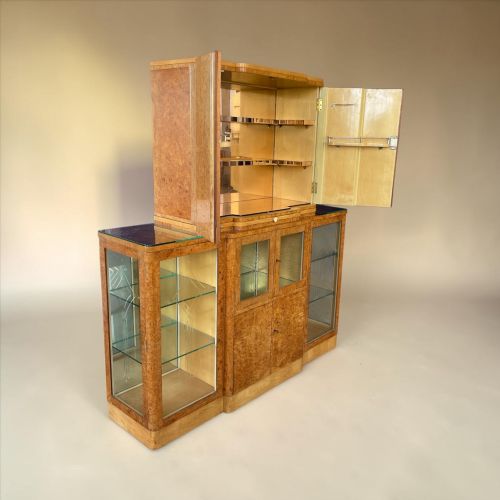
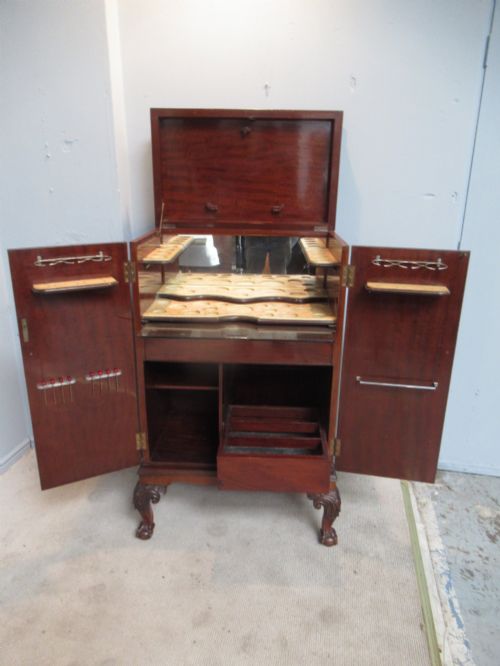
The most common examples on this page date from the 1920s and 1930s, heavily influenced by Art Deco design. Cabinets from this era often feature drop-front desks that double as mixing surfaces, internal illumination, and dedicated compartments for bottles and glassware.
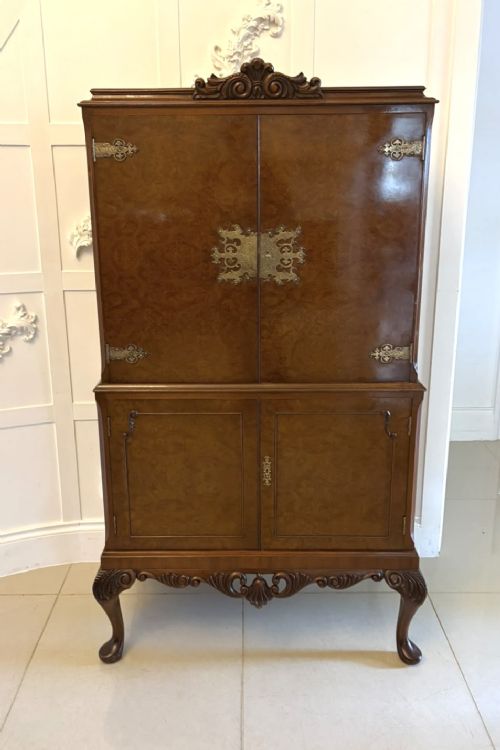
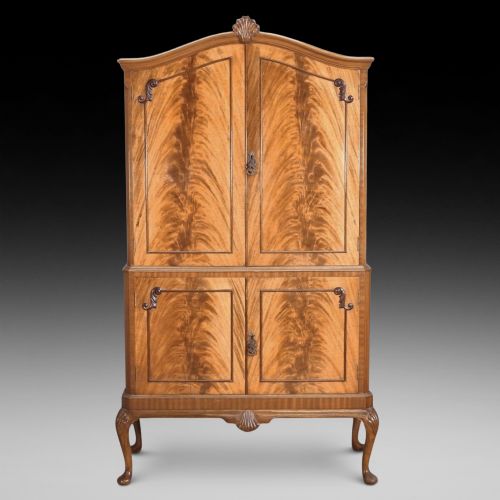
Earlier nineteenth-century iterations rely on oak or mahogany to house crystal decanters securely alongside games compendiums. Meanwhile, revival styles look backward through Victorian and Edwardian periods, employing Queen Anne or Chippendale motifs to disguise modern drinking habits within classical furniture forms.
Materials and Construction
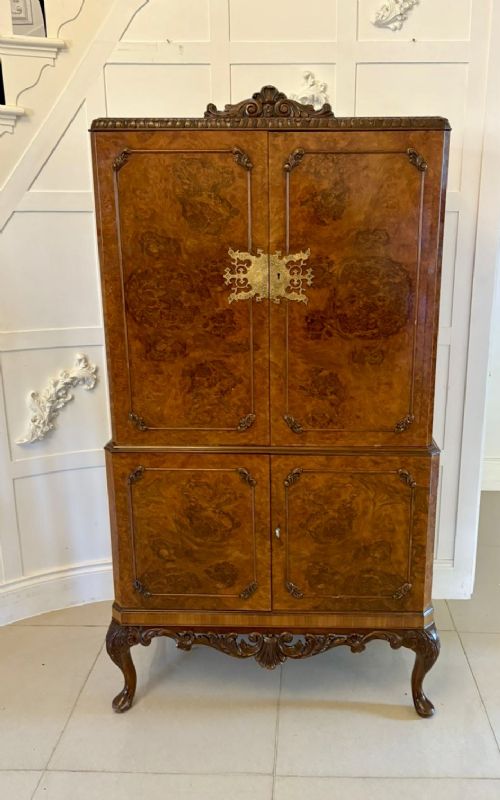
Makers utilised rich timber veneers over solid carcases, selecting burr walnut, bird's-eye maple, pollard oak, and mahogany to create striking exterior patterns. These figured woods underwent careful book-matching on doors and drop-fronts to present symmetrical visual textures.
Interiors often contrast the external timber with contrasting light woods such as satinwood, alongside functional linings of mirror glass and chrome hardware. Later twentieth-century examples integrate electrical components for internal lighting, supported by cast-iron legs or wooden stands.
Antique Dry Bar Cabinet Retail Price Guide 2026
Typical asking prices for dry bar cabinet among the pieces listed under this phrase on Sellingantiques today, from the lower quarter to the upper quarter. They describe what is for sale here now, not the wider market.
Art Deco forms dominate the twentieth-century dry bar selection alongside revival styles from earlier eras.
Design and Execution
Distinctions in quality rest upon the choice of timber veneer and the sophistication of internal mechanisms. Superior examples employ deeply figured burr walnut or meticulous marquetry, paired with clever folding leaves and integrated lighting rather than simple shelving.
Maker attribution elevates a piece significantly, with workshop output from renowned firms displaying superior joinery and hardware. The inclusion of original fitted glassware, working locks, and specialised compartments for cocktail implements further separates standard production items from masterworks.
Epstein·Harry and Lou Epstein·Hille·Maurice Adams·Waring and Gillow
The Antique Dry Bar Cabinet Glossary
- Tantalus
- A locking wooden frame holding decanters visible to guests yet secure from unauthorized access. This mechanism uses a metal bar locking the stoppers in place until a key is turned.
- Burr Walnut
- Timber taken from the gnarled growths of a walnut tree, yielding swirling grain patterns prized for cabinet doors. It demands careful polishing to display its natural depth.
- Drop-Front
- A hinged panel that folds outward to horizontal, serving as a preparation surface for mixing drinks. Such surfaces frequently feature leather or glass inserts for easy cleaning.
- Chinoiserie
- Decorative technique imitating Chinese and East Asian artistic traditions, often applied through lacquered finishes. This style appears on select twentieth-century cocktail cabinets.
- Games Compendium
- A fitted box containing equipment for multiple tabletop pastimes, occasionally incorporated into nineteenth-century bar designs. These sets often include cards, dice, and board game pieces alongside decanters.
Antique Dry Bar Cabinet: Frequently Asked Questions
What is an antique dry bar cabinet?
These pieces are specialised furniture items built to store liquor, decanters, and drinking accessories. They emerged in various forms, from nineteenth-century portabletantalus boxes to elaborate twentieth-century cocktail cabinets.
Designed for entertaining, they bring period elegance to living rooms and dining spaces while keeping hospitality gear neatly organised behind closed doors.
How do I date an antique cocktail cabinet?
Dating relies heavily on architectural styles, materials, and internal hardware. Pieces from the 1920s and 1930s typically embrace geometric Art Deco lines, burr walnut veneers, and glass-lined mixing compartments.
In contrast, nineteenth-century examples often utilise solid oak or mahogany paired with crystal decanters and mechanical locking bars for security.
Where should I place a dry bar in my home?
These cabinets suit dining rooms, drawing rooms, or entertaining spaces where guests gather for pre-dinner drinks. Freestanding versions on stands require adequate perimeter clearance for doors or drop-front mixing leaves to open fully.
Corner cabinets utilise unused angles efficiently, while larger sideboards serve dual functions as serving buffets and beverage stations.
How do I maintain the wood and glass interior?
Routine care involves dusting wooden surfaces with a soft, dry cloth and applying appropriate wax sparingly to nourish figured veneers. Avoid placing furniture in direct sunlight to prevent the timber finishes from fading.
Mirror plates and glass shelves inside require gentle cleaning with standard glass cleaner applied to a cloth rather than sprayed directly near old wood.