

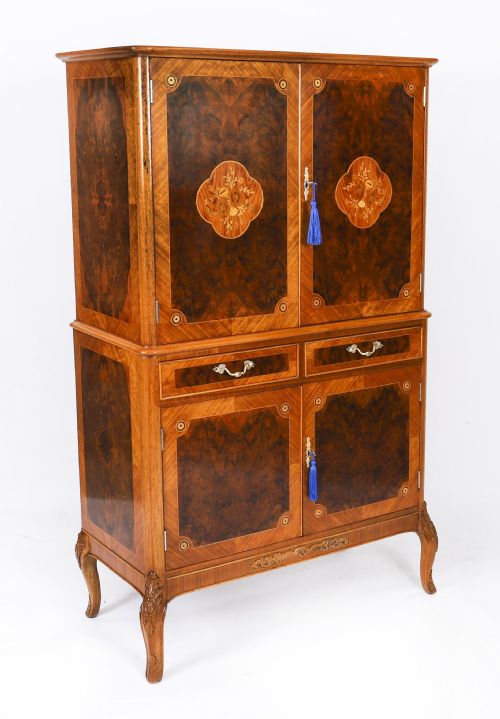


Burr Walnut Bar Cupboard
These burr walnut bar cupboard designs bring dramatic grain and clever internal fittings to entertaining spaces.
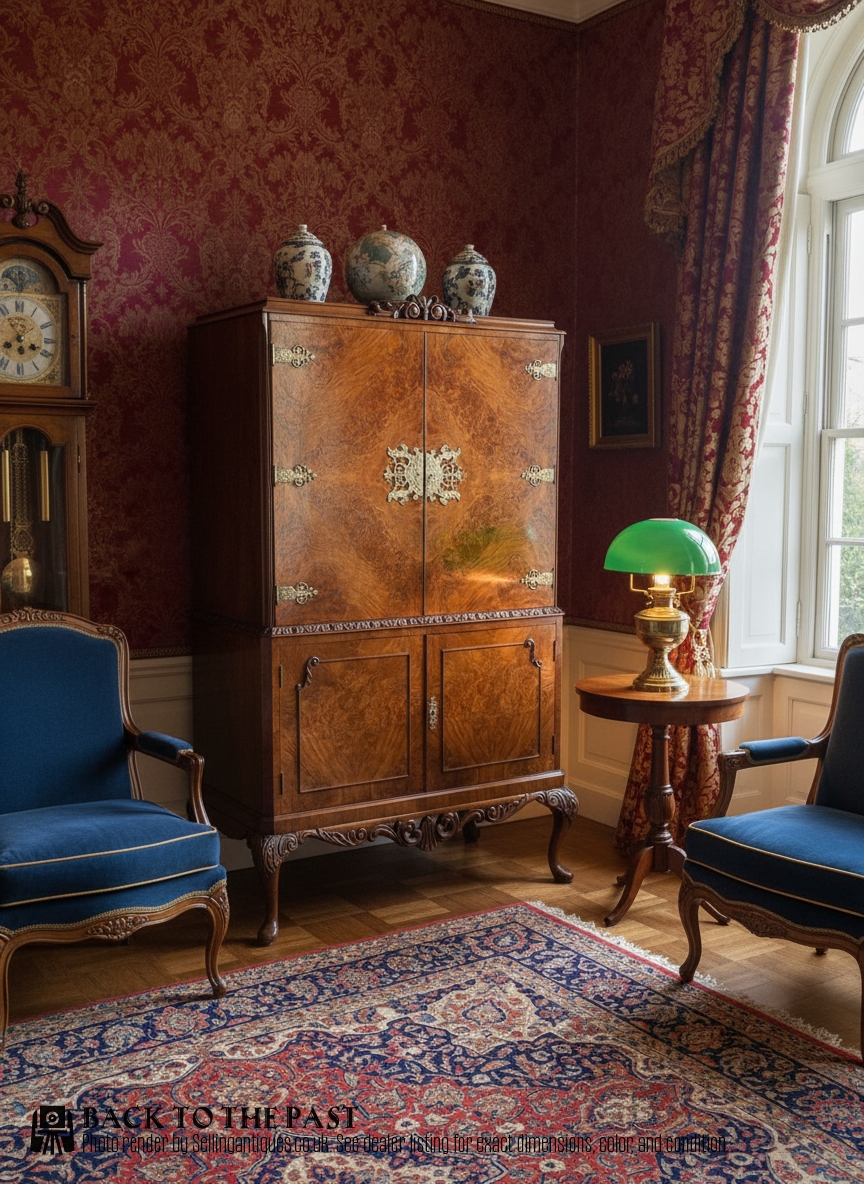
Burr Walnut Bar Cupboard
A burr walnut bar cupboard serves as a dedicated drinks cabinet or cocktail cabinet, designed to store bottles, glassware and mixing equipment behind handsome timber doors. These pieces date principally from the Victorian period through to the 1930s, encompassing various revivals alongside modernist shapes.
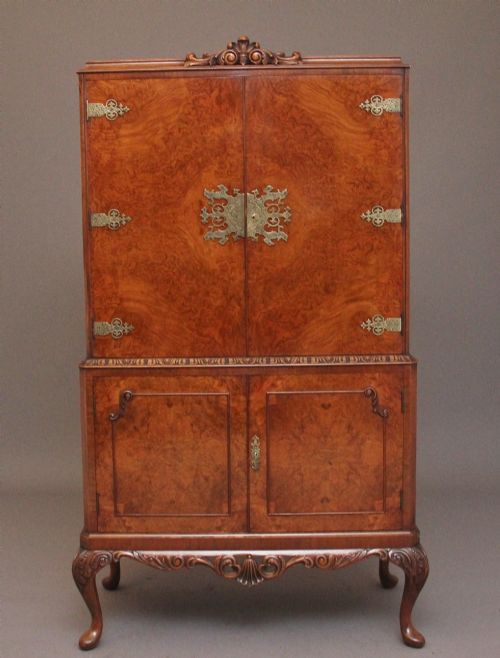
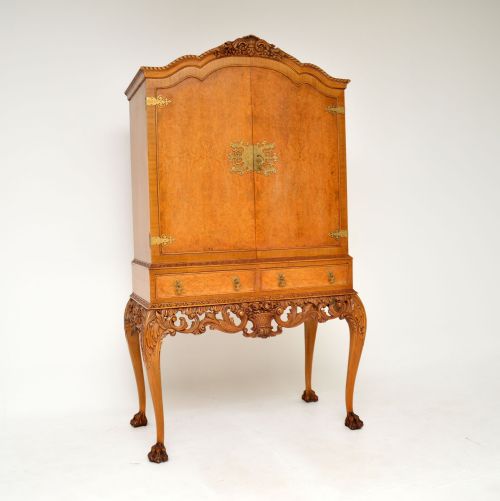
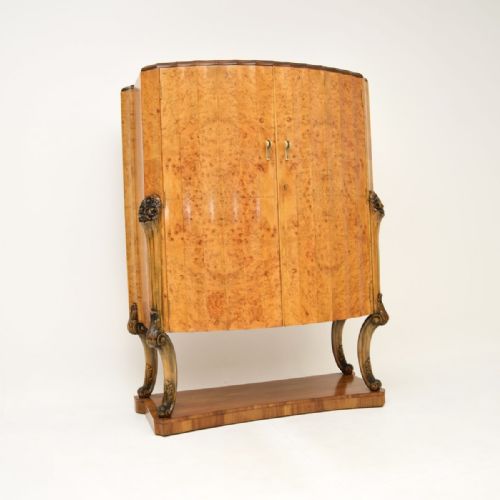
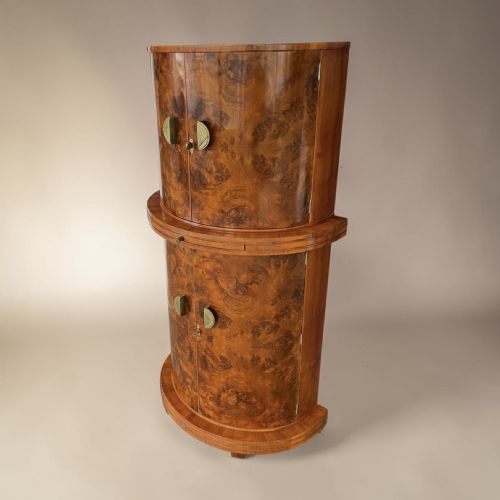
The version most commonly met on this page is the Art Deco cocktail cabinet or drinks cabinet from the 1920s and 1930s, frequently finished in striking burr walnut veneer. Alongside these geometric forms, buyers will encounter revival styles including Queen Anne Style, Queen Anne Revival, and William & Mary Style cabinets.
Makers such as Epstein, Hille, Waring and Gillow, and Liberty's of London produced these cocktail cabinets and dry bars, often incorporating clever internal pull-out shelves, mirror panels, and glass surfaces. These functional drinks chests combine domestic storage with dramatic entertaining focal points.
How they were made
Craftsmen built these cabinets using solid structural carcases faced with walnut veneer and decorative burr walnut veneer, which yielded swirling, knotty grain patterns across the primary surfaces. Marquetry inlay occasionally added further geometric or floral detail to the exterior panels.
Materials recorded across these cabinets include burr walnut, standard walnut, brass, glass, mirror, walnut veneer, and Bakelite.
What varies in quality
The selection of the burr walnut veneer dictates the visual impact of the cabinet, with symmetrical grain matching across doors representing superior cabinet-making. Plain timber surfaces or mismatched veneer patterns mark a more standard commercial production.
Fittings and internal execution set the finer cabinets apart from ordinary examples, particularly where makers supplied custom sliding shelves, fitted glass sections, and robust brass hardware. Signature work by recognised firms like Epstein or Hille demonstrates higher standards of craftsmanship.
Epstein·Hille·Waring and Gillow·Liberty's of London·Harry and Lou Epstein·Epstein and Co Furniture
The Burr Walnut Bar Cupboard Glossary
- Burr walnut
- A figured wood veneer taken from the growth growths or burls of walnut trees, producing highly decorative swirling patterns. This grain forms the primary visual feature on the exterior of these cocktail cabinets.
- Cocktail cabinet
- A specialised piece of furniture designed specifically for the storage and preparation of alcoholic drinks, usually fitted with drop-down serving flaps and glass shelves. They gained immense popularity during the 1920s and 1930s.
- Marquetry
- The art of applying pieces of veneer to a structure to form decorative patterns and pictures. Craftsmen utilised this technique on select walnut cabinets to enhance the front doors.
- Bakelite
- An early form of synthetic plastic utilised for handles and decorative trims on 1930s furniture. It provides a smooth, tactile contrast to the timber grain.
- Double bow front
- A cabinet front featuring two outward-curving convex sections side by side. This shape adds depth and three-dimensional presence to the furniture piece.
Burr Walnut Bar Cupboard: Frequently Asked Questions
What is a burr walnut bar cupboard?
A burr walnut bar cupboard is a specialised drinks or cocktail cabinet designed to store bottles, glassware, and bar accessories behind decorative wooden doors. These items function as portable home bars, often featuring drop-down preparation flaps and specialised interior fittings.
They emerged strongly during the 1920s and 1930s alongside earlier revival periods, utilising striking burr walnut veneer to create an impressive visual statement in entertaining rooms.
How were these cabinets used originally?
Owners used these cabinets to store and serve alcoholic beverages and mixed drinks during the height of the cocktail era in the early twentieth century. The internal spaces accommodated tall bottles, decanters, and cocktail glasses.
Drop-down front panels frequently served as mixing shelves where hosts prepared drinks for guests before returning everything securely behind locked doors.
How do I date a burr walnut drinks cabinet?
Dating relies heavily on stylistic cues, hardware, and structural forms visible across the piece. Cabinets from the Victorian era typically show heavier proportions and revival detailing, whereas 1920s and 1930s examples often embrace clean Art Deco geometric lines or double bow fronts.
Internal materials such as Bakelite handles or specific mirror types further help narrow down the decade of manufacture.
How do I incorporate a cocktail cabinet into a modern room?
These cabinets function well as focal points in living rooms, dining rooms, or home offices, offering enclosed storage that conceals barware when not in use. Their decorative burr walnut grain pairs effectively with both contemporary and traditional interior schemes.
Leaving the drop-down shelf open or illuminating mirrored interiors allows the cabinet to double as a display piece for vintage glassware.
What distinguishes Art Deco examples from earlier styles?
Art Deco drinks cabinets focus on streamlined symmetry, book-matched burr walnut veneers, and geometric silhouettes such as bow fronts. They reflect the modern design sensibilities of the 1920s and 1930s.
By contrast, Queen Anne or William and Mary style cabinets lean on historical motifs, cabriole legs, and traditional woodworking revival forms from earlier centuries.