
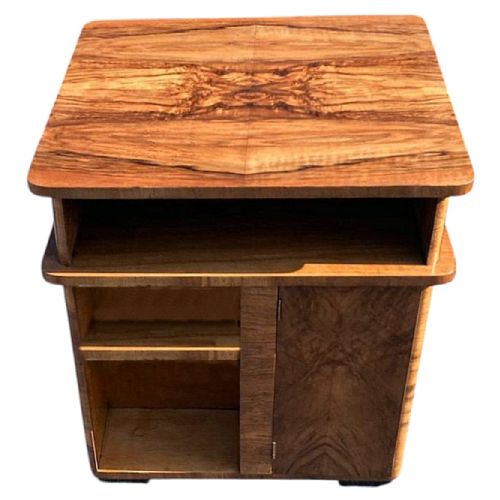


English Art Deco Cabinet
An English art deco cabinet brings the sculptural geometry of the inter-war years into a room through figured woods and curved glazing.
Forms and Origins
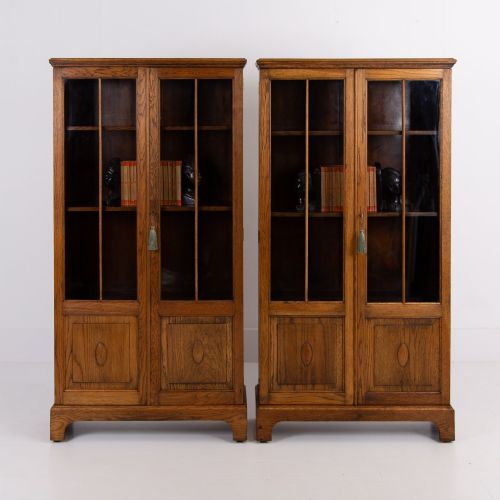
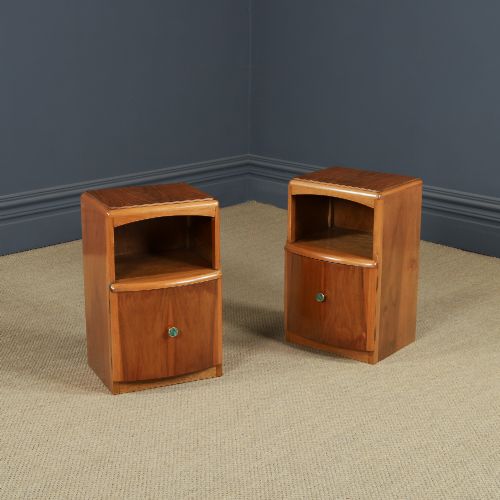
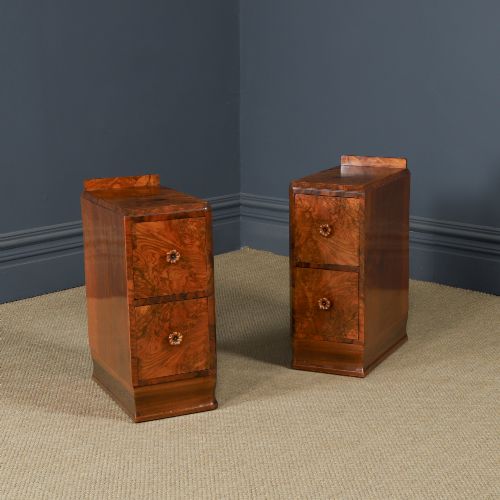
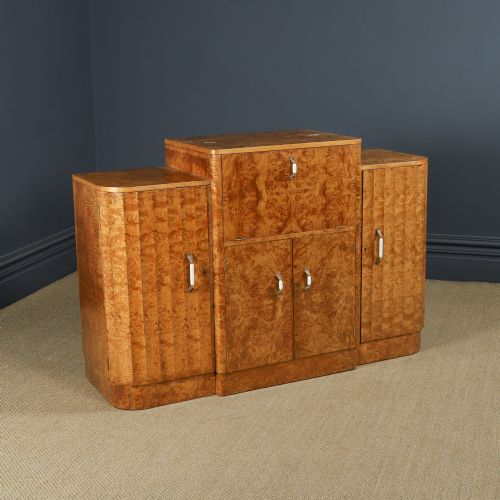
When you search for an english art deco cabinet, you encounter specialist storage pieces designed during the nineteen twenties and nineteen thirties. The selection spans cocktail and drinks cabinets, tall display vitrines, and compact bedside tables.
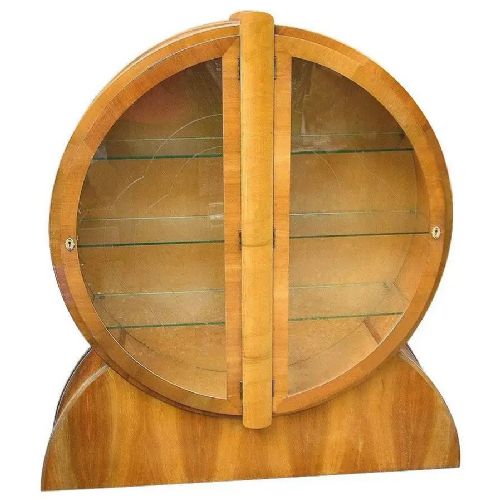
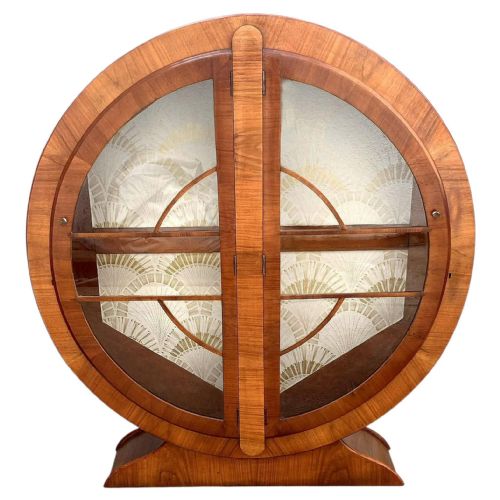
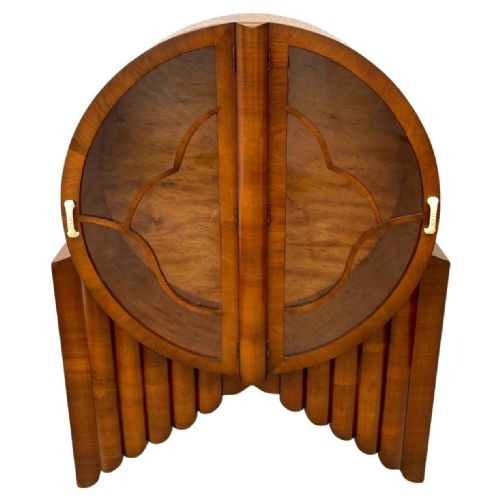
Display cabinets and dry bars dominate the forms, often taking bold shapes like the rocket cabinet, cathedral vitrine, or cloud-shaped sideboard. Walnut and burr walnut provide the primary canvas, frequently accented by shaped glass panels and mirrored interiors.
Materials and Technique
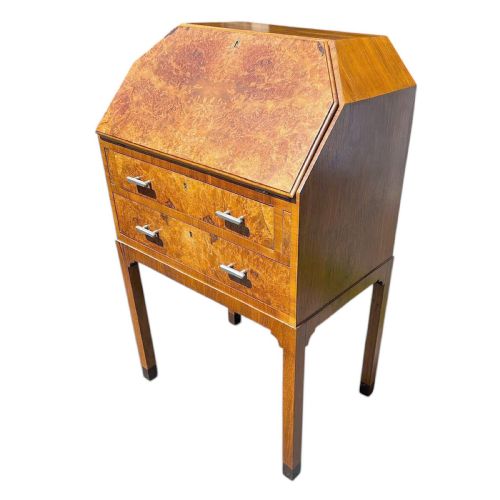
Cabinetmakers utilised rich timber veneers, predominantly walnut and burr walnut, laid down in symmetrical patterns to exploit the natural grain. Secondary woods like oak appear in utilitarian pieces and interior framework.
Metal hardware in chrome and brass provides the metallic contrast characteristic of the period, applied to door hinges, key escutcheons, and structural trims. Glass takes on bent and curved forms in bow-front doors and display shelves.
Retail Price Guide 2026
Typical UK retail prices for english art deco cabinet, calculated from the Sellingantiques database of over a million retail prices indexed since 2003. This retail price guide relies exclusively on Sellingantiques data; no external sources or auction records are used, so the figures do not describe the wider market.
Cabinetmakers of the thirties built folding portable cocktail bars so drinkers could wheel their spirits directly to the sofa.
Distinctions in Execution
The degree of ambition in the cabinet silhouette separates standard storage from exceptional design. Pieces adopting architectural skyscraper steps, rocket curves, or cloud profiles demand advanced joinery compared to straightforward rectangular carcases.
Veneer selection dictates visual impact. Matching burr walnut across sweeping curved doors requires considerable skill from the maker, whereas simpler straight-grained panels yield a quieter presence.
Epstein·F.H. Marshall·Harrods London
The English Art Deco Cabinet Glossary
- Burr walnut
- A prized wood veneer harvested from tree growths, yielding intricate swirling patterns across cabinet doors.
- Vitrine
- A glass-fronted display cabinet intended for china, books, or decorative objects.
- Cocktail cabinet
- A specialised storage unit designed for entertaining, often fitted with mirrored back panels, bottle shelves, and pull-down mixing surfaces.
- Skyscraper
- An architectural style descriptor denoting stepped vertical tiers reminiscent of modern city towers.
- Tambour
- A flexible sliding door formed of narrow wooden slats attached to a fabric backing.
Frequently Asked Questions
How do I identify an original english art deco cabinet?
Original pieces display period construction methods, traditional timber framing, and characteristic thirties hardware such as chrome handles. Look for genuine burr walnut veneers rather than printed modern laminates.
Check the interior fittings, as cocktail cabinets often retain original glass shelves, mirrored backs, and pull-down mixing slides typical of the era.
What is a rocket cabinet?
A rocket cabinet is an upright display vitrine featuring tapered, streamlined vertical lines that echo early aviation and space age design themes. These pieces utilise curved glass and stepped woodwork.
The profile draws the eye upward, making them suitable for corner placement or narrow wall spaces where standard rectangular furniture feels too heavy.
Where were these cabinets placed in a thirties home?
Cocktail cabinets usually resided in reception rooms or home bars to serve guests during evening gatherings. Display vitrines stood in dining rooms or drawing rooms to showcase fine china and books.
Smaller bedside cabinets and nightstands served sleeping quarters, matching the larger sideboards and dry bars found in public rooms.
How do I care for burr walnut veneer?
Keep walnut furniture away from direct sunlight and heat sources to prevent the wood veneers from drying out and lifting. Dust gently with a dry or slightly damp soft cloth.
Apply high quality beeswax periodically to nourish the timber and maintain the deep sheen of the figured grain without building up heavy residue.