


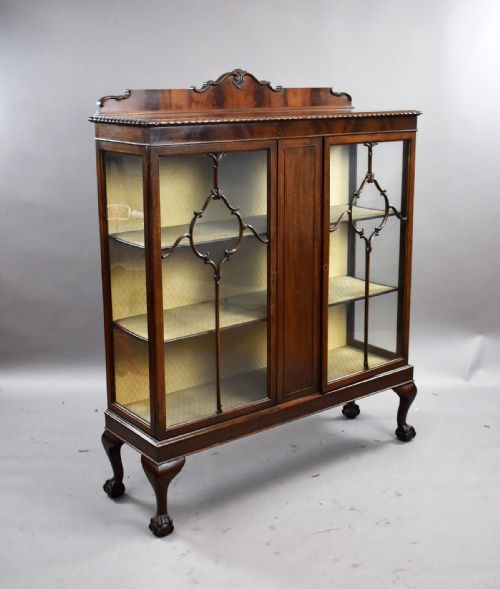
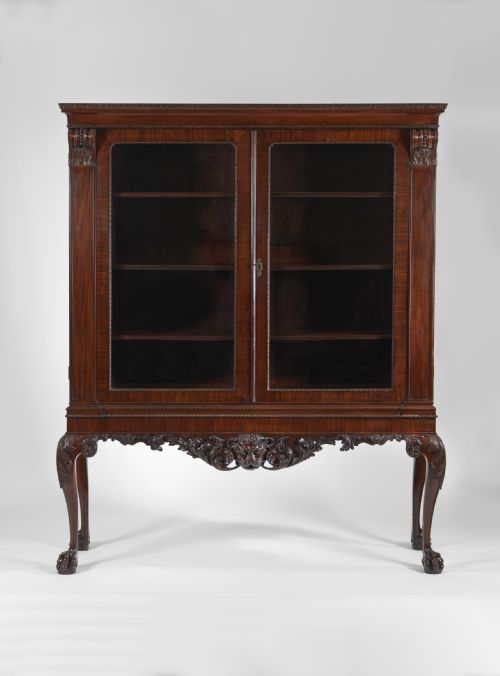
Ball and Claw Cabinet
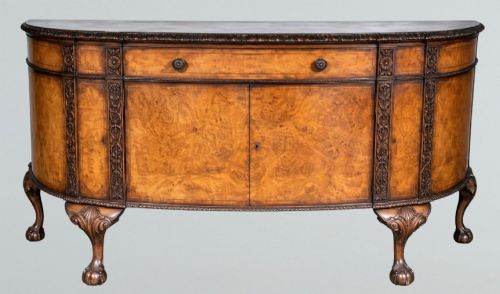
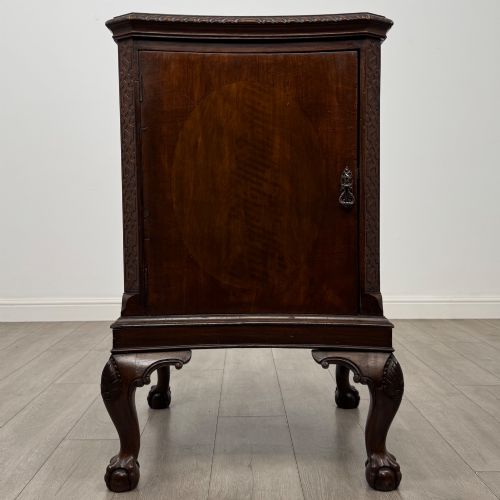
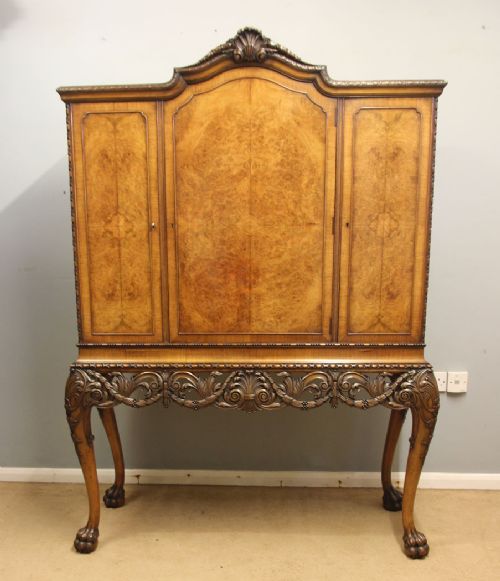
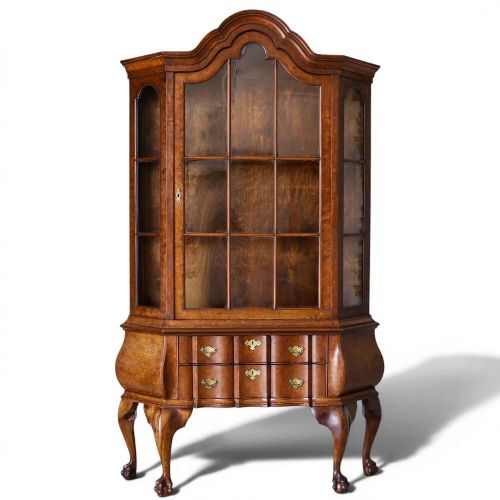
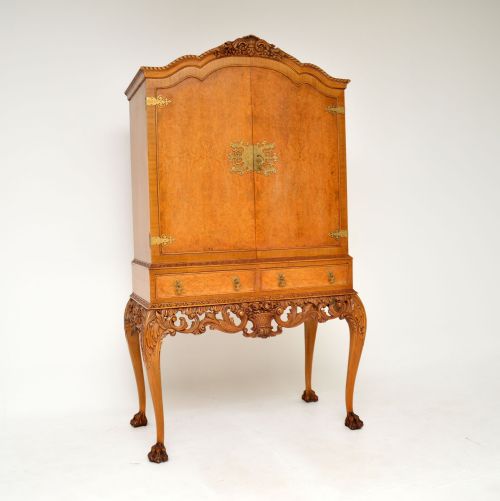
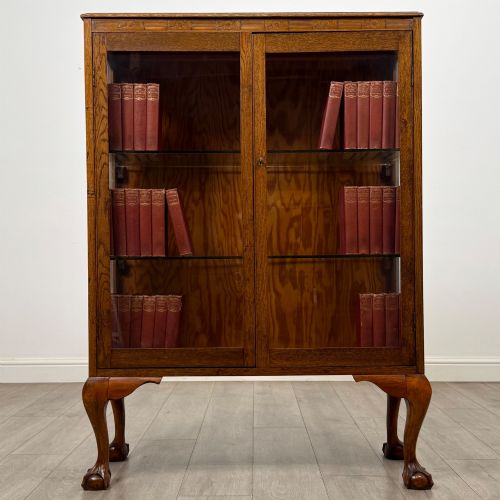
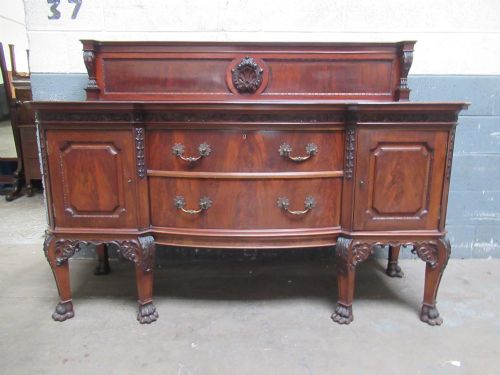
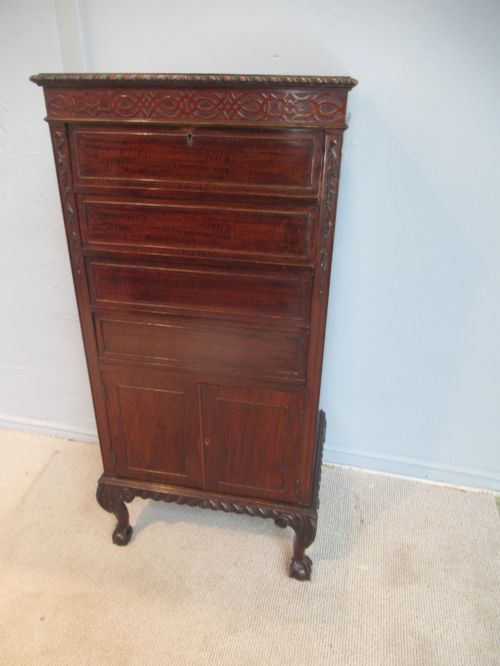
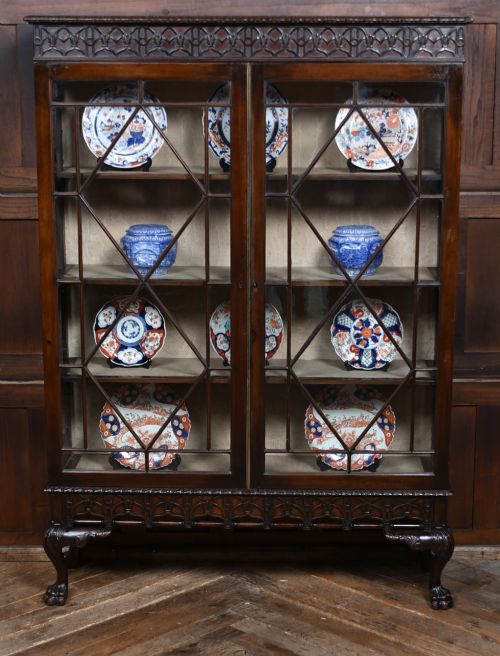
When you search for a ball and claw cabinet, you are looking for timber furniture raised on carved claw-and-ball footed legs.
What a ball and claw cabinet is
A ball and claw cabinet is a piece of furniture featuring carved feet grasping a sphere, designed to hold drinks, music, or display items.
You are most likely to meet mahogany or burr walnut versions spanning the Edwardian era through to the nineteen thirties, following Chippendale and Queen Anne revival styles.
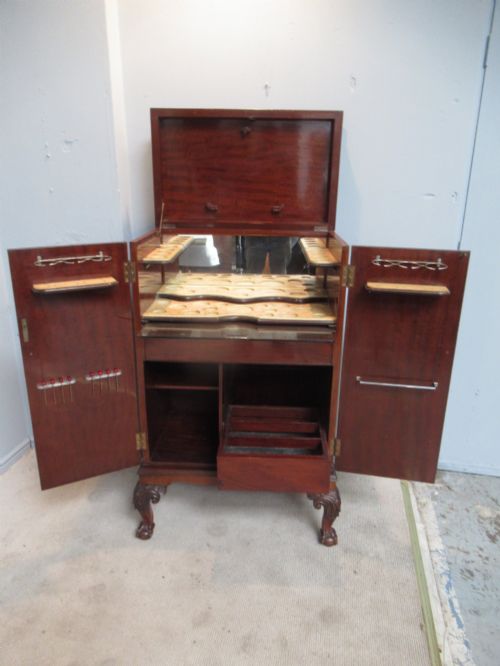
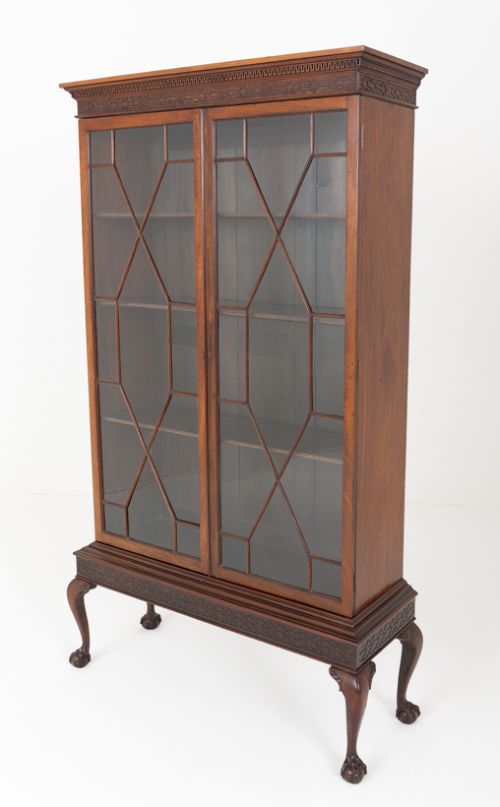
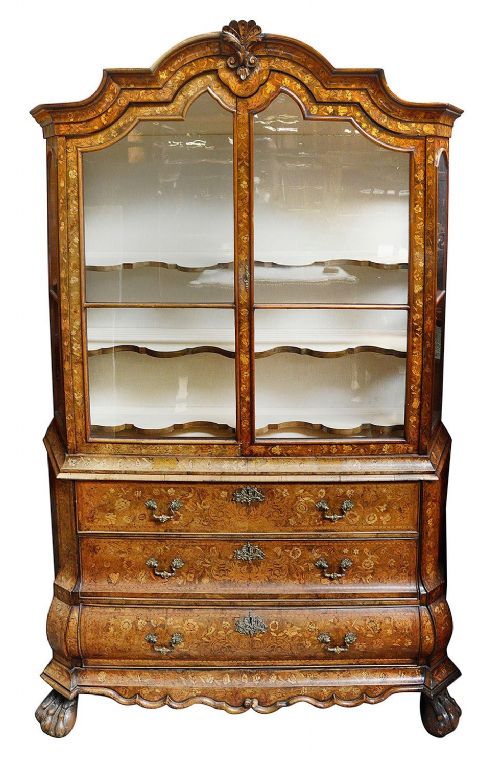
The forms on this page include tall narrow display cabinets, serpentine shapes, side cabinets, and dedicated drinks or cocktail units.
How they were made
Carpenters built these cabinets primarily from solid and veneered mahogany or burr walnut, sometimes pairing timber with glass panels and fabric linings.
Makers integrated brass hardware and carved the distinctive ball and claw feet directly onto the wooden legs to support the display and drinks cabinets.
Retail Price Guide 2026
Typical UK retail prices for ball and claw cabinet, calculated from the Sellingantiques database of over a million retail prices indexed since 2003. This retail price guide relies exclusively on Sellingantiques data; no external sources or auction records are used, so the figures do not describe the wider market.
Some cabinets hid sheet music and files while others stocked gin.
What varies in quality
Quality separates ordinary timber work from finer revival pieces through the depth and precision of the foot carvings and the selection of figured mahogany or burr walnut veneers.
The refinement of the proportions and the integration of specialised interiors, such as upholstered backs in display cases or dedicated drinks compartments, distinguish the finer examples.
The Ball and Claw Cabinet Glossary
- Ball and claw
- A foot carving depicting a bird's talon or animal paw clutching a ball, commonly found on revival furniture legs.
- Chippendale Revival
- A late nineteenth and early twentieth century style drawing on eighteenth century English cabinet designs.
- Burr walnut
- A figured wood veneer taken from the burl growth of a walnut tree, prized for its swirling grain patterns.
- Serpentine
- A cabinet front featuring a gentle undulating curve that bulges outward in the centre and recesses at the sides.
- Drinks cabinet
- A specialist storage unit designed to hold bottles and glassware, often equipped with drop-down surfaces.
Frequently Asked Questions
What is a ball and claw cabinet?
It is a wooden storage or display unit raised upon carved legs where the foot grips a ball.
These pieces typically date from the Edwardian period into the nineteen thirties and draw heavily on earlier revival styles.
How do I date my cabinet?
Dating relies on stylistic clues like Edwardian proportions or nineteen thirties revival details combined with material choices such as burr walnut or mahogany.
Construction methods and hardware also offer firm indicators of the era in which the cabinet was built.
Were these used for drinks?
Many examples on this page are explicitly designated as cocktail or drinks cabinets.
Others served as music cabinets, file storage, or general display pieces for china and ornaments.
What timber are they made from?
The recorded materials consist primarily of mahogany and burr walnut.
Additional elements like glass, brass, and fabric linings appear across the display and drinks variations.