



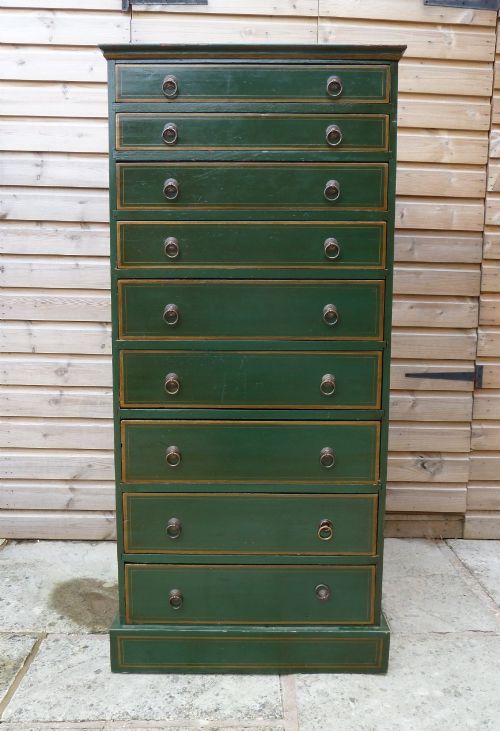

Antique Document Cabinet
An antique document cabinet brings order to correspondence and papers through practical drawer configurations.

Antique Document Cabinet
An antique document cabinet provides dedicated storage for letters, folios, and records through specialised furniture forms. Buyers look for pieces that organise papers while offering a distinct period appearance for a desk or study.
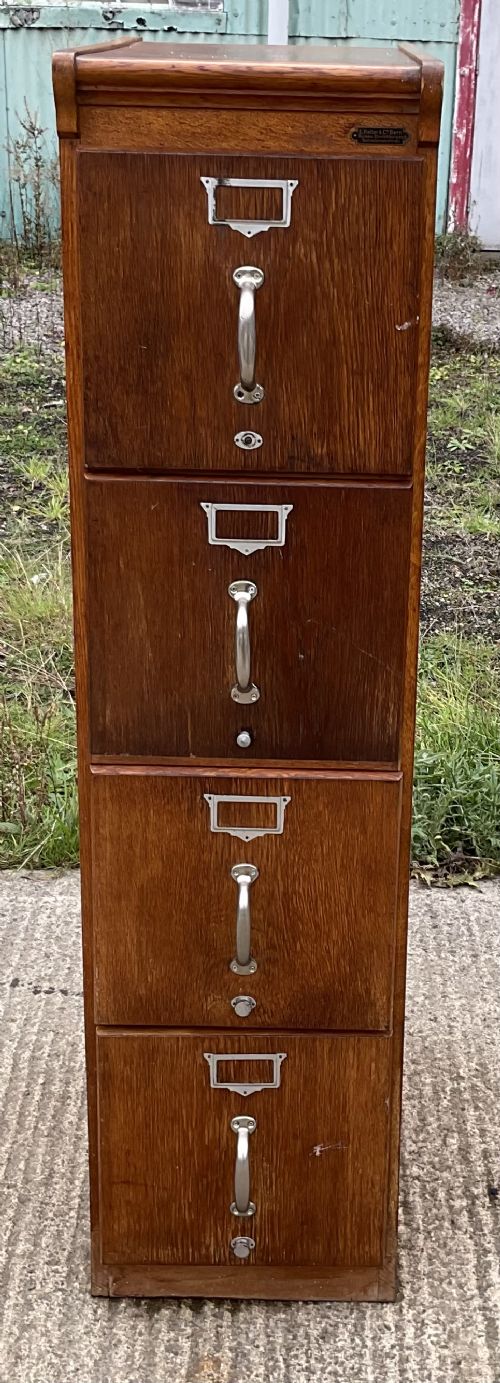
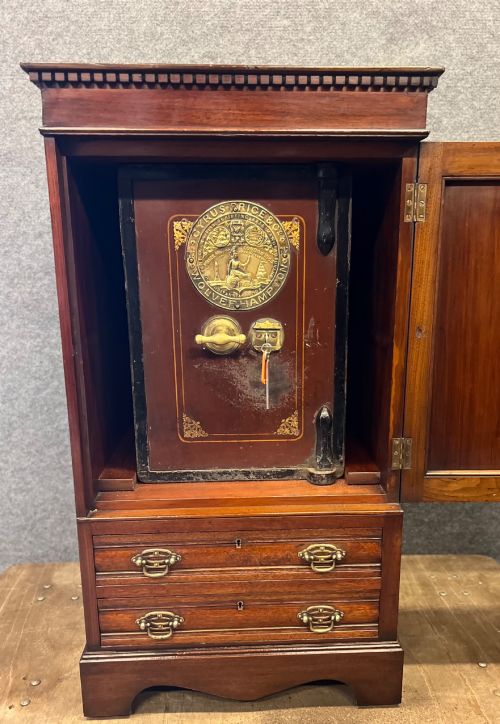
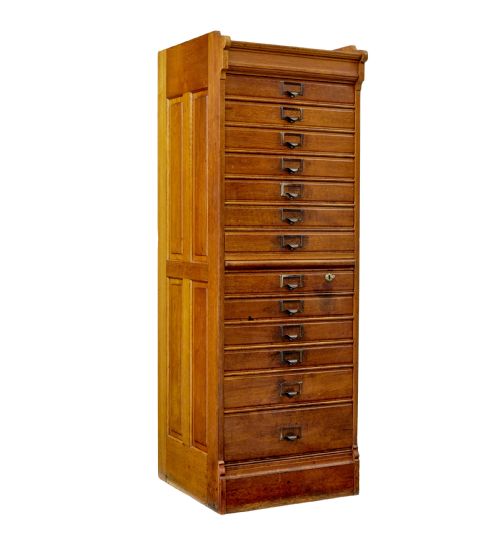
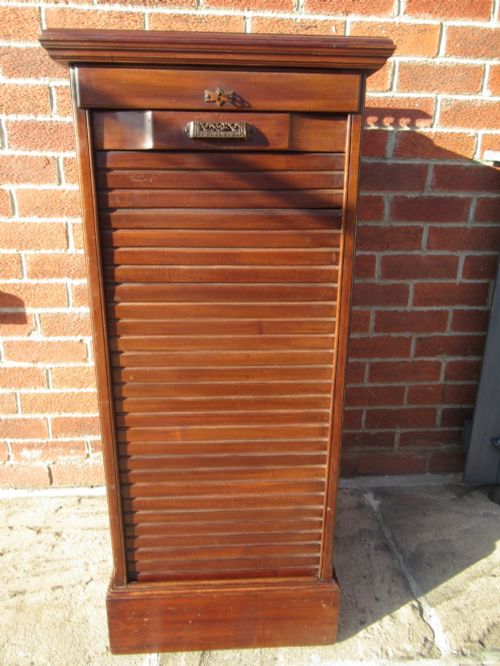
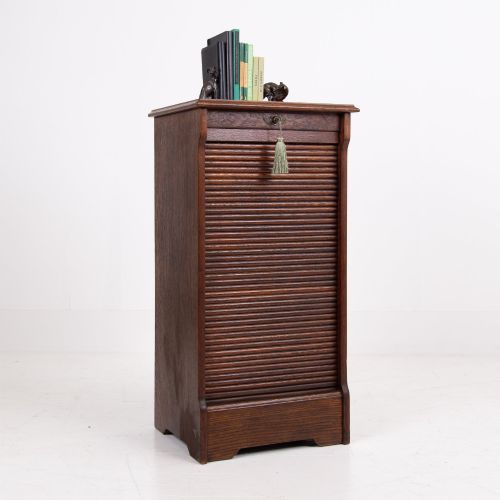
The selections available range widely in scale and purpose, covering large banks of filing drawers, compact stationery boxes, and tall tambour front units. Oak and mahogany versions from the Edwardian era and the nineteenth century appear most frequently on this page.
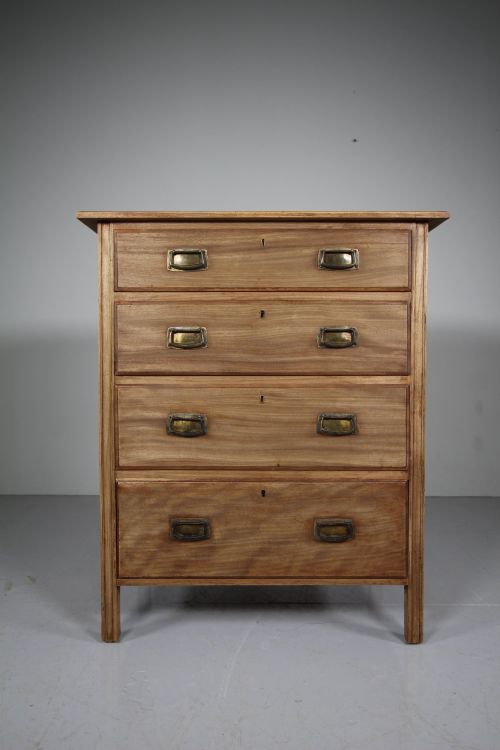
Desk accessories and table cabinets offer smaller storage options for papers, while industrial items and larger office chests provide extensive drawer capacity. Pieces originating from domestic, institutional, and commercial settings all serve the same paper-archiving role.
Materials and Construction
Cabinet makers relied primarily on solid timbers such as oak, mahogany, walnut, and pine to build durable frames that could withstand heavy daily use. Tambour doors utilised narrow strips of wood glued to fabric backings to slide smoothly around curved tracks.
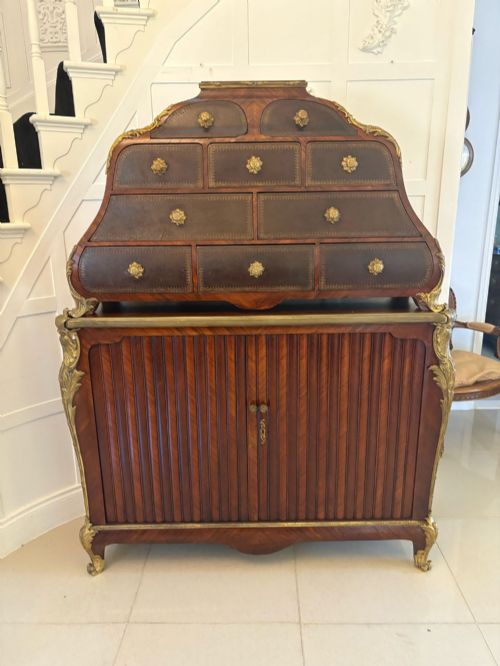
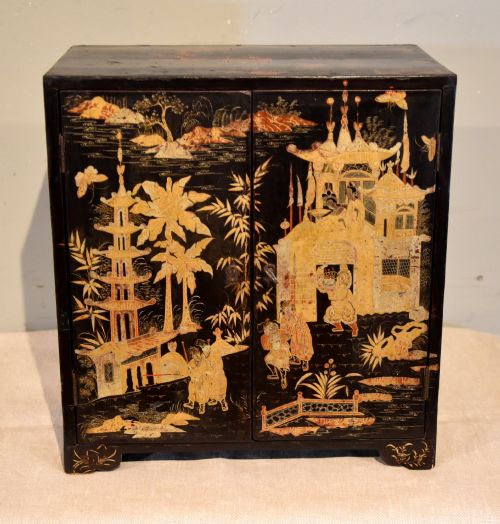
Metal components played a crucial structural and decorative role, featuring brass pull handles, iron brackets, and specialised label holders secured to drawer fronts. Leather inserts decorated writing surfaces, while lacquer finishes adorned Japanese import cabinets.
Antique Document Cabinet Retail Price Guide 2026
Typical asking prices for document cabinet among the pieces listed under this phrase on Sellingantiques today, from the lower quarter to the upper quarter. They describe what is for sale here now, not the wider market.
Period examples span the eighteenth, nineteenth, and early twentieth centuries, including Victorian and Edwardian designs.
Assessing Quality
Quality rests heavily on the execution of the drawer construction and the smoothness of moving mechanisms like tambour shutters. Superior examples exhibit tight joinery, unwarped sliding doors, and original hardware rather than modern replacements.
Finer pieces showcase select timber grains, such as figured mahogany or quarter-sawn oak, alongside thoughtful secondary woods. The presence of maker stamps or original brass label holders elevates the integrity of an archive chest.
The Antique Document Cabinet Glossary
- Tambour
- A flexible door made of narrow wooden slats attached to canvas, allowing it to slide around a curved track to enclose a cabinet opening. This mechanism became popular on office furniture from the late nineteenth century onwards.
- Cartonnier
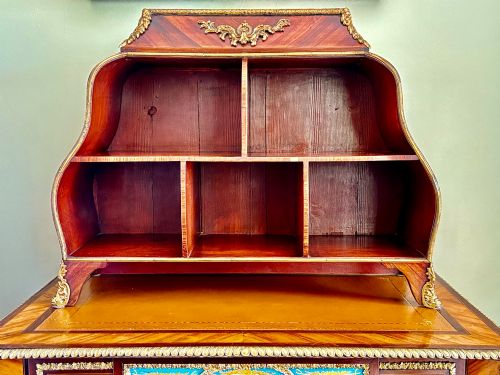
- A freestanding set of pigeonholes or drawers designed specifically to hold papers, documents, and cartons. These French cabinets often sat upon desks or tables in formal studies.
- Campaign
- Furniture designed to dismantle or fold easily for military travel, typically reinforced with brass corners and fitted with recessed carrying handles. Such pieces combined robust construction with portability.
- Pigeon holes
- Open compartments arranged in rows and tiers to sort letters and documents vertically. They often appear inside larger cabinets or as standalone desktop organisers.
- Stationery box
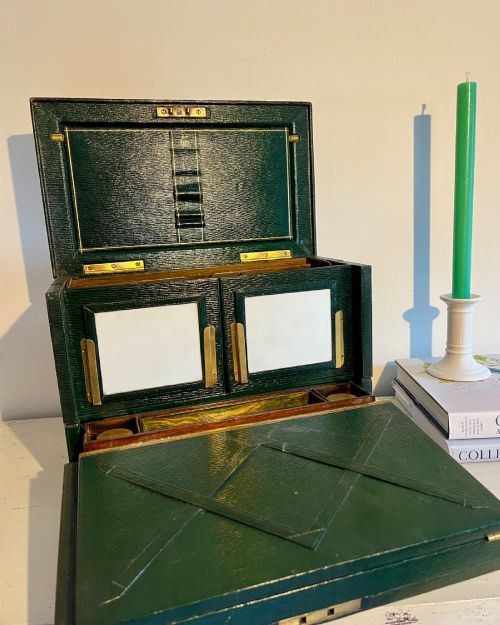
- A tabletop container featuring hinged lids or fall fronts to store writing paper and envelopes. They frequently incorporate small compartments for inkwells and stamps.
Antique Document Cabinet: Frequently Asked Questions
How do I use an antique filing cabinet today?
An antique document cabinet provides practical storage for modern paperwork, stationery, shallow art supplies, and correspondence. Many desktop organisers and small drawer banks fit neatly onto modern desks or sideboards.
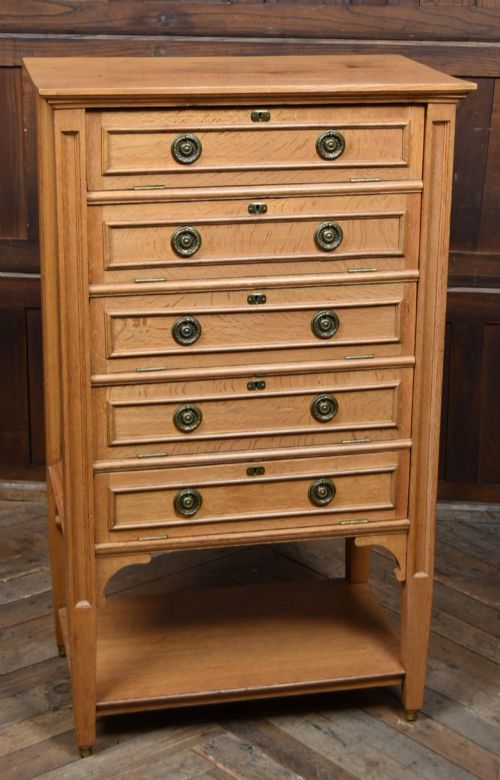
Larger multi-drawer units and banks of drawers serve well in home offices or studies for sorting documents flat. The varying drawer depths accommodate everything from envelopes to large folios.
How can I tell the period of a document cabinet?
Dating relies on examining the timber choices, construction techniques, and hardware styles. Nineteenth-century pieces often utilise solid mahogany or rosewood with hand-cut dovetails and turned wooden knobs.
Edwardian and early twentieth-century examples frequently feature quarter-sawn oak, tambour shutters, and stamped brass label holders on the drawer fronts. Industrial pieces from the interwar years incorporate metal elements and painted pine finishes.
What is the difference between a stationery box and a document cabinet?
A stationery box is generally a smaller, portable tabletop container designed to hold writing paper, envelopes, and small writing accessories. They often feature sloping fall fronts or hinged lids lined with silk or leather.
A document cabinet is a larger piece of furniture, either freestanding or designed to sit on a desk, containing multiple drawers or shelving tiers to archive files. Cabinets offer greater capacity for bound records and loose folios.