

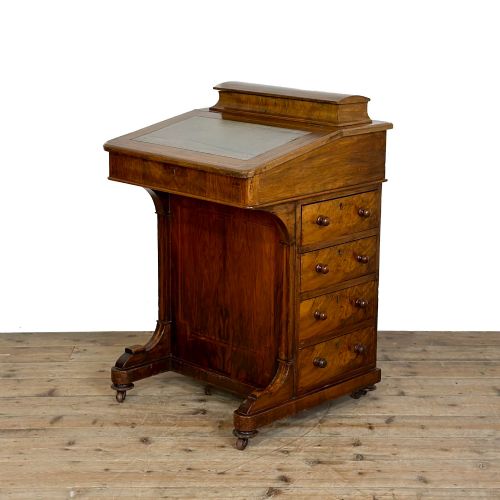
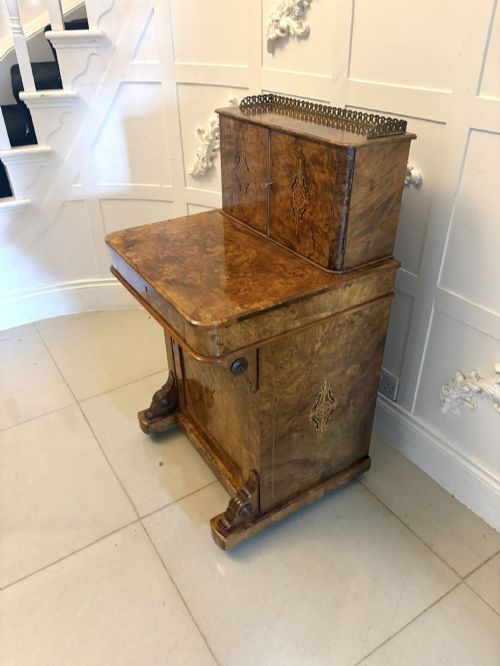
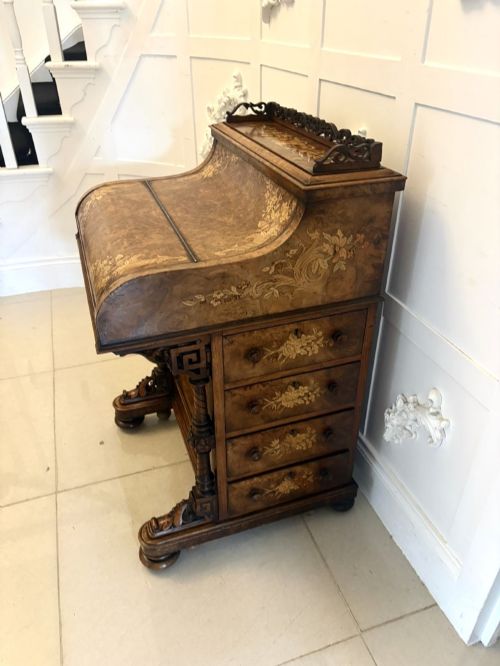
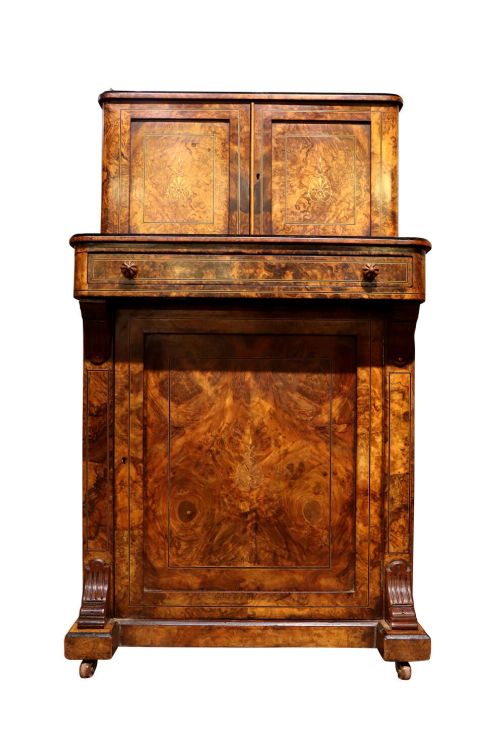

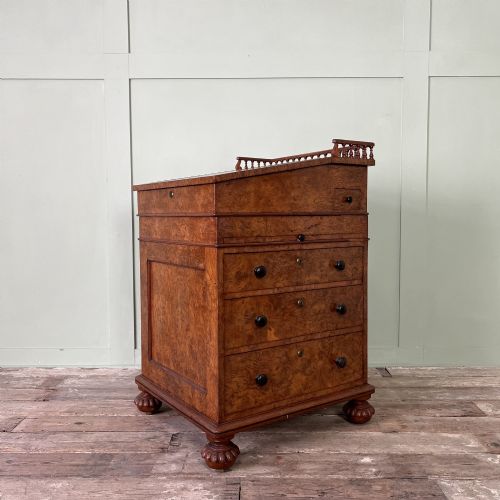

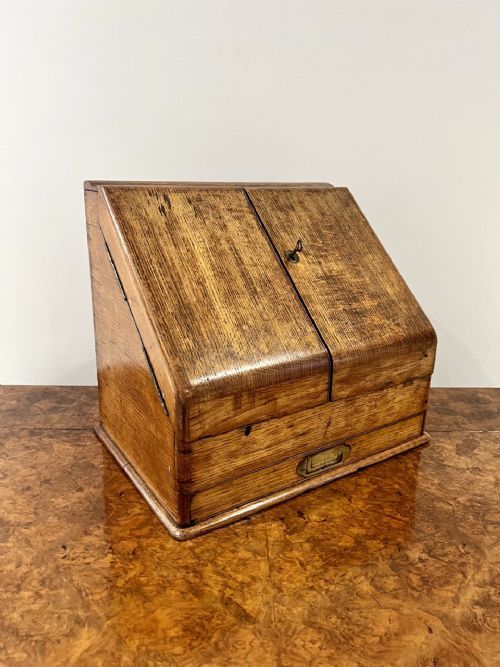
Victorian Stationery Cabinet
A victorian stationery cabinet organises correspondence with designated slots and compartments, bringing nineteenth-century desk organisation into modern spaces.
Victorian Stationery Cabinet
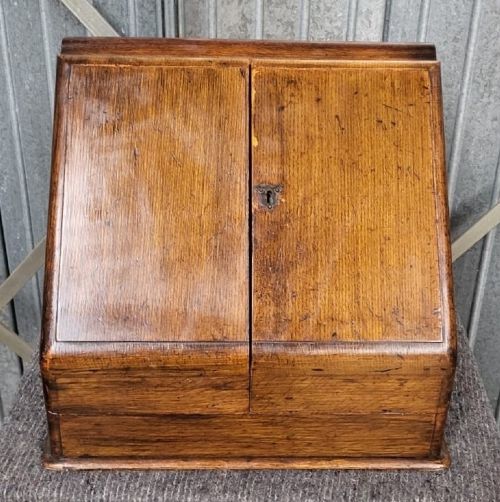
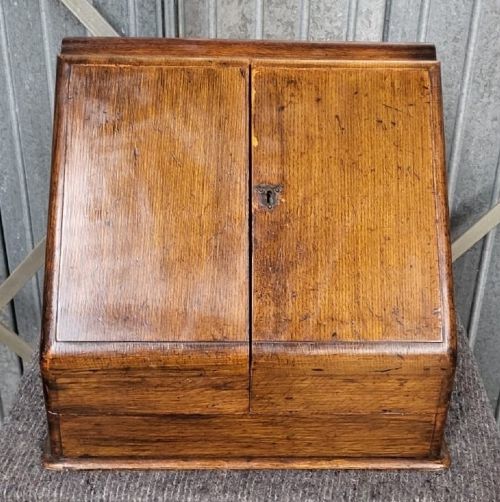
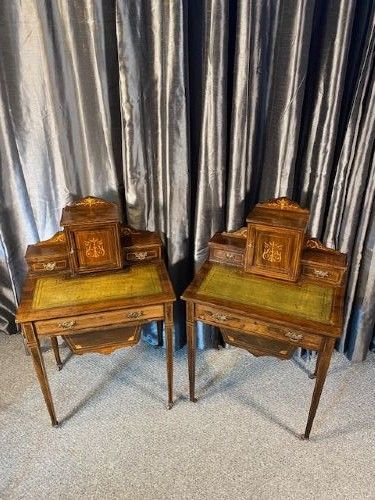
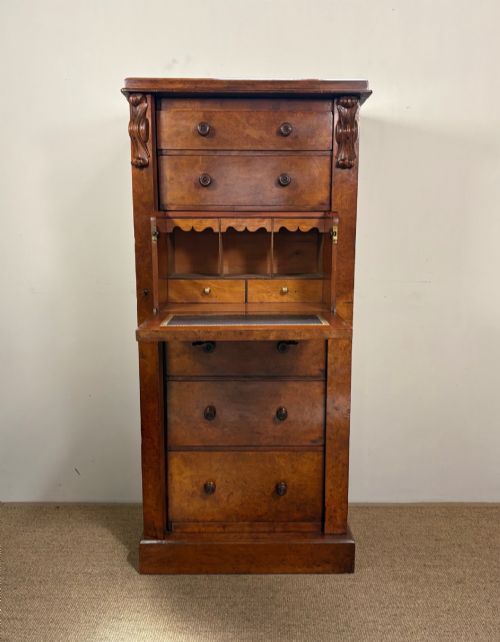
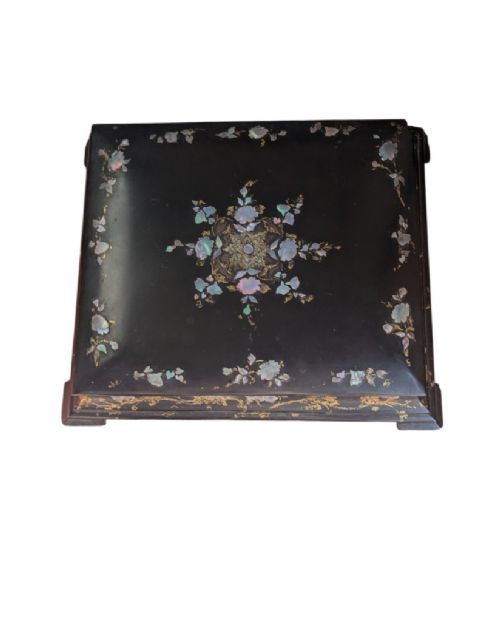
A victorian stationery cabinet takes the form of a tabletop box, desk companion, or compact upright chest designed to hold writing paper, envelopes, and ink. These pieces emerge predominantly from the nineteenth century, reflecting an era when correspondence required dedicated storage furniture.
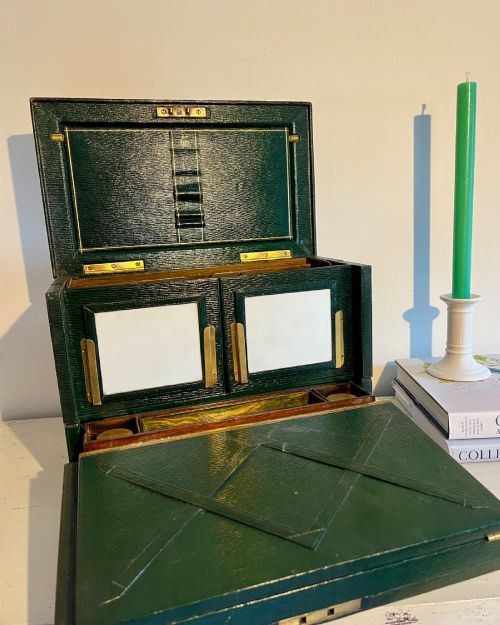
The versions most commonly met on this page are desktop boxes constructed in rich timbers such as burr walnut and oak. Many incorporate sloping lids, folding doors, or fitted interiors with tiered letter racks and integrated calendars.
Materials and Construction
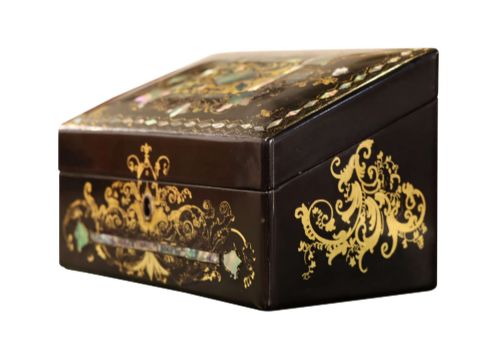
Cabinetmakers utilised substantial hardwoods including oak, walnut, and rosewood, often pairing figured veneers with solid carcases. Burr walnut and coromandel appear frequently on elevated examples, providing striking decorative grain patterns across the exterior surfaces.
Brass fittings such as carrying handles, strapwork, hinges, and lock escutcheons punctuate the timber constructions. Interiors often reveal secondary woods alongside fitted leather writing surfaces and glass inkwell inserts.
Victorian Stationery Cabinet Retail Price Guide 2026
Typical asking prices for victorian stationery cabinet among the pieces listed under this phrase on Sellingantiques today, from the lower quarter to the upper quarter. They describe what is for sale here now, not the wider market.
Green Man carved oak brings a surprisingly fierce woodland spirit to otherwise orderly Victorian correspondence.
Craftsmanship and Proportion
The division between standard workshop production and superior cabinet-making rests in the precision of the internal joinery and the selection of timber veneers. Higher-grade pieces display symmetrical grain matching, flush-fitting doors, and integrated mechanisms like pop-up stationery tiers that operate smoothly.
Decoration distinguishes the range, moving from plain functional oak boxes to elaborately mounted specimens featuring brass banding, inlaid Tunbridge ware or satinwood, and carved details. The thoughtfulness of the interior arrangement, including built-in perpetual calendars or dedicated stamp compartments, separates ambitious desk furniture from simple utility boxes.
Gillow & Co·Waterlow & Sons·Wedgwood
The Victorian Stationery Cabinet Glossary
- Burr walnut
- A figured timber veneer taken from the excrescences or burls of walnut trees. This material yields swirling grain patterns highly prized by nineteenth-century cabinetmakers.
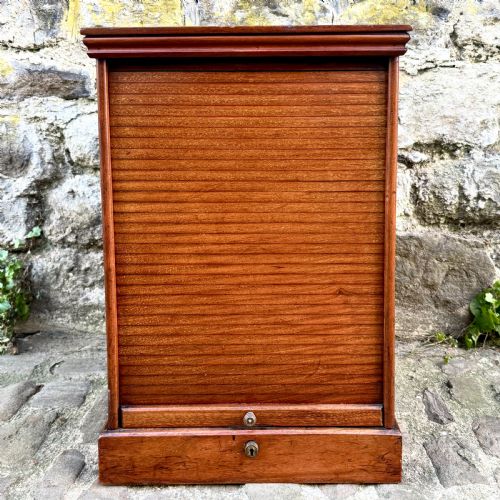
- Tambour
- A sliding door constructed from narrow vertical strips of wood glued to a flexible canvas backing. It runs in tracks to conceal interior pigeonholes.
- Cartonnuer
- A desktop cabinet fitted with tiered document cases or boxes for holding papers. This French form occasionally appears alongside British stationery boxes.
- Escutcheon
- A protective plate surrounding a keyhole. On these cabinets, they are frequently cast in brass and occasionally engraved.
- Pop-up
- A mechanism that raises internal letter racks automatically when the lid or front doors of the cabinet open. This engineering exemplifies high Victorian desk accessory design.
Victorian Stationery Cabinet: Frequently Asked Questions
What is a victorian stationery cabinet?
A victorian stationery cabinet is a specialised desktop container built in the nineteenth century to store writing paper, envelopes, and writing implements. These boxes feature fitted interior partitions to keep correspondence sorted by size.
Unlike general storage chests, they reflect the rigid letter-writing habits of the Victorian period, where every sheet of paper and postage stamp had a designated home.
How were stationery cabinets used?
Owners placed them upon writing tables or Davenport desks to maintain order among incoming and outgoing correspondence. The fitted compartments held writing paper, calling cards, and inkwells ready for daily use.
Many incorporate built-in calendars, date markers, or lockable doors to secure private letters and financial documents away from household staff.
How do I date a stationery cabinet?
Dating relies upon timber choice, hardware style, and incorporated mechanisms such as perpetual calendars or pop-up stationery tiers. Oak and mahogany examples span the entire nineteenth century, while figured burr walnut and coromandel become particularly prominent around the mid-to-late Victorian decades.
Hardware shifts from simple brass locks to elaborate brass strapwork and flush campaign-style handles on pieces designed for travel or estate offices.
Where should I place one at home?
These cabinets sit comfortably on modern desks, side tables, or bookshelves where their timber patination and brass details can be appreciated. Their compact footprint allows them to function as desktop organisers for modern stationery or tablets.
Keeping them away from direct sunlight and extreme radiator heat protects the polished wood finishes and delicate internal leather or paper linings from drying out.