

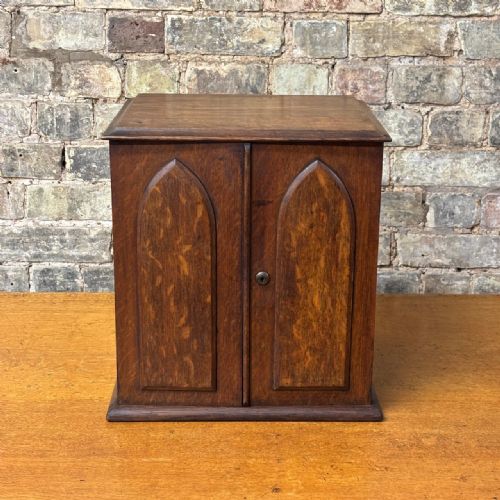
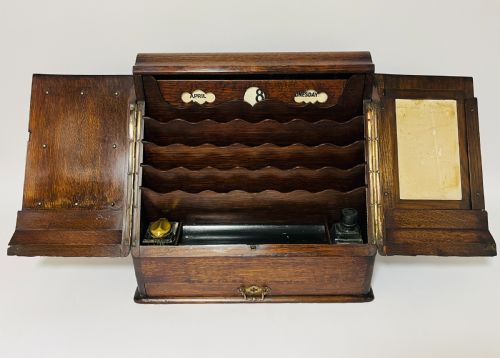


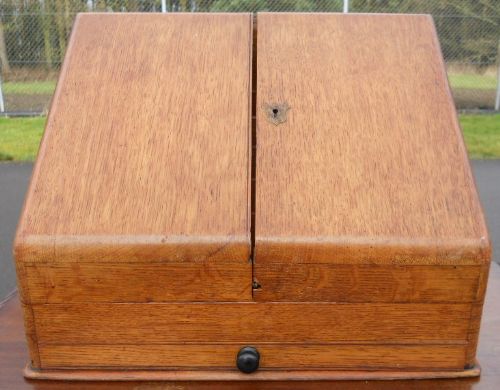


Victorian Oak Stationery Cabinet
These Victorian oak stationery cabinets bring order to a desk, housing paper and correspondence with period character.
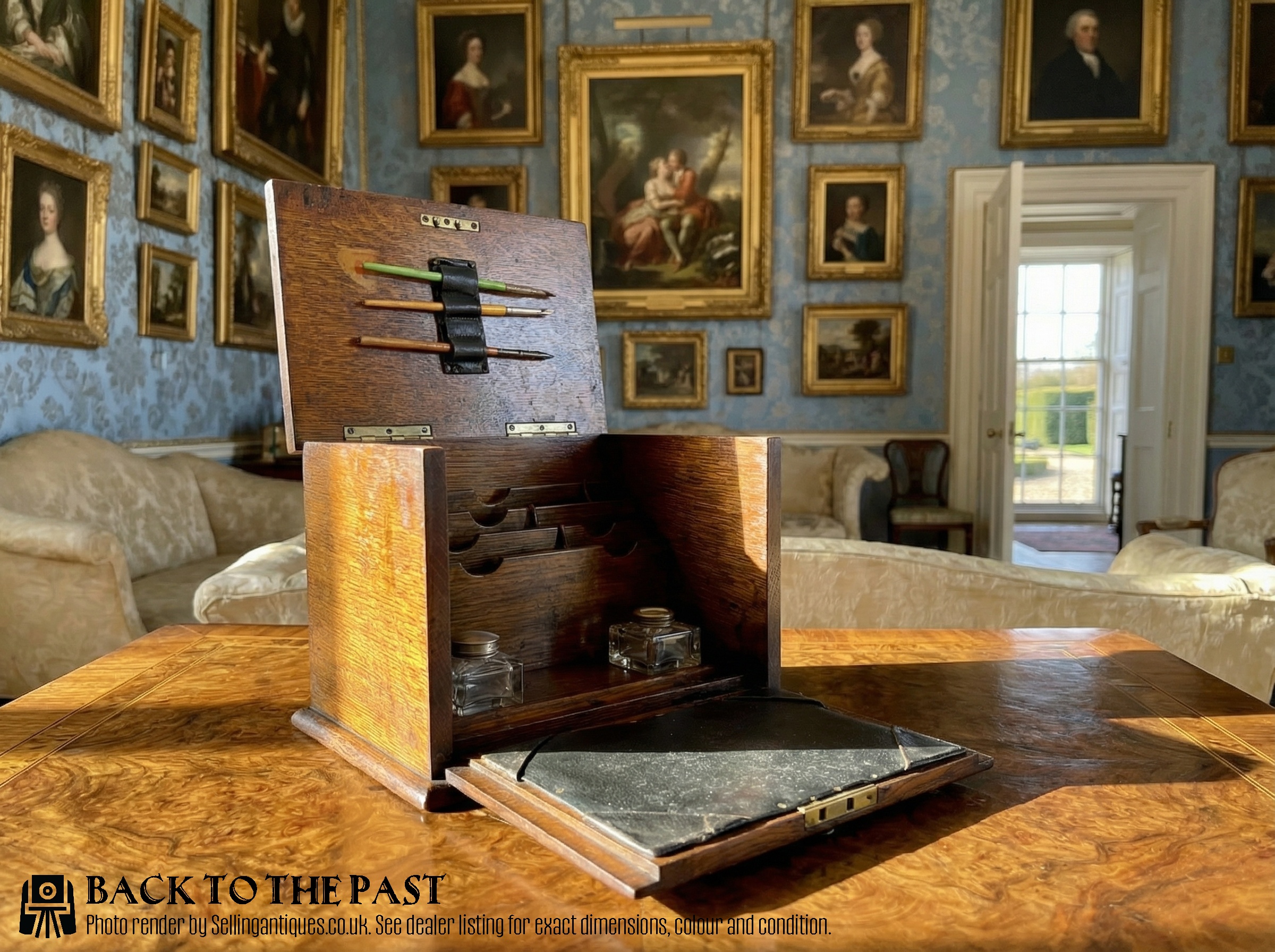
Victorian Oak Stationery Cabinet
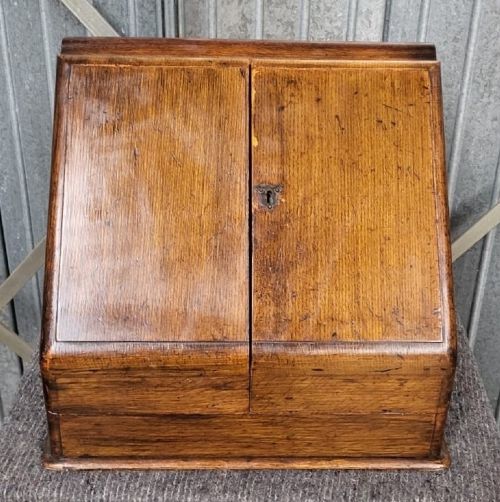
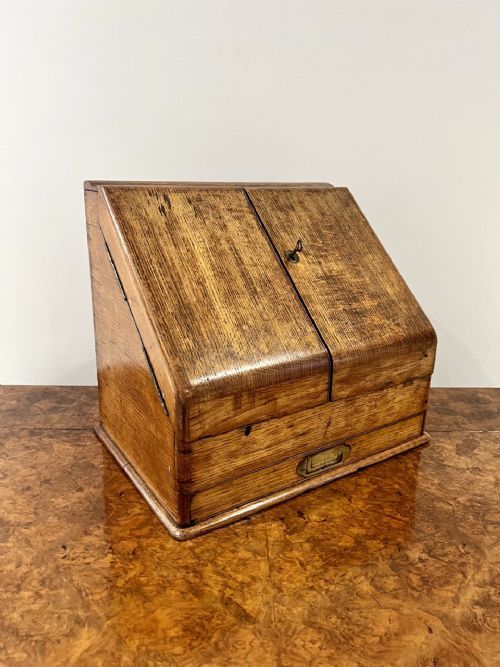
A victorian oak stationery cabinet is a desktop piece designed to hold writing paper, envelopes, and ink, commonly appearing in Victorian and Edwardian iterations. The listings show these taking forms such as stationery boxes, desk cabinets, table cabinets, and drop-front boxes.
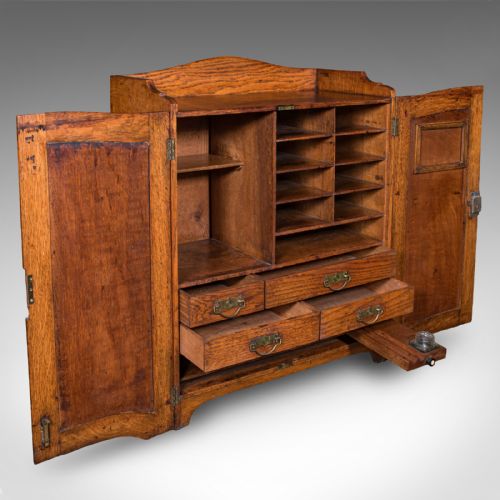
Most examples originate from the nineteenth century and the early decades of the twentieth century. They range from plain desktop boxes to fitted cabinets featuring tambour fronts, calendar mechanisms, and panel doors.
What varies in quality
Quality rests in the crispness of the timber selection, the integration of supplementary functions like adjustable dates and calendars, and the presence of matched accessories such as glass ink bottles. The sophistication of the joinery and the depth of carving, from plain panels to intricate figural work, set the better pieces apart.
The integrity of internal divisions for stationery and the inclusion of working brass locks and keys also distinguish standard boxes from higher-grade cabinet work.
Victorian Oak Stationery Cabinet Retail Price Guide 2026
Typical asking prices for victorian oak stationery cabinet among the pieces listed under this phrase on Sellingantiques today, from the lower quarter to the upper quarter. They describe what is for sale here now, not the wider market.
Some stationery boxes include clever adjustable dates to keep the Victorian clerk thoroughly up to speed.
The Victorian Oak Stationery Cabinet Glossary
- Tambour front
- A door constructed of narrow strips of wood glued to a flexible fabric backing, allowing it to slide smoothly around a curved track.
- Stationery box
- A desktop container designed with internal vertical dividers to sort envelopes and writing paper upright.
- Gothic Revival
- A nineteenth-century design style drawing on medieval architectural motifs, frequently featuring pointed arches and heavy panel work.
- Arts and Crafts
- A design movement emphasising plain forms, visible construction methods, and honest use of natural materials.
- Inkstand
- A desk accessory holding one or more ink bottles alongside troughs for pens and a stationery compartment.
Victorian Oak Stationery Cabinet: Frequently Asked Questions
What is a stationery cabinet used for?
These cabinets were built to organise correspondence materials on a library or study desk, keeping paper, envelopes, and writing implements tidy.
Today, they serve a similar desktop function while adding period character to a workspace.
How do I date an oak stationery box?
Dating relies on stylistic clues such as Gothic Revival or Arts and Crafts details, alongside construction methods and materials like brass hardware and glass inserts.
Pieces carrying calendar mechanisms or specific Victorian registration marks offer further chronological clues.
Where should I place a desk cabinet?
They sit comfortably upon large partner desks, writing tables, or sideboards where their fitted interiors remain accessible.
Keep them away from direct heat sources to protect the oak timber and any internal leather fittings.
What styles are common in these cabinets?
Plain Victorian and Edwardian examples predominate, alongside pieces bearing Gothic Revival panel doors and Arts and Crafts influences.
Carved details such as Green Man motifs occasionally appear on more decorative desk pieces.