

Victorian Carved Oak Buffet
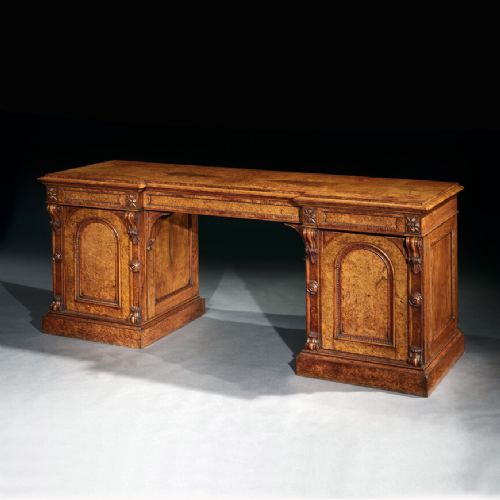
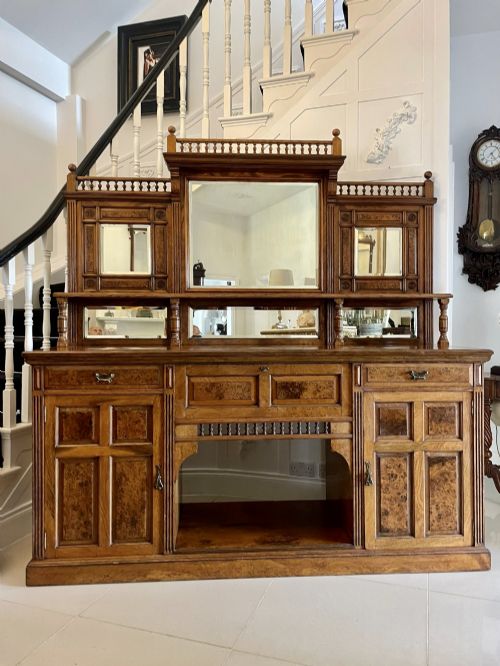
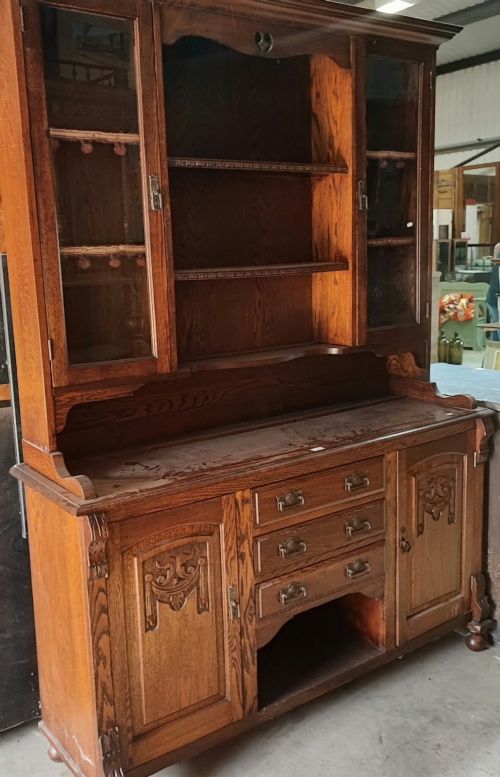
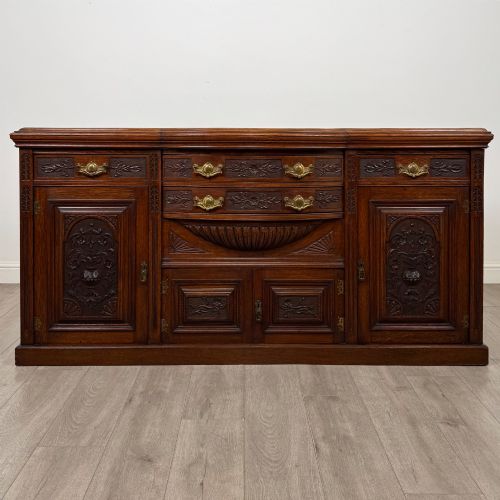
When you search for a victorian carved oak buffet, you find heavy timber dining room furniture built for display and service.
Victorian Carved Oak Buffet
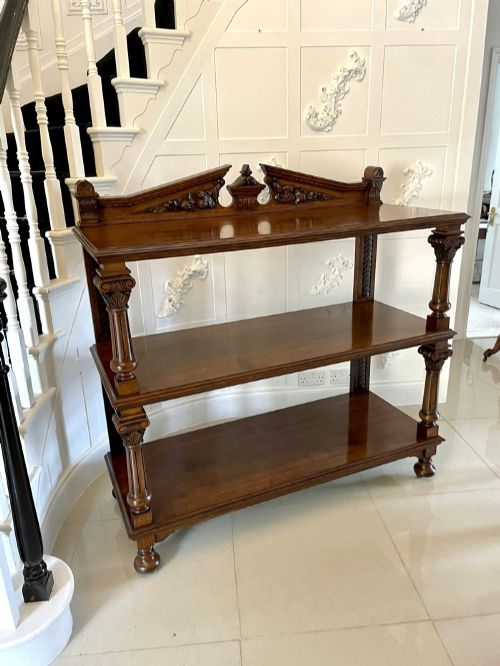
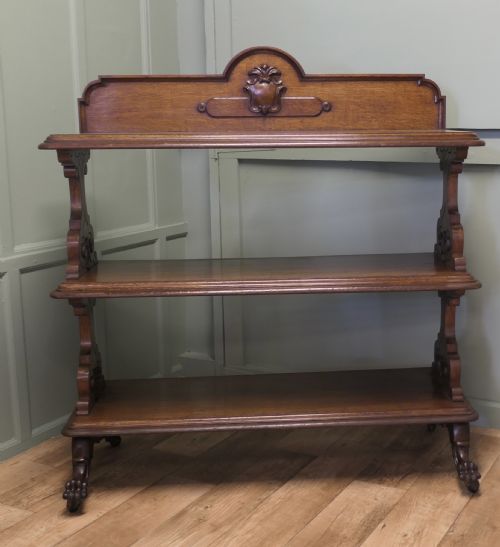
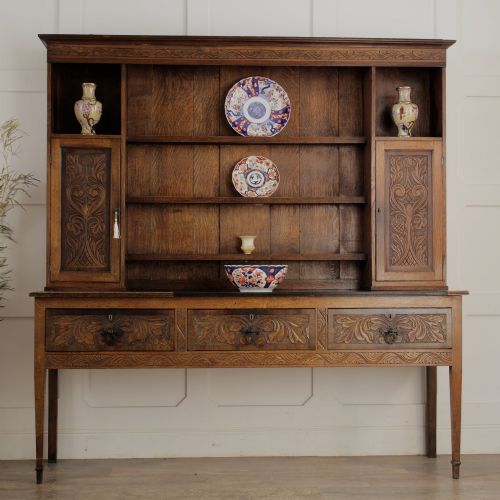
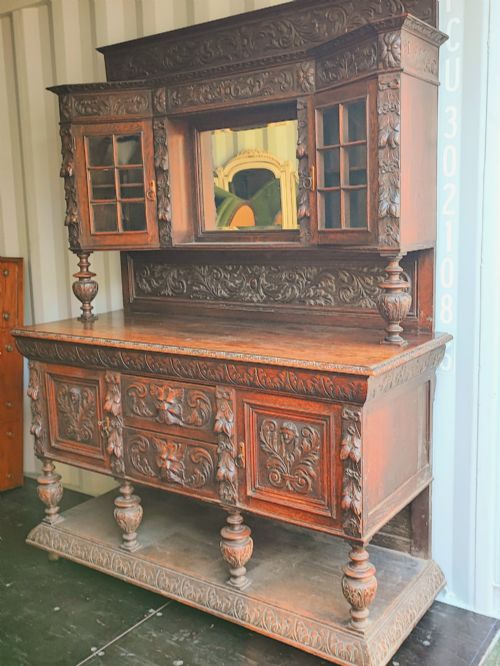
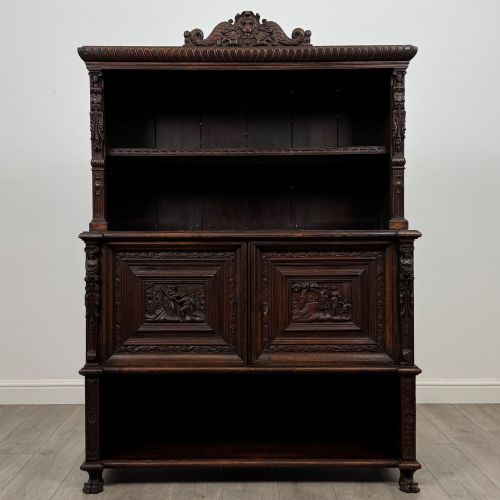
A victorian carved oak buffet is a substantial dining room piece designed to hold silver, glass, and serving dishes during the nineteenth century. These items appear in formats ranging from multi-tiered console tables and dumbwaiters to enclosed cupboards and mirror-backed sideboards.
Makers working across Scotland, England, and France produced these pieces using solid timbers and decorative panels. The surviving examples typically date from the middle to the late nineteenth century, reflecting historical revival movements of the period.
Materials and Construction
Carpenters constructed these pieces primarily from solid oak, alongside figured varieties such as pollard oak and tiger oak. Workshops often integrated glass panels, brass hardware, and iron fittings into the structure.
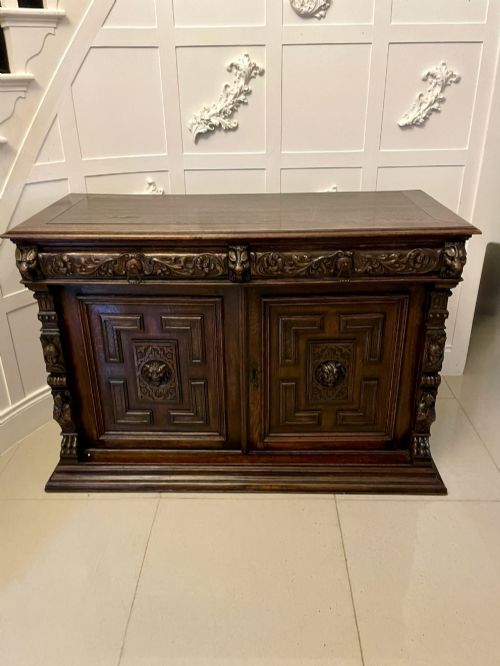
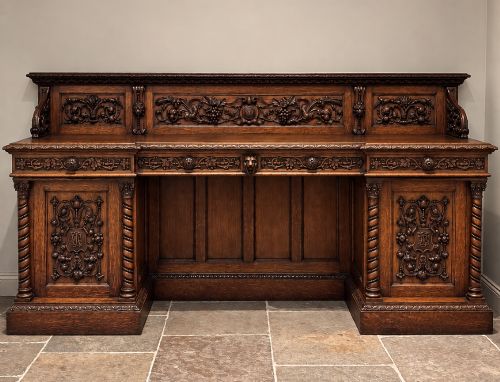
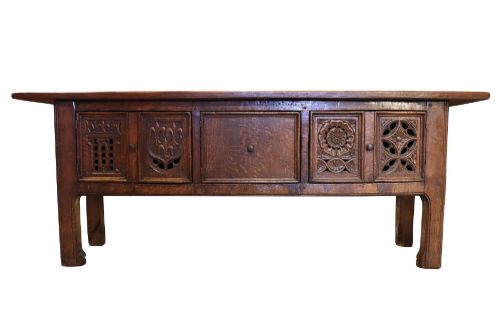
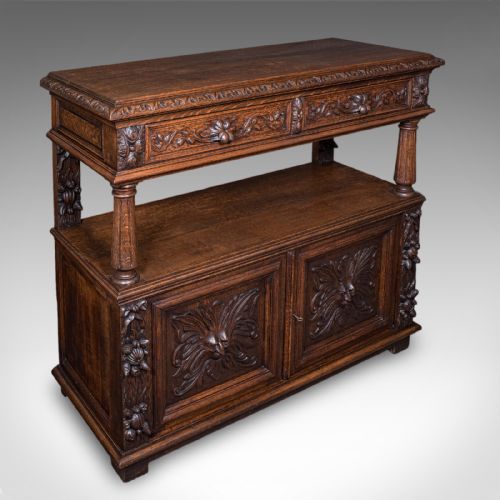
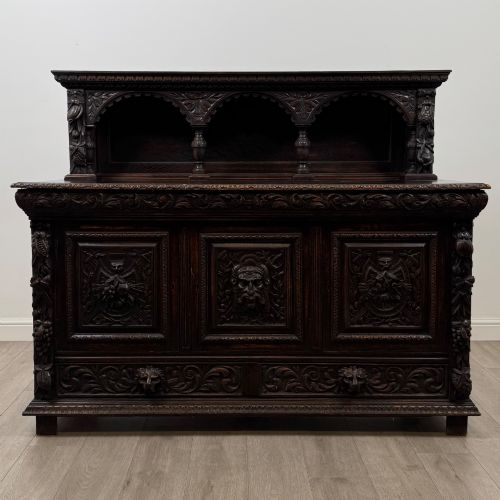
Decoration relied heavily on deep relief carving, featuring architectural Gothic elements, lion masks, and Green Man motifs. Artisans turned upright supports into barley twist columns to hold the tiered serving shelves.
Keep a watchful eye on the carved foliage: hidden Green Man faces peer out from the woodwork on numerous nineteenth-century buffets.
Judging the Workmanship
Quality rests on the depth and crispness of the carved ornamentation rather than the mere presence of decoration. Pieces featuring sharply defined Green Man masks or intricate foliage display superior hand-tool work compared to softer, mechanical milling.
The choice of timber significantly affects the standard of the piece, with richly figured pollard oak or tiger oak representing a higher grade of material. Construction integrity, such as the stability of multi-tiered uprights and drawers that move smoothly, distinguishes better workshop output.
The Victorian Carved Oak Buffet Glossary
- Buffet
- A dining room sideboard or serving table designed for holding food and tableware. These pieces often feature multiple tiers or enclosed cupboards beneath a display surface.
- Pollard Oak
- Timber taken from trees that were cut back to encourage a dense branch growth, resulting in highly decorative, mottled grain patterns. Cabinetmakers utilised this wood for prominent drawer fronts and panels.
- Green Man
- A sculptural motif depicting a human face surrounded by or sprouting from foliage. This ancient symbol appeared frequently on nineteenth-century Gothic revival furniture.
- Barley Twist
- A turned wooden column resembling the spiral shape of a barley stalk. This technique was popular for the upright supports on tiered side tables.
- Gothic Revival
- An architectural and decorative style drawing inspiration from medieval design. Pieces in this aesthetic incorporate pointed arches, tracery, and heavy mouldings.
Victorian Carved Oak Buffet: Frequently Asked Questions
What is a victorian carved oak buffet used for?
These pieces served as dining room sideboards where households displayed silver, glassware, and serving dishes during meals.
They also provided storage for table linens and extra serving platters within the enclosed lower cupboards.
How do you style a buffet in a modern home?
Position the piece against a dining room or hallway wall where its deep timber tones and carved details can anchor the space.
Use the flat top surface to display ceramics, glassware, or lamps, keeping everyday items stored out of sight below.
What is the difference between a buffet and a sideboard?
Buffets frequently incorporate multiple open tiers or serving shelves above the main surface for presenting dishes.
Sideboards tend to focus more on enclosed cupboard space and drawers beneath a single long top.
How do you identify a gothic revival piece?
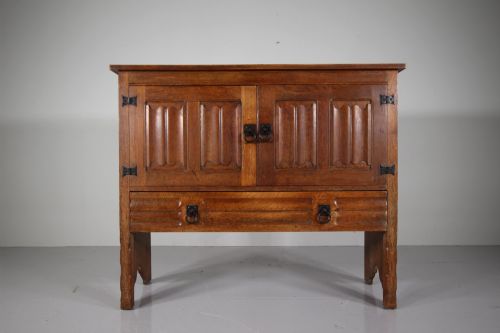
Look for characteristic architectural motifs such as pointed arches, tracery patterns, and heavy linenfold panels.
Makers also applied deep relief carvings featuring Green Man faces and lion masks to emphasise the medieval aesthetic.