





Pollard Oak Furniture
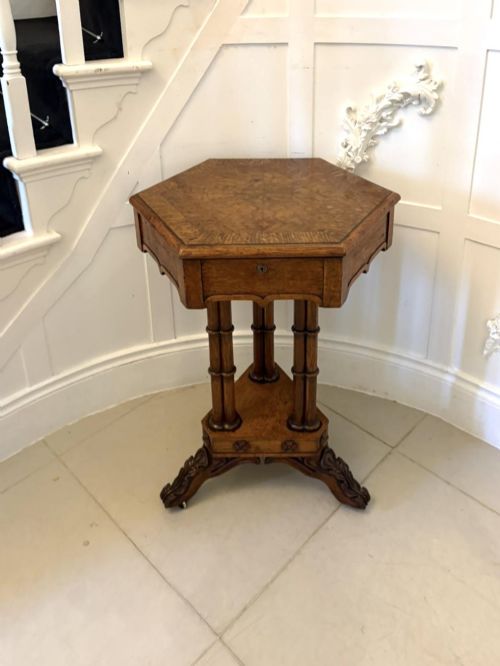
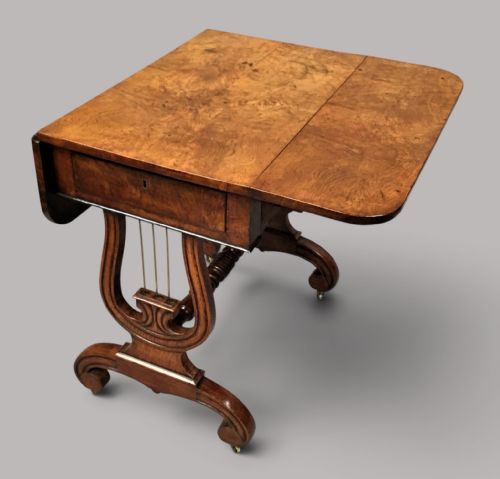
Pollard oak furniture commands attention through its distinctive knotty veneer, bringing rich, mottled warmth to period interiors.
Pollard Oak Furniture
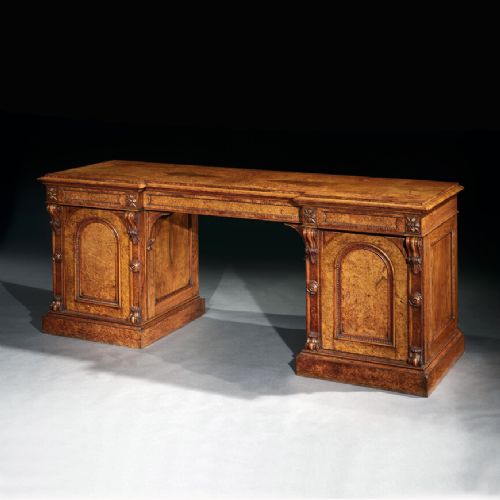
When searching for pollard oak furniture, buyers encounter pieces defined by heavily figured, mottled timber created by pollarding trees, a method of pruning that produces dense clusters of knots and swirling grain patterns. The selection here ranges from large bookcases, sideboards, and partner desks to smaller writing tables, cabinets, and occasional tables.
Victorian and Regency examples dominate the selection, spanning periods from the early nineteenth century through to the eighteen-eighties. Makers utilised this decorative wood selectively, often pairing solid oak carcasses with striking pollard and burr oak veneers to create dramatic visual contrast on primary surfaces.
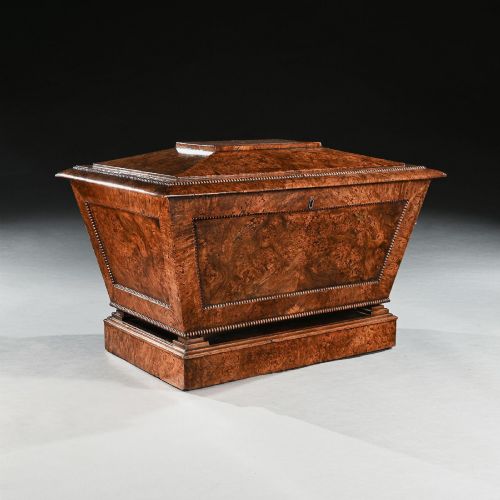
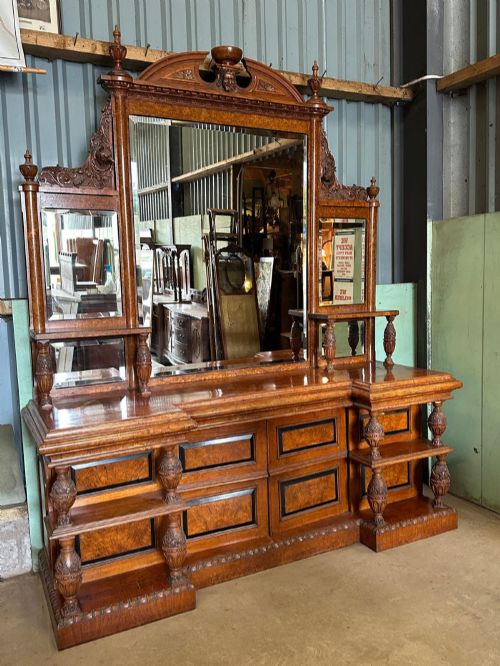
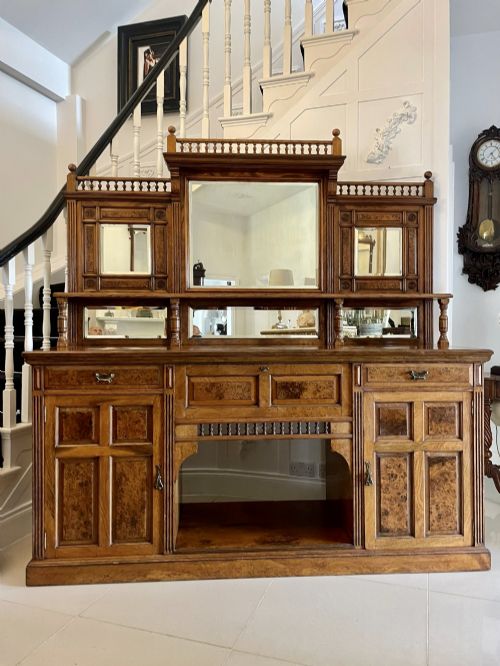
The assortment includes specialised forms such as wine cooler cellarettes, Wellington chests, Davenport desks, and mirror-back sideboards executed in styles including Gothic Revival and Campaign. These pieces reflect the high status afforded to figured timber during the nineteenth century, serving as functional focal points for libraries, dining rooms, and studies.
Distinctions in Quality
Quality rests primarily on the density and visual impact of the pollard oak figuring across the main surfaces, alongside the ambition of the original design. Pieces featuring exceptionally rich colour, deep patination, and balanced grain matching stand apart from plainer examples.
The integrity of the cabinetry, the presence of original brass hardware, and specialised internal fittings such as fitted drawers or specialised shelving dictate the upper tier of the range. Maker attribution or signature stamps add further distinction to exceptional works.
Pollard Oak Furniture Retail Price Guide 2026
Typical asking prices for pollard oak furniture among the pieces listed under this phrase on Sellingantiques today, from the lower quarter to the upper quarter. They describe what is for sale here now, not the wider market.
A butler could lock away the vintage claret in a pollard oak cellarette, keeping the evening's libations safe from curious guests.
James Winter And Sons·Boothroyd Sons And Rimmer·A Blain And Son·Howard And Sons·William Trotter
The Pollard Oak Furniture Glossary
- Pollard oak
- Timber harvested from trees that have been pollarded, a pruning practice where branches are cut back close to the trunk to stimulate dense, highly figured branch growth. This process creates the distinctive clustered knots and swirling patterns prized by cabinetmakers.
- Veneer
- A thin slice of decorative wood applied to a stable secondary timber carcass. In these pieces, pollard oak veneer displays the dramatic grain while structural oak provides overall strength.
- Cellarette
- A specialised container or cabinet designed to hold wine bottles and decanters safely. Often lined and fitted for temperature control or bottle separation during the dining ritual.
- Campaign furniture
- Portable pieces designed for military officers on active service, featuring recessed brass handles, folding mechanisms, and robust construction to withstand travel.
- Wellington chest
- A tall, narrow chest of drawers secured by a locking side flap that fastens over the drawer edges. Named after the Duke of Wellington, this form provides secure storage for papers or valuables.
Pollard Oak Furniture: Frequently Asked Questions
What is pollard oak?
Pollard oak is timber taken from trees that were periodically cut back at the trunk to encourage dense branch growth. This pruning technique creates a tight cluster of knots and swirling patterns in the wood.
When sliced into veneers, this wood displays a mottled appearance that became highly fashionable for fine cabinetmaking during the nineteenth century.
How do I care for pollard oak furniture?
Protect these pieces by keeping them away from direct sunlight and sudden temperature changes, which can dry out the historic wood and veneer. Maintain the finish by dusting with a soft cloth and applying appropriate wax sparingly.
Avoid placing damp items directly onto tabletops, as moisture can penetrate the polished surface and damage the underlying veneer.
How can I date my pollard oak piece?
Dating relies on examining the construction methods, drawer linings, hardware styles, and overall form relative to documented periods. Regency and Victorian examples often feature specific decorative vocabularies, such as Gothic Revival motifs or classical giltwood details.
Maker stamps, where present, provide definitive clues to the workshop and decade of production.
Where were these pieces used originally?
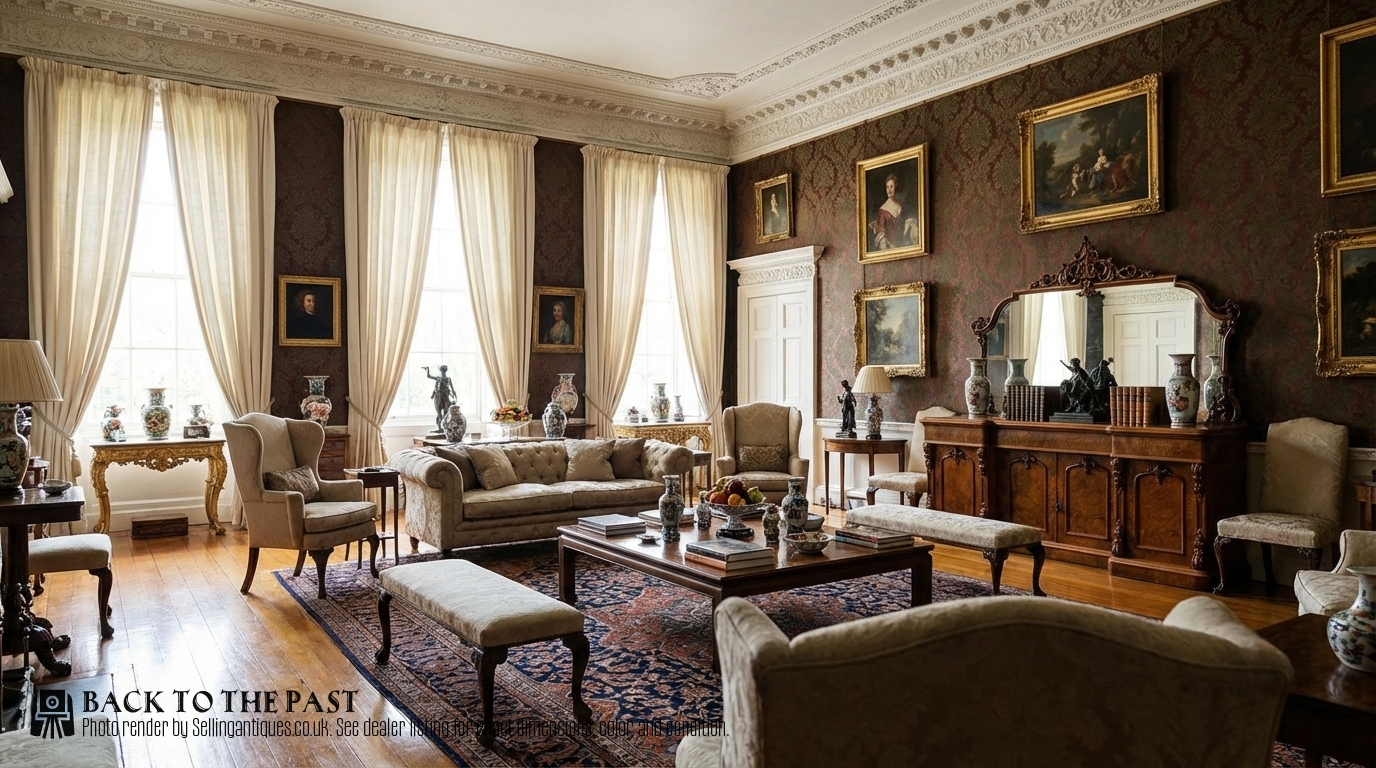
These items populated the principal rooms of grand houses, including libraries, dining rooms, studies, and drawing rooms. Large sideboards and cellarettes served formal dining needs, while partner desks and bookcases furnished private studies.
Smaller tables and cabinets functioned as decorative and practical additions to reception spaces.