



Golden Oak Credenza
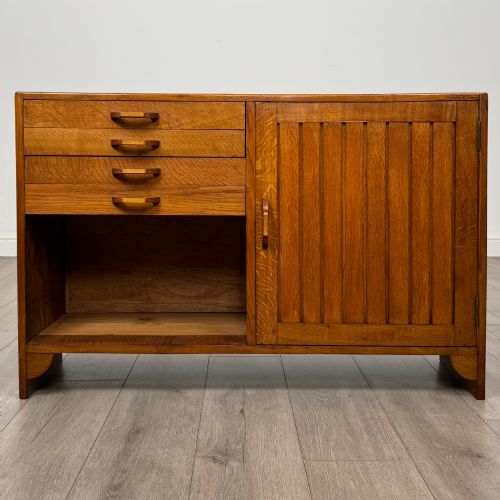
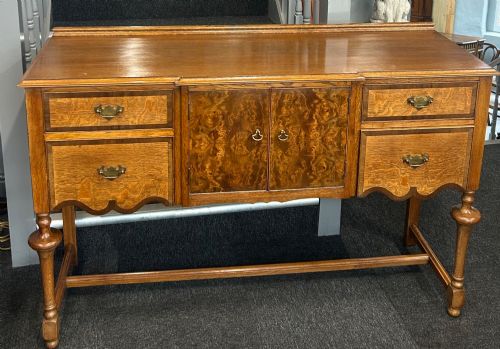
A golden oak credenza brings warm honeyed tones and sturdy timber to a dining room or hallway.
Golden Oak Credenza
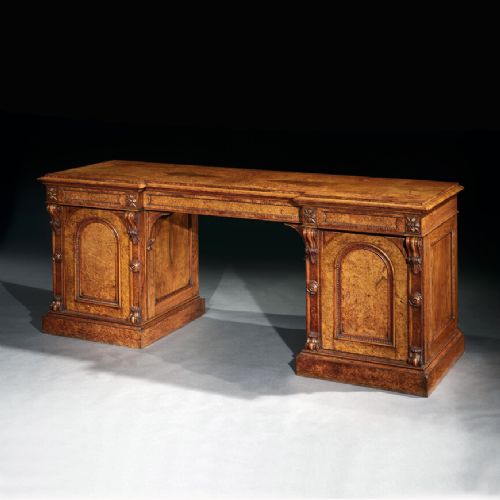
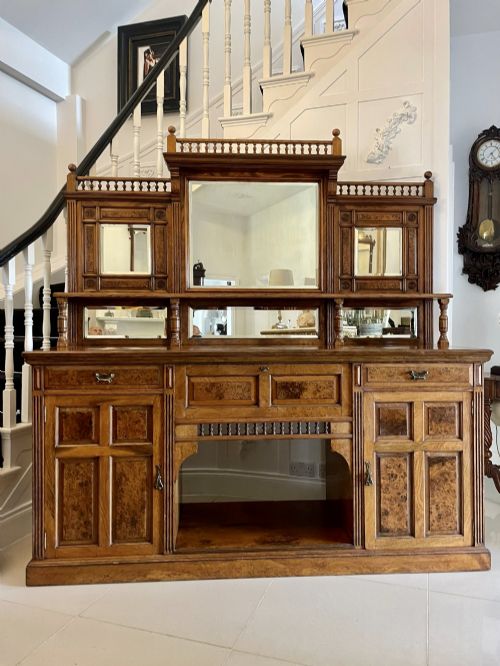
When you search for a golden oak credenza, you encounter substantial storage furniture built across the nineteenth and twentieth centuries. The pieces on this page span formats such as sideboards, cupboards, and dresser bases rather than strictly formal credenzas.
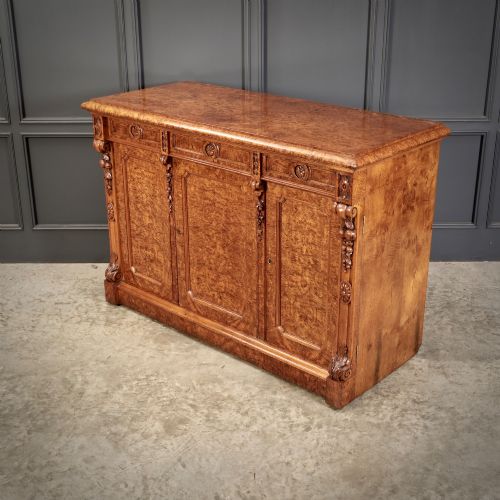
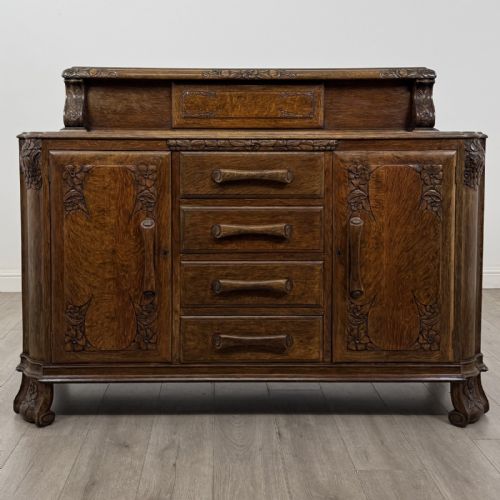
Edwardian and Victorian examples dominate the selection, often rendered in rich honeyed oak or figured pollard oak. These items served traditionally as dining room servers or display units for silver and china.
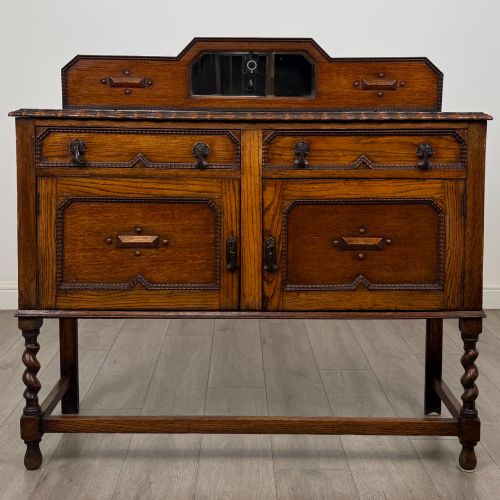
Makers drew on various stylistic influences including Arts and Crafts, Jacobean Revival, and Art Deco. You find everything from compact cabinets to massive mirror-backed sideboards.
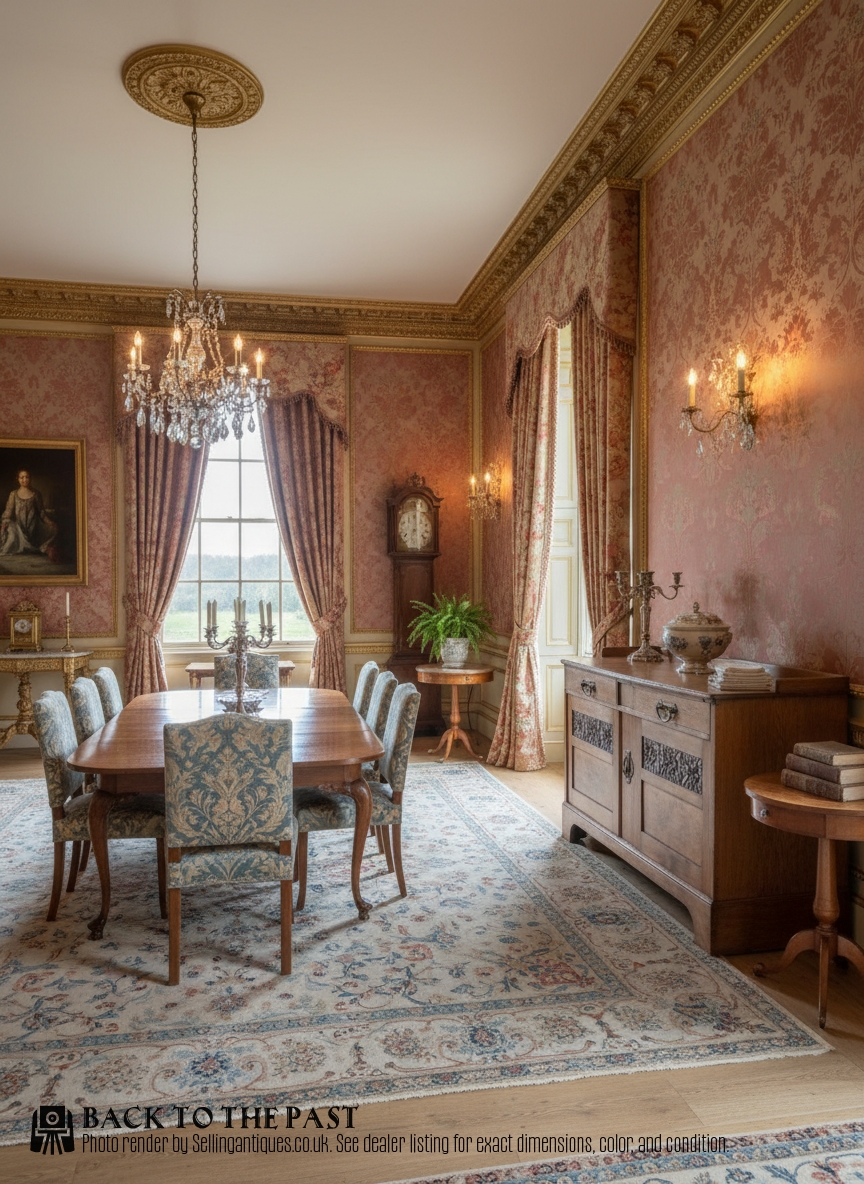
How they were made
Carpenters utilised solid oak, pollard oak, and burr walnut over sturdy pine carcasing, pairing the timber with brass, copper, and iron hardware. Glass panels appear on cabinet doors and mirror plates back up display shelves.
Construction methods range from traditional hand-carved joinery seen in Gothic and Jacobean Revival pieces to cleaner linear construction typical of the Arts and Crafts and mid-century periods.
Golden Oak Credenza Retail Price Guide 2026
Typical asking prices for golden oak credenza among the pieces listed under this phrase on Sellingantiques today, from the lower quarter to the upper quarter. They describe what is for sale here now, not the wider market.
Victorian mirror backs let you check your hair while sneaking an extra biscuit from the sideboard.
What varies in quality
The distinction between standard storage and superior examples rests in the selection of timber figure, such as pollard oak or burr walnut, and the depth of hand-carving. Finer pieces display crisp mouldings, matched grain patterns, and robust original brass or copper handles.
Proportion and structural integrity separate workshop output from mass production. Well-balanced proportions and heavy timber framing dictate the longevity and presence of each cabinet.
Gomme
The Golden Oak Credenza Glossary
- Golden oak
- A bright, warm shade of timber finish popular during the Edwardian period and early twentieth century. It highlights the natural grain without dark staining.
- Pollard oak
- Timber taken from trees that were pollarded, creating highly figured, knotted grain patterns. Cabinetmakers utilised this wood for decorative veneers on Victorian furniture.
- Dresser base
- A low wooden sideboard featuring drawers and cupboards beneath a flat top. These pieces originated in kitchens before moving into dining rooms.
- Arts and Crafts
- A design movement prioritising honest construction, simple forms, and visible hand-craftsmanship. Pieces often feature plain oak and wrought iron hinges.
- Mirror back
- An upright wooden superstructure holding a glass mirror plate attached to the rear of a sideboard. This element reflects light and displays porcelain.
Golden Oak Credenza: Frequently Asked Questions
What is a golden oak credenza?
A golden oak credenza is a heavy wooden storage cabinet or sideboard finished in a warm, light tone. These items function as dining room servers or hallway storage units.
Most examples date from the Victorian and Edwardian eras, incorporating cupboards, drawers, and sometimes mirror backs.
How do I date an oak sideboard?
Dating relies on stylistic clues, hardware, and construction methods. Heavy carving often points to Victorian Gothic or Jacobean Revival tastes, while clean lines suggest Arts and Crafts or twentieth-century production.
Examine the timber finish and interior linings to distinguish Edwardian pieces from later twentieth-century revivals.
Where should I place a sideboard?
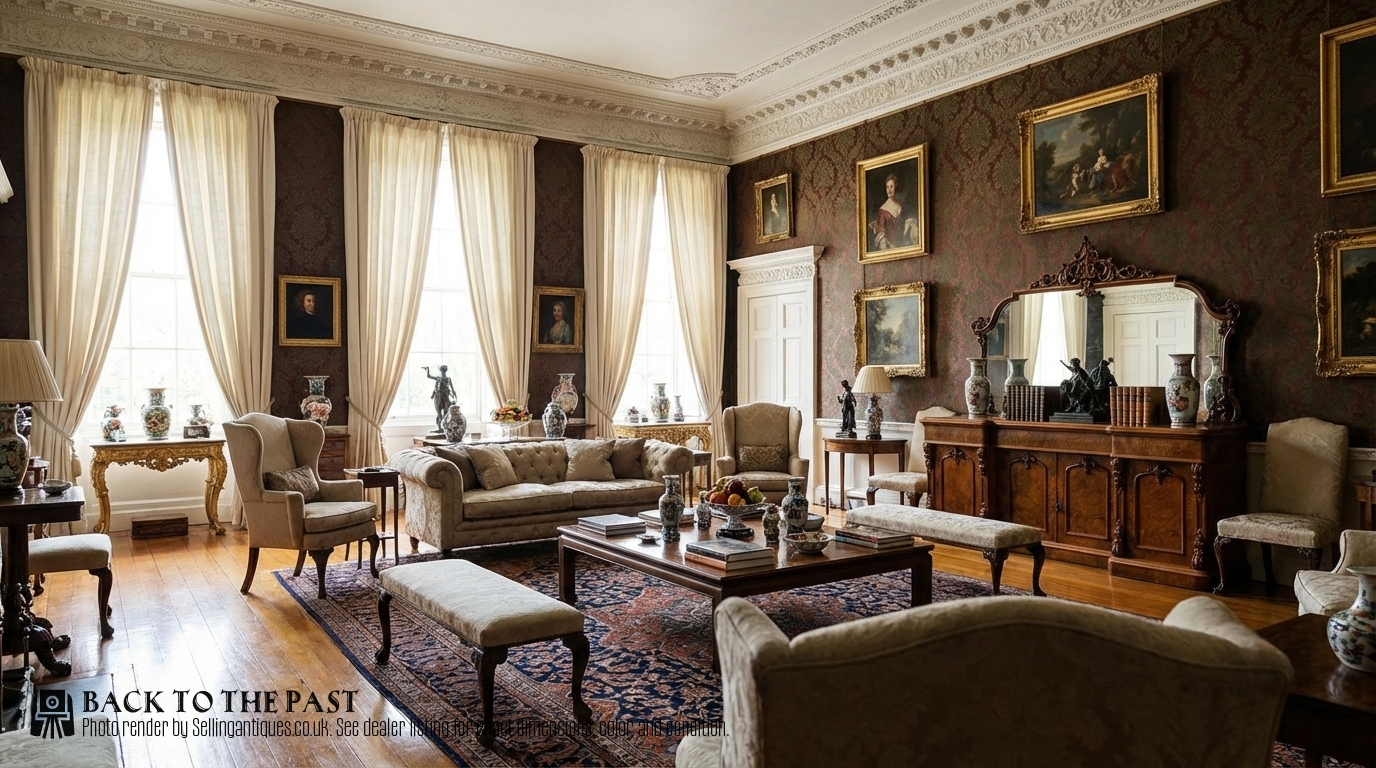
Sideboards suit dining rooms, large hallways, and spacious living areas. Their primary purpose is storing tableware, linens, and dining accessories while providing surface space for serving.
Ensure adequate wall space for larger mirror-backed models before positioning them in a room.
How do I care for golden oak furniture?
Maintain the timber by dusting regularly with a soft dry cloth and avoiding direct sunlight. Consistent humidity levels prevent the solid oak panels from splitting.
Apply high-quality beeswax sparingly to nourish the grain and preserve the honeyed lustre.