





Victorian Oak Chiffonier
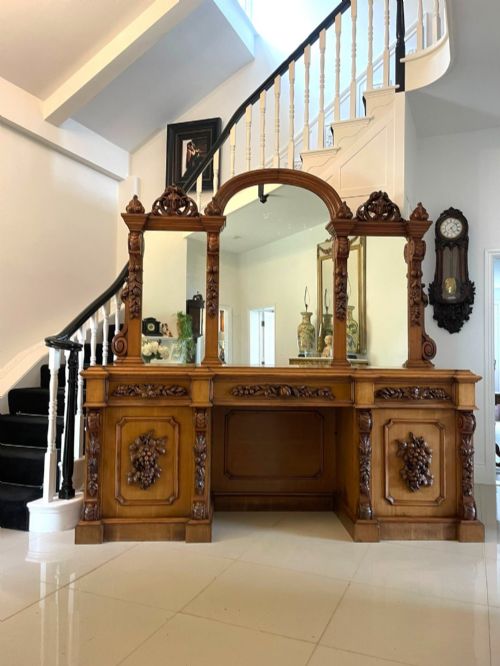
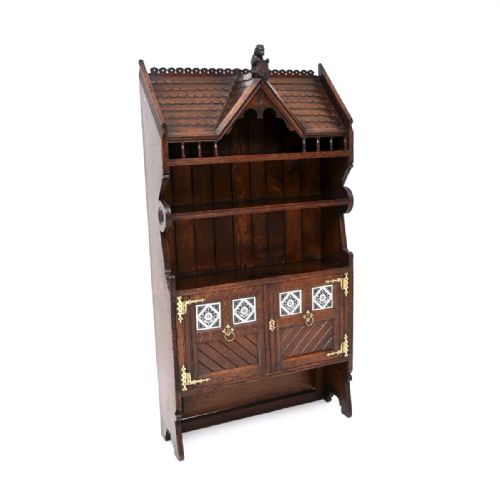
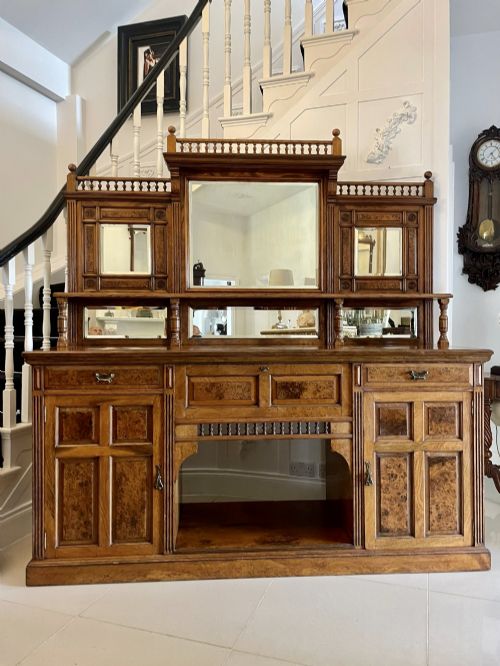
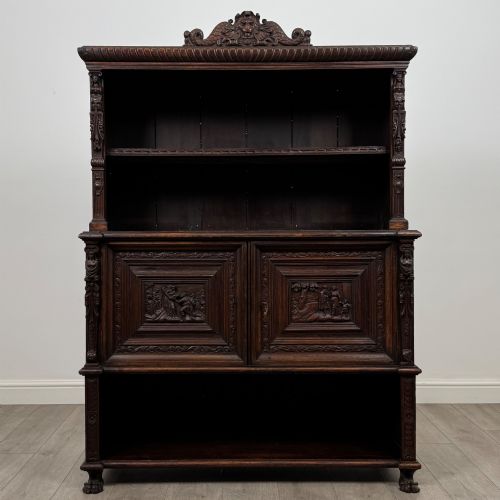
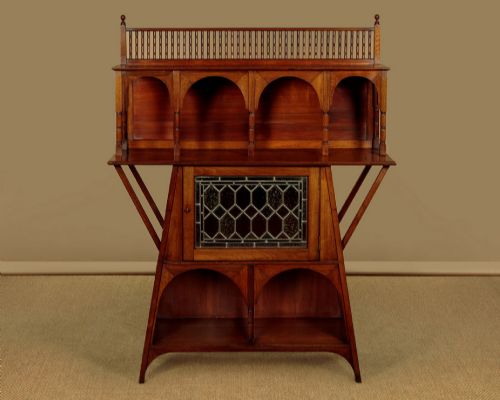
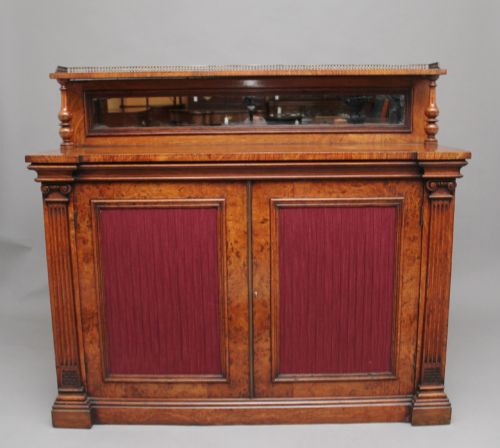
These pieces of a victorian oak chiffonier are solid timber storage units combining cupboards and shelves that anchor a dining room or hall.
Victorian Oak Chiffonier
A victorian oak chiffonier is a low cabinet designed for dining rooms and living spaces, offering enclosed storage below and often display space or a mirror above. The examples appearing on this page span the nineteenth century, including pieces from the eighteen-sixties through to nineteen-ten, and cross paths with related forms like sideboards, cupboards, and chests of drawers.
Most items you meet here rely on the warm tones of oak and pollard oak, sometimes finished with ebonised wood or glass panels. Makers of the period drew on styles ranging from plain Victorian utility to Arts and Crafts, Aesthetic Movement, and Victorian Renaissance Revival.
Buyers look for these low cabinets to provide practical sideboard storage with distinct period character. They sit comfortably in traditional and mixed modern interiors, offering heavy timber construction that outlasts modern alternatives.
What varies in quality
Quality depends heavily on the selection of timber, particularly where figured pollard oak veneers or burr oak panels are chosen for prominent door fronts and splashes. Carved elements show varying degrees of depth and hand execution, separating standard workshop output from exceptional commissions.
The integration of secondary materials like mirror glass, brass fittings, and structural hardware marks the distinction between everyday utility items and high-end cabinet work. Original locks and well-fitted doors indicate superior workshop standards.
Victorian Oak Chiffonier Retail Price Guide 2026
Typical asking prices for victorian oak chiffonier among the pieces listed under this phrase on Sellingantiques today, from the lower quarter to the upper quarter. They describe what is for sale here now, not the wider market.
Some cabinets feature locks by Charles Aubin, proving that even a Victorian lock maker deserved a small signature on the timber.
Liberty and Co·Garnett and Sons·Charles Aubin
The Victorian Oak Chiffonier Glossary
- Pollard oak
- Timber taken from trees that have been pollarded, producing a dense, highly figured grain pattern with clustered knots used for decorative veneer panels.
- Chiffonier
- A low sideboard or cabinet featuring a cupboard base, frequently surmounted by a shelf or mirror back.
- Ebonised wood
- Timber treated with a dark stain or finish to imitate ebony, a technique popular during the nineteenth century.
- Aesthetic Movement
- A late nineteenth-century design style emphasising visual beauty and artistic craft over heavy moral or historical narratives.
- Arts and Crafts
- A design movement valuing traditional craftsmanship, simple forms, and visible construction methods using local materials.
Victorian Oak Chiffonier: Frequently Asked Questions
What is a victorian oak chiffonier used for?
These cabinets served primarily in dining rooms to store tableware, linen, and bottles, while the top surface held serving dishes or decorative objects. Upper shelves and mirror backs provided space to display ceramics and glassware.
Today they function well in living areas, hallways, or dining spaces as practical low sideboards that offer substantial enclosed storage without dominating a room.
How do I date a victorian oak chiffonier?
Dating relies on stylistic clues, construction methods, and secondary materials recorded across the nineteenth century. Pieces from eighteen-sixty often display Gothic revival carving, while later items from eighteen-ninety lean toward Arts and Crafts or Aesthetic movement simplicity.
Examine the interior woods, drawer construction, and hardware types to narrow down the decade. Cabinetmakers frequently incorporated evolving lock mechanisms and glass treatments that help place the piece in its era.
Are these cabinets difficult to maintain?
Oak is a robust timber that requires minimal upkeep beyond routine dusting with a dry cloth. Avoid placing these pieces in direct sunlight or near heat sources to protect the polished finish and prevent timber movement.
Period wax applied occasionally helps nourish the pollard oak grain and maintain the deep sheen of the wood. Check brass fittings and door hinges periodically to ensure they remain properly aligned.
What is the difference between a chiffonier and a sideboard?
A chiffonier is typically smaller and lower than a traditional sideboard, often featuring a dedicated upper shelf or mirror back attached to a compact cupboard base. Sideboards generally run longer and focus heavily on extensive drawer and cabinet combinations for large dining rooms.
Both forms utilise heavy oak construction and share similar hardware, but the chiffonier offers a lighter scale suited to smaller rooms.