
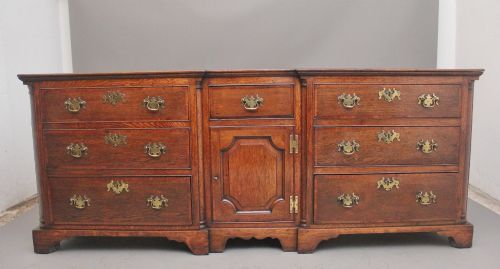
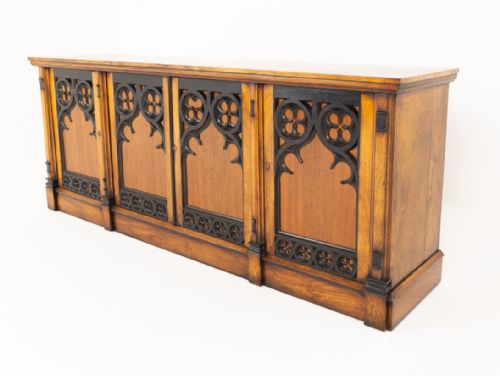

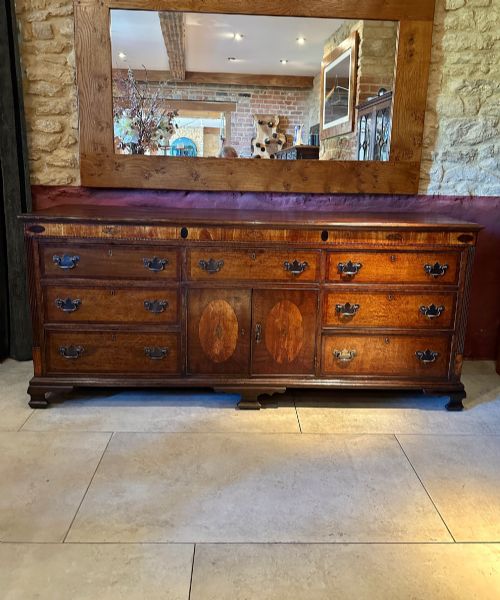
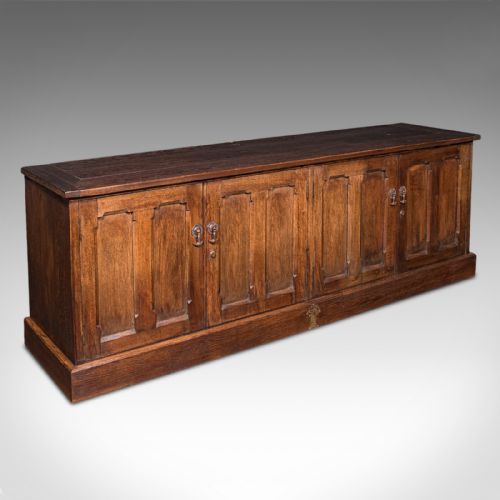


Large Oak Sideboard
A large oak sideboard anchors a dining room with substantial presence and enduring utility.
Forms and Origins
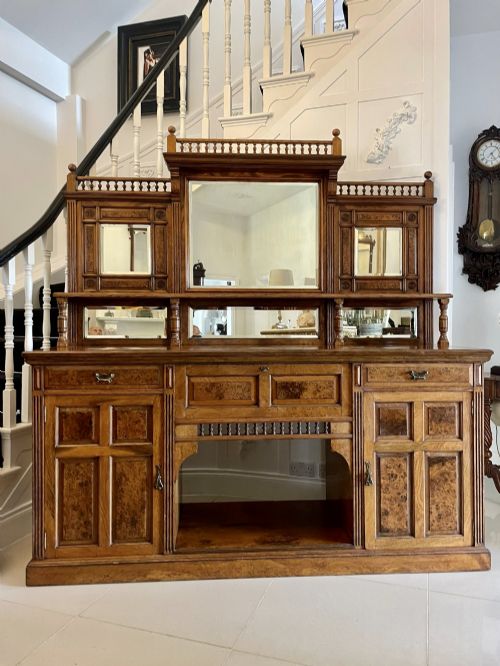
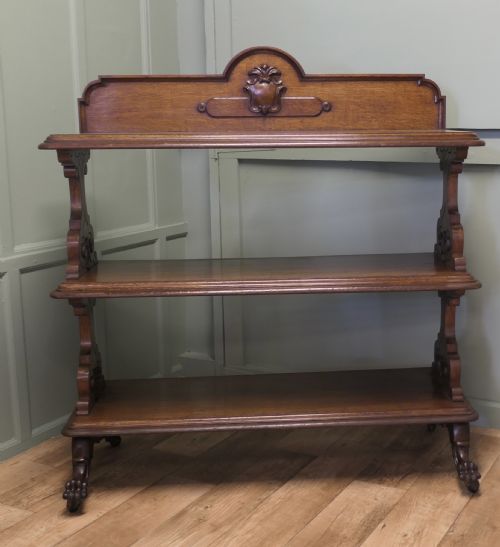
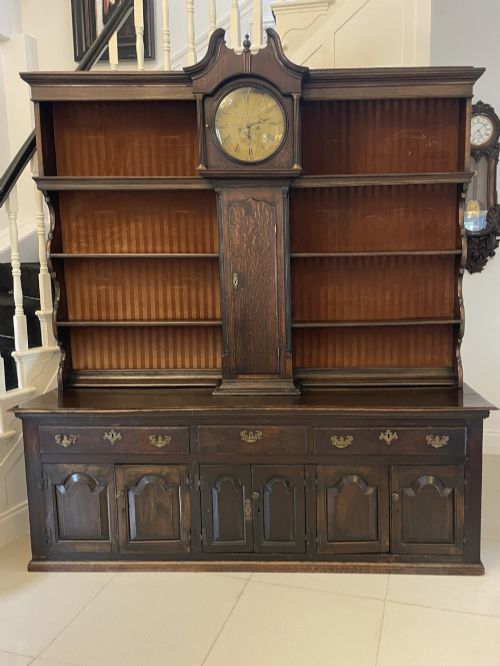
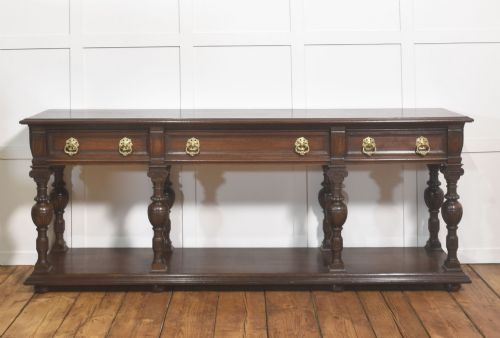
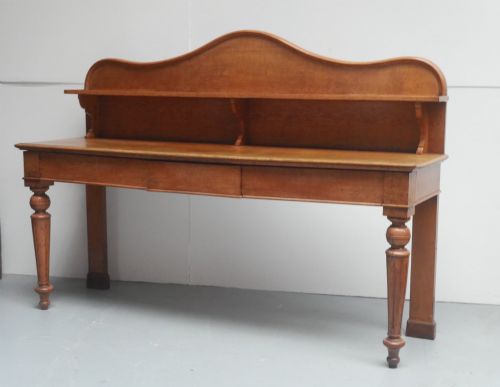
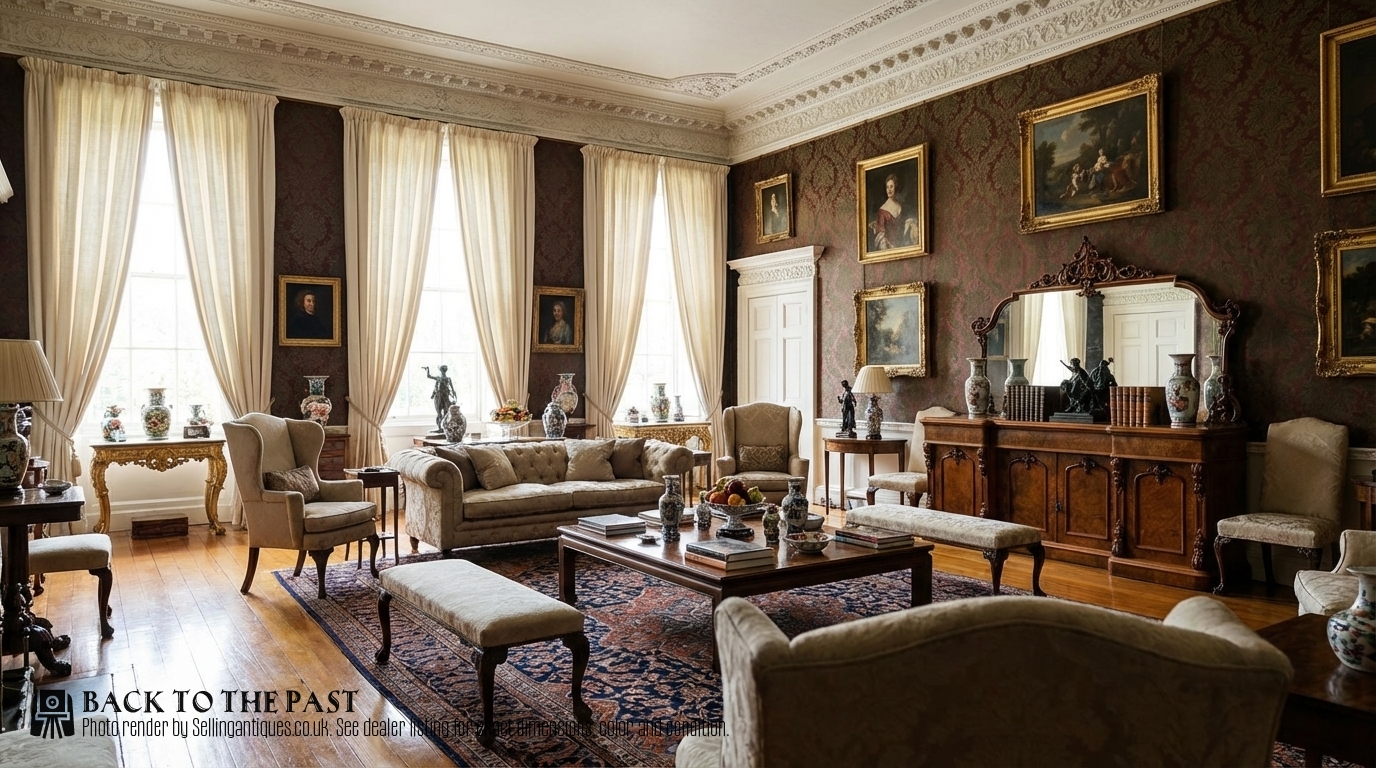
A large oak sideboard serves as a commanding storage piece for dining rooms and hallways, appearing frequently in Victorian, Edwardian, and twentieth-century iterations. Buyers searching for a large oak sideboard encounter robust forms ranging from heavy nineteenth-century mirror-back designs to monumental country house dressers and pedestal units.
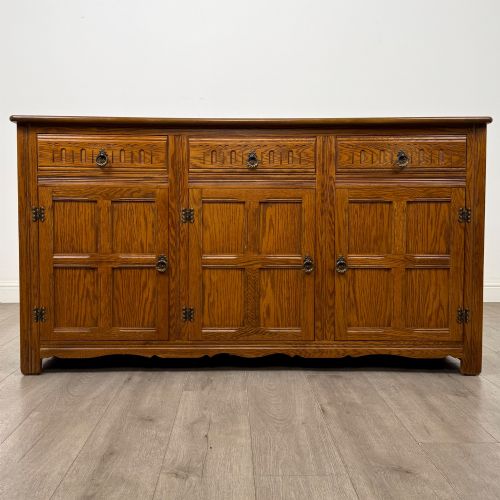
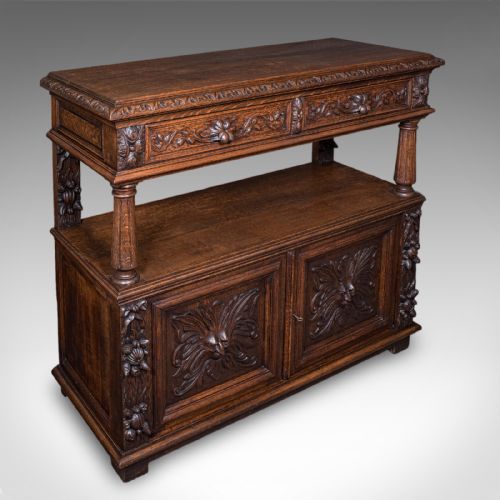
The pieces on this page span the nineteenth and twentieth centuries, incorporating styles such as Jacobean Revival and English Country alongside simpler golden oak and limed finishes. Regional variations include French buffets, Scottish buffet cabinets, and English estate hunt cabinets built from dense native timbers.
Makers and retail houses like James Schoolbred, Waring & Gillows, Edwards & Roberts, and Liberty & Co produced notable examples combining extensive cupboard space with display shelving. These forms developed from earlier mule chests and dresser bases into dedicated dining room servers.
Materials and Construction
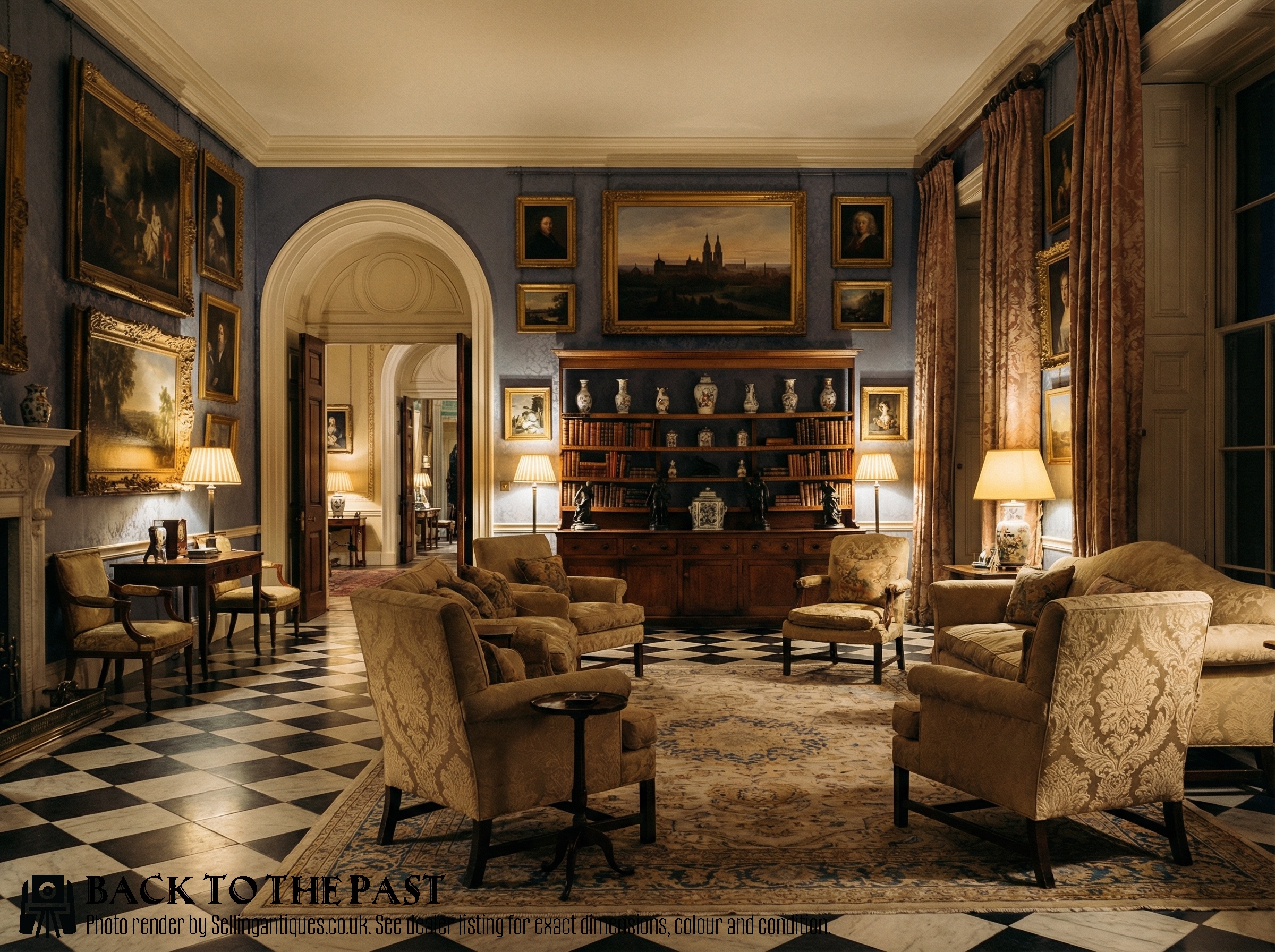
Construction relies heavily on solid oak and pollard oak, often accented with brass hardware, glass panels, and secondary timbers like elm. Workshops utilised traditional joining methods to build heavy carcasses capable of supporting carved mirror backs, plate racks, and heavy timber tops.
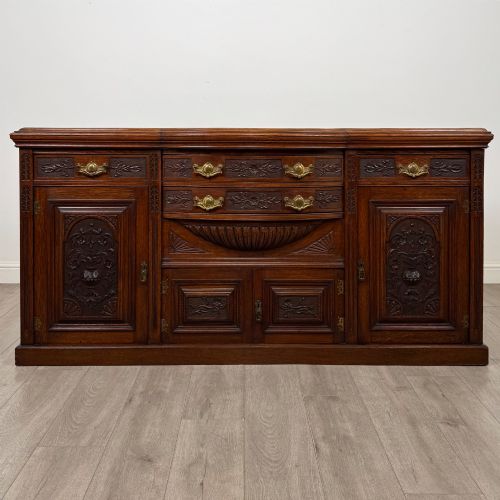
Surface ornamentation involves deep hand-carving in Gothic, Baroque, and Arts and Crafts tastes, complemented by contrasting limed or bleached finishes. Pollard oak veneers provide complex burl patterns across drawer fronts and cupboard doors on high-status examples.
Retail Price Guide 2026
Typical UK retail prices for large oak sideboard, calculated from the Sellingantiques database of over a million retail prices indexed since 2003. This retail price guide relies exclusively on Sellingantiques data; no external sources or auction records are used, so the figures do not describe the wider market.
Some nineteenth-century sideboards feature secret cellarette drawers lined in lead to keep wine cool.
Judging Quality
Quality reveals itself through the depth and crispness of the hand-carving and the selection of figured pollard oak veneers across large surface areas. Superior pieces exhibit harmonious proportions, integration of original brass fittings, and intact mirror backs with heavy bevelling.
Construction integrity distinguishes workshop-made furniture from mass production, seen in heavy panelled doors, dovetailed drawer construction, and stable timber movement across large carcasses. Maker attribution through stamps or labels further elevates specific pieces within the historical range.
Waring & Gillows·Edwards & Roberts·Liberty & Co
The Large Oak Sideboard Glossary
- Pollard oak
- Timber taken from trees that have been pollarded, producing highly figured, mottled grain patterns prized for decorative veneers. This distinctive wood appears on high-end Victorian and Arts and Crafts pieces.
- Mirror back
- An upright superstructure incorporating a plate glass mirror above the main sideboard surface, designed to reflect light and display decorative objects. These additions frequently feature carved frames and shelf tiers.
- Dresser base
- A low cabinet with drawers and cupboards originally used for food preparation and storage before evolving into the modern sideboard format. These sturdy pieces often include plate racks.
- Chiffonier
- A compact sideboard or low cabinet equipped with enclosed cupboards and sometimes a small shelf superstructure. The form gained popularity during the nineteenth century for smaller reception rooms.
- Pedestal sideboard
- A substantial sideboard configuration featuring two flanking cupboards or pedestals supporting a central surface and drawer section. This formal style draws inspiration from classical architecture.
Frequently Asked Questions
How do I clean a pollard oak sideboard?
Dust regularly with a dry, soft cloth to protect the delicate figured grain patterns from abrasive particles. Apply a quality beeswax periodically to nourish the timber and maintain a soft sheen without building up heavy residues.
Avoid placing these heavy timber items near direct heat sources or strong sunlight, which can dry out the oak and crack the veneer. Lift rather than drag the sideboard when repositioning to prevent structural stress on the joints.
Where should I place a mirror back sideboard?
Position the piece against a sturdy, load-bearing wall in a dining room, hallway, or spacious living area where the proportions balance the room. Ensure the floor level is even so the heavy carcass and detachable mirror superstructure rest securely.
Place the sideboard opposite or adjacent to a light source to let the mirror brighten the surrounding space. Leave adequate clearance around the doors and drawers for smooth daily access.
How do I distinguish Victorian oak from Edwardian oak?
Victorian examples frequently display heavy hand-carving, dark finishes, and elaborate mirror-back superstructures influenced by Gothic or Jacobean revivals. The timber is often dense and dark, reflecting formal nineteenth-century dining room aesthetics.
Edwardian pieces tend towards lighter golden oak tones, cleaner lines, and simpler Arts and Crafts or vernacular influences. Construction becomes slightly more streamlined while retaining substantial storage capacity.
What is the difference between a sideboard and a buffet?
A sideboard traditionally incorporates a combination of long drawers and lower cupboards specifically designed for storing dining linens, silver, and crockery. These units prioritize enclosed storage alongside a wide serving surface.
An antique buffet often emphasises an open serving arrangement, sometimes featuring a stepped top tier or servers designed for presenting food during large gatherings.