


Victorian Oak Buffet
When you need a victorian oak buffet, you are looking at substantial dining furniture designed for serving and display during the nineteenth century.

Victorian Oak Buffet
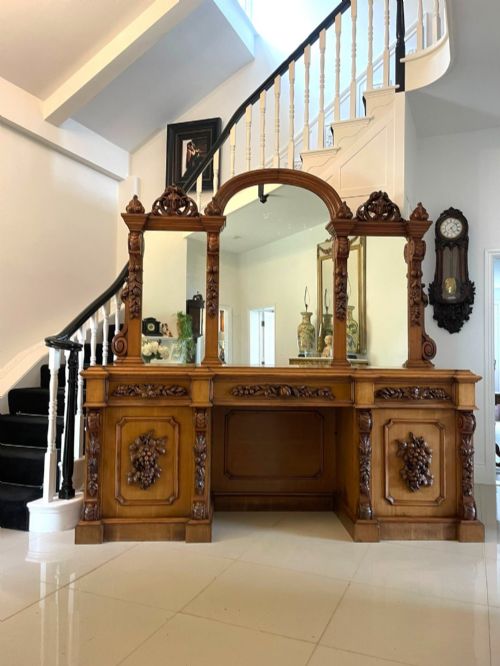
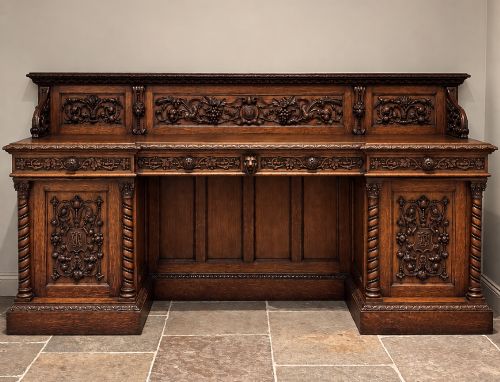
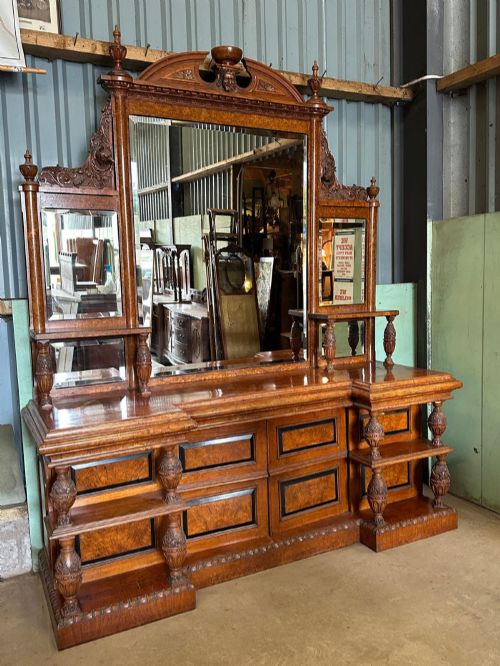
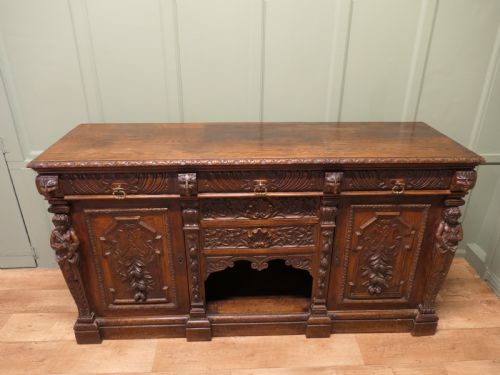
A victorian oak buffet is a heavy dining room server, cabinet or tiered stand designed for holding dishes and silverware. These pieces range from simple open serving tables to massive cupboards with mirror backs.
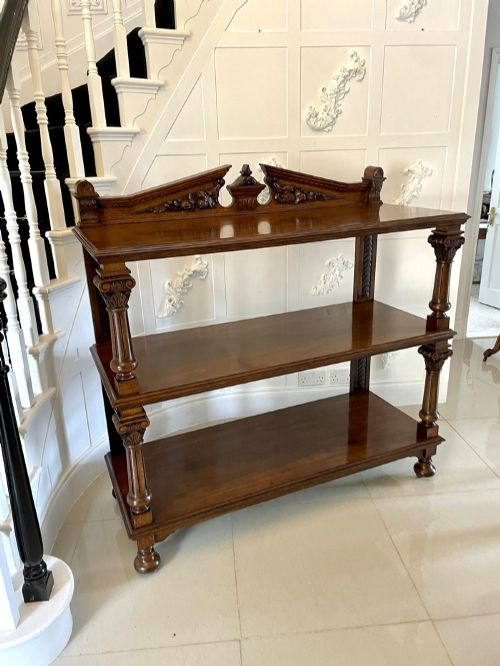
The pieces on this page span the nineteenth century, with strong representation from the eighteen-eighties. You will find forms ranging from three-tier serving trolleys to breakfront cupboards and dresser bases.
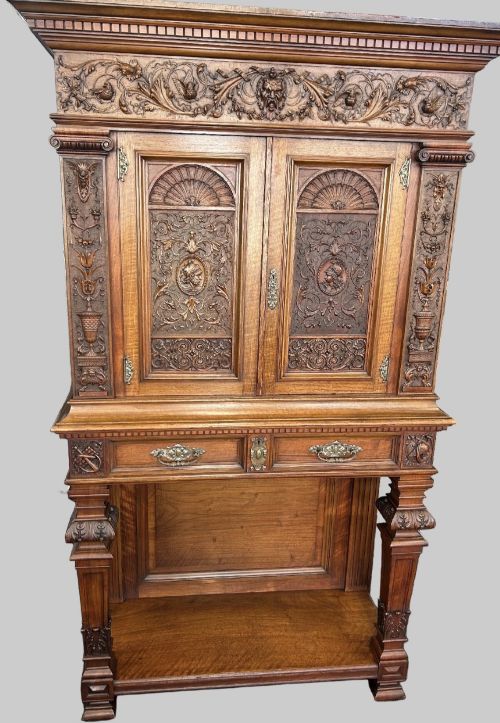
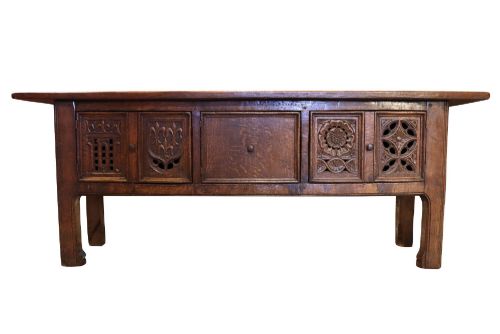
Makers utilised dense native and figured timbers, shaping them into forms influenced by Gothic Revival and Renaissance Revival tastes. Scottish and English workshops produced many of the larger server designs found in the records.
How they were made
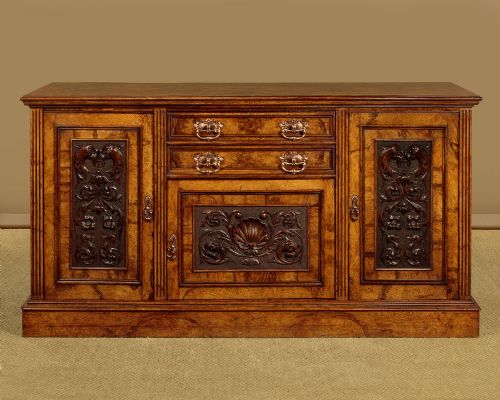
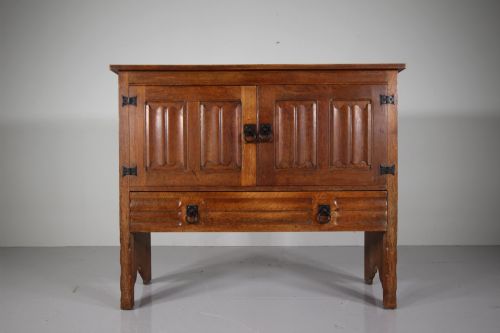
Makers built these pieces primarily using solid oak and pollard oak, often accented with brass hardware, iron fittings, and mirrored glass panels. The timber was selected for strength and distinctive grain pattern.
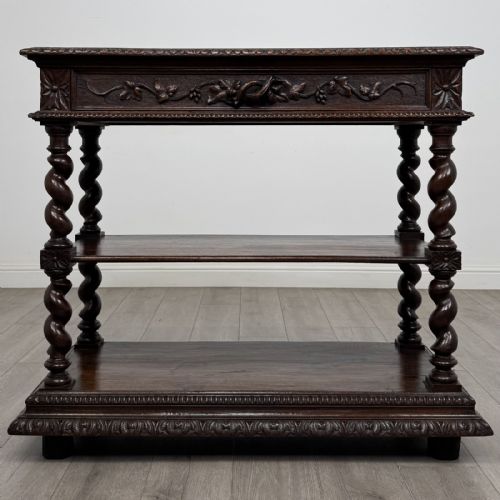
Joinery techniques included heavy carving, panel construction, and turned columns such as barley twist supports. Surfaces were finished to highlight the natural golden or deep brown tones of the wood.
Victorian Oak Buffet Retail Price Guide 2026
Typical asking prices for victorian oak buffet among the pieces listed under this phrase on Sellingantiques today, from the lower quarter to the upper quarter. They describe what is for sale here now, not the wider market.
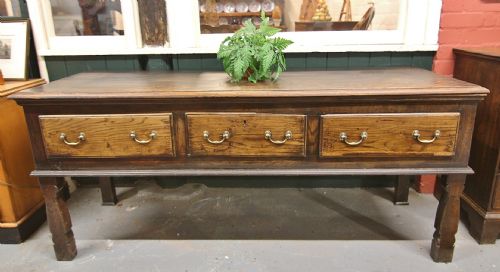
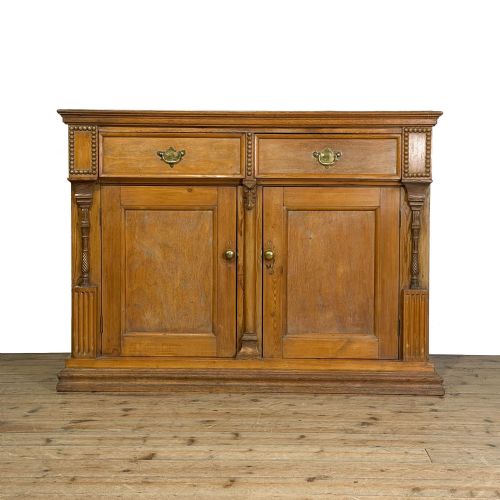
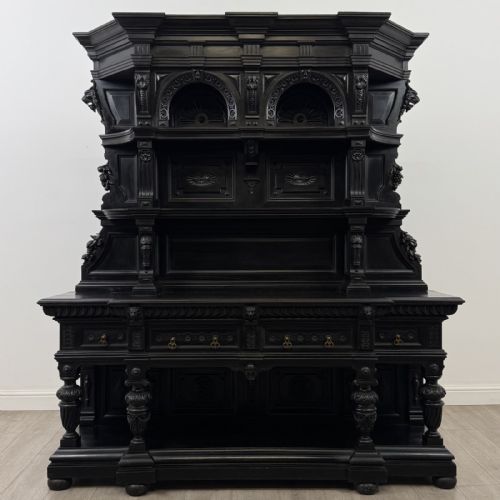
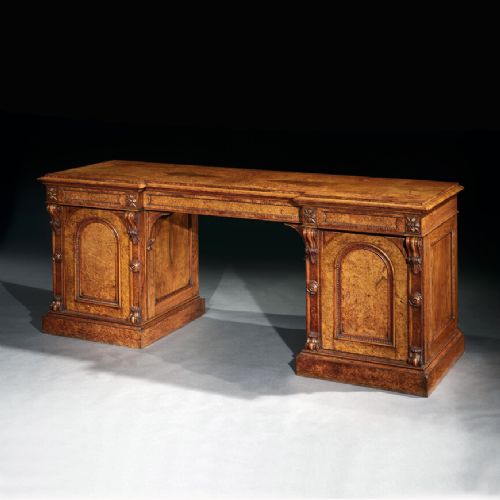
Forms include three-tier serving tables, dresser bases with pot boards, breakfront cabinets, and mirror back sideboards.
What varies in quality
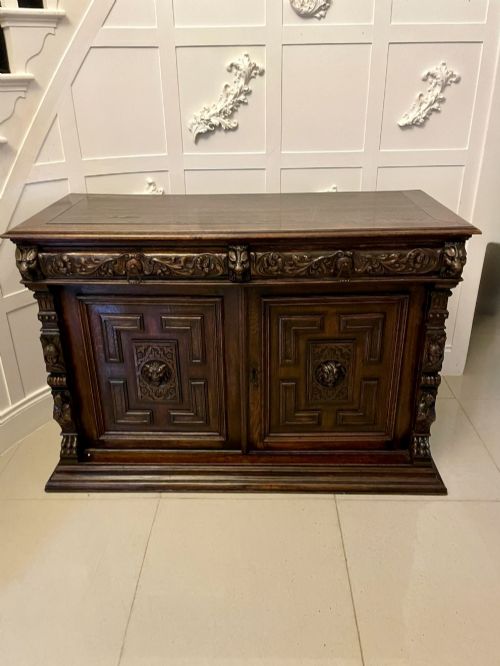
Quality rests on the selection of timber, particularly figured pollard oak, and the depth of the carving. Superior examples display crisp hand-chiselled details such as Green Man masks and lion motifs rather than shallow stamping.
Proportion and architectural presence separate ordinary items from exceptional ones. Pieces with balanced breakfront lines, original brass hardware, and integrated tiered shelving command greater attention.
The Victorian Oak Buffet Glossary
- Pollard oak
- Timber taken from trees that were pollarded, resulting in a highly figured, mottled grain pattern prized by nineteenth-century cabinet makers.
- Dumbwaiter
- A multi-tiered serving table or stand used in dining rooms for holding dishes without the need for constant servant attendance.
- Breakfront
- A cabinet or sideboard whose central section projects forward from the flanking sections.
- Gothic Revival
- A nineteenth-century design style drawing inspiration from medieval architecture, featuring pointed arches, tracery, and heavy carved details.
- Green Man
- A decorative architectural motif representing a human face engrafted with leaves, vines, or branches, frequently found on nineteenth-century carved oak.
Victorian Oak Buffet: Frequently Asked Questions
What is a victorian oak buffet used for?
These pieces served as dining room side tables for presenting food, holding glassware, and storing serving dishes during large meals.
Today, they function as practical sideboards in dining rooms, hallways, or living spaces for both display and storage.
How do I identify a gothic revival buffet?
Gothic Revival pieces display architectural elements such as pointed arches, tracery, linenfold panels, and heavy carved motifs.
They often incorporate dark oak finishes and robust proportions that reflect medieval design influences.
What is pollard oak?
Pollard oak is a decorative timber harvested from trees whose branches were cut back to promote a dense, cluster-like branching habit.
This pruning creates a swirling, highly figured grain pattern that was particularly fashionable on mid-nineteenth-century sideboards.
Are these buffets heavy?
Yes, these items are constructed from solid oak and often feature multiple tiers, heavy doors, and mirrored backs.
Their substantial weight requires careful placement and adequate floor support in modern homes.