
Victorian Carved Dresser
A victorian carved dresser brings heavy timber, deep relief work, and practical storage together in one imposing frame.
Victorian Carved Dresser
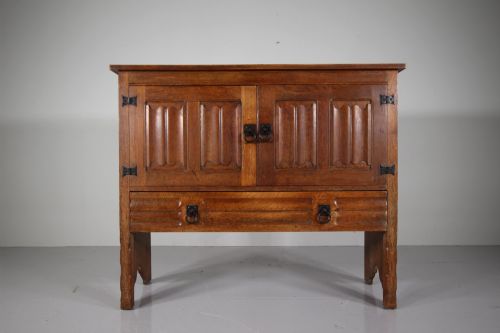
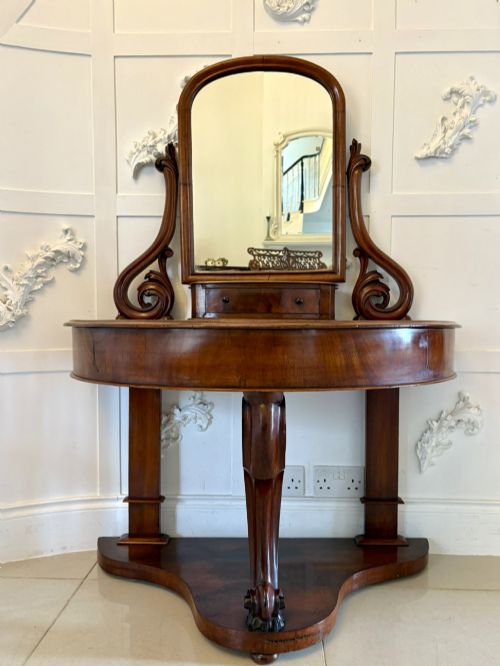
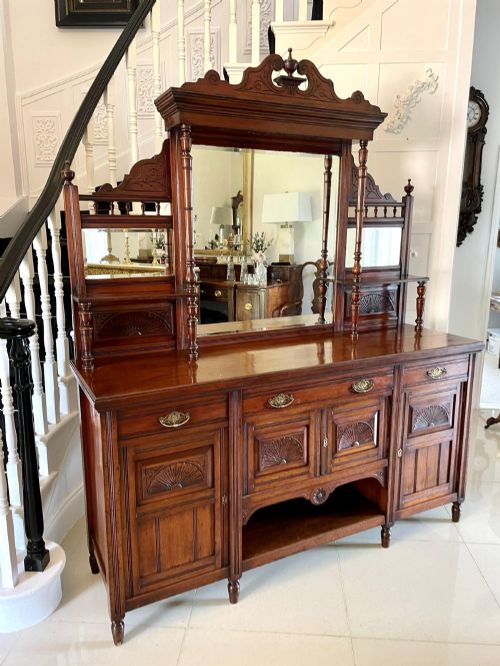
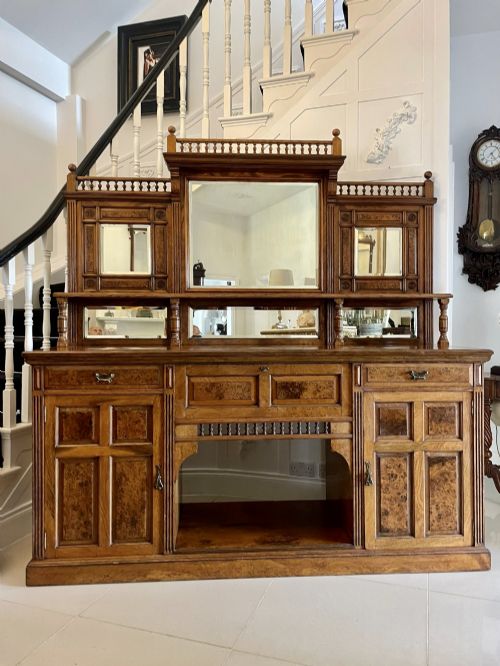
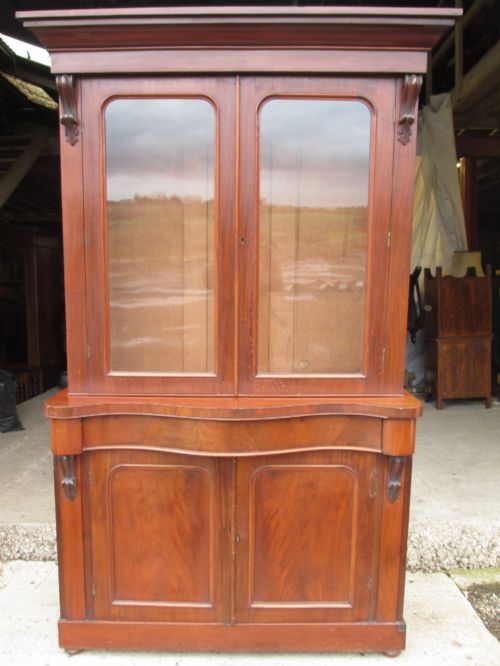
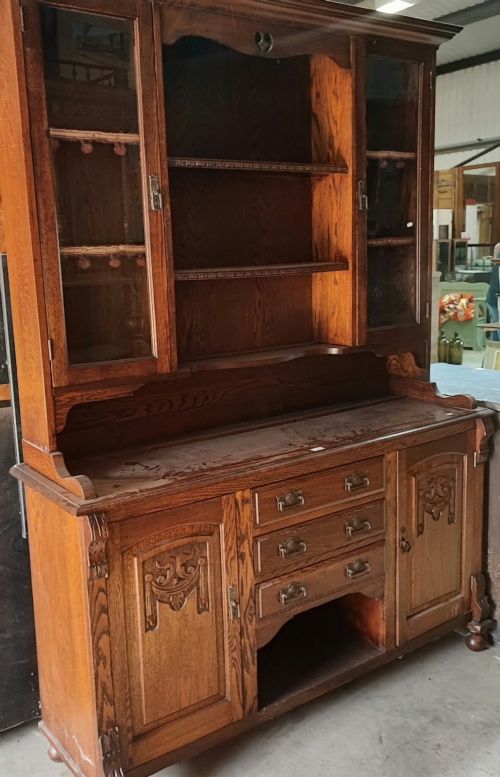
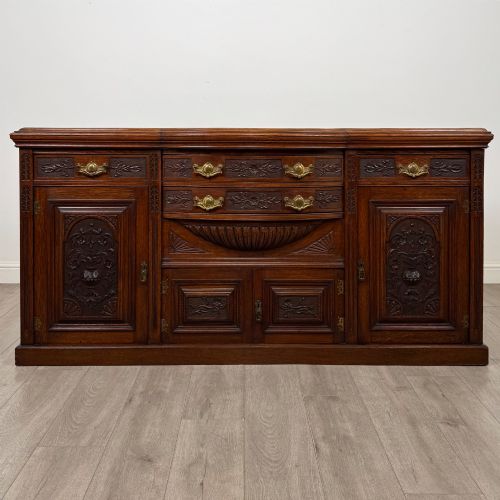
A victorian carved dresser spans massive mirror-backed sideboards, kitchen dresser bases, and glazed display cabinets created during the nineteenth century. These forms reflect a period of immense industrial output matched by a revival of historical woodworking styles.
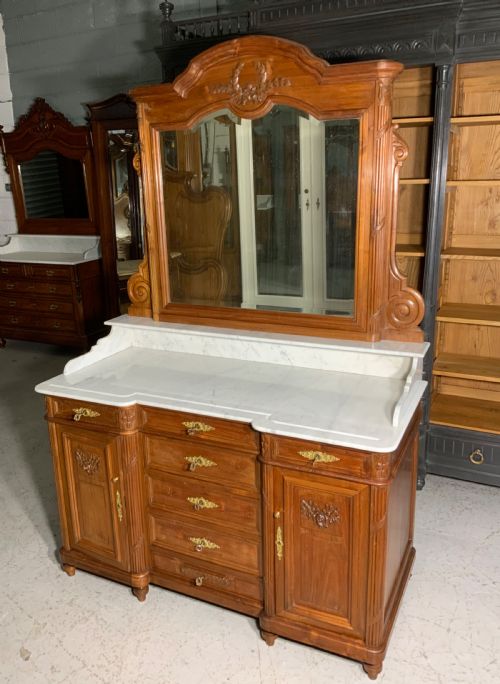
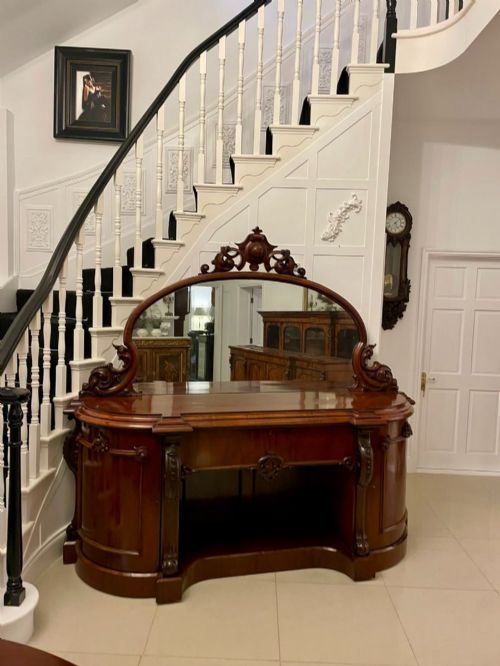
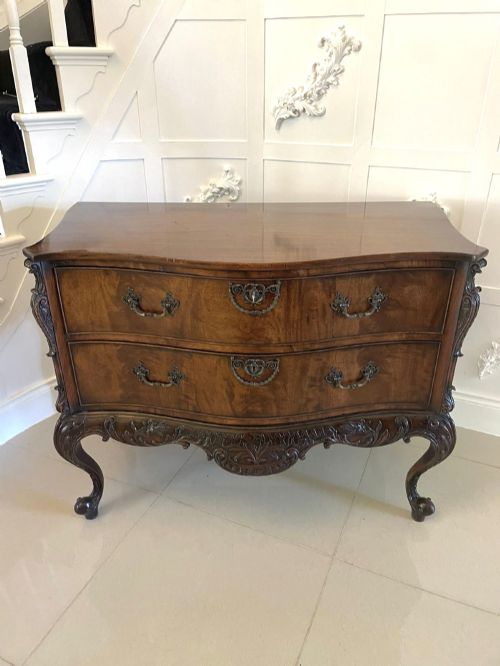
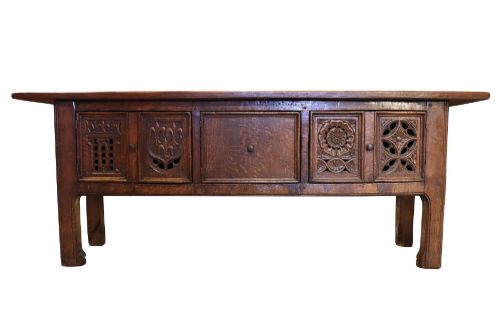
Oak dominates the vernacular and Gothic revival pieces, while mahogany and walnut shape the more formal mirror-backed sideboards and chests. The search phrase captures both rural Welsh cupboards and heavily ornamented urban dining room furniture.
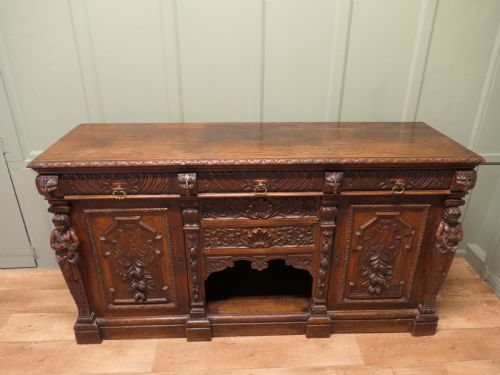
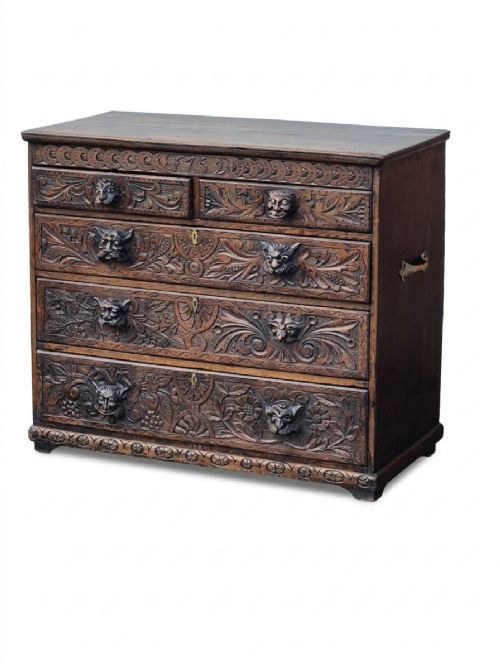
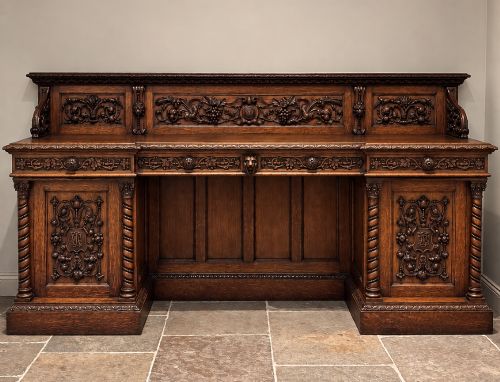
The heavy decoration draws on Gothic, Renaissance, and Jacobean revivals, often incorporating green man masks, lions, and intricate foliate carving. Buyers encounter everything from compact cottage dresser bases to grand, towering structures fitted with display shelves and cupboards.
How they were made
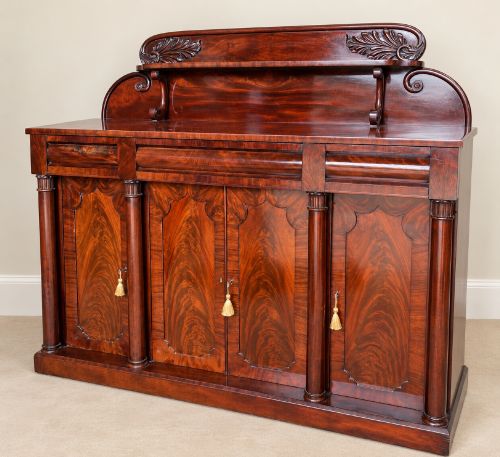
Cabinet makers built these pieces using solid oak, pine, walnut, and mahogany, frequently applying flame mahogany veneers to drawer fronts for dramatic grain patterns. Structural carcases relied on sturdy dovetail joints for drawers and mortise and tenon framing for doors and panels.
Hand carving brought the timber to life through deep relief work, moulding, and applied turnings in styles ranging from Gothic revival to English country vernacular. Brass hardware, stained glass panels, and mirror glass inserts completed the assembly of the larger sideboard and bookcase variants.
Watch for small dog finials keeping guard over jewellery caskets.
What varies in quality
The depth and crispness of the hand carving separate mass-produced factory work from master craftsmanship, as does the selection of figured timber veneers like flame mahogany and pollard oak. Balance in proportion and the integration of large mirror backs or plate racks dictate the visual success of the piece.
Construction integrity shows in the survival of original brass handles, functioning locks, and stable joints across heavy timber carcases. Pieces retaining their original patinated wax finish hold greater integrity than those stripped or overly restored.
Christopher Dresser
The Victorian Carved Dresser Glossary
- Green Man
- A sculptural motif of a human face emerging from or entwined with foliage. It symbolises rebirth and appears frequently in nineteenth-century Gothic revival carving.
- Mirror Back
- A tall wooden superstructure fitted with a large bevelled mirror plate and display shelves. This feature sits atop sideboard bases to reflect light and display ceramics.
- Welsh Dresser
- A traditional kitchen storage unit combining lower cupboards or drawers with upper open plate racks. Pine and oak serve as the primary timbers for these vernacular forms.
- Dog Kennel
- A central open recess positioned beneath the drawers of a dresser base, flanked by cupboards. The space originally housed hunting dogs or served as storage.
- Flame Mahogany
- A veneer sliced from timber where the branch joins the main trunk, creating a flamed, flickering grain pattern. Cabinet makers reserved this expensive material for prominent drawer fronts.
Victorian Carved Dresser: Frequently Asked Questions
What is a green man carving?
A green man carving depicts a human face surrounded by or sprouting leaves, vines, and branches. It represents ancient agricultural myths of rebirth and spring.
Victorian craftsmen revived the motif extensively on heavy oak furniture, particularly on sideboard doors and dresser cornices. Its presence adds a distinct folkloric character to nineteenth-century woodwork.
Where should I place a heavy sideboard?
A heavy sideboard requires a sturdy wall and solid flooring to support its substantial timber frame and mirror back. Dining rooms and large open hallways provide the scale necessary to balance their visual weight.
Keep these items away from direct heat sources and strong sunlight to protect solid timber panels and wood veneers from splitting or fading. Proper placement ensures the piece remains a stable and functional focal point.
How do I care for antique oak?
Antique oak benefits from occasional applications of traditional beeswax to nourish the timber and maintain a soft, protective sheen. Avoid silicone-based sprays, which build up over time and attract dust.
Maintain a stable room temperature and moderate humidity to prevent the massive oak boards from shrinking or cracking. Gentle dusting with a dry lint-free cloth preserves the natural patina built over generations.