
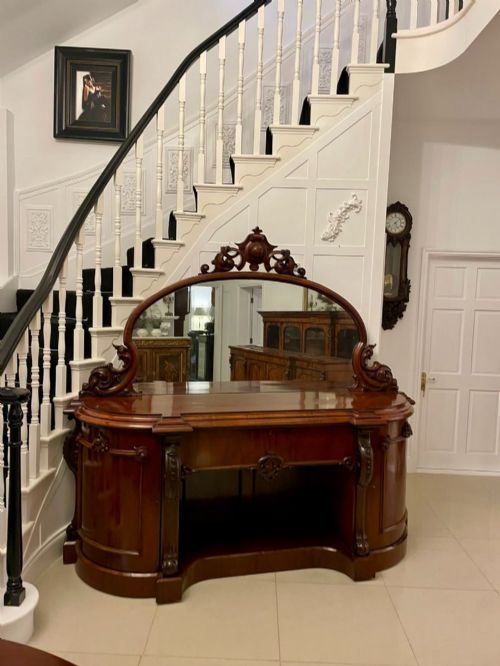
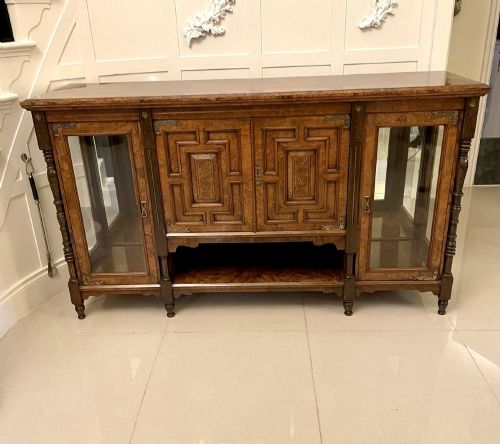
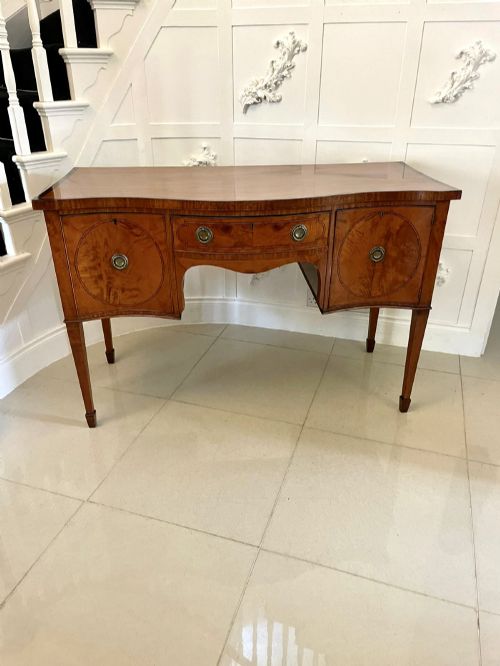
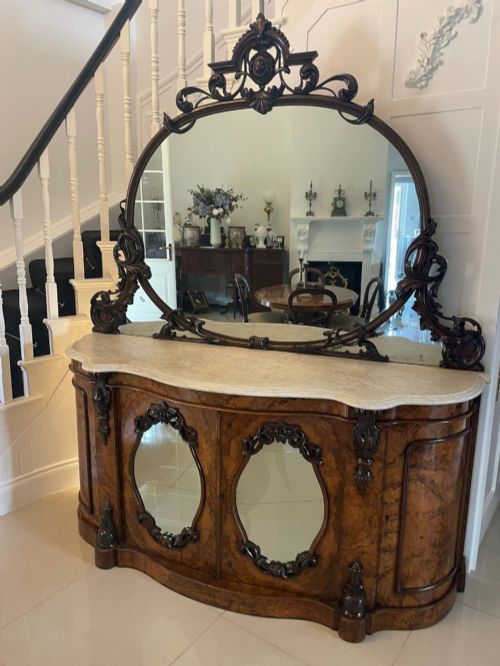
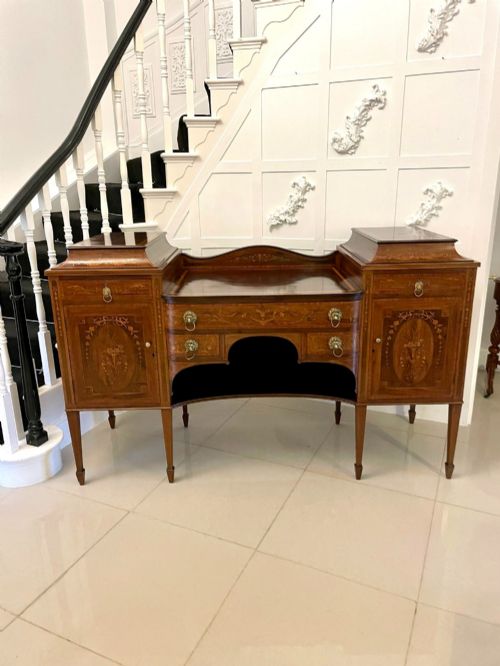
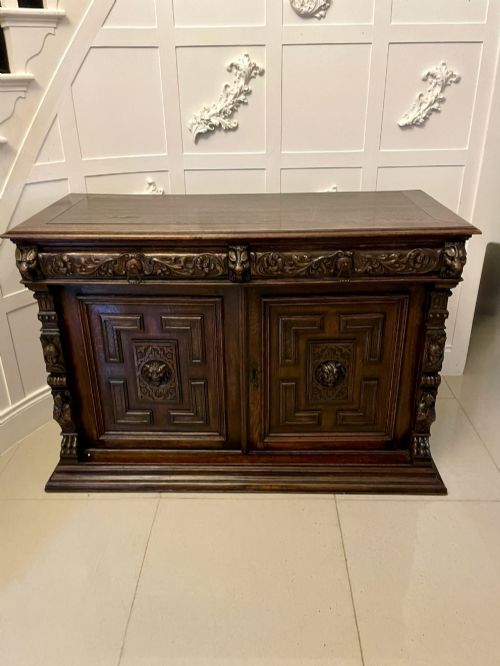
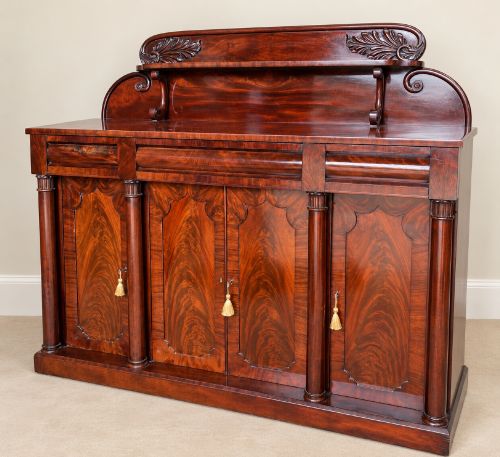
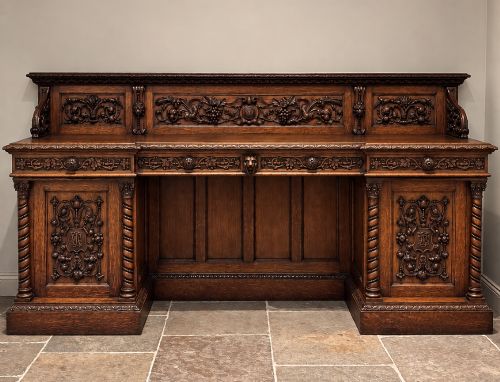
Victorian Dining Cabinet
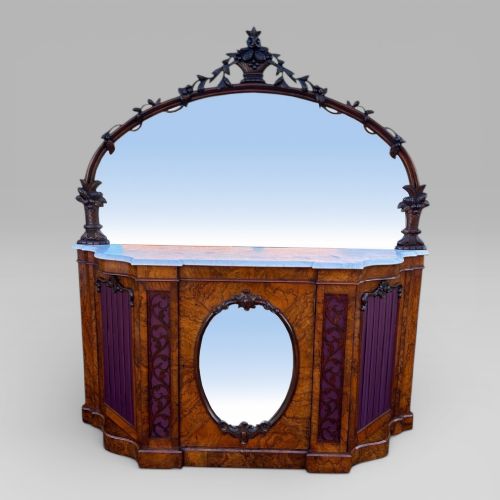
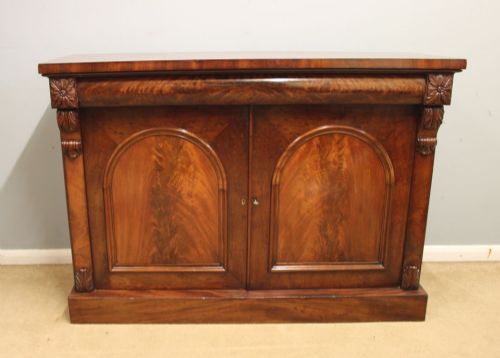
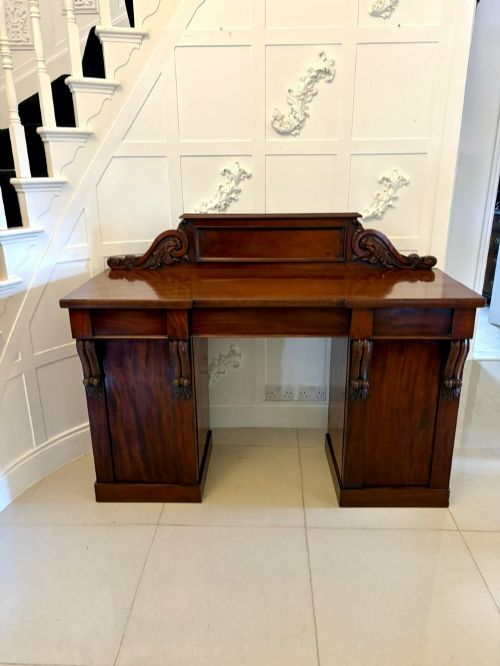
A victorian dining cabinet organises the formal dining room, combining deep timbers and generous storage to hold silver, linen, and service wares.
Victorian Dining Cabinet
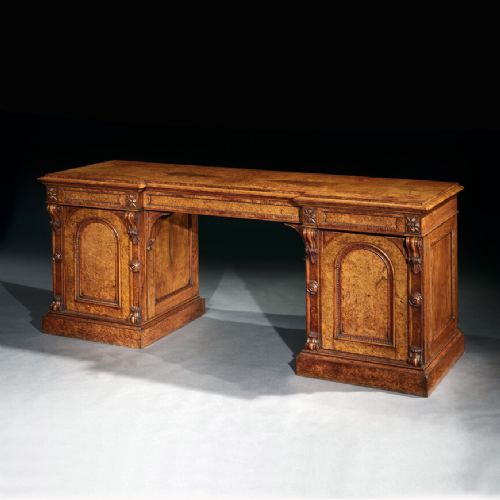
A victorian dining cabinet encompasses large sideboards, credenzas, buffets, and chiffoniers originating across the nineteenth century. These foundational dining room pieces emerged from various revival movements, including Renaissance, Gothic, and Jacobean tastes, alongside classic Victorian design.
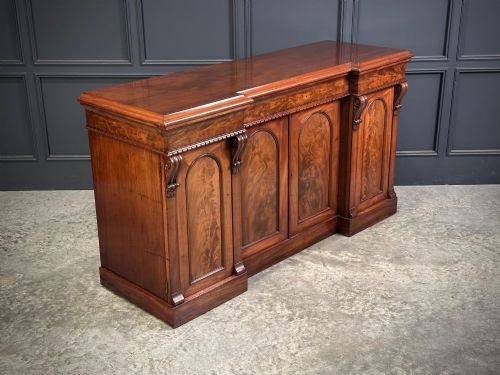
Mahogany and oak dominate the listings, frequently shaped into breakfront forms or fitted with mirrored backs. Lower cupboards and tiered shelving provide the primary storage volumes expected in period dining spaces.
Makers utilised dense fruitwoods and exotic veneers to elevate the presence of these substantial cabinets within the domestic interior. Surviving examples reflect the shifting dining habits of the period, moving from simple server cabinets to elaborate architectural credenzas.
Materials and Construction
Cabinet makers built these pieces using solid timbers like mahogany, oak, and rosewood, often applying flame mahogany or burr walnut veneers to primary surfaces. Marquetry inlay and carved details accentuate the structural grain of the wood.
Heavy marble tops appear on select credenzas and sideboards, paired with brass hardware and bevelled glass mirror plates. Joinery techniques include hand-cut dovetails for drawers and framed panel construction for cupboard doors.
Several dining cabinets include secret fitted compartments specifically designed for hiding the family silver from sticky-fingered domestic staff.
Judging Quality
The standard of a victorian dining cabinet depends on the selection of figured timber veneers and the depth of hand-carved ornamentation. Finer examples display continuous grain matching across drawer fronts and doors.
Structural integrity relies on seasoned hardwoods that resist warping, alongside substantial brass mountings and original mirrored glass. Secondary timbers inside drawers and back panels indicate the overall level of workshop execution.
Hewetsons London
The Victorian Dining Cabinet Glossary
- Credenza
- A low cabinet for the dining room, frequently featuring mirrored glass doors and intricate marquetry. These pieces often incorporate marble tops and side display compartments.
- Chiffonier
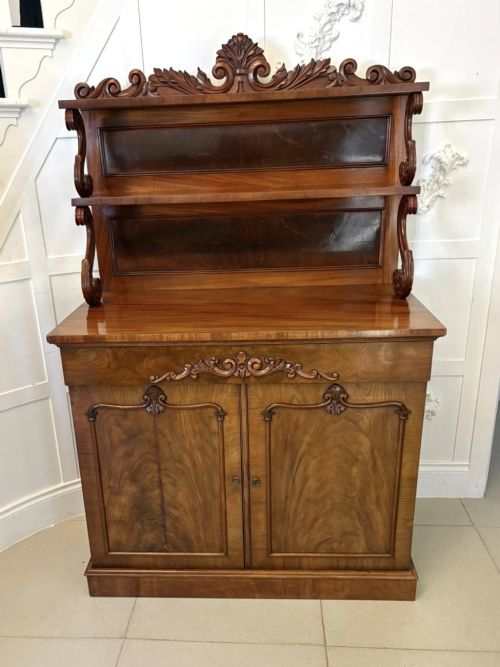
- A compact sideboard variant featuring lower cupboards and one or more upper display shelves. They provide practical storage in more confined dining spaces.
- Breakfront
- A piece of furniture where the central section projects forward from the flanking outer sections. This arrangement creates visual depth and varied internal cabinet proportions.
- Marquetry
- The art of applying thin slices of decorative wood veneer to form geometric or floral patterns. Craftsmen arranged contrasting timbers to create detailed surface designs.
- Pollard Oak
- Oak timber taken from trees pruned close to the trunk, producing dense clusters of knots and swirling grain patterns. Cabinet makers prized this figured wood for statement doors and panels.
Victorian Dining Cabinet: Frequently Asked Questions
What is a victorian dining cabinet used for?
These pieces served primarily to store heavy dining silver, porcelain, table linen, and bottled spirits. The upper surfaces and mirror backs provided a display area for decorative items during formal meals.
Today, they function as practical storage credenzas and sideboards in contemporary dining rooms or living spaces. Their deep cupboards accommodate modern tableware while maintaining period character.
How do I distinguish a sideboard from a chiffonier?
Sideboards are typically larger, heavier pieces designed for main dining rooms, featuring extensive lower cabinetry and optional mirror backs. They offer substantial capacity for service ware and bulk storage.
Chiffoniers are smaller variations that include one or more upper display tiers or shelves above the main surface. They suit tighter spatial layouts while retaining enclosed storage below.
What woods were used in these cabinets?
Mahogany and oak form the structural core of most pieces, supplemented by walnut, rosewood, and satinwood. Cabinet makers selected these durable hardwoods to support heavy loads and complex carved details.
Burr walnut and flame mahogany veneers provided decorative grain patterns on prominent exterior surfaces. Secondary timbers like pine or oak appear inside drawer linings and back panels.
How do I identify different revival styles?
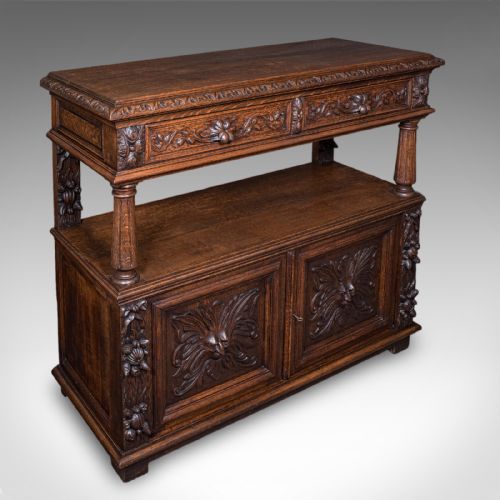
Gothic revival pieces feature pointed arches, heavy linenfold panels, and sombre oak timbers. Renaissance and Jacobean revival styles display bold architectural carvings, turned columns, and strapwork.
Sheraton and Regency influences appear in lighter satinwood veneers, subtle inlay work, and curved serpentine fronts. Each revival style reflects nineteenth-century interpretations of earlier historical eras.