

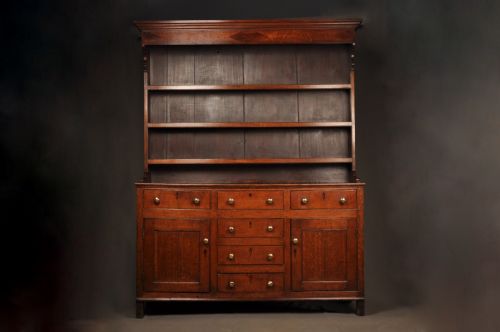


Carved Oak Display Sideboard
These carved oak display sideboards and related dressers bring solid timber storage and glazed display space together for everyday living.
Carved Oak Display Sideboard
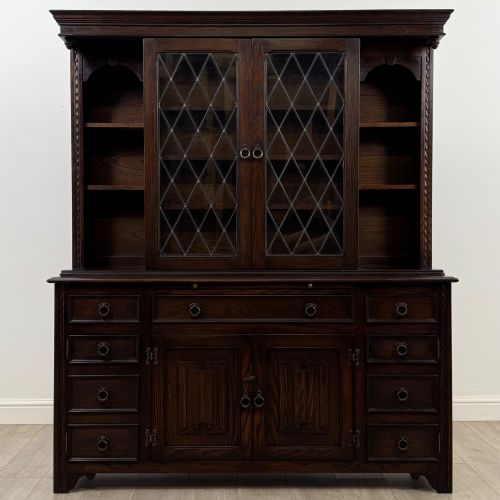
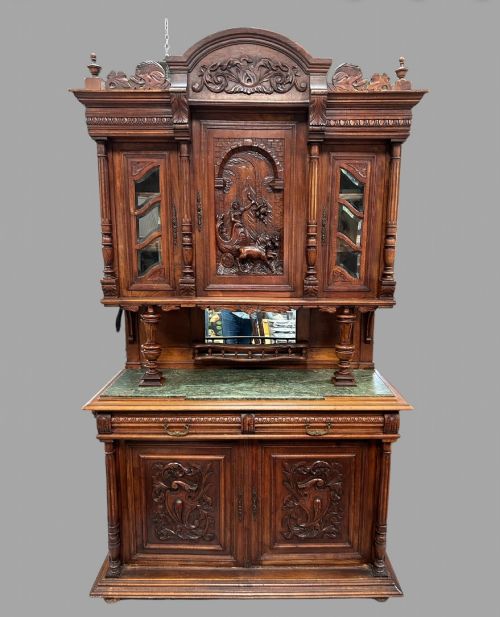
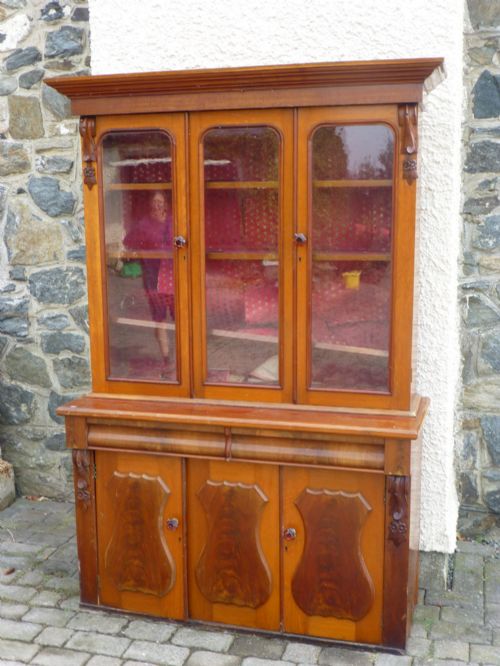
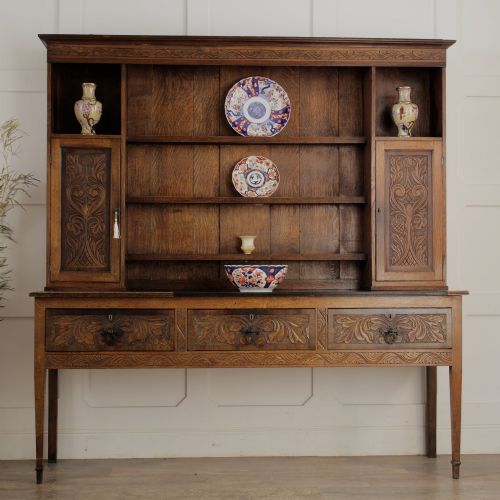
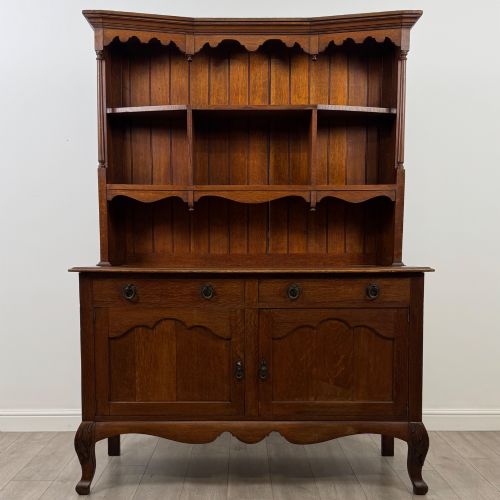
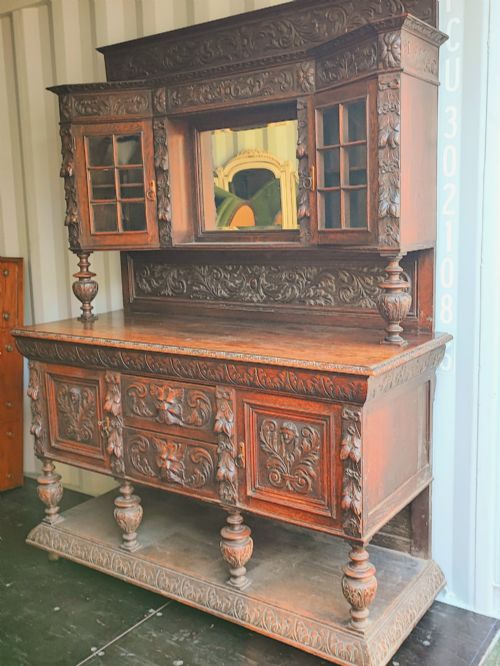
A carved oak display sideboard combines heavy timber storage with upper display shelving or glazed cabinet doors, serving as a prominent functional piece in dining rooms and kitchens. When searching for this form, buyers encounter substantial pieces originating primarily from the eighteenth, nineteenth, and early twentieth centuries.
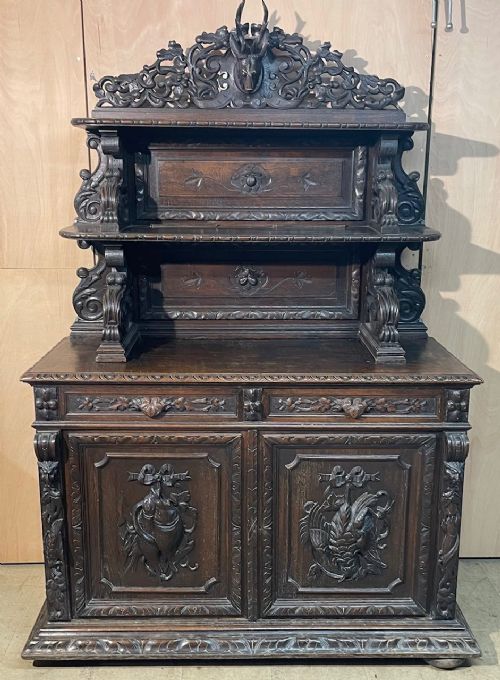
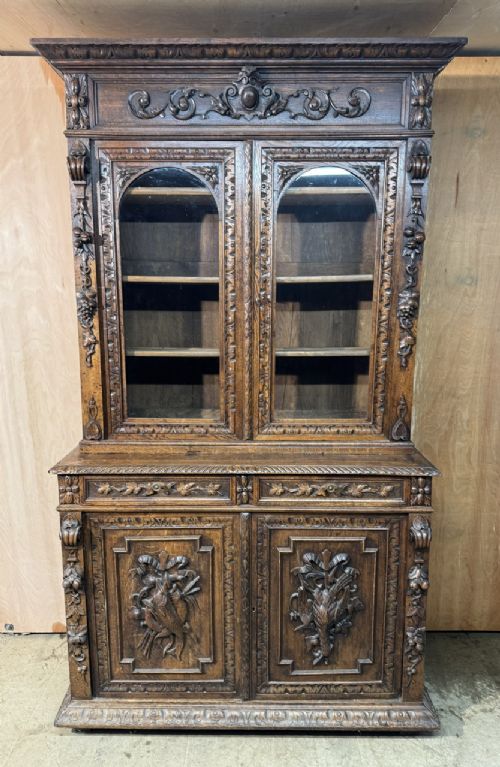
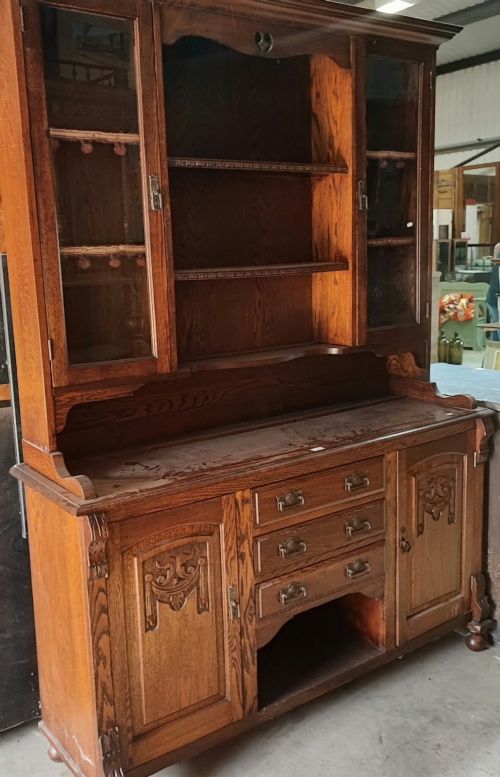
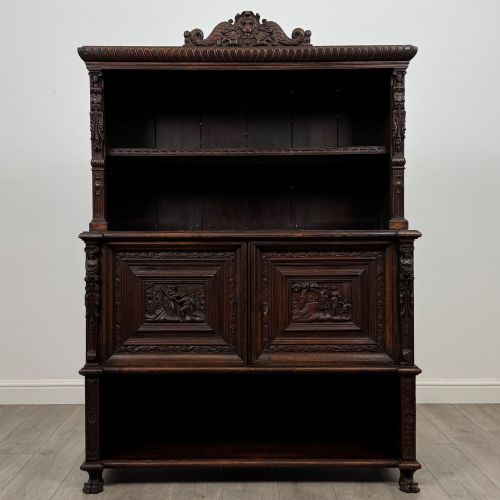
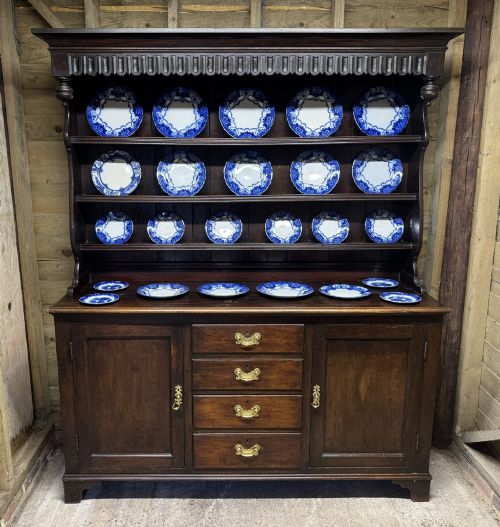
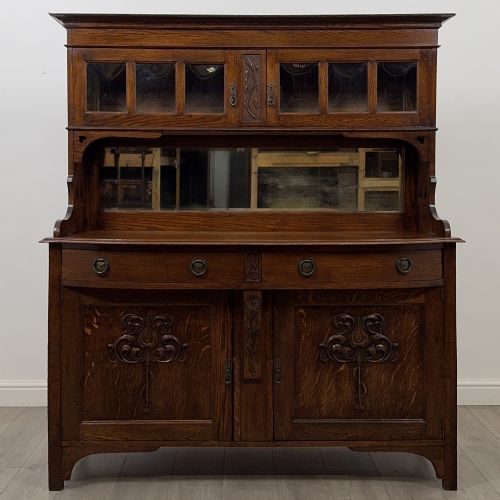
The selection ranges from vernacular country cottage dressers to elaborate Gothic Revival and Jacobean Revival sideboards, featuring carved decorations, mirrored backs, and leaded glass doors. Most examples date from the Victorian and Edwardian eras, incorporating regional variations such as Welsh dressers and French provincial cabinets alongside traditional English forms.
How they were made
Cabinet makers constructed these pieces predominantly using solid oak, occasionally combining mahogany or walnut elements, alongside tiger oak selections. Structural stability relied on traditional joinery, while hardware incorporates brass handles, iron fittings, and internal mirror plates.
Glazing techniques utilise clear, stained, or leaded glass panels set into wooden doors to protect displayed ceramics and books. Carved details - ranging from geometric patterns to figurative Green Man motifs - were worked directly into the timber by hand.
The listings span from the eighteenth century through to the 1930s, featuring oak, mahogany, glass, and brass.
What varies in quality
Quality separates in these pieces through the depth and crispness of the timber carving, the selection of figured oak grain, and the integrity of the original construction. Superior examples exhibit harmonious proportions between the heavy lower cupboard base and the upper rack or display cabinet.
The presence of original hardware, intact leaded or stained glass panes, and well-fitted drawers distinguishes finer workshop productions from simpler utilitarian country furniture. Alterations to racks, bases, or handles alter the internal consistency of the piece.
John Moyr Smith·Heals of London
The Carved Oak Display Sideboard Glossary
- Welsh dresser
- A traditional regional form featuring open plate racks above a base of drawers and cupboards. These pieces were designed for domestic utility and display in farmhouse kitchens.
- Green Man
- A sculptural architectural ornament depicting a human face entwined with foliage and vines. This motif frequently appears carved onto Victorian and Gothic Revival oak furniture.
- Leadlight
- Glass panels held together with lead cames to form geometric or decorative window patterns. This technique appears on cabinet and bookcase doors across the nineteenth and early twentieth centuries.
- Bowfront
- A convex curved front section on a cabinet or set of drawers. This styling softens the heavy linear geometry typical of standard oak case pieces.
- Creedence cabinet
- A medieval-derived sideboard or cupboard traditionally used for holding food or communion vessels. Later revival pieces adapt this form into domestic storage furniture.
Carved Oak Display Sideboard: Frequently Asked Questions
How do I clean a carved oak sideboard?
Dust the surfaces regularly with a soft, dry cloth to prevent dirt accumulation in the carved recesses. Apply a traditional beeswax sparingly to nourish the timber grain.
Avoid using modern liquid polishes or silicone sprays, as these build up dull films over time. Keep the furniture away from direct heat sources to prevent the oak from splitting.
What is the difference between a dresser and a sideboard?
A dresser traditionally incorporates an open plate rack or enclosed bookcase superstructure mounted above a lower storage base of drawers and cupboards. These originated primarily for practical kitchen use and display.
A sideboard functions as a serving table or low storage unit, typically featuring a flat top surface without an upper rack. Many examples include low backsplashes or small display cabinets instead.
How can I tell a Victorian piece from an 18th century one?
Eighteenth-century country oak pieces generally display simpler hand-planed surfaces, pegged joinery, and vernacular proportions shaped by local vernacular traditions. The timber shows deeper patination and natural wear consistent with extended age.
Victorian pieces often incorporate heavier machine-assisted construction, revival styling such as Jacobean or Gothic motifs, and factory-produced hardware. Carving on nineteenth-century examples tends to be sharper and more deeply undercut.