
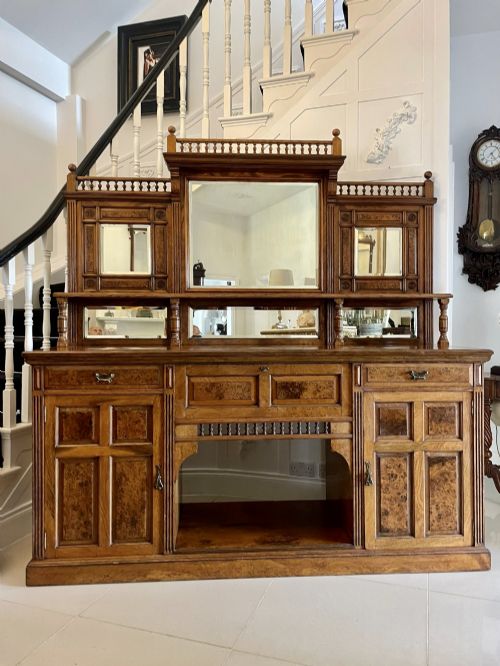
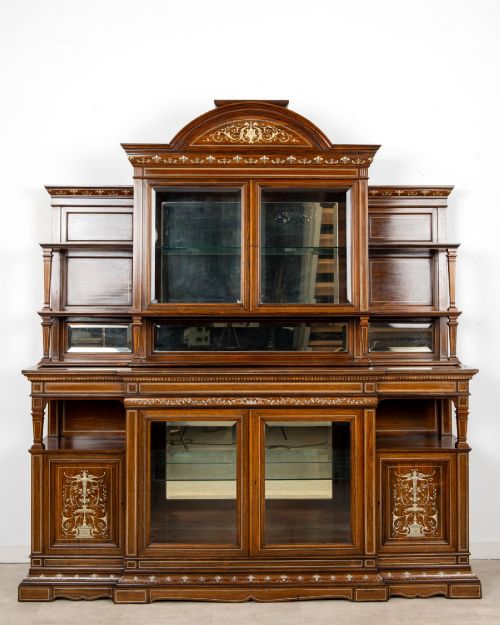
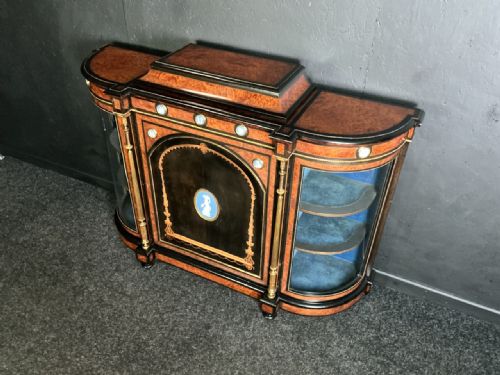
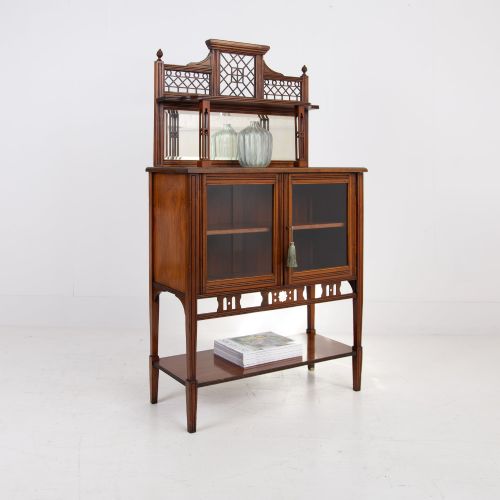
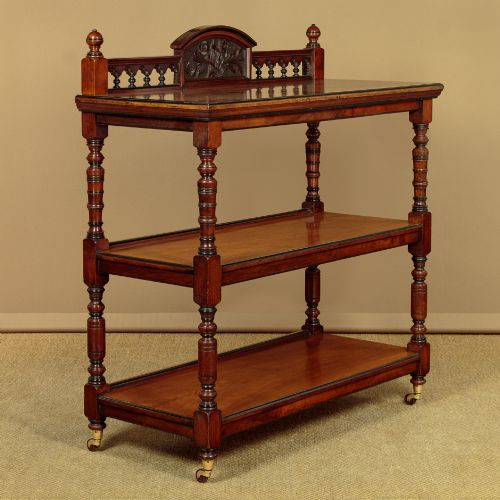
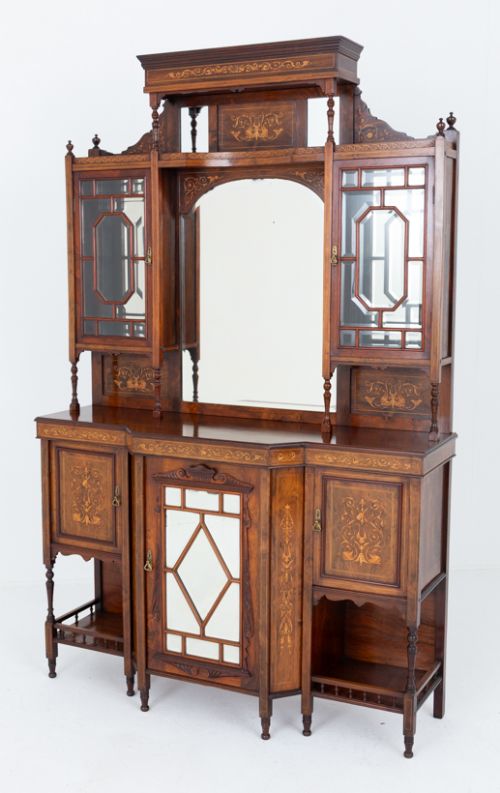


Aesthetic Movement Sideboard
These aesthetic movement sideboards bring striking nineteenth-century design and rich cabinet-making into modern interiors.
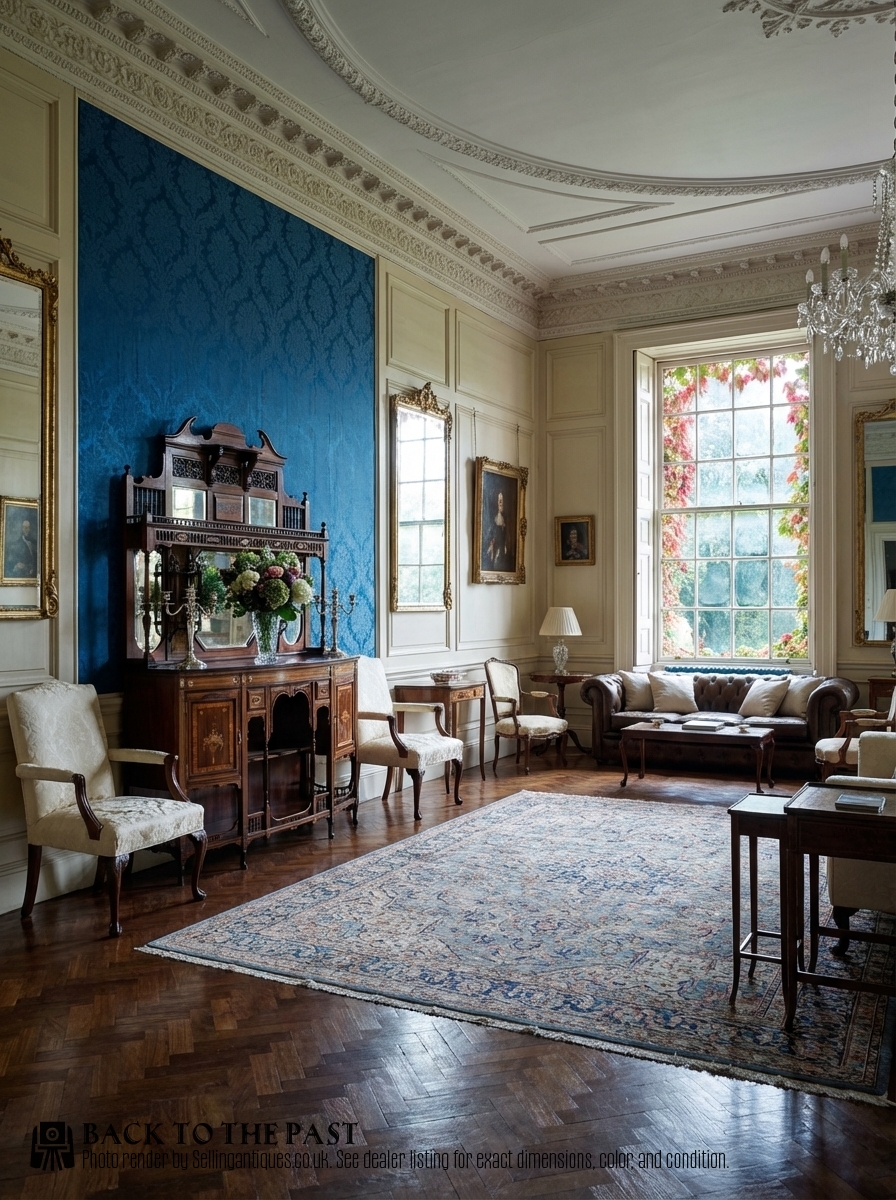
What an aesthetic movement sideboard is
An aesthetic movement sideboard combines nineteenth-century design principles with practical storage for the dining room or hall. These pieces emerge from the late Victorian period, spanning the 1870s to around 1900, reflecting a distinct shift away from heavy historical revivalism toward simpler, art-focused forms.
You will most commonly encounter sideboards, credenzas, and serving tables executed in rich woods like walnut, pollard oak, ebonised wood, and mahogany. Many examples incorporate mirror backs, glass panels, and decorative ceramic inserts such as Majolica or Minton tiles.
The aesthetic movement sideboard serves as both a functional serving surface and a display piece for decorative arts. The forms range from compact side cabinets to large mirror-back sideboards with brass mounts and gilt metal details.
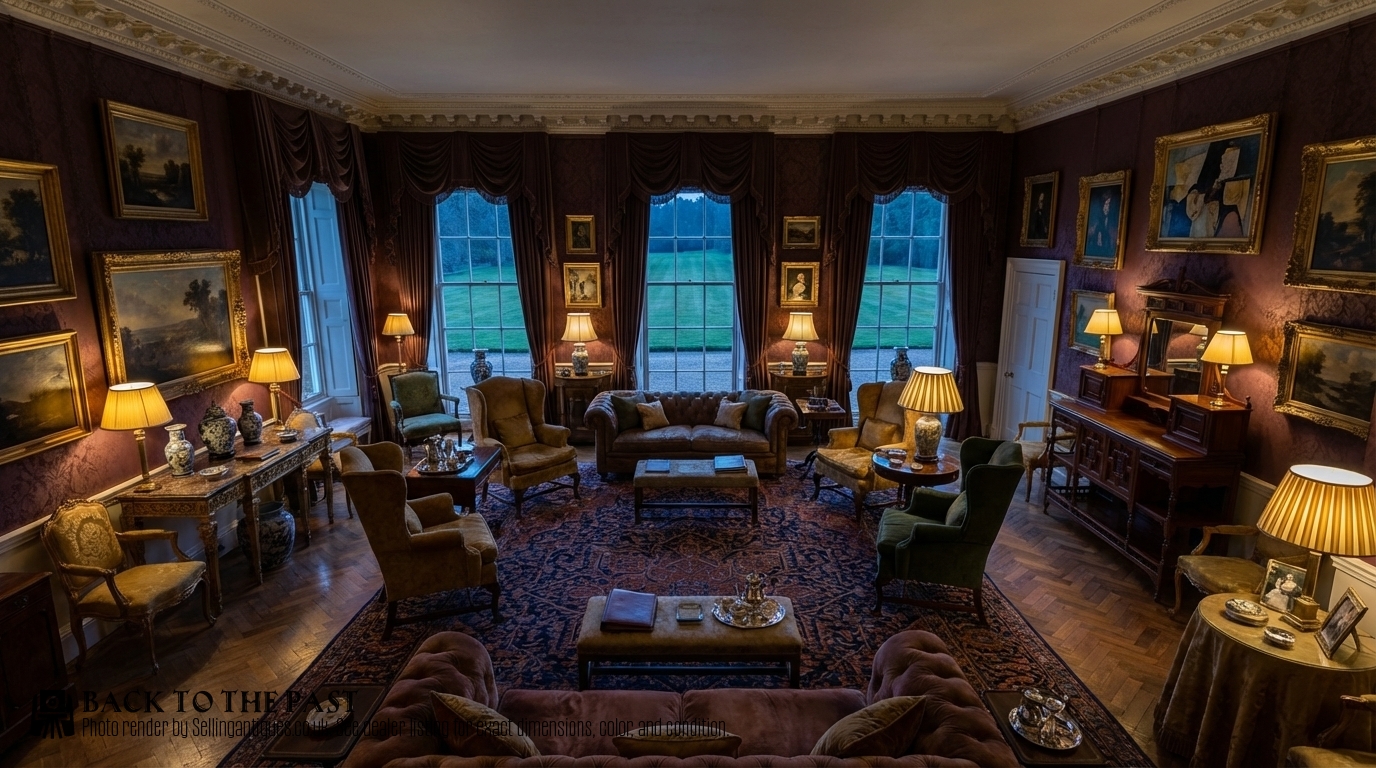
Materials and construction methods
Makers utilised a variety of dense timbers, pairing walnut, pollard oak, burr walnut, and rosewood with ebonised finishes to create sharp tonal contrasts. Surfaces frequently feature marquetry inlay and painted decoration, applying artistic motifs directly to the timber structure.
Construction often integrates brass hardware, gilt metal accents, and bevelled mirror glass within the superstructure. Specialised ceramic panels from manufacturers like Minton or Majolica were fitted into doors and splashbacks to add colour and texture.
Retail Price Guide 2026
Typical UK retail prices for aesthetic movement sideboard, calculated from the Sellingantiques database of over a million retail prices indexed since 2003. This retail price guide relies exclusively on Sellingantiques data; no external sources or auction records are used, so the figures do not describe the wider market.
Materials documented across the inventory include walnut, pollard oak, rosewood, mahogany, brass, glass, and ceramic tiles.
Understanding quality in these pieces
The distinction between standard production and top-tier work lies in the choice of timber and the precision of decorative details. Finer examples display carefully selected pollard oak or burr walnut veneers alongside intricate marquetry and hand-painted panels.
Execution of secondary materials also dictates quality, separating simple ebonised pine carcasses from substantial hardwood frames fitted with original brass hardware, bevelled mirrors, and intact ceramic tiles.
Collinson and Lock·Stephen Webb·Gillows
The Aesthetic Movement Sideboard Glossary
- Ebonised wood
- Timber treated to resemble ebony, a technique widely utilised in nineteenth-century cabinet-making to create a stark black finish that highlights gilt and ceramic accents.
- Marquetry
- The art of applying small pieces of veneer to a structure to form decorative patterns, frequently seen in floral and geometric motifs across these surfaces.
- Credenza
- A dining room storage form without legs, sitting low to the floor with cupboards and display space, often overlapping in function with the sideboard.
- Pollard oak
- Timber taken from trees that have been pollarded, producing a dense, highly figured grain pattern prized for its ornamental appearance.
- Majolica
- A type of tin-glazed earthenware pottery, frequently incorporated as decorative panels within nineteenth-century furniture doors.
Frequently Asked Questions
What defines an aesthetic movement sideboard?
These pieces combine nineteenth-century craftsmanship with artistic design, featuring dark or ebonised woods, contrasting veneers, and decorative elements like tiles and mirrors.
They reject heavy Victorian ornamentation in favour of cleaner lines and a focus on decorative arts.
How were these sideboards used originally?
Dining rooms relied on these cabinets to store silverware, linen, and serving dishes while displaying fine ceramics on top.
Mirror-back versions also helped to reflect candlelight and brighten dark nineteenth-century dining spaces.
How do I date a nineteenth-century sideboard?
Dating relies on combining stylistic evidence with construction methods, timber choices, and any maker signatures or stamps.
Pieces from this era frequently span the 1870s through the end of the nineteenth century, showing transitions in finish and ornament.
How do I care for ebonised and polished wood?
Maintenance requires keeping wooden surfaces away from direct sunlight and extreme temperature fluctuations to prevent veneer cracking.
Applying a traditional wax polish periodically helps preserve the sheen on walnut, rosewood, and ebonised finishes.