


Pollard Oak Chiffonier
A pollard oak chiffonier brings rich, speckled figuring and practical storage to a room, offering the distinct character nineteenth-century cabinetmakers achieved with these burls.
Pollard Oak Chiffonier
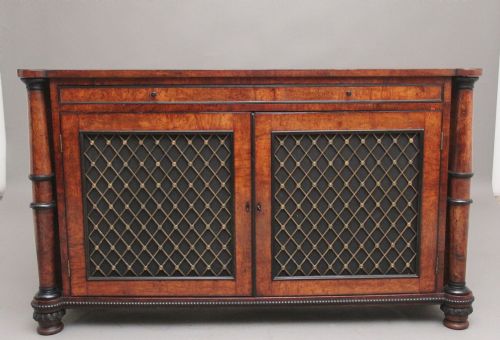
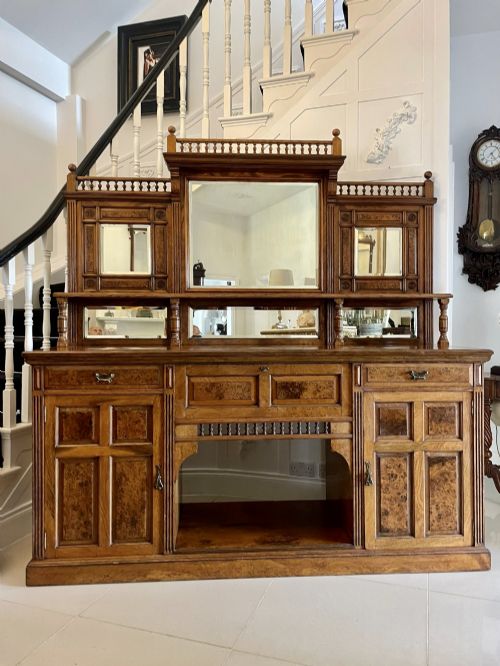
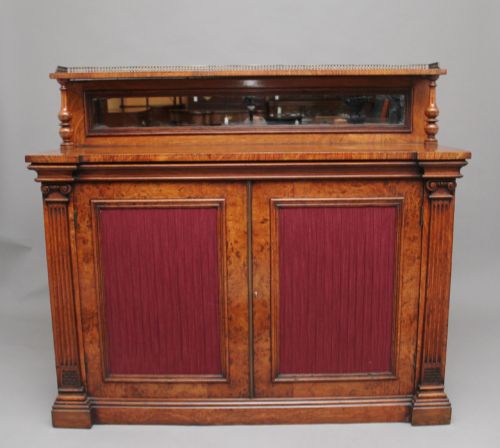
When you search for a pollard oak chiffonier, you are looking at low nineteenth-century side cabinets and sideboards distinguished by their heavily burr-figured timber. These pieces date across the Regency and Victorian periods, often appearing as two or three-door cabinets with shelf backs or mirror backs.
The versions you are most likely to meet on this page hail from the Victorian era and the broader nineteenth century, frequently categorized alongside general sideboards and side cabinets. They range from simple two-door chiffoniers with raised shelves to large mirror-backed sideboards.
Makers utilised pollard oak and burr oak to create dramatic, mottled grain patterns across the front doors and fascias. This specific choice of timber defines the group, setting these functional storage pieces apart from standard mahogany or plain oak furniture.
How they were made
Cabinetmakers selected pollard oak and burr oak veneers for these chiffoniers, laying the highly figured timber over solid foundational woods to display the intricate knotting and circular grain patterns. Workshops occasionally paired this pale, speckled oak with contrasting ebony details to frame the doors and panels.
Construction methods rely on traditional nineteenth-century joinery, incorporating brass hardware for locks and hinges, and sometimes integrating glass panels or fabric linings within the upper sections. Mirror-backed iterations incorporate heavy bevelled glass secured behind wooden frames on the upper shelf tier.
Tree pruning centuries ago accidentally birthed the speckled timber that makers turned into these swirling cabinet doors.
What varies in quality
The distribution and tightness of the burr figuring across the pollard oak surfaces dictate much of the visual merit, with denser patterning commanding greater attention. Finer examples display symmetrical veneer matching on the doors and cabinet fronts.
Structural complexity also separates the tiers, moving from simpler two-door chiffoniers with plain shelf backs up to elaborate mirror-backed sideboards with three doors and extensive architectural mouldings. The integration of contrasting timbers like ebony demonstrates a higher level of workshop design.
The Pollard Oak Chiffonier Glossary
- Pollard oak
- Timber taken from trees that were pollarded by having their upper branches cut back, which stimulates dense, mottled burr growth in the new wood. This process creates the characteristic speckled grain seen on these chiffoniers.
- Chiffonier
- A low nineteenth-century sideboard or cabinet, typically featuring enclosed storage below and a shelf or mirror back above. It serves as both a display surface and a practical storage unit.
- Burr oak
- A growth deformity on an oak tree that produces tightly clustered knots and swirling grain patterns. Cabinetmakers sliced this wood into thin veneers for decorative furniture fronts.
- Regency
- An early nineteenth-century design period known for classical restraint and refined proportions. Pieces from this era often exhibit cleaner lines before the heavier Victorian ornamentation took hold.
- Ebony
- A dense, dark wood used by cabinetmakers for contrasting inlay and stringing. It highlights the lighter tones of pollard oak.
Pollard Oak Chiffonier: Frequently Asked Questions
What is a pollard oak chiffonier?
A pollard oak chiffonier is a low nineteenth-century storage cabinet featuring distinctive mottled timber veneers and usually a raised shelf or mirror back.
Cabinetmakers built these pieces during the Regency and Victorian eras as functional sideboards that combined cupboard space with display surfaces.
How do I date a chiffonier?
Dating relies on observing the overall style, timber preparation, and structural proportions relative to the Regency and Victorian periods.
Earlier nineteenth-century pieces tend toward restrained lines, whereas later Victorian examples frequently incorporate larger mirror backs and heavier ornamentation.
How were these cabinets used?
These chiffoniers served as practical side cabinets in dining rooms and parlours for storing tableware, linens, or glassware.
The upper shelves or mirrors provided a convenient space to display decorative ceramics or silver.
How do I care for pollard oak furniture?
Maintain pollard oak by keeping it away from direct heat sources and sudden humidity changes to protect the decorative veneers.
Regularly dust with a soft cloth and apply appropriate wax sparingly to nourish the timber grain.