

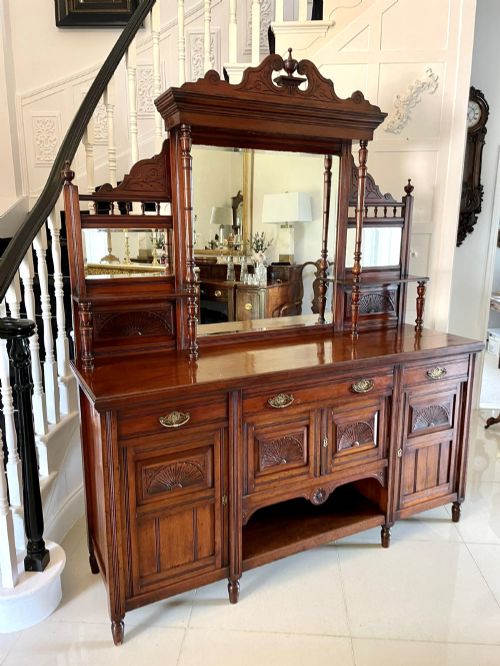
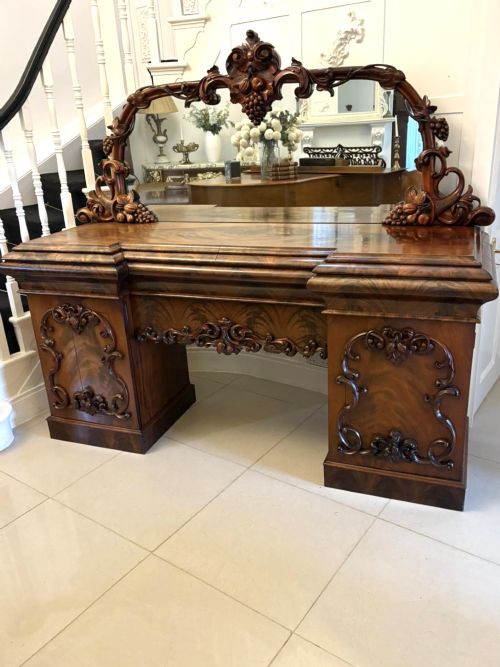
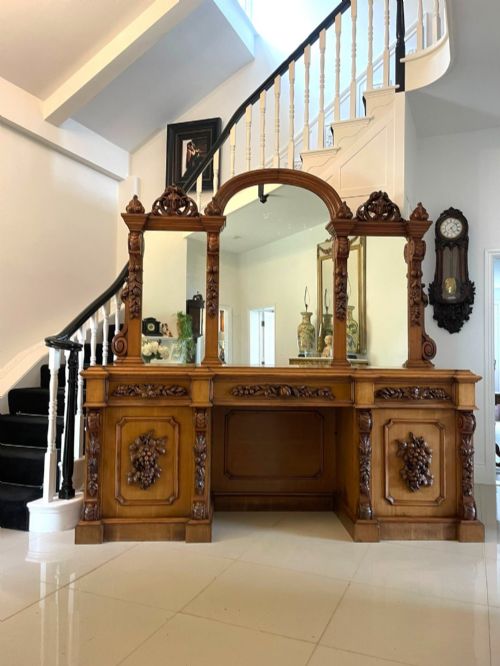
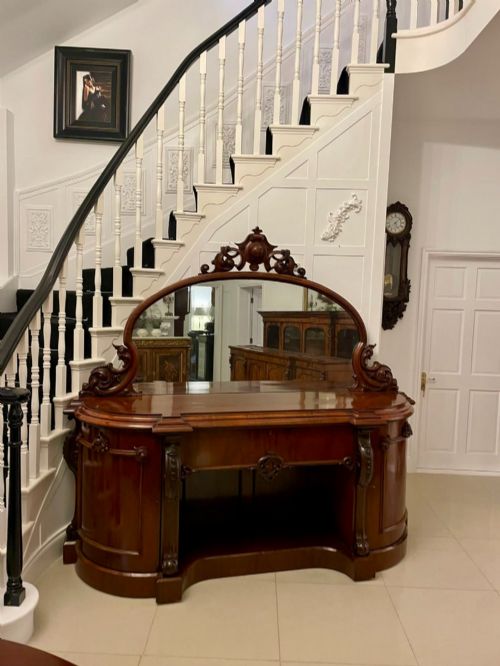

Victorian Sideboard with Mirror
These Victorian sideboards with mirrors combine generous storage with deep bevelled glass, bringing practical elegance and light into any room.
Victorian Sideboard with Mirror
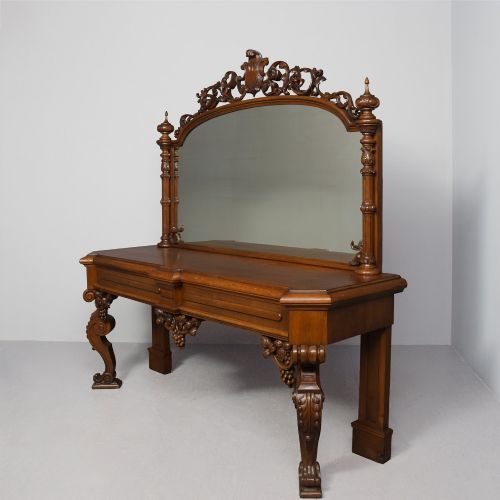
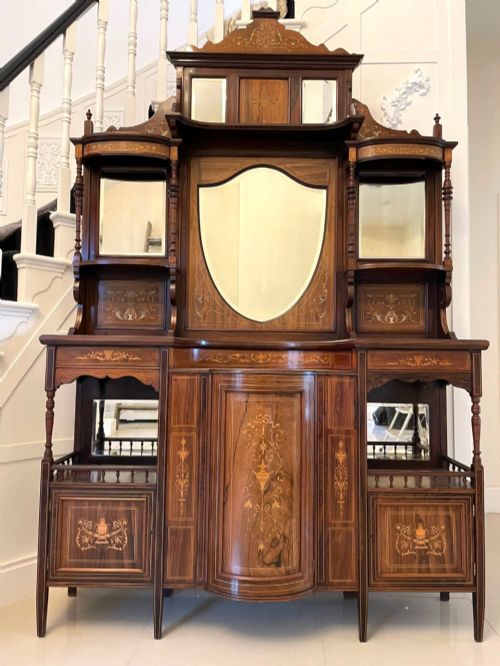
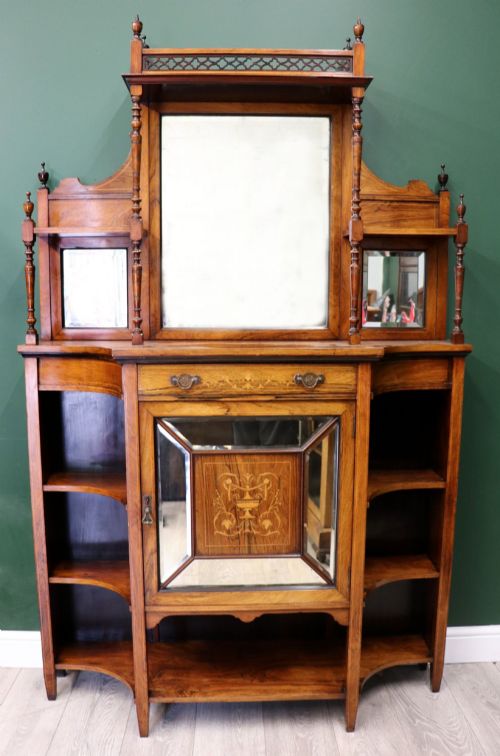
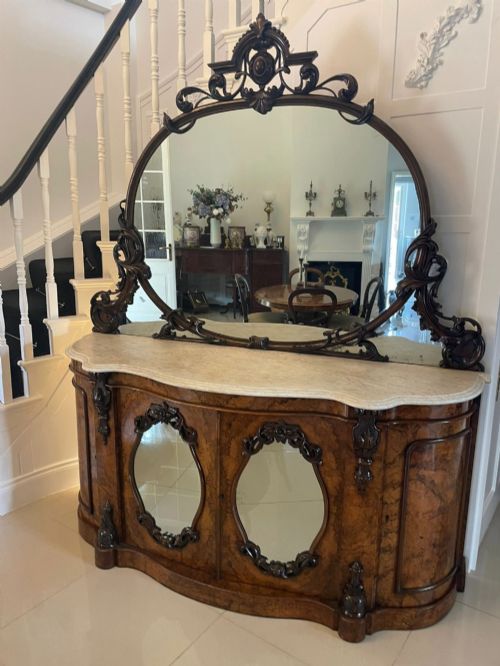
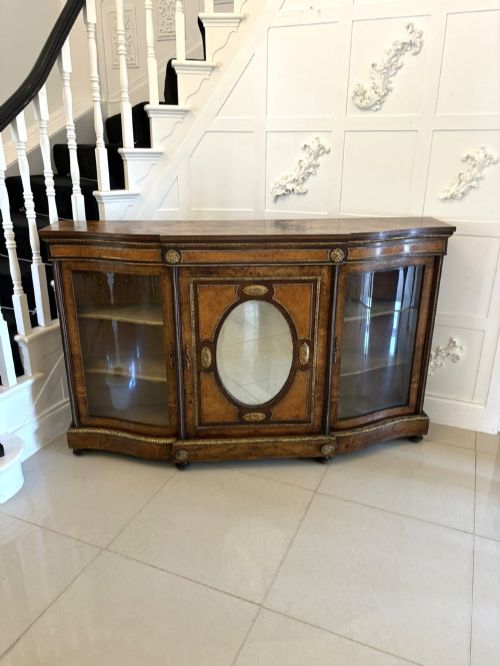
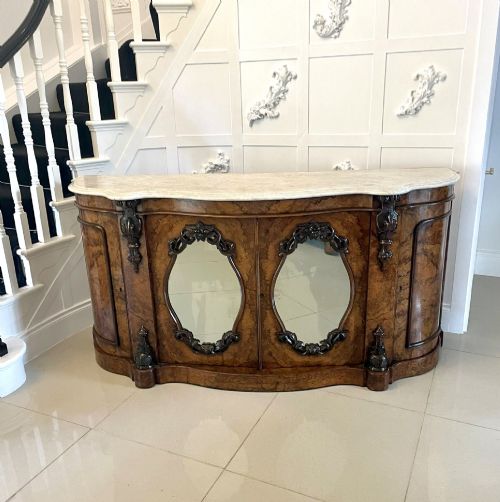
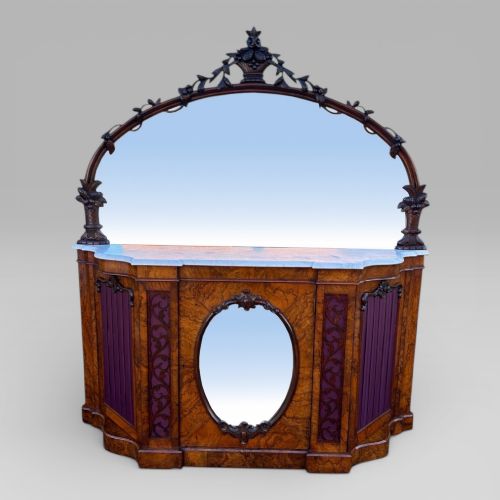
A Victorian sideboard with mirror sits at the heavier end of nineteenth-century dining room furniture, combining a substantial timber base with an architectural upper glass section. Most examples encountered here date from the mid to late Victorian period, spanning walnut, mahogany, and oak constructions.
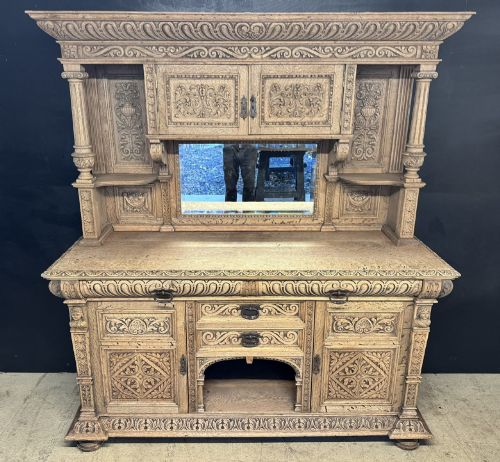
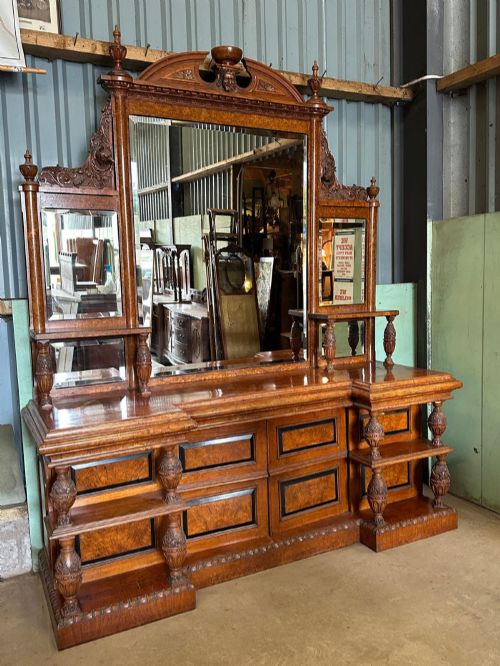
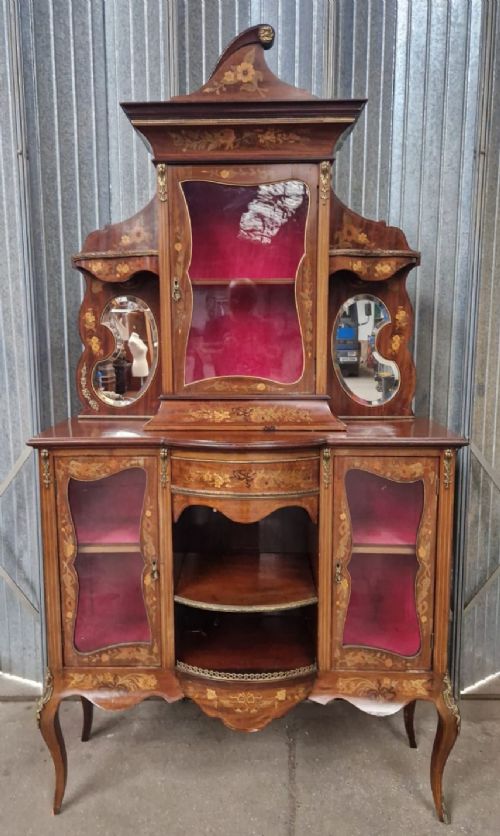
The form often merges characteristics of credenzas, chiffoniers, and display cabinets, providing enclosed cupboards alongside open shelving or mirrored backdrops. Buyers will find both compact pedestal versions and large breakfront designs equipped with carved wooden detailing.
Makers utilised various revivalist movements, resulting in pieces reflecting Jacobean, Regency, and Arts and Crafts aesthetics alongside high Victorian ornamentation. These items served as central display surfaces in period homes, designed to reflect candlelight and tableware.
Materials and construction
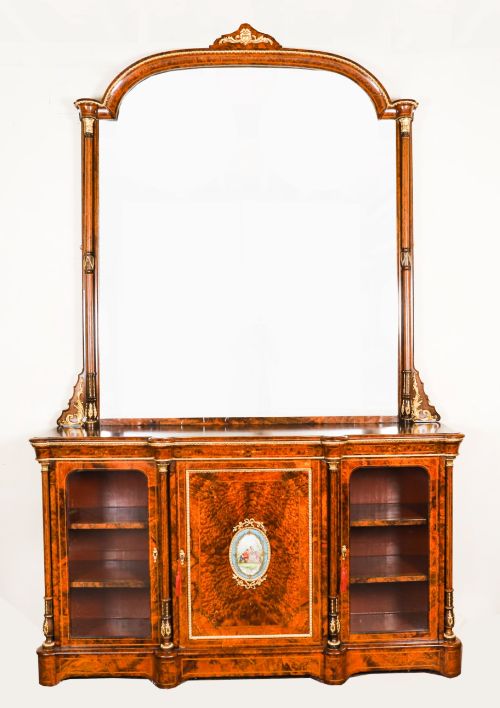
Cabinet makers built these pieces using solid timbers like oak, mahogany, and rosewood, frequently applying burr walnut veneers to primary surfaces for striking grain patterns. Ormolu mounts, brass handles, and marble tops added decorative contrast to the darker woods.
Mirrors were securely set into carved wooden frames or integrated directly into panelled backsplashes, supported by turned columns or scrolled brackets. Marquetry inlay and detailed hand-carved motifs frequently adorned the cupboard doors and friezes.
Victorian Sideboard with Mirror Retail Price Guide 2026
Typical asking prices for victorian sideboard with mirror among the pieces listed under this phrase on Sellingantiques today, from the lower quarter to the upper quarter. They describe what is for sale here now, not the wider market.
Some nineteenth-century sideboards feature secret drawers cleverly concealed within the carved frieze moulding above the doors.
Indicators of quality
Superior examples distinguish themselves through the choice of timber figure, such as highly figured burr walnut or pollard oak, matched carefully across the doors and panels. Hand-carved relief work shows crisp definition and depth rather than shallow machine stamping.
The integration of the mirror section and the precision of ormolu mounts or marquetry marquetry define the maker's ambition. Maker marks, such as stamps from established workshops, separate standard production items from exceptional commissions.
Gillows
The Victorian Sideboard with Mirror Glossary
- Credenza
- A sideboard or cabinet, often featuring mirrored doors and ormolu mounts, traditionally used for serving food or displaying valuables. They sit low to the ground and are frequently faced in burr walnut.
- Ormolu
- Gilded bronze mounts applied to furniture for decorative effect. This technique was popular on high Victorian pieces to highlight architectural corners.
- Burr walnut
- Timber taken from a growth on a walnut tree, producing swirling, complex grain patterns highly valued for veneer work. It defines the surface finish of many top-tier Victorian cabinets.
- Chiffonier
- A compact sideboard equipped with a raised shelf or mirror back and enclosed cupboards below. They originated in the Regency era and remained popular through the Victorian period.
- Marquetry
- The art of applying pieces of veneer to a structure to form decorative patterns and pictures. It appears frequently on late Victorian rosewood and walnut cabinets.
Victorian Sideboard with Mirror: Frequently Asked Questions
How do I clean the mirror glass?
Use a soft microfibre cloth with a mild vinegar solution applied directly to the cloth rather than the glass, preventing moisture from seeping behind the silvering.
Avoid harsh chemical ammonia sprays, which can damage the aged backing and the surrounding wooden frame over time.
How do I care for burr walnut veneer?
Keep the timber away from direct sunlight and heat sources to prevent the thin veneer from drying out, cracking, or lifting from the core.
Apply a quality beeswax polish occasionally to nourish the wood and maintain a soft sheen without building up heavy wax layers.
Where should I place a heavy sideboard?
Position the piece against a structurally sound wall, using furniture fixings if necessary, due to the top-heavy nature of the large mirror backs.
Ensure the floor is level so the heavy doors and drawers align correctly within their frames during daily use.