
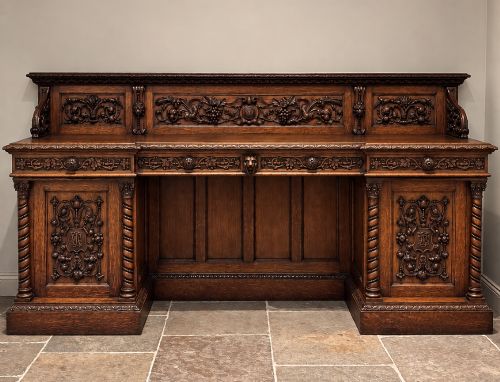
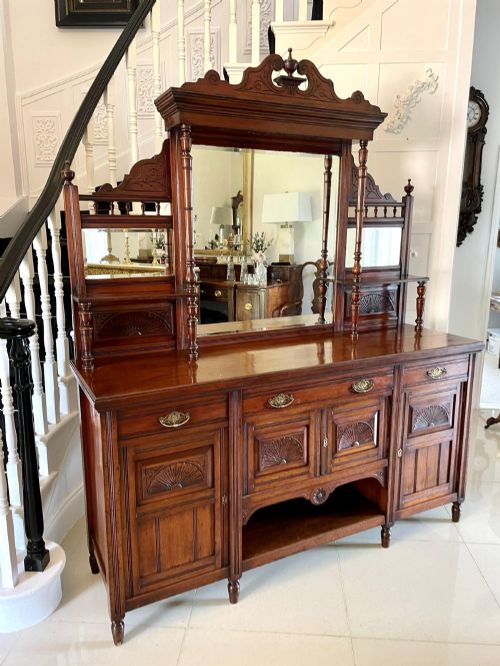
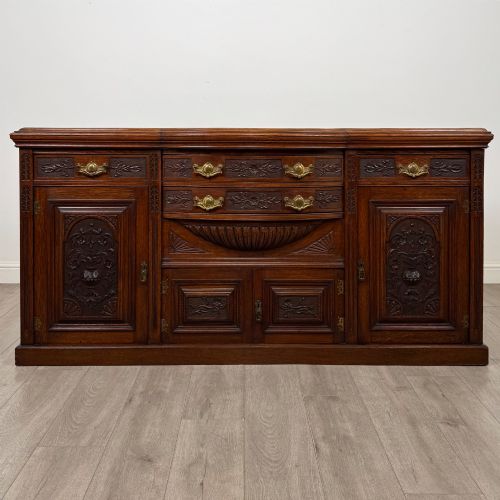
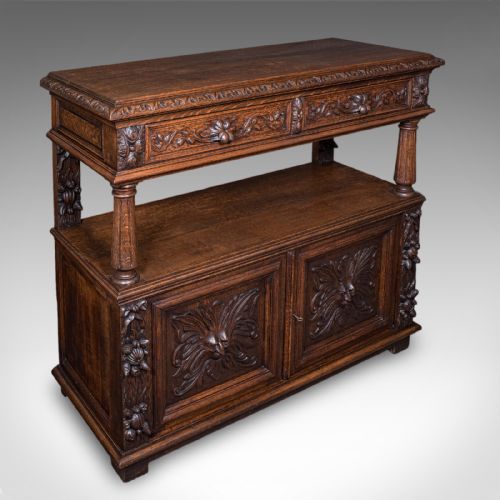
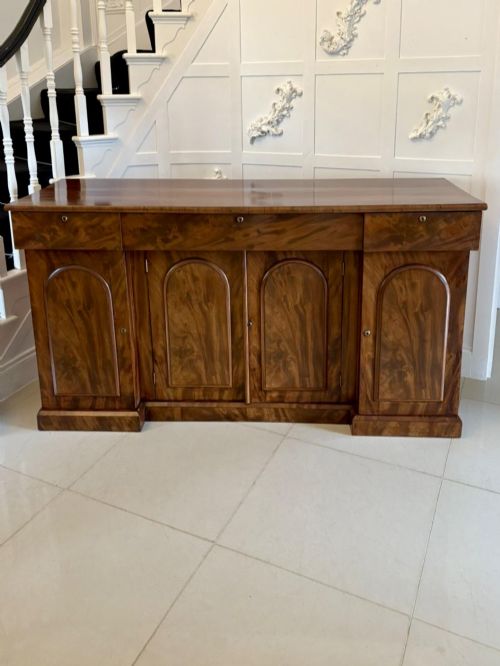
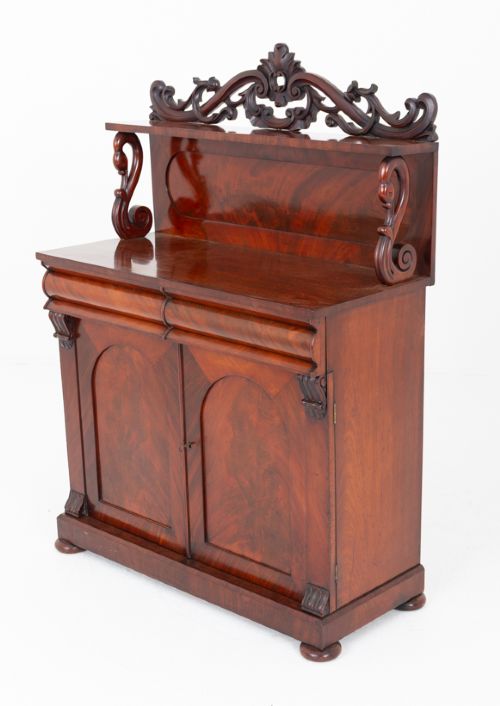
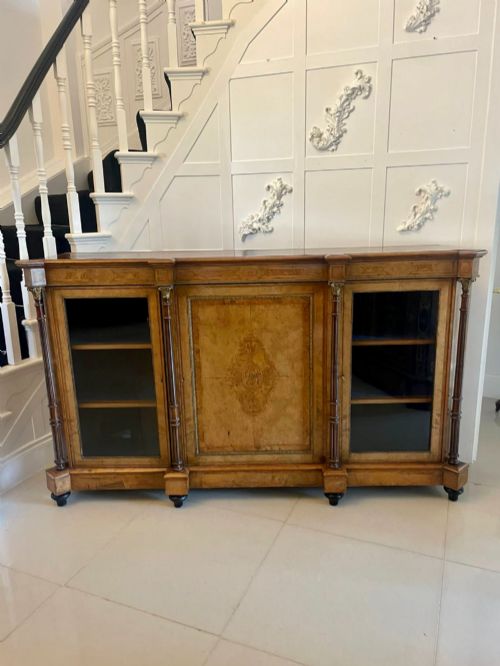
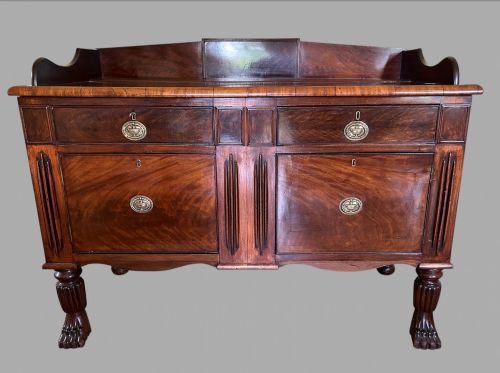
Victorian Dining Room Credenza
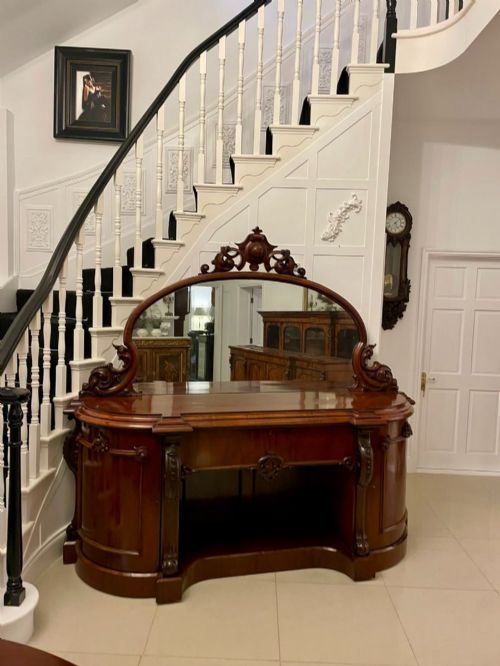
These Victorian dining room credenza pieces bring serious nineteenth-century presence to a room, offering grand timber storage and display.
Victorian Dining Room Credenza
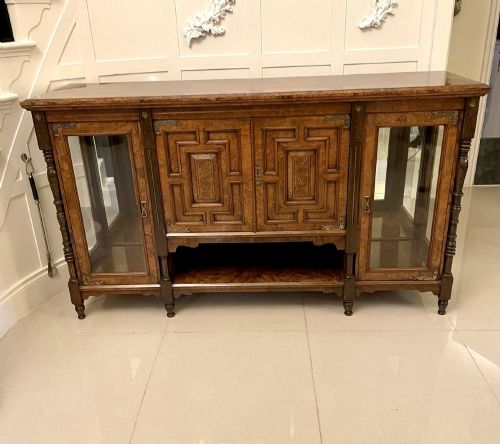
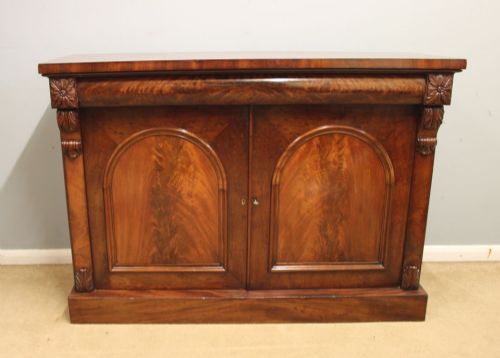
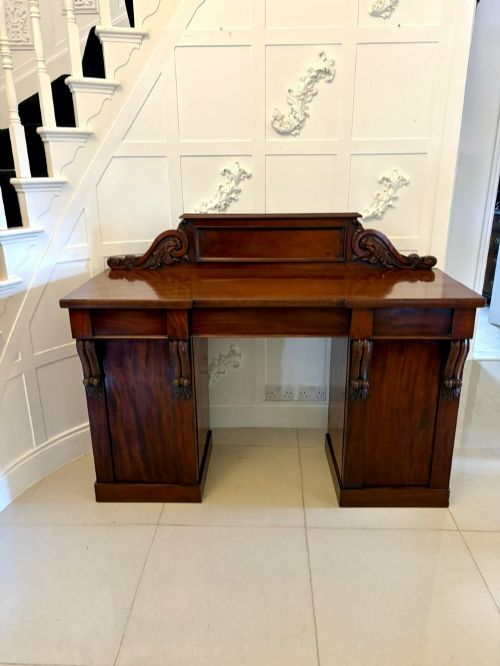
A Victorian dining room credenza encompasses large foundational timber pieces built for nineteenth-century entertaining, frequently overlapping with sideboards, buffets, and chiffoniers. You will encounter these forms spanning the Victorian era alongside William IV and Arts and Crafts examples.
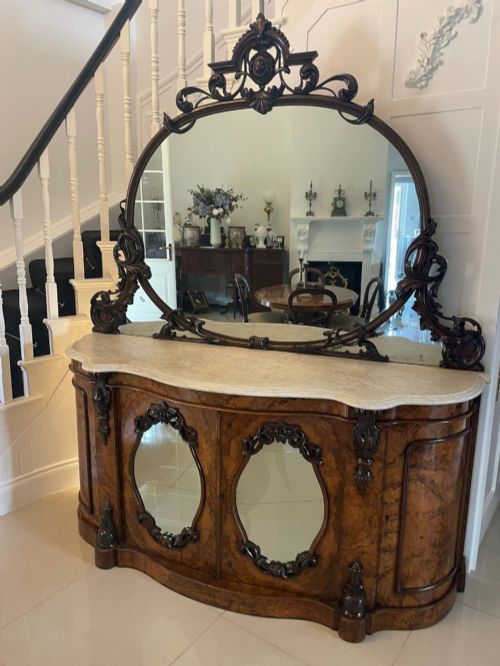
The layout typically involves substantial cupboards and drawers designed for dining silver and linens, often surmounted by architectural carved mirror backs. These pieces dominate a dining space through sheer scale and heavy timber presence.
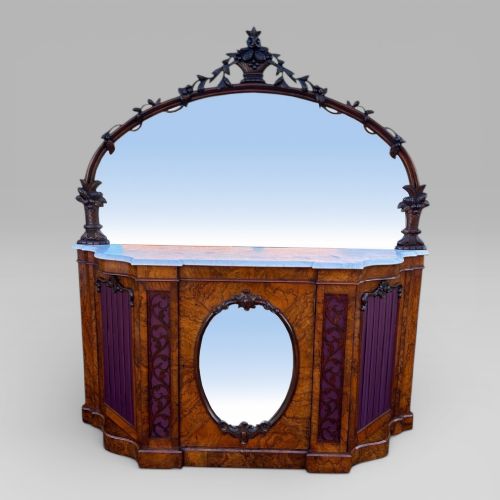
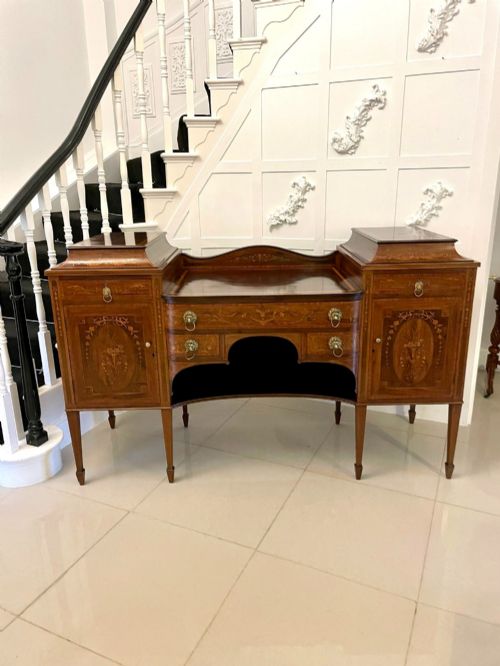
Makers adapted these cabinets across decades, moving from heavy architectural mahogany forms to burr walnut credenzas and inlaid marquetry server tables. The common thread is domestic utility combined with prominent nineteenth-century craftsmanship.
Materials and Construction
Cabinets rely heavily on solid mahogany, oak, and walnut, often enhanced with figured veneers like burr walnut or flame mahogany to create striking grain patterns on large flat surfaces. Marquetry inlay and brass details frequently accent the primary timber.
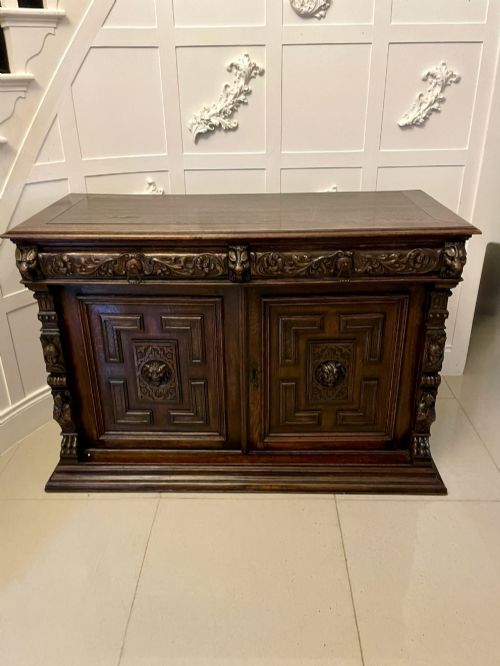
Carving is integral to the construction, executed directly into the solid timber or applied through decorative mouldings, pilasters, and mirror frames. Structural glass and marble tops also appear on specific server and credenza configurations.
Victorian Dining Room Credenza Retail Price Guide 2026
Typical asking prices for victorian dining room credenza among the pieces listed under this phrase on Sellingantiques today, from the lower quarter to the upper quarter. They describe what is for sale here now, not the wider market.
Design influences recorded include Sheraton Revival, Gothic Revival, Renaissance Revival, and Arts and Crafts styles.
Evaluating the Pieces
Quality rests in the selection of timbers, where highly figured veneers and deep, crisp hand-carving distinguish superior examples from standard production pieces. The integration of complex marquetry inlay and original mirror glass elevates certain cabinets.
Construction integrity determines longevity, seen in the tight fitting of heavy cupboard doors, substantial drawers, and stable architectural mirror backs. Pieces retaining original surface patination and uncompromised structural joints stand at the upper end.
Hewetsons London
The Victorian Dining Room Credenza Glossary
- Credenza
- A low cabinet originally used for displaying plate, evolving during the nineteenth century into a formal dining room storage piece.
- Chiffonier
- A compact sideboard or low cabinet, typically featuring enclosed shelving below and sometimes a small superstructure above.
- Marquetry
- Decorative veneer work forming pictorial or geometric patterns using various coloured woods.
- Pollard oak
- Oak timber taken from trees that have been pollarded, producing burr growths with highly decorative, knotted grain patterns.
- Pedestal sideboard
- A large dining cabinet featuring central workspace flanked by two substantial columnar pedestals or cupboards.
Victorian Dining Room Credenza: Frequently Asked Questions
How do I date a Victorian sideboard?
Dating relies on stylistic shifts and timber choices, moving from heavy architectural mahogany in the mid-nineteenth century toward lighter inlaid walnut or Arts and Crafts oak by the late nineteenth century.
Secondary clues include construction methods within the drawers and the presence of specific revival styles documented in cabinetmaker records.
What is the difference between a sideboard and a credenza?
Sideboards generally offer large cupboards and drawers specifically engineered for storing dining room linens and heavy serving dishes.
Credenzas often sit lower and frequently incorporate central display spaces or glass doors alongside timber cupboards.
Are mirror backs original to these pieces?
Many nineteenth-century dining room cabinets integrated carved mirror backs as part of the primary design to reflect light and display decorative objects.
Checking the integration of the frame and the silvering on the glass helps confirm period authenticity.
Where should I place a heavy Victorian cabinet?
These substantial timber pieces require a strong wall and adequate floor space, traditionally anchoring the main dining room wall opposite the table.
Consider ceiling height if the piece includes a tall mirror back or heavy architectural pediment.